
Nikon Zf Review: Why I Switched from Leica CL for Travel Photography
When I got into the Leica cameras I use, I had built a kit around street photography, urban photography, urbex photography, and travel photography. The next thing I started doing was adapting vintage lenses to them. Then I started using TTArtisan glass on the Leica CL and loved it! My Leica SL2 now carries the 50mm APO Summicron L pretty much all the time as well. I love the SL2, but for a backpacking trip, it is probably not the best choice.
After years of using the Leica CL for travel photography, I finally switched to the Nikon Zf—and I should have done it sooner. The breaking point? Getting caught in English rain on the Pilgrims Way with my non-weather-sealed Leica CL. In this Nikon Zf review, I'll explain why I chose this retro-styled mirrorless camera over the Leica CL for hiking trips and travel photography, covering weather sealing, IBIS, battery life, and real-world performance.
Why I Needed a Weather Sealed Travel Camera
When I got into the Leica cameras I use, I had built a kit around street photography, urban photography, urbex photography, and travel photography. The next thing I started doing was adapting vintage lenses to them. Then I started using TTArtisan glass on the Leica CL and loved it! My Leica SL2 now carries the 50mm APO Summicron L pretty much all the time as well. I love the SL2, but for a backpacking trip, it is probably not the best choice.
That experience changed everything for me. I realized I was babying my camera instead of using it. Every time clouds rolled in, I'd pack it away. Every time I saw a stunning scene but it was drizzling, I'd pass on the shot. That's not why I bought a camera—I bought it to use it, to capture moments, to not miss opportunities because I'm worried about weather. That's when I knew I needed weather sealing as a non-negotiable feature in my next travel camera.

The Leica CL served me well for years, but lack of weather sealing was a deal-breaker for hiking trips in unpredictable weather.
Why the Leica CL Didn't Work for Hiking Trips
The Leica CL, while perfect in size for travel, is not weather sealed… I came to this realization while hiking the Pilgrims Way in England a while back. (I did a small series of videos on this trip if you are interested) and this is when I came to realize that while the Leica CL is really small and lightweight, it is also not my favorite for hiking trip travel. Rain is a real threat in England and I was fortunate that my camera did not get caught in a cloud burst.
So knowing all of this, I started down the path of finding a new travel camera to shoot with…
My Requirements for the Perfect Travel Photography Camera
So knowing all of this, I started down the path of finding a new travel camera to shoot with. I looked at several factors to guide my choice:
The first was it had to be weather sealed or it was a no go for me.
The next is it had to have IBIS as I love shooting with vintage glass and this allows me to shoot at much slower shutter speeds while handheld.
I also wanted a full frame, 24MP sensor if possible as these (in 2024) have much better low light performance due to the larger photo sites on the sensor.
It also needed good battery life as these Leica mirrorless cameras just don't have great battery life for me.
These weren't just nice-to-have features. These were requirements based on real frustrations I'd experienced in the field. Weather sealing because of England. IBIS because I shoot vintage glass and hate carrying a tripod on hikes. Full-frame 24MP for those low-light church interiors and evening shots. Battery life because running out of power halfway through a hiking day is unacceptable.
Nikon Zf Features That Changed My Travel Photography
After searching for a year or so with no luck, Nikon drops a bomb on me with the launch of the Nikon Zf retro styled camera. You could have just as easily called it the "Nikon Special Custom Built Camera For Dave" and the name would have been accurate. HaHa!
I immediately fell in love with it…before I even laid eyes on one in person. When I see a new camera that I am interested in, I will search all about it that I can and see if it will fit my needs and do that at a price point that I am comfortable with.
The Nikon Zf mirrorless camera is a camera that checks all those boxes and more. You see I am in love with the retro-style camera design aesthetic like the Fujifilm XT-3 and now the Nikon Zf (as well as to a lesser degree the Nikon Zfc too). I owned the Fujifilm XT-3 for several years and it had two main shortcomings that made me want to move away from it over the years.
The crop sensor had pretty bad low light performance (it was 26 mega pixels so it was doing a lot of work to get it all in there) and the lack of IBIS in a mirrorless camera. Cameras at this time were coming standard with IBIS (In Body Image Stabilization) and I felt this was a huge misstep for Fujifilm on this camera. I, none the less, used it for several years anyway and to great effect too, but the lack of these two features was a nagging thought at the back of my mind the whole time.
Then Nikon came out with the Zfc and I initially was in love with it, but upon closer inspection, it was simply an XT-3 in a Nikon shell. Yeah, it had a few things that were newer and (debatably) better, but it still lacked certain things I wanted. I had resigned myself at this point to wait for a replacement to the Nikon Df or maybe something by Leica that was closer to what I was wanting. Well as fate would have it, Nikon saw the demand for the retro camera design and came out with the Zf—a full frame, IBIS, 24 megapixel, mirrorless camera loaded with all the magic that they could cram into the beautiful Nikon retro shell.
Nikon Zf vs Leica CL: Key Differences for Travel Photography
Let me break down the key differences between these two cameras for anyone facing the same decision I did:
Weather Sealing: The Nikon Zf is fully weather sealed; the Leica CL is not. This was the deal-breaker for me. If you're hiking in unpredictable weather or traveling to places with rain, dust, or humidity, the Nikon Zf gives you peace of mind. The Leica CL requires constant babying in anything but perfect conditions.
IBIS: The Nikon Zf has 5-axis in-body image stabilization; the Leica CL does not. This makes a massive difference when shooting with vintage manual focus lenses or in low light. I can handhold shots at 1/15th second with the Nikon Zf that would be impossible with the Leica CL. For travel photography where you can't always use a tripod, IBIS is a game-changer.
Sensor Size: The Nikon Zf has a full-frame 24MP sensor; the Leica CL has an APS-C crop sensor. The full-frame sensor gives you better low-light performance (larger photosites), shallower depth of field control, and generally more flexibility. The crop sensor on the Leica CL is excellent, but the full-frame advantage is real when you're shooting in challenging light.
Battery Life: The Nikon Zf's battery lasts significantly longer than the Leica CL. With the Leica CL, I'd carry 3-4 batteries and still worry about running out. With the Nikon Zf, two batteries get me through a full day of shooting with power to spare.
Size and Weight: This is where the Leica CL wins. It's noticeably smaller and lighter, which matters on long hikes. The Nikon Zf is not a huge camera, but it's definitely more substantial. For me, the practical advantages of the Nikon Zf outweigh the size disadvantage, but this is a personal choice.
Price: The Leica CL (when it was still in production) was more expensive than the Nikon Zf. Now that it's discontinued, you'd be buying used. The Nikon Zf offers better value for the features you get.
The Nikon Zf's weather-sealed body and IBIS make it ideal for unpredictable travel conditions and hiking with vintage lenses.
Real World Nikon Zf Performance: Travel and Hiking
So to be honest, I was still skeptical that this would be the next camera for me. I have gotten really comfortable using my Leica cameras and the thought of learning a new camera was really not that appealing to me. But the more reviews I watched on YouTube and the more I just looked at the camera in general, the more I liked it.
Since getting the Nikon Zf, I've put it through its paces on several trips, and it's delivered every time. The weather sealing proved itself on a rainy morning shoot where I would have packed the Leica CL away. The IBIS let me shoot handheld in a dimly lit museum with a vintage 50mm f/1.4 lens at 1/15th second and still get sharp images. The battery lasted an entire day of hiking without needing the spare.
The retro physical dials are more than just aesthetic—they're genuinely useful in the field. Being able to glance down and see my shutter speed and ISO without turning on the screen saves battery and makes adjustments faster. On a hike, every second counts when you're trying to catch changing light or a fleeting moment.
The full-frame sensor's low-light performance is noticeably better than the Leica CL's crop sensor. I can comfortably shoot at ISO 3200 or even 6400 when needed, and the files are clean. With the Leica CL, I tried to stay under ISO 1600 whenever possible. That flexibility matters when you're traveling and can't always control the light.
So for now, this is my new travel/street machine. It has wonderful rendition and is a joy to shoot with. I look forward to taking it on outings now and I have the 50mm f1.8 S lens if I want auto focus and to be able to access all the special features that have to do with the auto focus system. So going forward, there will be more about this machine as well as the two Leica camras I use as well. You see, those two machines are also wonderful cameras and I still enjoy using them too, I use them for certain things as I have found. But I still love getting them out and using them.
Nikon Zf vs Leica CL: Which Should You Choose?
Choose the Nikon Zf if:
You need weather sealing for hiking, travel, or unpredictable conditions
You shoot with vintage manual focus lenses and want IBIS
You value battery life and don't want to carry multiple batteries
You want better low-light performance (full-frame advantage)
You're comfortable with a slightly larger/heavier camera for the features
Choose the Leica CL if:
Size and weight are your absolute top priorities
You primarily shoot in good weather or controlled conditions
You're already invested in the Leica L-mount ecosystem
You prefer the Leica color science and rendering
You can find one used at a good price (it's discontinued)
For me, the practical advantages of the Nikon Zf outweigh the size advantage of the Leica CL. But I still appreciate what the Leica CL offers for lightweight urban photography.
Recommended Gear for Travel Photography
Support this website by using these affiliate links to shop on Amazon:
Leica M11 Digital Rangefinder Camera because the Leica CL is out of production now.
Nikon AF-S FX NIKKOR 105mm f/1.4E ED Lens
Voigtlander Nokton 35mm f/1.4 II
Sandisk 128GB Extreme Pro memory cards
Nikon 50mm f1.8 S Lens for Z mount
Frequently Asked Questions About the Nikon Zf for Travel Photography
Is the Nikon Zf good for travel photography?
Yes, the Nikon Zf is excellent for travel photography. After switching from the Leica CL, I've found the Nikon Zf addresses all the key requirements for serious travel work: weather sealing protects it in rain and dust, IBIS (In-Body Image Stabilization) allows handheld shooting with vintage lenses and in low light, the full-frame 24MP sensor delivers outstanding image quality even at high ISOs, and the battery life is significantly better than my Leica mirrorless cameras. The retro design with physical dials makes it quick to adjust settings on the fly, which is crucial when you're hiking and need to shoot fast.
How does the Nikon Zf compare to the Leica CL for travel?
The Nikon Zf and Leica CL serve different needs. The Leica CL is smaller and lighter (perfect for ultralight backpacking), but lacks weather sealing and IBIS, which are deal-breakers for hiking trips where rain is a possibility. The Nikon Zf is heavier but offers weather sealing, IBIS, a full-frame sensor with better low-light performance, and much longer battery life. I switched from Leica CL to Nikon Zf specifically because I got caught in English rain on the Pilgrims Way and realized I needed weather protection. If you're doing casual city travel, the Leica CL's compact size is nice. For serious hiking and unpredictable weather, the Nikon Zf is the better choice.
Is the Nikon Zf weather sealed?
Yes, the Nikon Zf is weather sealed. This was one of my primary requirements when searching for a travel camera to replace the Leica CL. The weather sealing on the Nikon Zf protects against rain, dust, and moisture - essential for hiking trips and travel photography where you can't always control the conditions. After hiking the Pilgrims Way in England with my non-weather-sealed Leica CL and worrying about rain the entire time, having weather sealing gives me peace of mind to shoot in any conditions.
Does the Nikon Zf have IBIS?
Yes, the Nikon Zf has 5-axis In-Body Image Stabilization (IBIS). This was another critical requirement for me. IBIS allows me to shoot with vintage manual focus lenses at slower shutter speeds while still getting sharp handheld images. It's also invaluable for travel photography when you're shooting in low-light situations like churches, museums, or evening street scenes where you can't use a tripod. The Leica CL lacks IBIS, which was one of the main reasons I switched to the Nikon Zf.
What is the battery life like on the Nikon Zf?
The Nikon Zf has significantly better battery life than my Leica mirrorless cameras. While Leica mirrorless cameras have notoriously short battery life (I always carried 3-4 batteries), the Nikon Zf's EN-EL15c battery provides enough power for a full day of travel photography on a single charge. This is a huge advantage for hiking trips where you might not have access to power for recharging. I typically carry two batteries for the Nikon Zf and rarely need the second one, whereas with the Leica CL I'd go through multiple batteries in a day.
Can you use vintage lenses on the Nikon Zf?
Absolutely! The Nikon Zf is fantastic for vintage lenses, which is one reason I love it. With the FTZ II adapter, you can use Nikon F-mount lenses, and with various adapters you can mount Leica M, M42, Canon FD, and many other vintage lenses. The combination of focus peaking, IBIS, and the high-resolution EVF makes manual focusing a joy. I regularly shoot with vintage glass on my Nikon Zf when traveling, and the IBIS compensates for the lack of optical stabilization in older lenses. This was impossible with the Leica CL which lacks IBIS.
Is the Nikon Zf worth it over the Leica CL?
It depends on your priorities. The Nikon Zf is worth it if you need weather sealing, IBIS, better low-light performance (full-frame vs crop sensor), and longer battery life. These were all critical requirements for my hiking and travel photography. The Leica CL is worth considering if you prioritize extreme portability, the Leica color science, and compact size above all else. For me, the practical advantages of the Nikon Zf (weather sealing especially) outweighed the Leica CL's size advantage. After nearly losing my Leica CL to rain in England, the choice became clear.
What focal lengths work best for travel photography on the Nikon Zf?
For travel photography on the Nikon Zf, I primarily use the Nikon 50mm f/1.8 S lens because it's lightweight, sharp, and versatile. The full-frame sensor means you get the classic 50mm field of view, which works for everything from street scenes to portraits. I also adapt vintage lenses, particularly 35mm focal lengths, when I want a wider perspective for landscapes or architecture. The beauty of the Nikon Zf's IBIS is that I can handhold even at slower shutter speeds, so I'm not limited by the lack of stabilization in vintage glass. For hiking trips, I keep my kit minimal - usually just the 50mm f/1.8 S and maybe one adapted vintage lens.
So for now, this is my new travel and street machine. It has wonderful rendition and is a joy to shoot with. I look forward to taking it on outings now and I have the 50mm f1.8 S lens if I want auto focus and to be able to access all the special features that have to do with the auto focus system.
Going forward, there will be more about this machine as well as the two Leica cameras I use. You see, those two machines are also wonderful cameras and I still enjoy using them too—I use them for certain things as I have found. The Leica CL still comes with me on city trips where weight matters. The Leica SL2 is my studio and portrait camera. But for travel photography where weather and versatility matter? The Nikon Zf is now my go-to.
Are you considering the Nikon Zf for travel photography? Or have you made a similar switch from one camera system to another? I'd love to hear about your experiences in the comments below!
Want more honest camera reviews and travel photography tips? Subscribe to my photography blog for weekly posts about real-world gear testing, not just spec sheets and studio tests.
Support this website by using these affiliate links to shop on Amazon:
Leica M11 Digital Rangefinder Camera
Nikon AF-S FX NIKKOR 105mm f/1.4E ED Lens
Voigtlander Nokton 35mm f/1.4 II
Sandisk 128GB Extreme Pro memory cards
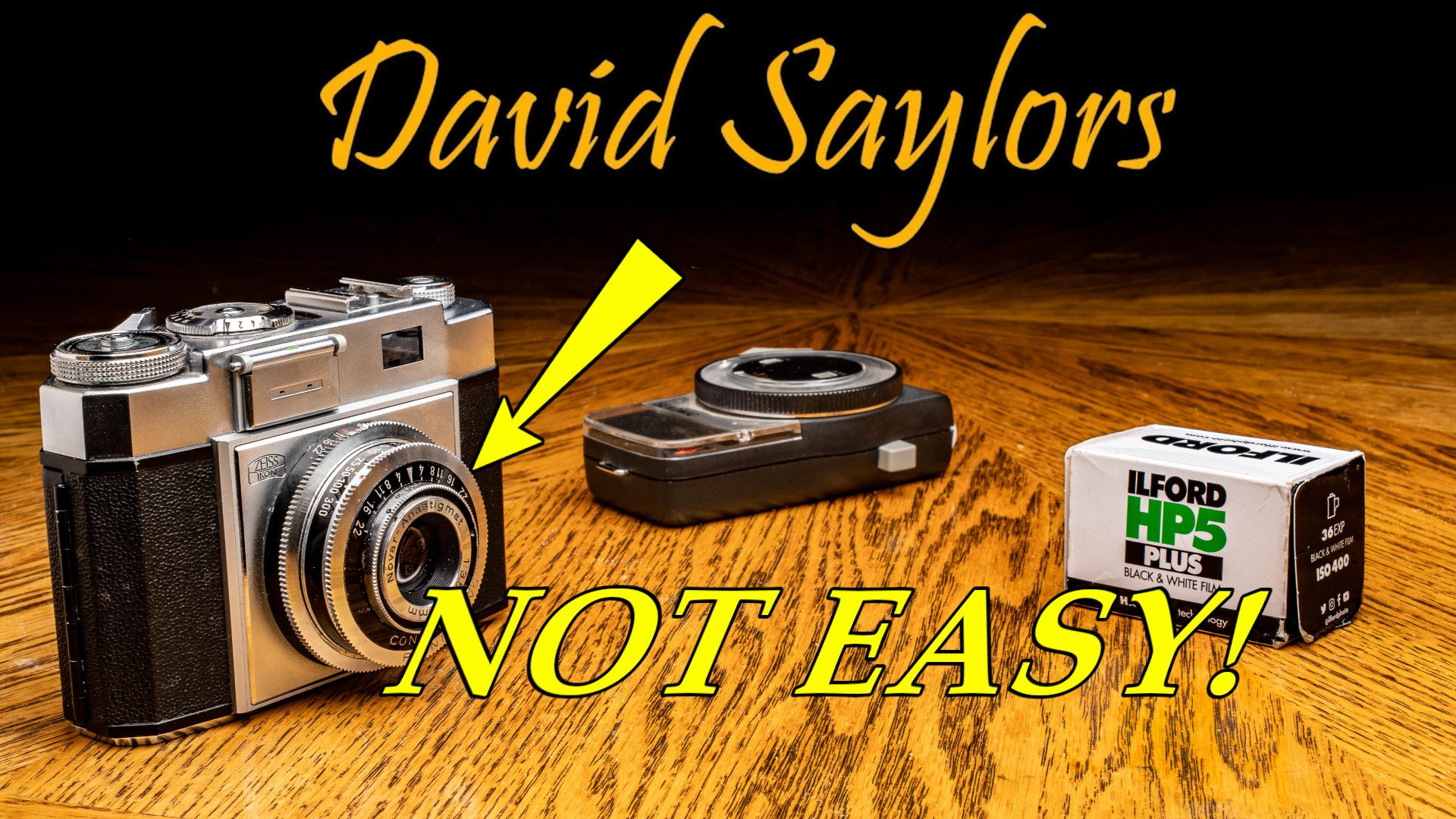
How shooting with Zeiss Ikon Contina made me realize I am spoiled...
When I started out on my own in photography it was already the 90s so I really didn’t know how good things were at the time since I got a second hand Yashica SLR that was manual focus, but had Program mode for exposure control.
My Photography Journey: Starting in the 90s
When I started out on my own in photography it was already the 90s so I really didn’t know how good things were at the time since I got a second hand Yashica SLR that was manual focus, but had Program mode for exposure control.

Once I got that camera it was a whole new world of photography since up to that point I had only owned the little “point and shoot” cameras that you could get for about 40$ at the time. Turns out those simple little cameras were a god send in technology compared to just a couple of decades earlier where we had cameras like the Zeiss Ikon Contina.
The SLR, being semi-automatic in nature, was like giving a driver of race cars his first stick shift car after driving automatics. It was a level of control that was hard to understand at first but soon became something that I looked forward to. This was because the rest of the exposure was being handled by the camera and I could easily confirm focus on the SLR as I was literally looking through the “taking lens” when focusing. All of this and I loved it, it was a very “connected” way to shoot and for the first time, I really wanted to get out and shoot photos. Sometimes it just takes the right tool to get the job done!
Why I Still Shoot Vintage Manual Cameras (Occasionally)
Given everything I've said about how difficult the Contina is to use, you might wonder why I bother at all. Here's the honest answer:
It's Meditative: When I take the Contina out, I'm forcing myself to slow down completely. Every frame requires thought, measurement, estimation, and commitment. There's no rapid-fire shooting, no checking the back screen, no instant gratification. It's almost zen-like in its deliberation.
It Builds Skills: Shooting manual cameras makes you better at photography fundamentals: understanding exposure, reading light, estimating distances, pre-visualizing shots. These skills translate to better photography with ANY camera.
It Creates Appreciation: This is the big one! After shooting the Contina, I pick up my modern cameras and feel genuine gratitude for autofocus, auto exposure, instant feedback, and all the conveniences. Instead of taking these features for granted, I appreciate them.
It's Different: Sometimes you just want a different experience. Shooting digital all the time can feel samey. Film is different. Manual exposure is different. Range focus is VERY different! The variety keeps photography interesting.
The Results Are Unique: The Zeiss Tessar lens renders differently than modern lenses. Film looks different than digital. The whole aesthetic is its own thing. Sometimes you want that look!
BUT (and this is important): I'm not saying everyone should shoot vintage cameras, or that old is better than new, or any of that gatekeeping nonsense. Modern cameras are objectively superior in almost every way! I shoot vintage cameras occasionally because I enjoy the experience, not because I think it makes me a "real" photographer. Use whatever camera makes you happy and helps you make the photos you want to make!

The 8-Step Shooting Process (No Automation!)
You see, the Zeiss Ikon Contina has none of these things. It doesn’t do anything for you automatically…at all. Here is the operational sequence to take a photo…
Find the scene you want to shoot.
Meter the light in the scene with the light meter.
Set the aperture based on film ISO.
Set the shutter speed also based on film ISO.
Guess the focus distance and set it on the lens.
Second guess yourself on focal distance and do it again…
Fire the frame and advance the film.
Repeat…at least once since you probably missed focus…lol.
Notice how you have to guess the focus. That is because there is no way to visually confirm it other than looking at the numeric distance numbers on the lens and hoping you are good at range estimation. You literally have to rely on the range focus system and shoot stopped down if you really need the photo to be in focus, that is the only real way of getting it…well that and a tape measure…
The Contina is NOT a rangefinder! It's a viewfinder camera with range focus. Big difference in usability! A true rangefinder like a Leica M-series or a Canonet makes focusing so much easier because you can actually SEE when you're in focus. With the Contina? You're just guessing and hoping!
Oh and that is a cold shoe on the top, not a coupled hot shoe so you have to use a sync cable that connects to the front of the camera to fire a flash module and I am not sure that is even a thing anymore…

The technology has advanced so much that we are to the point now where the camera has to focus PERFECTLY on the nearest eye of a moving subject…and that subject doesn’t even have to be a human either. On top of that we now expect the CAMERA to follow that subject while it and maybe even ourselves are moving and maintain that perfect focus as well! Isn’t it amazing how far the technology has evolved in less than the period of my mother’s lifetime?
Getting the Contina: Winchester England Story
So when I came into possession of the Contina, I was in Winchester England. We had found it at one of those public junk sales. Back home we call them Flea Markets. You know, where anut Gerty brings our her little figurines and next to her is a guy selling his ratty comic book and then another person is selling home made bread… and so on. It was sitting among several vintage cameras at one fella’s booth and it just caught my eye. It was really reasonably priced…or so I thought, so on my way back through the market, I just paid the guy for it. I didn’t know if it worked properly or not so I sent it home with my daughter as she was traveling home sooner than me. Once back home I proceeded to search out a reputable camera repair shop and sent the machine up to them for a full service. This also took a while as a lot of these shops are now “one man” operations and if they do good work, there is a backlog. So I finally get the camera back and take it out for its maiden voyage to shoot a roll of Ilford HP5 and see what the lens could produce. This was also to test for light leaks to make sure it didn’t need light seals either, so in that vain, I shot the first roll kinda haphazardly and then had it developed and scanned so I could check for light leaks. To be honest, I really liked the scans and that is what I used here and in the video below as well.

Well, I was impressed to be quite honest about it . To lack any semblance of automation, this little camera came away with a surprisingly high number of keepers in my book. Now, I am not talking about Pulitzer prize winning “keepers” but rather properly focused and exposed photos. I did use my handheld Sekonic light meter a lot that day, making adjustments to the camera as I went along to keep the exposure where I hoped it would make good photos.
I did have 400 speed Ilford HP5 in the camera so the maxed out shutter speed of 1/300 second was my only real choice when the sun was out fully. I then ran the aperture all the way down to make up for it so the images would be close to correctly exposed. I figured out once I got the camera back from service that it was designed for film from an era where there was no 400 speed film…yet.
Anyway, after spending the day with this camera I learned what it meant to be spoiled by the technology that we have today. It is akin to them getting this camera back then and the people doing wet plate talking about how good the new people have it. LOL. There really isnt anything new under the sun… Well, I still enjoy the little camera and I take it out on occasion for some “me” time where I will be by myself and just immerse myself into the activity of shooting with little camera.
Camera Specifications
Zeiss Ikon Contina (Type I or II, depending on your model):
Manufactured: 1950s (West Germany)
Lens: Zeiss Tessar 45mm f/2.8 (4-element design, excellent sharpness!)
Shutter: Prontor-SVS or Vario, 1 second to 1/300 second
Focus: Range focus (scale focus), manual distance estimation
Viewfinder: Simple optical viewfinder (not coupled to focus)
Film: 35mm, 24 or 36 exposure
Flash sync: Cold shoe + PC sync port (requires cable)
Exposure: Fully manual (no built-in meter)
Body: Folding design, collapses for compact storage
Weight: Approximately 400-500g depending on model
Current used price: $50-200 (plus CLA service recommended)
Film Used:
Ilford HP5 Plus 400 (black and white)
Would recommend ISO 100 film for better exposure flexibility given the 1/300 max shutter speed
Accessories Needed:
Handheld light meter (essential!)
Film (obviously!)
Flash sync cable if using flash
Patience and good distance estimation skills! lol
Support this website by using these affiliate links to shop on Amazon:
Leica M11 Digital Rangefinder Camera
Nikon AF-S FX NIKKOR 105mm f/1.4E ED Lens
Voigtlander Nokton 35mm f/1.4 II
Sandisk 128GB Extreme Pro memory cards
Nikon 50mm f1.8 S Lens for Z mount
Leica M11 Digital Rangefinder Camera
Nikon AF-S FX NIKKOR 105mm f/1.4E ED Lens
Voigtlander Nokton 35mm f/1.4 II
Sandisk 128GB Extreme Pro memory cards
Nikon 50mm f1.8 S Lens for Z mount
Frequently Asked Questions About Range Focus Cameras and the Zeiss Ikon Contina
What is a range focus camera and how does it work?
A range focus camera (sometimes called scale focus or zone focus) doesn't have any system to visually confirm your focus! You literally have to estimate the distance to your subject and set that number on the lens barrel. The Zeiss Ikon Contina has distance markings on the lens (measured in feet and meters), and you set the focus by guessing how far away your subject is. No rangefinder patch, no split-image focusing screen, no autofocus... just you, your eyes, and hopefully some good distance estimation skills! If you're off by a few feet? Well, your photo might be out of focus. That's why I mentioned using a tape measure in the post... haha. I was only half kidding!
Is the Zeiss Ikon Contina a rangefinder camera?
Nope! This confuses a lot of people. A rangefinder camera (like a Leica M-series) has a coupled rangefinder mechanism where you see two overlapping images in the viewfinder, and when you focus, those images align. The Contina doesn't have this. It's a viewfinder camera with range focus (scale focus). You're just looking through a simple optical viewfinder that shows you the frame, but it doesn't help you focus at all. The viewfinder and the focusing mechanism are completely separate, which makes focusing much harder!
What's the difference between a cold shoe and a hot shoe?
A hot shoe has electrical contacts built in so when you slide a flash onto the camera, it automatically connects and fires when you press the shutter. A cold shoe is just a metal bracket on top of the camera with no electrical connection. The Zeiss Ikon Contina has a cold shoe, which means if you want to use flash, you need a sync cable that plugs into the front of the camera body and connects to your flash unit. This is old-school flash sync from the 1950s! Modern hot shoes are SO much more convenient (and that's an understatement).
Why is the Zeiss Ikon Contina so difficult to use?
Because it doesn't do ANYTHING for you automatically! Let me break it down: (1) You have to meter the light separately with a handheld meter, (2) You have to set both aperture and shutter speed manually based on your meter reading, (3) You have to guess the focus distance and set it manually with no visual confirmation, (4) You have to advance the film manually after each shot, and (5) You have to keep track of how many frames you've shot since there's no fancy frame counter that resets automatically. Modern cameras do ALL of this for you automatically, or at least make it way easier. That's what I mean when I say I'm spoiled!
Can you actually get good photos with the Zeiss Ikon Contina?
Yes! I was honestly surprised by the keeper rate from my first roll. The Zeiss Tessar lens on the Contina is actually really good glass from the 1950s. If you take your time, use a light meter, shoot stopped down a bit (f/5.6 or f/8 helps with focus), and carefully estimate your distances, you can absolutely get sharp, well-exposed photos. The lens renders beautifully on film. BUT, you have to slow down and be deliberate about every single frame. This isn't a camera for street photography or fast-moving subjects unless you're some sort of range-estimation superhuman! For static subjects, architecture, landscapes, and portraits where your subject isn't moving? It works great if you take your time.
What film should I use in the Zeiss Ikon Contina?
I used Ilford HP5 Plus 400, which is a great general-purpose black and white film. However, here's the thing: the Contina's max shutter speed is only 1/300 second, which means it was designed for SLOWER film. Back in the 1950s when this camera was made, ISO 400 film didn't exist yet! Most film was ISO 100 or slower. So with ISO 400 film in bright sunlight, I was constantly maxed out at 1/300 and f/22 (smallest aperture) just to keep from overexposing. For this camera, I'd actually recommend ISO 100 film (like Ilford FP4 or Kodak TMax 100) so you have more flexibility with your exposure settings in bright light. Or just embrace shooting at small apertures... which actually helps with the whole focus guessing problem! lol
How much does a Zeiss Ikon Contina cost?
They're pretty affordable on the used market! You can find them anywhere from $50 to $200 depending on condition and whether they've been serviced. I sent mine out for a full CLA (clean, lubricate, adjust) service, which cost me about $100-150, so factor that into your budget if you buy one that hasn't been serviced recently. These cameras are 70+ years old, so getting them professionally serviced is pretty much essential if you want them to work reliably. The shutter speeds drift over time, the lubricants dry out, and the aperture blades can get sticky. A good CLA makes a huge difference!
Where did you get your Zeiss Ikon Contina serviced?
I sent it to a reputable camera repair shop that specializes in vintage cameras. (I don't remember the exact shop name offhand, but there are several good ones that work on vintage folders and rangefinders.) The CLA took a while, but they did a great job. The shutter speeds are accurate now, the aperture blades work smoothly, and everything functions as it should. If you're looking to get a vintage camera serviced, ask around in the film photography communities on Reddit or the Rangefinder Forum... people there have great recommendations!
Is the Zeiss Ikon Contina good for beginners learning film photography?
Honestly? Probably not as your FIRST film camera! lol. It's too challenging for someone just starting out because of the range focus system and completely manual operation. I'd recommend starting with something that has either (1) a coupled rangefinder for easier focusing (like a Canonet or Olympus 35RC), or (2) an SLR with a viewfinder focusing screen (like a Pentax K1000 or Canon AE-1). Once you're comfortable with manual exposure and film basics, THEN the Contina becomes a fun challenge. It'll teach you to really think about every single frame and appreciate how much modern cameras do for us!
Why do you still shoot with the Zeiss Ikon Contina if it's so difficult?
Great question! Because sometimes I enjoy the challenge and the "me time" aspect of it. When I take the Contina out, I'm forcing myself to slow down, think about every frame, and engage with photography in a more deliberate way. There's no chimping on the back screen, no instant feedback, no spray-and-pray... just careful consideration of each shot. It's almost meditative in a way. Plus, it's fun to use camera gear from a completely different era and appreciate how far technology has come. That said, I'm NOT shooting the Contina exclusively or even regularly! It's an occasional thing when I want that experience. For everything else? I'm absolutely using my modern cameras with autofocus and metering and all the conveniences! haha
BONUS QUESTION: What's the biggest lesson you learned from shooting the Contina?
Appreciation for modern technology! Seriously. After spending a day with this camera, manually setting everything and guessing focus on every single shot, I came home and picked up my Nikon Zf and was like "Holy crap, this thing focuses ITSELF and exposes ITSELF and even follows moving subjects!" We really are spoiled by what modern cameras can do, and that's not a bad thing at all. The Contina taught me that "the good old days" weren't always that good... at least when it came to camera technology! lol
Nikon Zf Full Frame Concept Camera Rumor Discussion
Well here we are. Talking about fictitious cameras again… lol.

Of course this is my satire photo I cobbled together for a concept, I kind of like the aesthetic though.
When I heard this rumor I thought about it and dismissed it almost immediately, but then I started thinking about it more and more and came to realize that I would really like a camera like the rumored Nikon Zf mirrorless retro camera. Let’s take a walk down “Wishful Lane” and cobble together the main features I would like to see in such a camera.
David Saylors Nikon Zf Full Frame Rumor Street Photography Camera Livestream
First off we need to establish something, Nikon is no newcomer to the retro camera space, if anything they are a leader in this space in my opinion. You see, they have already tried this several years ago. The Nikon Df was a full frame DSLR retro styled camera that first came out in late 2013. Here is the problem with the Df, it was ahead of its time. The Df came out at the height of the DSLR period in camera history and nobody wanted to go back in time to the cameras that looked like that… yet. To say it simpler, nobody wanted it…

Reference photo scraped from the internet courtesy of B&H Photo.
The Nikon Df was a really cool camera too, sporting a full frame sensor in a stylish retro body. It was simply just too soon. Fast forward to mid 2017 and Fujifilm launches arguably their most important camera to date…the XT3. Sure the XT1 and XT2 had done fairly well, but this camera propelled them into the Street, Reportage, Lifestyle camera space like a rocket. Everybody had an XT3 at one point, shoot I even used one for several years. It is a great camera.

Another image scraped from the internet for reference.
Fuji had been chumming the waters for several years at this point in the street photography niche and a strong marketing campaign combined with a period in time when youtubers were the main game in town for getting the word out and the XT3 took over this game…for a time. The point had been finally made that the photography world was in fact ready for a retro styled camera.
Next in this story came the Zf-c from Nikon, this little power house of a camera was basically a test run, in my opinion, to see if Nikon had enough market segment clout to pull users from Fujifilm, Olympus and Leica over to their court. They even released it with a retro styled 28mm lens to go with it. Pure genious in my opinion as the 28mm f2.8 Ai-s was one of their best lenses ever made. This has to be the most blatant shot across the bow of Fujifilm in the company’s history… Just look at the two cameras in the comparison below.

Sceen capture from Cameradecision.com, a website that will allow you to compare many cameras.
I grabbed this image above from CameraDecision.com as it has the measurements to show how close they actually are in physical size and appearance. Just look at it and then try to tell me with a straight face this wasn’t a test shot at improving Nikon's street photography market share…lol
You know what though, it worked. Zfc sales soared and the cameras flew off the shelves. People loved the tiny little camera but it wasn’t without its shortcomings. These shortcomings will be what is fixed in the Zf if I am right… You see Leica has already figured it out. The dropped the CL from their lineup entirly due to the fact that people that want crop sensor street cameras simply buy the Fujifilm machines. Fujifilm owns this market outright now. It is common knowledge that if you shoot crop sensor street photos it is probably on a Fuji… So Leica simply leaned into their full frame machines and focused on them more, this proved to be the right move for them too. Nikon is also starting to see this in my opinion and the Zf will be the camera that they use to show it.
The things I am lookng for in the Zf that will make me choose it will be:
24Mp full frame, stacked, BSI sensor - Low light is what I am wanting here.
IBIS - slow shutter speeds are so much easier with good stabilization.
The same battery as the other full frame machines.
Dual card slots - not a deal breaker but overflow is nice.
High quality EVF - A hi-res EVF is important to me.
Released with a set of fast primes like 28mm, 35mm, & 50mm.
A tilting screen is a must. A side swinging (flip out) design is not important though.
Shutterless design like the Z8 & Z9
Weather resistant in the rain.
You will notice that video is not on this list. That is because I don’t think this camera will be used by video enthusiasts and good video specs will not really matter. Sure, give it 4K 30p or some such if you want. That way you can capture the occasional B roll clip of shoot off of a tripod or what have you, but 90 percent of the people that will choose this camera will be choosing it for the stills experience.
I think that if they lean into the stills side of the game on this machine and integrate the external controls from something like an F3, that they will have a solid winner on their hands. I know I would love to have one. I bought the XT3 back in the day because Nikon didn’t have what I wanted. The Zfc was a near miss for me, I almost bought one when my buddy Phil Thach did, but I was able to keep my resolve to hold out for the full frame version…lol.
You see, I already have a crop sensor street camera with my Leica CL, so I just didn’t see the point in another crop sensor machine that didn’t have IBIS. If I buy another APS-c camera it will have IBIS. The tech is there, just look at the Fujiifilm XH2 for instance. The IBIS makes a big difference for me in that I like to shoot with fairly slow shutter speeds to capture motion blur and in low light or even at night. This is why I want the 24MP sensor, the larger photo-sites will make noise control a lot easier for the processor. Also killing shadow noise at the same time. Another point that needs expanding is that I like the EVF in my Leica cameras as I use glasses and with the EVF I can see the camera display7 information as well as the scene exposure and I can focus it to be able to not need to use my glasses. This matters in that if I looked through my glasses, I have to press the lens against the rubber eye cup and this usually has skin oils on it which in turn makes my glasses useless… Hence the reason for being able to focus the viewfinder to my un-aided eye. I simply look directly into the EVF and I can see everything, including image review if needed. I have grown to NEED a good EVF at this point instead of wanting it.
What do you think would make the perfect retro styled camera? Let me know in the comments below!