Prime lens primer
So you have never used a prime lens before… well let’s change that.

Leica CL with the TTArtisan 35mm f0.95 APS-C prime lens
A prime lens is like a window into another world of photography. They can be had in much larger apertures than zooms usually, they are smaller under most circumstances, and if you get vintage ones…they can produce very unique results.
Another thing that prime lenses are good for is they teach you to compose based on the environment. You have to work within the confines of the focal length which means you will have to either move closer or further away to “zoom” with your feet to get your composition. Sometimes this means not getting a certain shot at all because you would have to stand in the middle of a river to get the composition or something like that. But I rarely run into this problem and once I start seeing in focal length it seems I filter out these problems subconsciously anyway.

Leica CL with the TTArtisan 17mm f1.4 APS-C lens.
You will also learn to see in your chosen focal length over time as well. That is, once you shoot a while with just one focal length… You hear street photographers talk about the 28 or the 35 and they know what the photo is going to look like based on experience.
I will be honest here, it is really liberating to have such a small and potent setup when I run prime lenses. Zoom lenses give you versatility, but I see people that use zoom lenses still carrying a camera bag. This seems overly redundant to me, I use the one lens all day and get out in the environment, but I am not everyone. Some people prefer to have all the options on hand so they can setup and shoot whatever comes their way I guess. Maybe they have missed a opportunity in the past while using a prime and now want the versatility of a zoom to give them better odds in the future should that happen again, I don’t know. Those are some of the speculations I have had, but for me, I just like having something dedicated like the prime brings to the table.
Zoom lenses do serve a purpose though, they are the work horses of the professional photography world. Giving the professional the ability to change focal lengths instantly on demand to fulfill the job at hand. Primes force the professional to move around a lot more to build the composition that the zoom makes short work of. This is important when you are on a clock. Anything that saves time also saves money so zooms have their uses.
So what makes a prime appealing over a zoom? That large aperture and the small size are some of the magic that the zoom lens lacks.
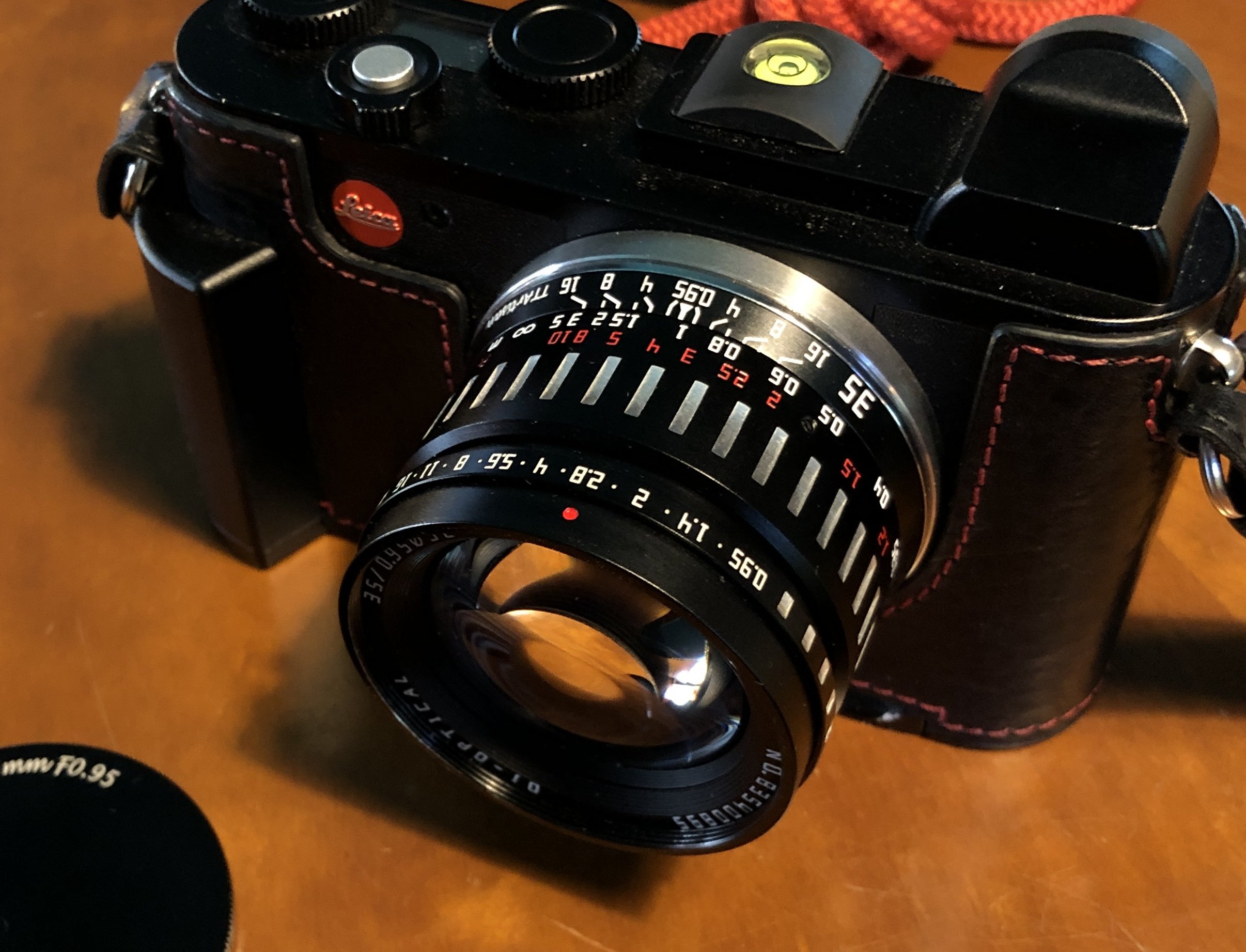
Lenses like the one above with it’s f0.95 maximum aperture can create an effect that nothing else can produce. The “Bokeh” or blurred out background is something that large apertures are well known for. The portrait below is a prime example of the feature. The background was probably 15 feet behind him when I shot this photo.

Primes lenses come into their own when it comes to vintage lenses too. This is where I have found my passion. The old Pentax glass along with the Nikon and early Canon stuff is all phenomenal. I do have some early Leica stuff but the Pentax / Asahi branded glass is just awesome. I also will try about anything to see what the photos are like as well. I have even adapted some glass that should not be able to be adapted like some Argus lenses. I documented that process on my YouTube channel if you want to see how I was able to make that work. Argus had a unusual way to drive the focus on the lens and it posed a challenge to get it to work.

One of my favorite vintage lens brands is Pentax and the Asahi Optical company.
With the advent of the mirrorless camera, we now have a flange distance that is conducive to adapting these vintage lenses to our cameras easily and the electronics in the camera make using these lenses even easier than ever as well. Things like focus magnification and focus peaking as well as exposure preview to see how the image will look before you press the shutter are great for coupling vintage primes to your new shiny mirrorless camera. Some even allow image stabilization via sensor stabilization so you even get that feature with vintage glass sometimes.
So if you have not used prime lenses in the past, I implore you to get a simple one, like the 50mm f1.8 on full frame (affectionately named the “nifty fifty”) or it’s APS-C little brother, the 35mm f1.8 DX (Nikon uses the term DX for their APS-C cameras) and put it on your hobby camera and leave it there for a month. It will either make you hate primes or fall in love with them. For me I got the 35mm f1.8, installed it on my Nikon D7000 and left it for almost a year without removing it. I really loved that lens.
So until next time, get your camera out and go take some photos with it!
Altering the world around us with strobes and a camera...

There is an alter ego that I have and sometimes I have to do things as this other person that dont seem quite so glamorous… This is the job of product photographer. I have a business that makes and sells little devices and I have to take photos of these for the website and then edit them to be “floating” on a white background. This is pretty standard stuff to be honest, not “cool” but still very much needed and important.

Anyway…I also get to do some of the social media photos and on occasion, I will go to the trouble of setting up a light and trying to make something artistic instead of the usual Instagram snapshot.
For product photos, I have bought some studio strobe kits from amazon and these run on wall power and have sync ports to fire them, they also sympathetically fire from a light sensor if you turn that feature on as well. Simple strobe with a power knob and you plug in a sync cable and plug that cable into your camera.
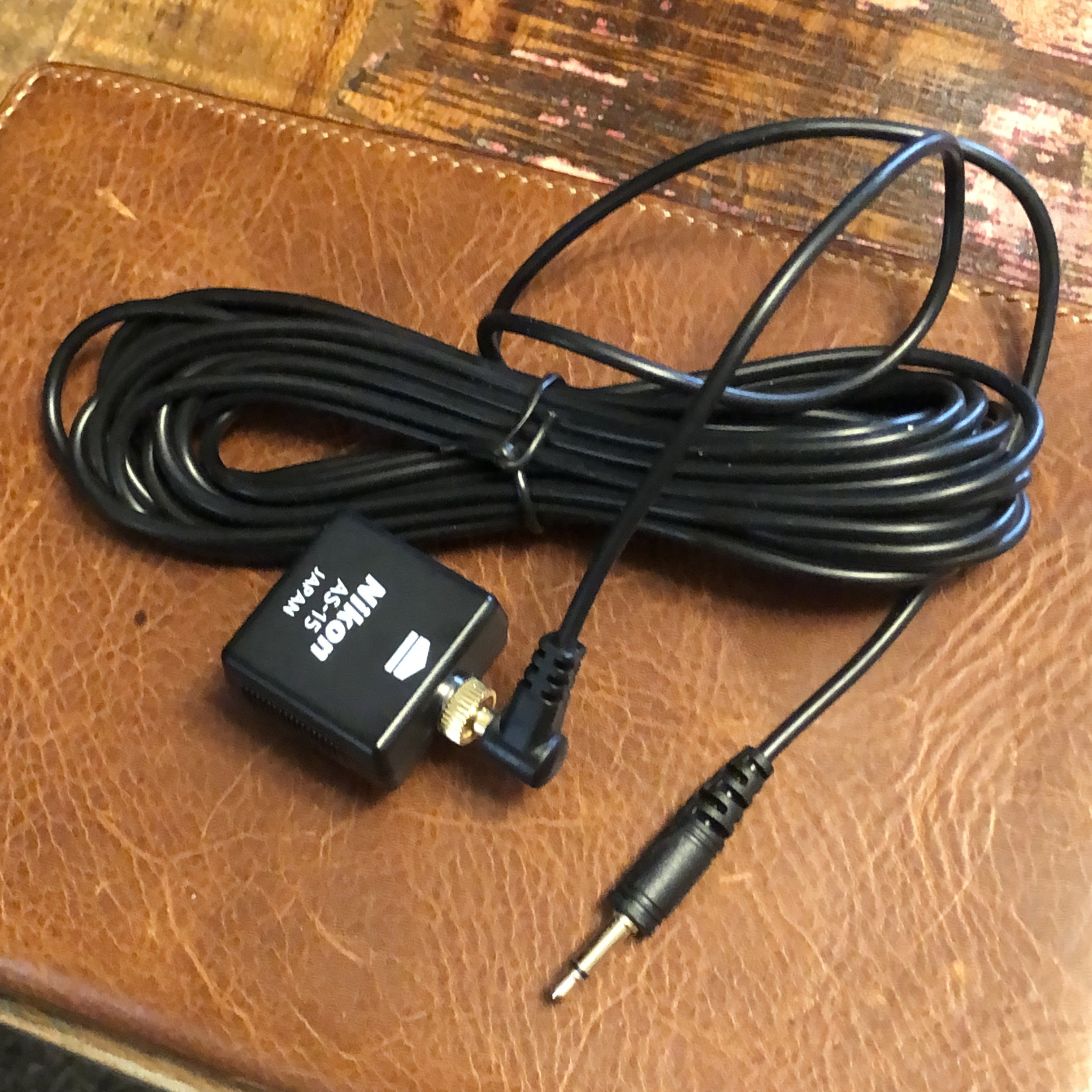
Your camera doesn’t have a sync port you say? No problem, I also use an adapter from Nikon to allow a sync cable to be connected to any camera with a hot shoe on it, which is almost all cameras. So if you want to use a studio strobe and it requires a sync cable, then fear not, I have a solution for you!

I really like to use the sync cable and wall powered strobes as I really dislike batteries and avoid them whenever possible. It just seems that EVERY SINGLE TIME I go to do something with my radio trigger (I have owned several pocket wizards in the past), they would be dead, needing charged batteries. This really is annoying in the commercial setting when time is of the essence and hunting batteries or having to charge them before I can do a project is frustrating to say the least. Hence the sync cable…not batteries and works EVERY TIME…

So this is the photo I got the other day. It was late morning and the machine shop was in full operation. Knowing what I know about strobes and aperture, it was a non-issue though.. I grabbed one of the lights and take it out to the shop floor and rig it to shine down from overhead. I am fortunate in the Sierra thought to grab a photo of the setup for me by the off chance she wanted to see what I got versus what she got. Sierra was blown away by the difference in our images, she had to have the one I captured to show her friends so they would understand why I had such a silly setup just for a photo! LOL.
I wanted a spot where the background was still fairly clear of clutter and we moved a couple of items out of the way to make it a cleaner “in camera” image, but for the most part, you will see in Sierra’s photo that the shop has a lot of stuff sitting everywhere.

To keep the light positioned like that, I just wedged the high leg under a rolling cart that is just outside of frame. This way I could get the light down low and parallel to the floor. This stand is budget and doesn’t have a feature to do this built in. Improvised and got the shot.
I laid down in the floor and manually focused a vintage 75-150mm Pentax zoom lens and got this SOOC photo. I did a few images at different flash powers to get the carbine exposed the way I wanted.

You can see the soft box in the top part of the photo, but since I was going to fade the background to black anyway, it is a non-issue. I next imported the image into GIMP and cropped it to get rid of the excess floor and ceiling, then just painted out the light that was left over. Simple as that. The next step was to take it into my phone and run it through an app I have there called Afterlight. This app allows for several adjustments that I enjoy using, but it also has a framing feature as well and that is my primary desire for the app, so I framed it and then put it on the Gram… Done. You cant see the frame on here because the background is white on this webpage, but on Instagram it shows up just fine, and gives it a very clean appearance.
My takeaway from this whole article is this: you are not tied to the light you see around you. If you have a strobe then all bets are off as to what you can do with your camera. Don’t let yourself get caught up in the mindset that you can only shoot “available light”, that limits you greatly. Build the light in the scene yourself and you will never be beholding to the sun again!
Now get your camera out and go take a picture with it!