This 21-Year-Old Nikon's Colors (Straight Out of Camera) Will Surprise You
Here is the scene… I'm standing in downtown Chattanooga with a camera that's older than some of the people that are reading this blog post. The Nikon D200 was introduced in 2005, which makes it 21 years old this year. And you know what? The colors coming straight out of this CCD sensor that is in this camera are better than what I get from most modern cameras without heavy editing.
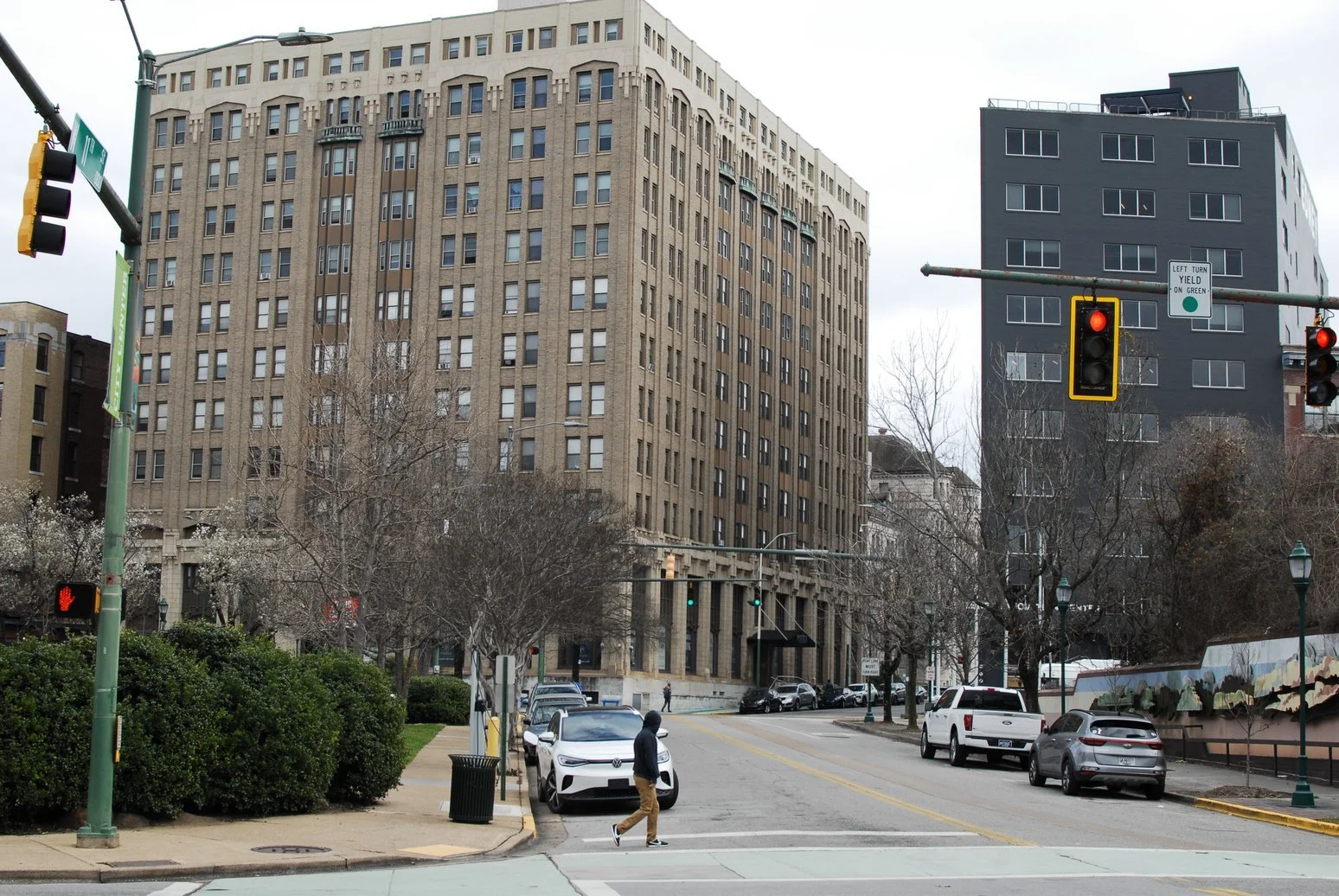
The richness of the Nikon D200 CCD Sensor color science is hard to dispute when the SOOC photos look like this.
Today I'm taking you on a photowalk through downtown Chattanooga to show you what this vintage DSLR can do, and more importantly, why CCD sensor cameras still have a magic that modern CMOS sensors just can't quite replicate.
The Setup: Simple and Effective
For this photowalk, I'm keeping everything as simple as possible:
Camera: Nikon D200 (CCD sensor, 10.2 megapixels) Lens: Nikon 35mm f/1.8 DX Settings: Aperture priority, ISO 640 fixed Focus: Back button focus, AF-C (continuous autofocus)
Why ISO 640? Because it's daytime, it's sunny, and with a CCD sensor, you want to keep that ISO low to get the best color rendition. The result? My shutter speed stays nice and high, and the colors are just incredible right out of camera.
The 35mm f/1.8 DX lens is compact, sharp, and on this DX body it gives me a perfect walk around focal length. This combination is light, fast, and honestly? It just feels right since it simulates 50mm on a full frame sensor
The Photowalk: Downtown Chattanooga
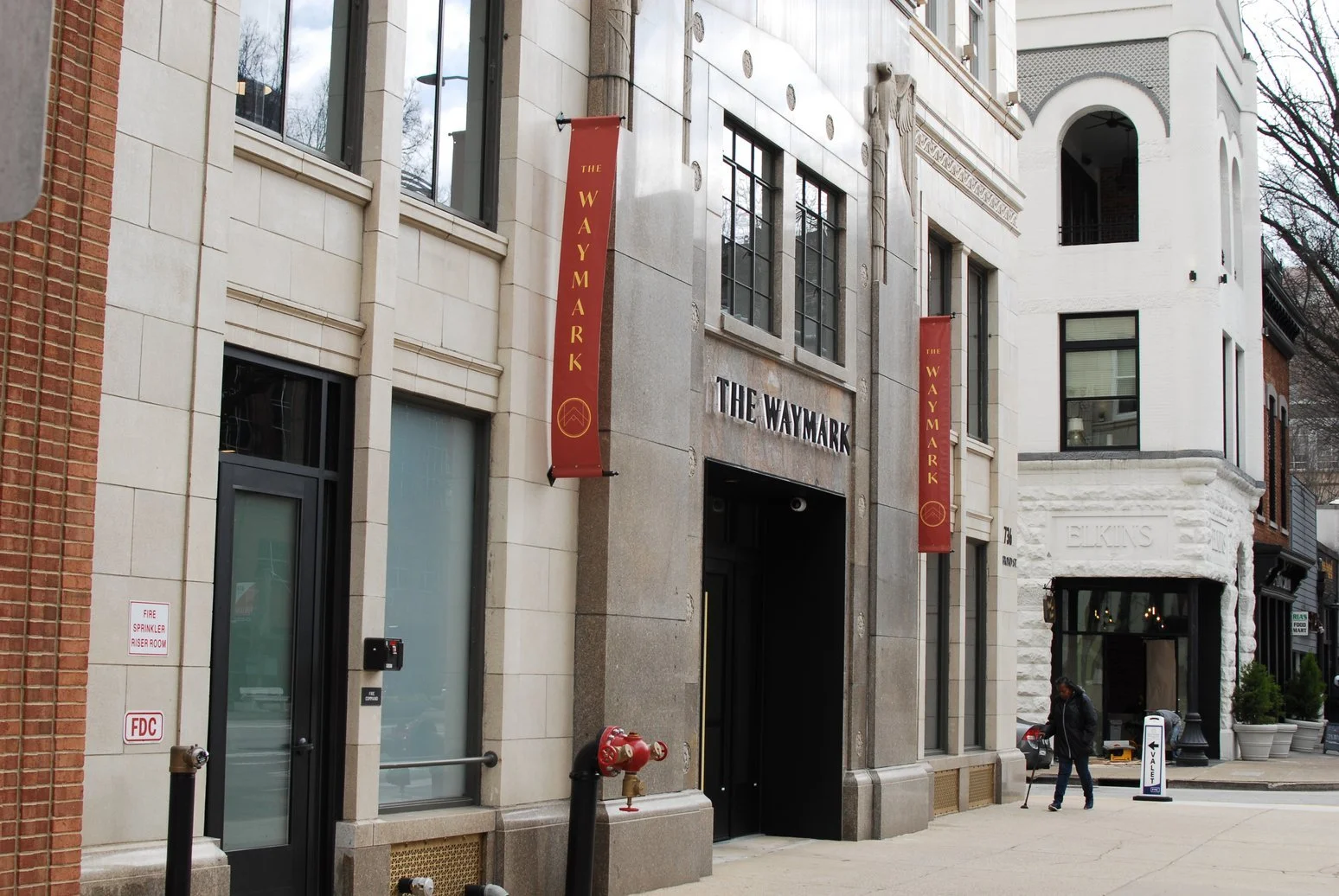
The vibrant colors coming out the Nikon D200 show up in SOOC images like this photo of the entrance to the newly opened Waymark Hotel.
I parked near the Waymark hotel (the old Chattanooga Bank building) and immediately noticed it's finished! When I left for Florida a while back, it was still under construction. Now it's open for business, people are working inside, and I walked through the lobby to check it out.
It's neat, though personally I think it's a little crowded with all the walls, partitions, and conference rooms they've put in. Looks like they're putting a restaurant in the corner where the old jewelry store used to be, but that piece isn't finished yet. Got a couple of photos of the outside with the D200, and the colors on that old brick and the new signage? Perfect straight out of camera.
The Trolley Barn Construction
Across the street from my vantage point, they're completely changing the landscape over where the trolley barn once stood. I mean, it's a canyon! They have completely removed the old structure and are drilling these massive holes in the ground for something. At first I thought they were drilling a well, that is what it looks like, but I'm pretty sure they're just putting in pylons to stabilize the soil or set up a foundation. Whatever they're building is going to have a serious basement for this new hotel!

The nikon D200 is quite possibly the perfect camera for outings such as this where you have no idea what you will encounter. Like this construction site!
I grabbed a couple of shots of the construction site. Now, construction photography isn't the most glamorous subject, but the way the D200 renders the earth tones, the machinery, the shadows in that hole...errr...basement area...haha. Well, you just don't get that from modern sensors without a lot of post-processing work. Hold that thought (like Hugh Brownstone would say)...
Walking Broad Street and Main
I made my way down Broad Street to the “Southside”, crossed around 13th or so, and headed down to Main. Between the TVA building and that stretch, it's kind of sameness honestly. Not a lot to photograph in that particular section, but I did graba shot of the TVA complex as it looked sort of like a liminal space or something.
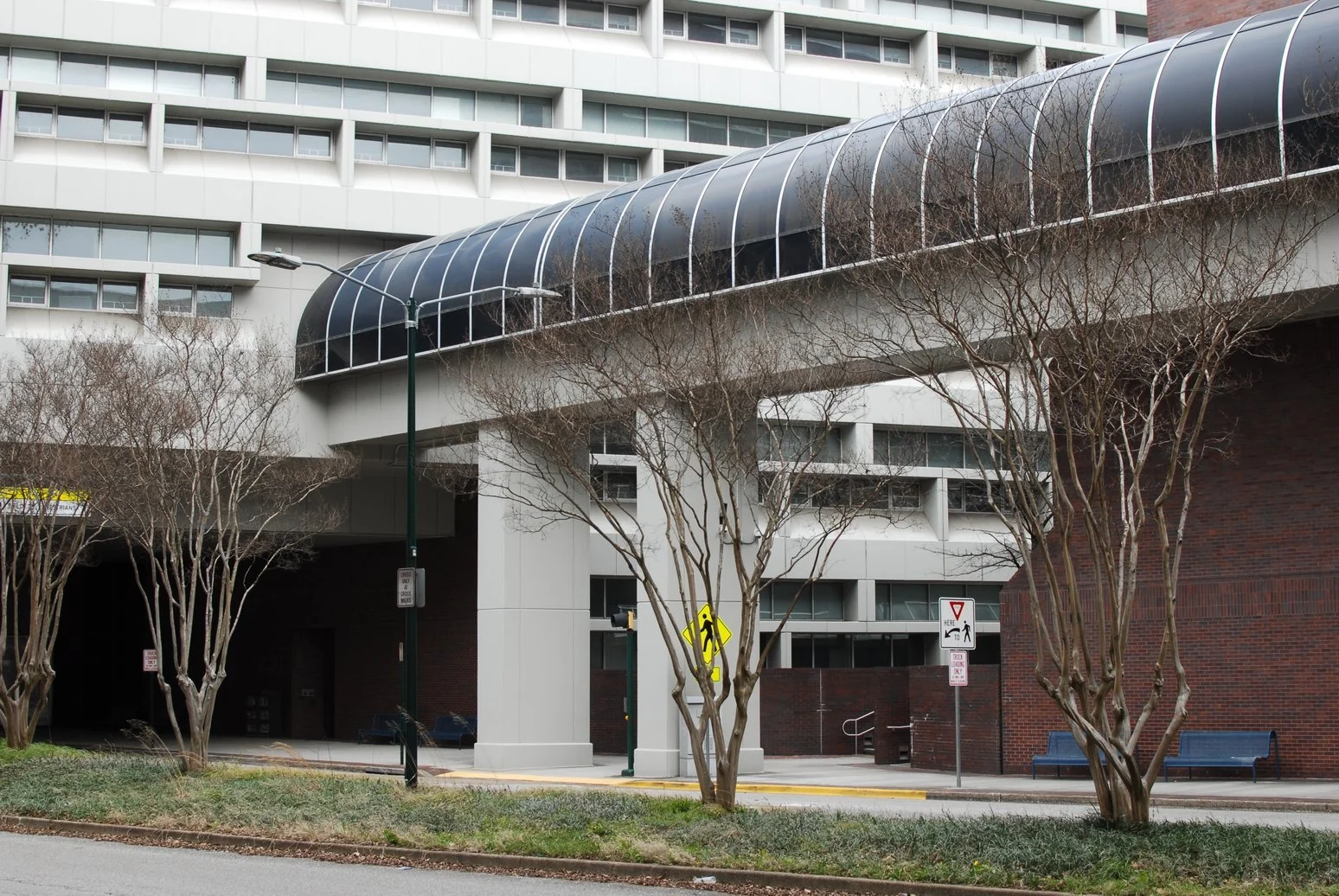
Urban outdoor liminal spaces are kinda hard to find, but I think this one fits. Shot on the Nikon D200 camera.
But once I got down to Main, things picked up. I stopped at an open-air building that was once a bank. The corner has the original bank logo still on it, and inside there's Blue Orleans restaurant, a barber shop, and a tattoo place down at the end of the hall.
The interesting thing about this building is it's open all the time. They can close the windows, but mostly it's just open to the street. It's got this great natural light coming through, and the D200 loves that kind of light. The dynamic range isn't huge on this old sensor, but when you expose it right? The colors are just gorgeous. Knowing that, you start looking for scenes that work for it.
The First Time for Everything
On my way back to Main street, I had a first. Usually when I hear sirens in downtown Chattanooga, it's a fire truck or an ambulance. But this time, it was something different, a police car came screaming through with lights and sirens going full tilt right by me. That was a first! He was in a huge hurry, wherever he was going.
I didn't get a photo of that moment, but I did get a good laugh out of it. If you watch my youtube video, you will see what I am talking about here...it never fails...lol.
Why CCD Sensors Are Special
Here's the thing people don't understand about CCD sensors: it's not about resolution or ISO performance or even sharpness. Modern CMOS sensors beat CCD in all those technical metrics.
But color? Color science? That's where CCD sensors and the supporting algorithm shine.
The way a CCD sensor renders color in the older Nikon cameras, especially in good light, is just different. It's smoother, more film-like, with better color separation. Reds are red, blues are blue, and skin tones are just beautiful without having to mess with them in post. Seriously, I rarely edit my D200 images at all, maybe the exposure is a little off for some reason and I need to correct that, but all the other stuff I never touch.
You don't need to do the "film look" editing dance that everyone does with modern cameras. You just shoot it, and the colors are already there. Straight out of camera.
The Colors That Made Me Fall in Love
When I get these files home and look at them on the computer, I'm always surprised by how good they look right out of the camera. The JPEGs from the D200 are perfectly usable for most things.
That brick red from old buildings. The warm tones in afternoon light. The way it handles shadows without turning them muddy. The color separation between similar tones. This is what I'm talking about when I say CCD magic.

Construction in progress on the Tivoli theater shot with the Nikon D200 camera.
Modern cameras give you more megapixels, better high ISO, faster autofocus, and video capabilities. But they don't give you these colors straight out of camera. You have to work for them in post-processing. Nikon knew something back in the day that they are not talking about now or have lost. The old engineers knew film, color film like Kodachrome and knew what people liked when it came to these film stocks so they built their color science around it. Now the new generation of photographers are wanting that color pallette again and this is pretty much the only place to find it.
The Reality Check: What This Camera Can't Do
Let me be honest about the limitations here, because I'm not going to pretend this is the perfect camera for everything:
High ISO is rough. Above ISO 800, you're going to see noise. A lot of noise. This is a camera for good light.
Autofocus is slow by modern standards. It works fine for my street photography and static subjects, but don't expect to track a bird in flight. That is a total no go with this machine… or your some sort of super human tracking machine, because the camera aint gonna do it!
10.2 megapixels is limiting if you need to crop heavily. Plan your compositions in-camera.
No video capabilities. This is a stills-only camera as it comes from the era when a camera like this was for photos and video cameras looked very different.
The LCD screen is tiny and low-resolution by today's standards. You're basically shooting and hoping until you get home to the computer. It is so low resolution that I use it to confirm the composition was right when I shot the image, but checking focus is laughable at best.
But you know what? None of that matters for what I was doing today(I didn’t even look at the screen on the back except to set the time. Walking around downtown Chattanooga, shooting architecture and street scenes in good light, this camera is more than enough. Actually, it's better than enough. It's perfect for this...for me.
The Shutter Count Question
When I got back to the truck, I mentioned I wanted to figure out how many shutter clicks this camera has on it. I've put several thousand on it since I've owned it, and I'm curious what the total count is. The D200 has a shutter rated for 100,000 actuations, and mechanically, this camera is in great shape. The count is a little over 33,000, which means this machine is essentially like new mechanically. The shutter still sounds crisp, the mirror slap is confident, and everything just works. They don't make them like this anymore, and I mean that literally. The build quality on the D200 is tank-like compared to most modern cameras.
Why I Keep Coming Back to This Camera
I own modern cameras. I've got mirrorless options. I've got cameras with better specs in every measurable way, some of which are quite costly.
But I keep coming back to the D200 for photowalks because of the experience. The colors are part of it, sure. But it's also the simplicity. The lack of distractions. The feeling of a real camera in your hands with real buttons and real dials.
When I'm shooting with the D200, I'm not checking the histogram every shot. I'm not chimping on the back screen. I'm not worried about whether I got the shot or not. I'm just shooting and trusting the camera to do what it does.
And what it does is give me beautiful photos with rich colors straight out of camera.

Ellis Resturant sign has become a local icon in the city of Chattanooga, shot with the Nikon D200 camera.
The Lesson: You Don't Need New Gear
Here's what I want you to take away from this: You can get really good photos from a camera with a CCD sensor, or to put it another way, a really old camera. They haven't made CCD sensors for new cameras in like 20 years!
If you've got an old DSLR sitting in a drawer somewhere (a Nikon D200, D2X, D70, Canon 5D, 20D, whatever), pull it out. Charge the battery (or order a new one from Amazon if your current battery is toast). Put a simple prime lens on it and go take some pictures.
I think you're going to be surprised by what you see. Especially the colors.
The camera companies want you to believe you need the latest and greatest gear to take good photos. But that's just not true. A 21-year-old camera can still produce images that will surprise you, especially if you're used to the over-processed, over-sharpened look of modern cameras “in camera” processing to get you the “straight out of camera” images. (iPhone I am looking at you...)
Final Thoughts

Market and MAin streets in Chattanooga Tn, shot with the Nikon D200 camera
This photowalk reminded me why I love photography in the first place. Not because of the gear, but because of the process. Walking around my city, seeing familiar places with fresh eyes, capturing moments and light and color.
The Nikon D200 helped me do that without getting in the way. The colors it gave me straight out of camera made editing basically unnecessary. And at the end of the day, I walked away with photos I'm proud of from a camera that's old enough to buy its own beer.
Well, if cameras could buy beer. You get what I mean...lol.
Thank you for coming along on this photowalk with me. If you've got an old camera sitting around, I challenge you to pull it out and give it a try. You might just fall in love with photography all over again.
Until next time, get your camera out and go take a picture with it!
Camera and Lens Details
Camera: Nikon D200
Released: 2005
Sensor: CCD, 10.2 megapixels, APS-C (DX format)
ISO Range: 100-1600 (extended to 3200)
Shutter: Rated for 100,000 actuations
Build: Professional magnesium alloy body
Current used price: $50-150 depending on condition
Lens: Nikon 35mm f/1.8G AF-S DX
Released: 2009
Focal length equivalent: 52.5mm on DX
Aperture: f/1.8-22
Weight: 7 oz (200g)
Current used price: $100-150
Settings Used:
Mode: Aperture priority (A)
ISO: 640 (fixed)
Focus: Back button focus, AF-C (continuous)
White balance: Auto (CCD sensors handle this well!)
Support this website by using these affiliate links to shop on Amazon:
Leica M11 Digital Rangefinder Camera
Nikon AF-S FX NIKKOR 105mm f/1.4E ED Lens
Voigtlander Nokton 35mm f/1.4 II
Sandisk 128GB Extreme Pro memory cards
Nikon 50mm f1.8 S Lens for Z mount
All photos in this post were shot with the Nikon D200 and 35mm f/1.8 DX lens. Colors are straight out of camera with minimal editing.