WK4DS Amateur Radio Blog
AAR from a couple of short activations
The last couple of days has actually been good for my radio habit…errrrr…hobby. Yeah, hobby… lol.

Both were at K-2169 as I am working towards getting 100 activations at this park and it is close to home as well, so I can go play with my radios fairly easily here too. The new part about this trip is that I went to a different part of the park, this section is on the east side of the park and is a trail head for mountain bikers and hikers mostly. I knew I was fully in the park when I saw the boundary sign at the entrance to the parking lot.

These two photos show how convenient it was to setup here. The first photo shows the view from the road in front of the park with the boundary sign out front. It also shows the yellow electric gate behind it as well. The next photo shows my truck parked in the corner of the lot with the yellow gate in the foreground. It was pretty busy here too, there was a lot of people out riding as it was a Sunday and the weather was perfect.

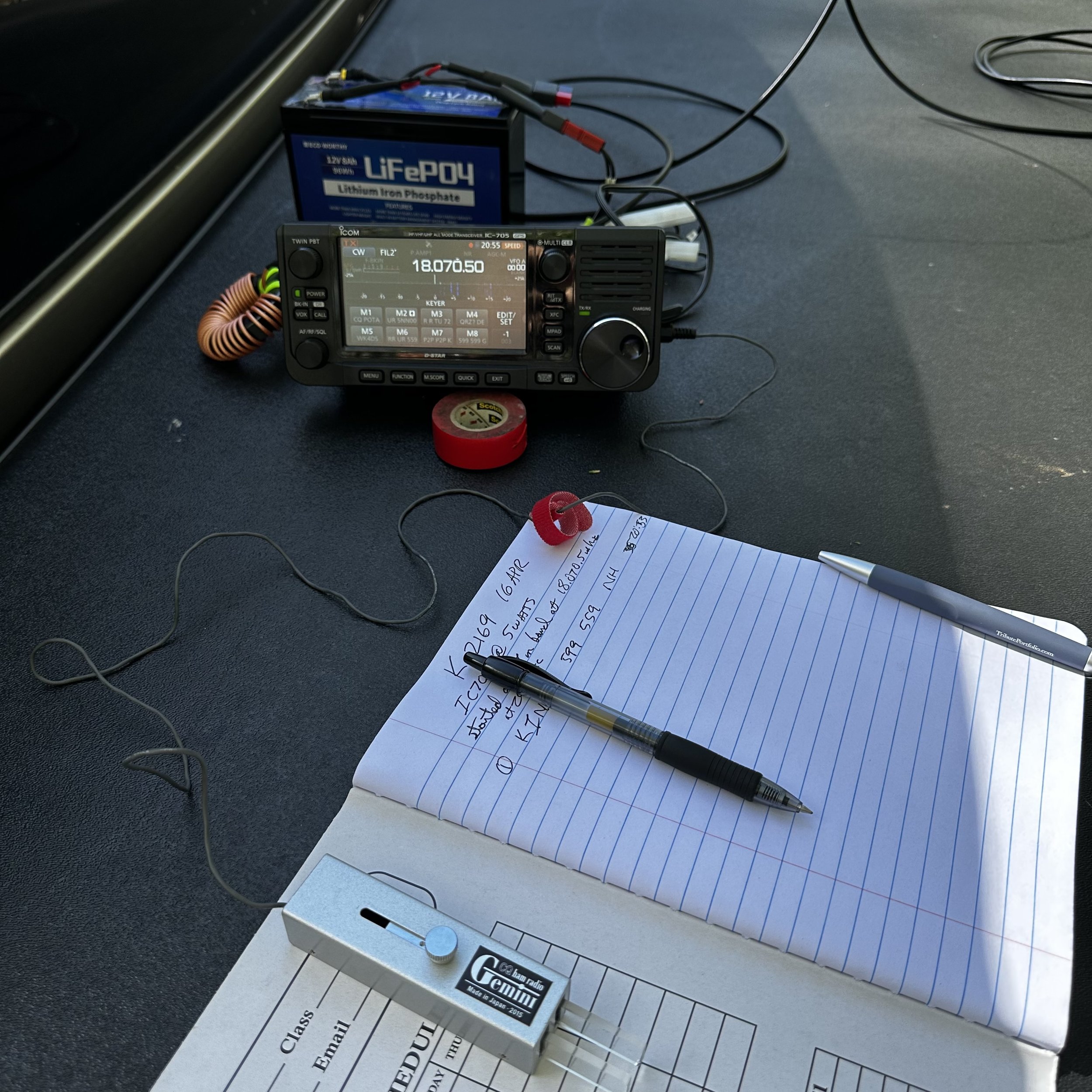
Here lately I have been using the Icom IC-705 QRP radio as it is easy to use, has memory keying and METERS! I can actually confirm the SWR is good before just trying to load it and hoping for the best. Also note the common mode choke too as well as the 8aH battery behind it, I have been using this battery since last summer and it works wonderfully. I can activate at least 3 times with it before even needing to be charged. That is incredible! One other thing about the IC-705 that I like is that it has an external speaker. That is nice if I can setup on the truck bed cover like I did here so I don’t have to mess with my headphones.
Below is a problem I have not had before. The antenna was in the tree branches and I am certain that it was killing my signals. I moved the whole truck forward 2 feet and got out of the branches and immediately started making contacts. So a note to myself is that I don’t need to let my hamsticks touch the tree limbs when I setup in a park…

17 meters has been crazy lately, as in this contact to Italy with 5 watts. I was weak to him, but he heard me! He probably had a tri-bander or a dedicated 17 meter Yagi pointed my way, but I don’t know…


Once I switched to 20 meters the signals were much stronger and I quickly secured the activation and was able to wrap it all up and be back on the road in just under an hour. Not bad for a guy with a few hamsticks and 5 watts of power…

The next activation happened 2 days later and this time I was also only able to stay for about an hour. So this time I wanted to see just how much I could trim off the setup and go full on minimalist with the activation this time. The weather was nice so I didn’t even have to run the coax into the cab of the truck. As you can see, this time I used the internal battery on the IC-705 as the radio will run 5 watts when using this battery anyway and it was super fast this way! I could have probably left the common mode choke off as well but I liked knowing it was there protecting the radio…

I bought a pack of various BNC adapters off of Amazon and here is the male to male coupler connecting the coax to the choke. This makes setup of the cable to the antenna a breeze.

Here is another time saving item I used today, instead of both radials, I used just one of them and stayed on 20 meters the whole time to eliminate the time needed for band changes. It seems to work at about 85% as good as both radials so it gets the job done but if I am not in a hurry I will deploy both radials as it just seems to work better.


All of the strike thru partial QSOs are from what I can only explain as strange band conditions. It was like the band would be fully turned on one minute then like a switch it was gone the next. I would try a bunch of times to get them back but finally figured out the band was dead to that area and had to move on. It was really strange how it kept happening too. I mean they would be LOUD and then gone… Most likely it was them listening for me as I was QRP and the reports are showing not so great reports when I did get contact. So I am guessing I just faded into the noise floor on their end to be perfectly honest about it.

All in all, it was still great to get a coup[le of activations in and have some fun on the air at the same time. Thanks for reading along about my exploits.
My 80th Activation of K-2169
This AAR is brought to you by… wait for it… me! Lol. But seriously, today is special for another reason or two, on this day I activated Cloudland Canyon State Park for the 80th time and I met another ham at my home park!


Today, once again I setup the truck in the lower lot like I did a while back as it is faster somewhat but also it has a different view as well. I normally don’t setup down here as I have had issues with electronic hash noise in this area (I am guessing it is coming from inverters in the campground just over the hill) so that is why I goto the top of the hill where the disc golfers are most of the time. The antenna situation today is as follows, I went ahead and installed all the radials at once as it was threatening to rain the whole time and would sprinkle on occasion during the activation regularly.
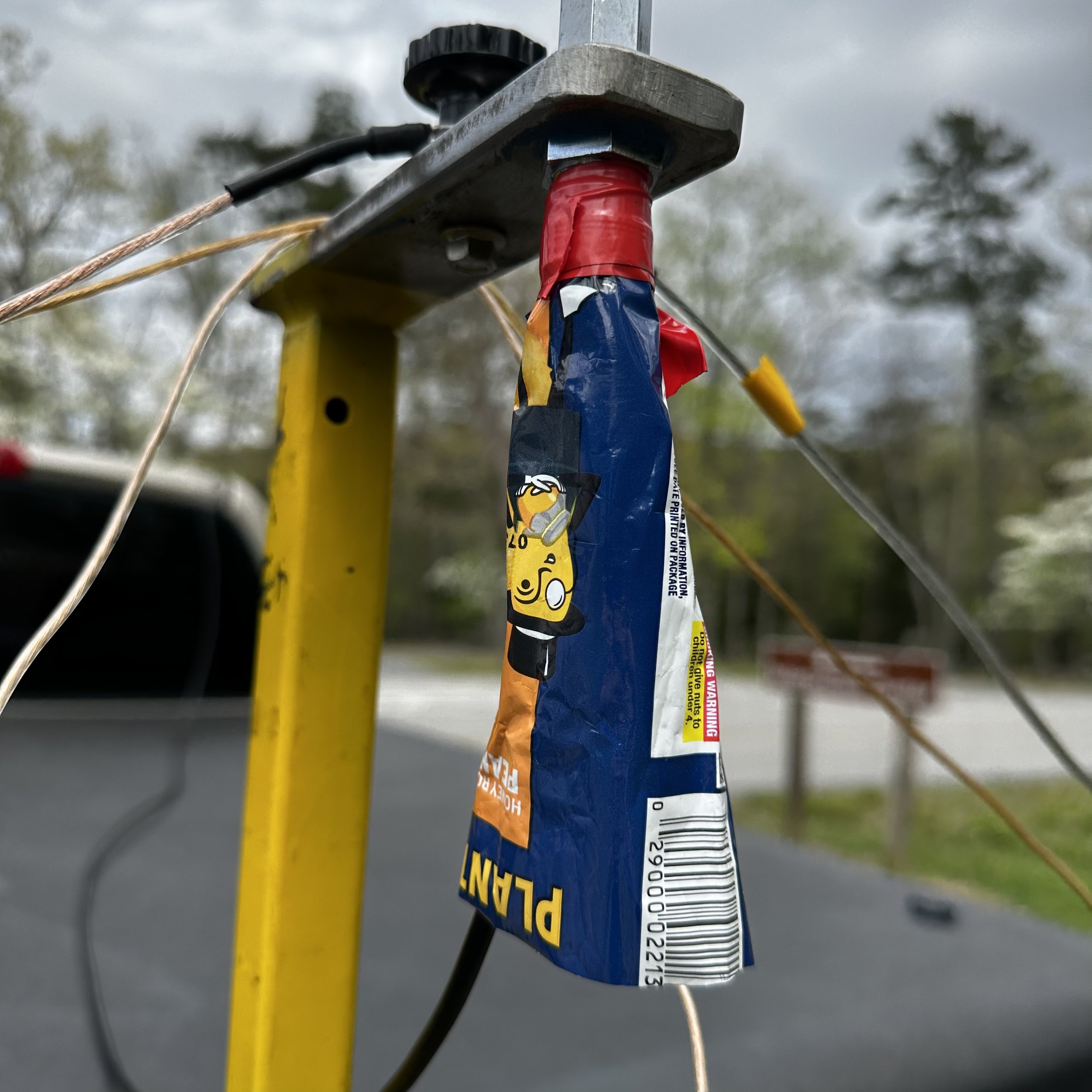
I also used my RG-316 coax today along with my rain proof “countermeasures” which consist of a peanut bag taped over the coax connector to keep it dry during the activation. This is a field expedient solve that also happens to be a way to recycle a common piece of trash that would otherwise end up in the landfill. I can even reuse the tape a couple of times if I am careful.
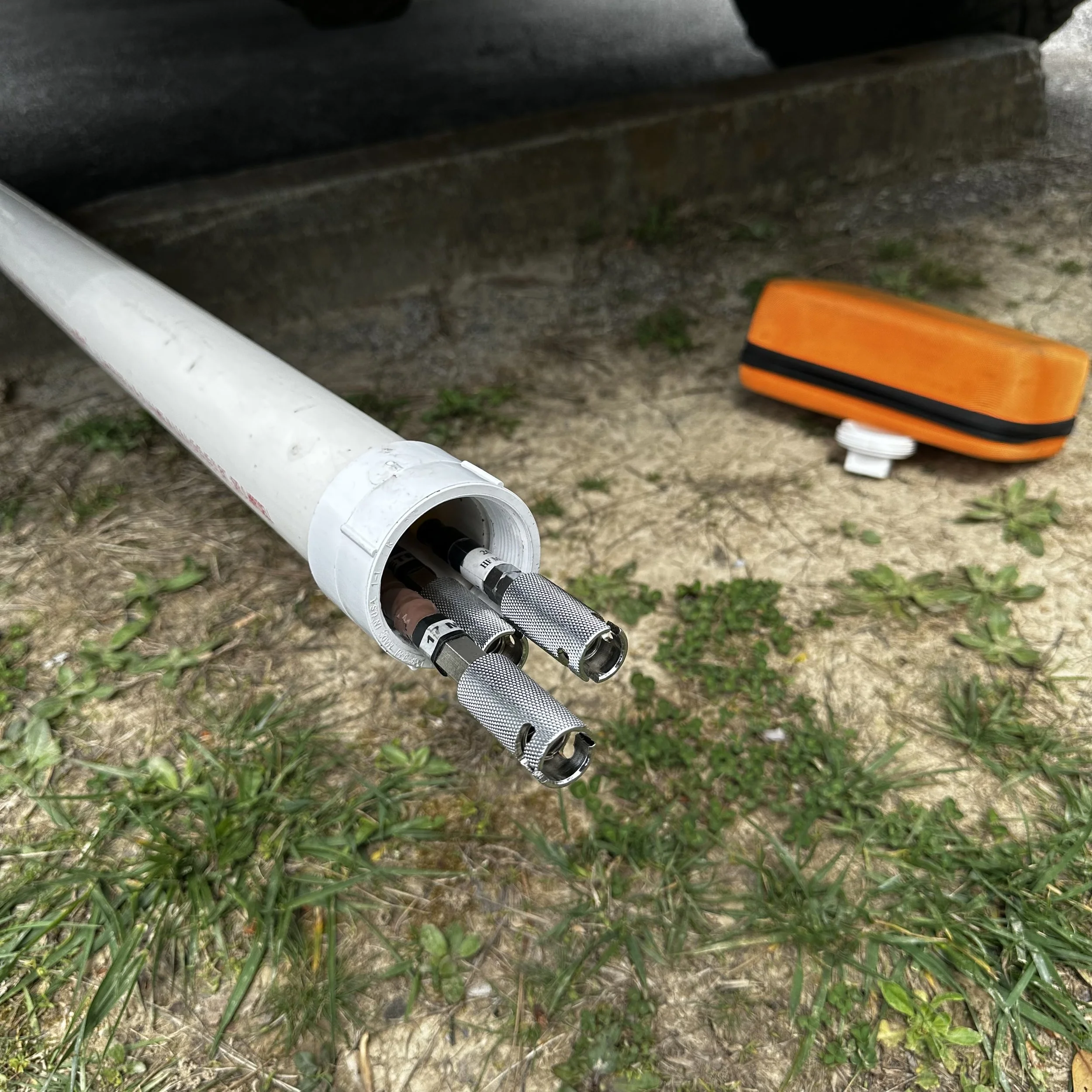
Since I connected all my radials today, I also tried to use the whole suite of antennas that I have currently. If you will look closely, you will se I also installed QD mounts on my hamsticks as well. This made band changes so much faster!
I figured I would start on 17 meters to see what I could hear up there. When I connected it and saw the radio, I had high hopes as the waterfall on the Icom IC-705 had several signals on it. Calling CQ almost immediately netted 2 dx contacts! I worked DL1AX in Germany and SP9RXP in Poland! Did I mention I am only using 5 watts?!?! SP9RXP is 5060 miles from K-2169 so that qualifies for the 1000 miles per watt award! One day I will actually apply for these… HIHI I attribute this entirely to the new common mode choke I made and was using and a nice little band opening that happened at the same time. The choke probably didn’t have much of an impact on this but I want to believe it did.

This choke works so much better than my other one that it isnt even a real comparison. It also seems to help with band noise, but that could just be me wanting to believe it does since I built it more than anything. I know it measures real good on the nanoVNA… lol
While I was on 20 meters this camper van rolls by real slow, I tend to get that a lot with all the radials and the hamstick on the back of the truck. Then the camper van stops right in front of me and the guy gets out and starts over my way. I also get this a lot as people are curious and want to know what I am doing. But then it takes a completely different direction when he says (I am paraphrasing a little here) “Are you doing Parks on the Air?” This caught me off guard as I had never had someone who knew what I was doing, actually ask me if that was what it was.

Turns out this camper was none other than W5DXQ on vacation! He is from Texas and is very active on the air using an assortment of modes. I was in the middle of a QSO so I asked him to let me clear it then we proceeded to talk for about 20 minutes about my rig and CW and digital modes and how he uses the spotter system and SSB and the list goes on and on. Meeting Jeff was the highlight of the activation…well that and working two dx stations right out of the gate on 17 meters… It was awesome to finally meet someone else who does POTA at a park. I am so glad he decided to stop and ask what I was doing. I hope to work him on the air at some point! Now the challenge for me is to meet someone actually activating like Jeff did when he found me today.
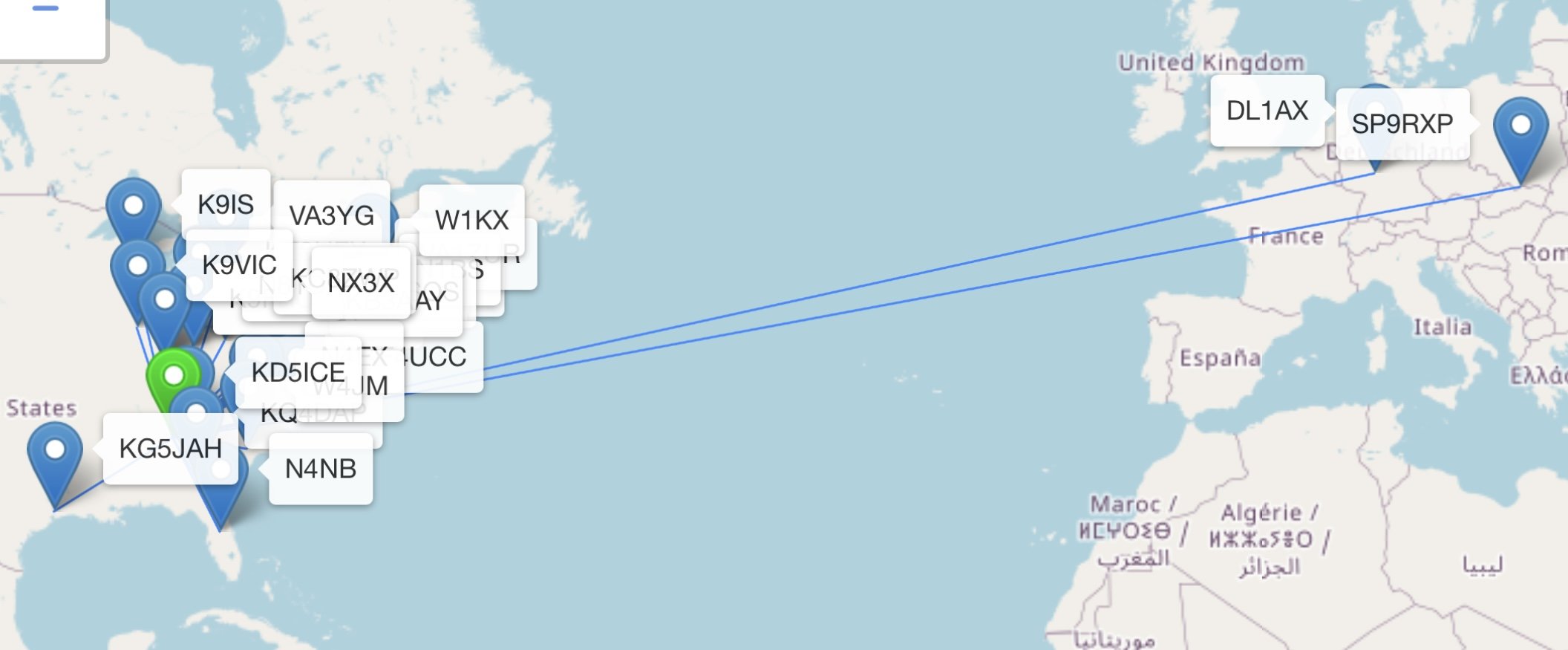

Once we finished our eyeball QSO he headed off on his adventure and I got back on the air. Looking at the QSO map, it looks really odd with the two european stations when compared to the North American dispersion that happened once the band opening closed on 17 meters. I normally net at least a few western states but today saw no one west of Texas.
As you can see from the logbook, today 30 and 20 meters were the bands to use but even then the reports were showing how the bands were fading in and out. I did make some contacts on all four bands though so I am super happy with that.


The peeps over at the POTA website even sent me this cool certificate to commemorate the 80th activation! Nice!

All in all, it was a great day for POTA. I hope to hear you on the air soon. 72 de WK4DS
One of the reasons I like POTA
The first picture is one of the main reasons I like POTA. Being out in the field with a portable radio and being able to make a reliable contact with it is just special to me.

The parking lot was almost full when I arrived and fortunately for me, the space I wanted was open! That is me all the way over to the left at the end of the row. The perfect spot to be if others are in the lot as there is no trail here so no one will be tripping over the antenna parts when the come and go.

Today I found I had about an hour of free time and the weather was perfect for a change so I gathered up the gear and went to K-2169 for a quick activation. Since the weather was so nice I opted to setup on the tailgate.
When I operate at home, I am in my “shack” which is actually a spare bedroom I have repurposed for my hobbies. That is the one thing I like and don’t like about it. It is indoors. I like it when it is raining or cold outside but I don’t like it when it’s nice weather outside. This is the biggest reason I like going to Field Day in June, that is second only to the camaraderie with the other people.

Today, since I wasn’t in my regular truck (I commandeered one of my shop trucks while they put new shoes on the dodge) I didnt have my usual antenna kit. So today I deployed the 41’ random wire antenna that I used in Hawaii. I also coupled it to my Icom IC-705 with the automatic antenna tuner as well. This makes band changes a breeze…

I threw a line over a tree beside the truck and pulled the wire up as high as I could and tied on a 13’ counterpoise. The tuner connects to the radio with two cables, a co-ax transmission line and a signal/control cable that is simple a 3.5mm stereo cable commonly referred to as a “AUX” cable. It has two AA batteries in it and works fine with these but if possible I will power it with the main battery I feed the radio with, so I also included a power cable in my harness I made up for it. This harness is 6’ long and allows me to connect random wires right to the tuner.

To lift the burden of the wire tension off of the tuner, I also have a small cord connected to the radio end of the 41’ wire so I can anchor it to something near the tuner. This works really well and keeps me from pulling the tuner off the table when something moves the wire like wind, squirrels or people which in turn would cause damage to my tuner.
Today was a pretty good day too, I got my activation in a fairly short amount of time, I was outside in the wonderful weather and I was able to just play radio a little while. That being said, I netted less than 20 QSOs today with signal reports showing I was not very strong…probably because the wire was poorly deployed and not even all the way.

The key of choice today was once again the Gemini I picked up off of eBay a while back. I have ran into two problems with it since getting it. I also use it a lot as it has a great feel and normally works very well. Issue number one is detailed in a previous blog post where I bumped the lever arms at some point and this shifted the action off center causing it to send dits nonstop. I dismantled the key and realigned the lever arms, which is really easy once you see what needs to be done. The second happened just the other day during an activation. I got all setup and started to call QRL and it was just sending trash. I couldn’t get it to send anything correctly at all, just a mess of dits and dahs with no coherent outcome. So I fell on the backup, the N6ARA key and it saved the day. Once back home, I took the key apart to find that the center ground post that the contacts touch when keying, had worked loose and it was about to fall out. It has one small screw that holds it on the base plate and I simply tightened this screw and it was back in business. The lesson here is to have a spare key with you…fortunately I had one and was able to get the activation.

Looking at the map, we can see how the radiation pattern started about 700 miles away probably due to my terrible antenna deployment, but people were still able to hear me so that is all that mattered. lol…

Do you have any tales from the outer planets that relate to anything like what has happened here? If so, let me know in the comments. I look forward to working all of you on the air at some point.
72 de WK4DS
So I have had this nagging thought about toroids.
I have wondered if the hype about certain “mixes” of core materials made THAT much of a difference in things like common mode chokes and such.
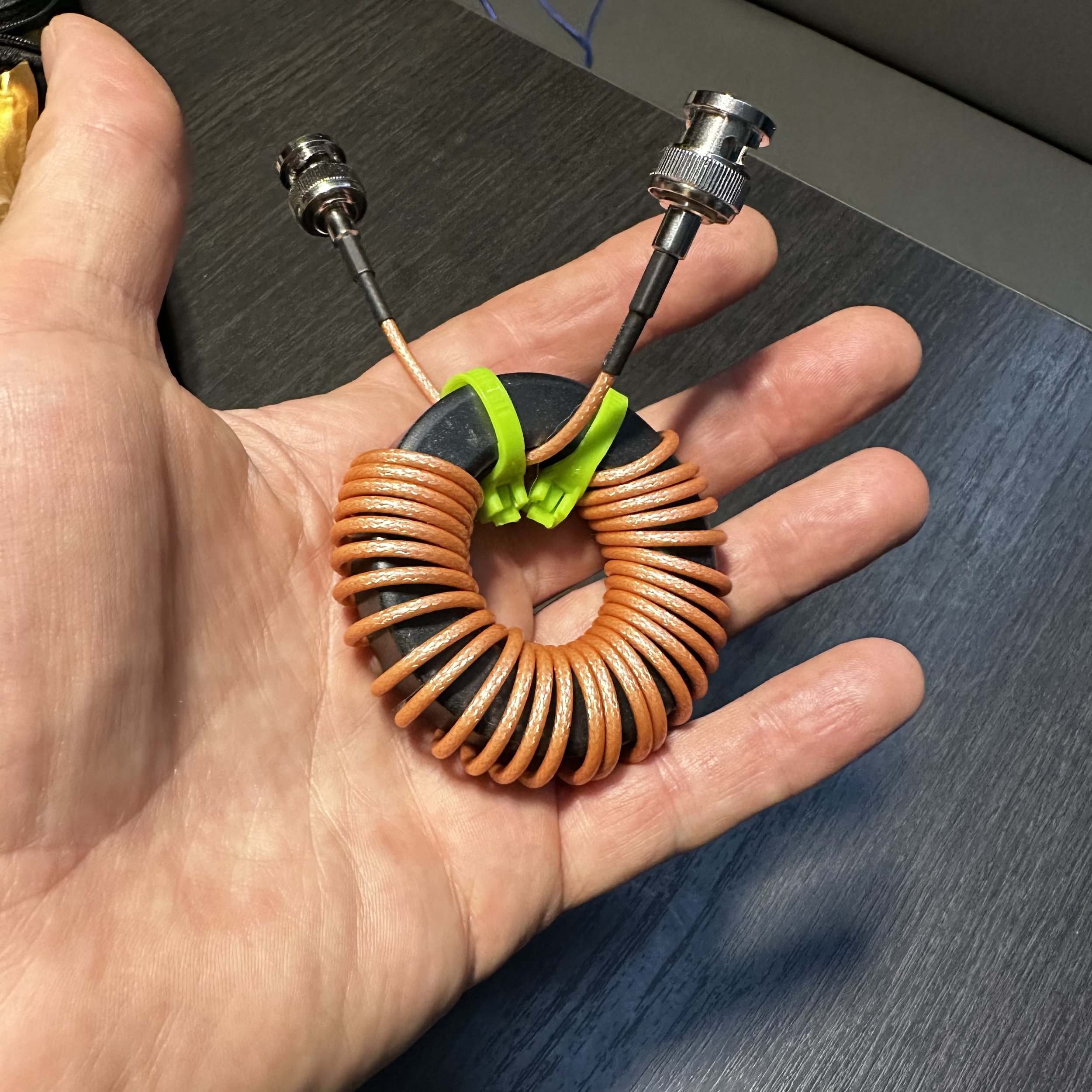
FT240-43 Ferrite Core
Well, it turns out, yes…it matters alot. Like more than you could imagine kinds of alot. Let me share my experiment numbers with you.

T130-2 Powdered Iron Core
So to do this test, I used my nanoVNA and the S21 input set to LOGMAG so I can measure the difference between port 0 and port 1 in dB. I also swept the entire HF band space to get points from 1.8 mhz up to 29.7 mhz.


Note this test isn’t to determine which setup is the better setup, (well maybe it is if I am being completely honest) but rather to see if there was enough of a difference to warrant getting the specific composition toroid. If you will notice, the ferrite choke is much larger, this is because I learned from my mistake with the powdered iron version I used in the beginning. I struggled to get 14 turns of RG174 through the powdered iron core so when I ordered the ferrite core, I made sure it was big enough. Lol. My QRP setup for POTA is not ultralight weight, super minimalist portable but rather a “drive the pickup truck to the park and setup near the truck” kind of portable. I also learned when the ferrite core arrived that it would hold quite a few more turns of coax. Well… following my “more is better” philosophy I figured out what length would basically fill the toroid and that turned out to be 6 feet of coax. Hence the ferrite core has 30 turns of RG 316 coax on it.


The next thing I needed was a way to actually test the common mode current suppression. You see common mode current flows on the outside of the coax shield only.
This in turn required me to make up a cable that would allow me to connect the coax shield of the choke to both the port 0 and the port 1 inputs on their center pins while coupling the input shields together from those ports.
Enter Youtube at this point on how to use the VNA to perform this test. Of course, the test isnt 100% accurate as I couldnt perform the calibration correctly with the built up cable installed, but it does give me a close approximation to the performance I can expect.
As you can see from the picture above I simple cut a short jumper in half, soldered the shields back together and then soldered the center conductors to the shields attachments of two BNC connectors so I can pass the test signal over the shield only of the cable under test. This works surprisingly well but it is fragile so at some point I plan to put this in a simple project box.

The first one to test was the powdered iron core, which is the one currently in use in my POTA kit. I had bought this core with not much though being put into it. An RF choke is an RF choke is an RF choke was the thought process here. So I added it to my coax and happily used it for a while but occasionally got unwanted dits and dahs on my code if the coax was near the key cable. I noticed I could simply reposition the coax and it would stop causing interference. This made me question the choke’s effectiveness and here we are now. The VNA is set to 10dB per division and the whole amateur band with 1.8 mhz on the left and 30 mhz on the right. To save you from squinting I made a chart at or close to the bands I use to see the relative suppression and it is below for this choke.

As you can see from the chart, it works really well on 17, 15 & 12 meters but not really well past those. I dont know why it produces a 54dB null on 15 meters but that is kinda awesome. The performance on 1.8 mhz though is abysmal and I am guessing this is why I was getting RF induced into the keying line on 40 meters with only 13dB of suppression. So then I put the new ferrite choke into circuit and the waveform and chart are below.


Holy moly what a difference! The first thing I noticed was how broadbanded it was and the next thing was how low the waveform was! The poorest performers were the high and low portions of 10 meters and they still almost made 30dB!!! Wow! That 80 meter null is phenomenal and has me wanting to try a hamstick on that band. So this simply proves conclusively that I am an idiot and should have listened to start with…
Following my idea of “more is better” I decided to couple both chokes in series to see if the deep null on 15 meters from the powdered iron core and the 80 meter null from the ferrite would simply “add” together for some sort of magical double dip monster choke.


Well…It didn’t go quite to plan. There are two distinct dips… Instead of adding the two plots, it seems to more have averaged them together. This result is kinda disappointing to be honest. I was hoping to get over 50dB on two bands, but so is life. I am sure there is solid math somewhere that explains this in detail, but I honestly don’t know it, this is why I like to experiment and tinker with things. I can still learn something even if I dont have all the background (like the math knowledge) for a given idea. Also a quick note, my note at the bottom is wrong as it improved 17 meters as well. But it was late and I was getting tired. Lol.
In conclusion, if you plan to make a common mode choke for your HF coax, use the 43 mix ferrite for good performance across the band. Also, I didn’t try varying the number of wraps either. This will change the performance characteristics of the choke as well, so at some point I will probably do that but for now, I will just get on the air with my new choke and be happy.
I hope this helps someone on their common mode choke journey and keeps them from having to learn the same things I did the hard way so until next time, get on the air!!!
My activation with 9/10th of a watt… on CW.
Today marks a new milestone for me. I did a complete POTA activation with less than 1 watt of transmitter power. This is only 18% of my normal power of 5 watts. The numbers seem impressive now but just wait.

I went to K-2169 to get a quick activation in before they closed the park gate as I had almost two hours of time to do it.
I have several things that would be considered road blocks to this being possible.
The first one is the power obviously. The second is I am running that power into a hamstick antenna, which is not known for there efficiency. Lastly I setup at the foot of a mountain, literally… so let’s see what happened.

Spoiler alert…it went really well. I did have a bit of a rocky start as I wanted to get on 40 meters first but no one was there from what I could tell. After a solid 5 minutes of calling CQ I got zero answers, so I checked the spot page and saw there was a bunch of activators on 20 meters, so I changed the antenna to 20 meters and got on there.
Things changed when I did this. My first contact was with Paul KJ7DT in Idaho! That is right at 1780 miles on 9/10ths of a watt! He even gave me a 559 report, which I couldn’t believe! Wow, this just might work!!!
Well, as you see in the logbook, it went surprisingly well and I was able to complete the activation and get back home well before dark too. This was a pleasant surprise to be honest about it. I have turned down my power before but never this much. Now, I am going to do a series of self challenges to see how low I can take the Icom IC-705 for output power and still get the activation.
There is an award from the QRP-ARCI called the 1000 miles per watt award. I won this award at least six times today (if I were to actually apply for it that is). That just boggles my mind. I think my furthest contact was VA7AQ in British Columbia at about 2120 miles. That comes out to 2355 miles per watt!!! That is crazy!!!


Radio waves are a strange thing sometimes. If the sun is cooperating and the earth is also happy, it is easy to get across oceans with just a watt or two of radiated power. I plan to test this theory more this summer as the solar cycle improves even more towards the maximum.
What really impressed me is with POTA you normally send more honest signal reports than in say a usual DX pile up or a contest. If you will notice, 20 meters was going strong at that moment and almost everyone was booming into my IC-705 in the rain that day. (I was inside the truck but it was raining). 9/10ths of one watt is what most hf rigs would consider the pre-amp stage. Lol. So the next time you have 100 watts and 2:1 SWR, dont sweat it too much, you still have something like 90+ times the radiated power I was using today. That should make you feel a little better about it. Haha. Until next time, warm up that atmosphere!!!
Addendum: Well I now have to get crazy low as Thomas (K4SWL) has a video where he activates with 100mW of output power… more to come…
Who owns a POTA “activation”?
Addendum: It seems a lot of people misunderstood what I was saying with this blog post and it subsequently hurt a lot of peoples feelings. I am sorry for that as all I wanted to do was shine the light on the hunters as well as the activators. But this seems to have missed the mark. If you are finding this for the first time, you have been warned…on with the article.
I have thought about this a lot lately. You hear people asking things like how to handle pile ups and what frequency to use and so on. The usual answer is along the lines of “it is your activation so do it how you like”.

The IC-705 makes a great QRP PTA radio.
I am going to go out on a limb and disagree here. You see, I am both an avid hunter and a frequent activator as well. So I can see both sides of the discussion with this issue. Having this perspective had given me a position that differs from the usual.
I see it like this, the activation belongs to both the activator AND the people hunting the activator. I do understand that the activator has the lion’s share of the work involved. They have to pack up the gear, travel to a park, setup the station, operate in less than ideal weather sometimes, then breakdown the station and pack it away and finally travel home and upload the logs so the hunters get credit for it. The hunter simply grabs a hot cup of coffee, walks into the shack, juices up the radio and calls the activator once he checks the spot page. Done. So I can see where the mindset comes from that the activator owns the event.
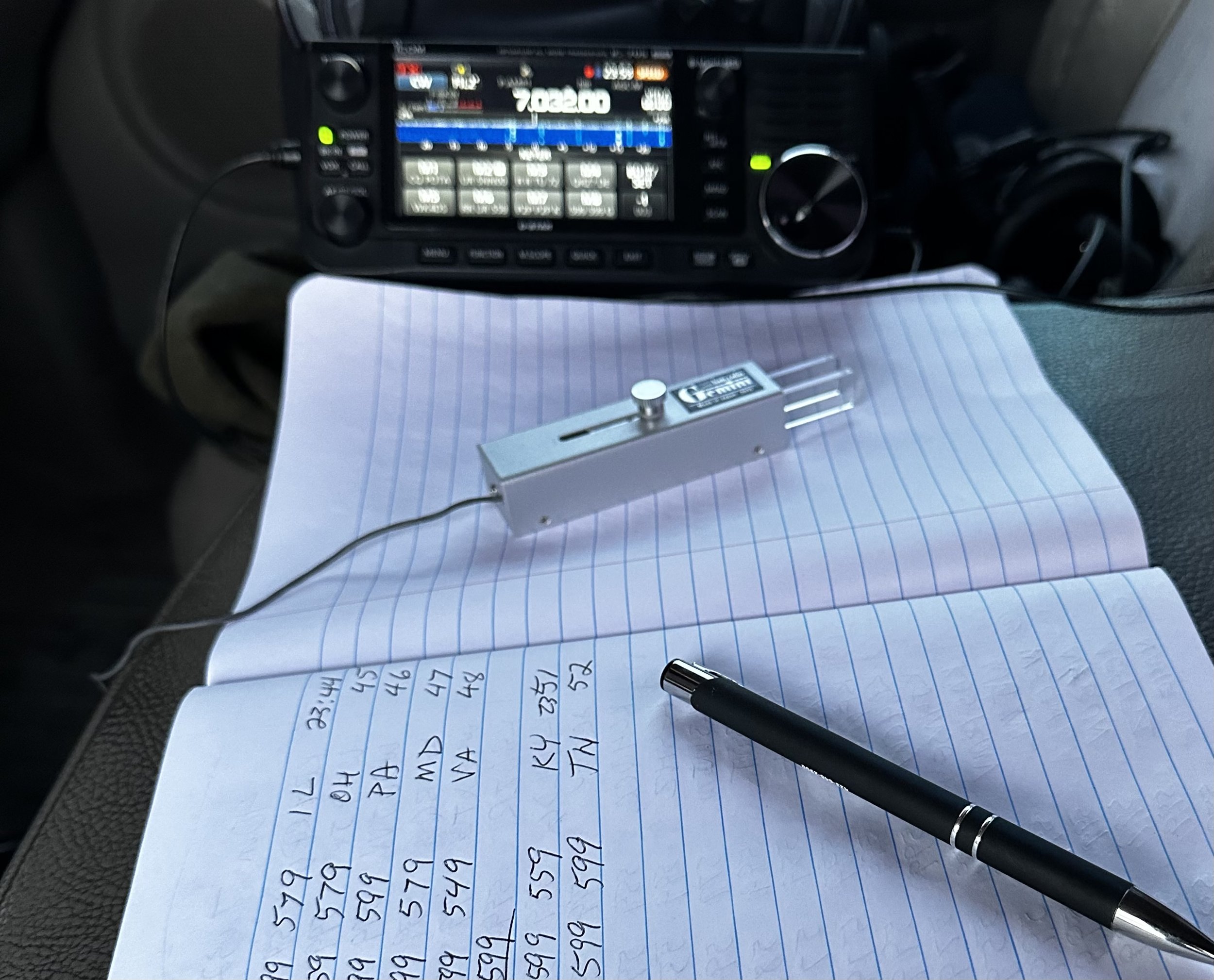
CW works surprisingly well for POTA activations.
I propose a different idea though. The activation wouldn’t be an “activation” without the hunters… except if there were enough park to park QSOs to get the minimum of ten. Which I normally dont have when I can go do an activation. So the activation hinges on the hunters answering my CQs. They comprise a full 50% of the QSO and are equally invested, as they might not be investing in field kit but instead they are giving me something much more valuable…their time. Each one of those people are willing to take their time and use it to make contact with me. The is huge in my book. Each person has a finite amount of time and we take this for granted for some reason.

My “hunter” station…
So if I have a big gun power through a bunch of weak signals, I work them. They have spent a considerable amount of time and resources to be able to do that. If I get a letter of a call before the “big gun” comes in over the little signal, I will ask the little signal to repeat. I am just saying, all of my hunters are valuable to me. I do my best to work all of them when I activate. That is why I worked over 100 QSOs the other day, I answered the calls till no one was left. We are all in this together and we are all valuable, so when it comes to the “activation” remember the hunters are spending their time to hunt you just as much as you are spending your time to be hunted.
I hope this helps some new ham with their POTA journey and we can get those calls in those logs!
72
David - WK4DS
A centurion style activation that almost didnt happen…
Here is the setup. I wanted to activate my local park after work and had a couple of hours to do so. I had a long day at work and then had some other stuff to do after that, but wanted to goto a park. We worked out the small stuff that needed doing right quick. This makes me think I don’t have time to get in an activation before dark, but Teresa assured me that I had time…how did she know??? LOL. I load up and ride over and find the frisbee golfers are few in number today so parking was easy. I grab my favorite spot at K-2169 and put up the 17m hamstick and get started… I was not ready for what was about to happen…

Here is the operating position for the afternoon. The cab of the truck works quite well of POTA. I figured out how to setup the Icom IC-705 so that it is out of the way, yet easy to work with by propping it on the bag that is sitting in the other seat. This works fine for solo ops, but will be a problem if someone goes with me.

I finally tried installing more than one set of radials at once this time and it worked! The SWR on 40 meters was pretty high at 2.3:1 but it worked fine as evidenced by the pages of QSOs I logged with it like this. I have done a lot of research and 2:1 SWR isn’t really a problem as much as some would think, it does loose efficiency, but not that much. So little that I ran this high SWR for over an hour and the radio was barely warm and it worked wonderfully well. I still need to make a set of dedicated 40 meter radials and a set of 15 meter radials now that I have the 15 meter stick…


So I get in a good spot and deploy the antenna system and this time I go ahead and rig the radials for 17, 20 & 40 meters (20 and 40 share radials) so all I needed to do was change radiators to change bands. The idea is that the rf will find the right antenna and radials and ignore the others and it does.
Side note: I am making a part to allow for 4 hamsticks to be mounted at once on the base so I will soon be able to just change bands on the radio without having to go outside of the truck. This system has proven itself viable for portable operations like this.

By the end of the activation, I had the place to myself. Well there was a herd of deer just out of camera shot that I saw when I left…
I started on 17 meters with the hopes of getting enough to have an official activation just on 17. It took me a few minutes to get going so to speak, but once it did, I had a constant stream of contacts. Finally it died down a little so then I switched over to 20 meters because this is where the “scores” can REALLY change, to borrow a line from some gameshow I used to watch. I think it was Jeopardy… but anyway, QSY to 20 meters…
Well, 20 meters DID NOT DISAPPOINT!!!! Holy Mackerel you guys brought your A game!!! I even worked a contact in France while on this band! I finally caught a lull after some kind of crazy nonstop run on 20 meters (something like over 40 contacts on 20 meters alone) and decided to QSY to 40 meters.

Here is where I didn’t really expect to get all that many calls as 40 meters is more localized for me with the hamstick antennas. I get the closer states more than anything else. Well, this didn’t seem to matter either as the calls started coming in! I worked something like 46 calls in a little over an hour on 40 meters before there was a lull so I could go QRT and pack it up. What a day!

The sheer density of the QSO map should say it all. Just crazy to me at how many people answered my little call that day. Some of these call signs have more than one contact too since they called me on multiple bands like KJ7DT did.

That is a lot of QSOs in one day for me! Thanks y’all!
Check out the log for this day, I have several ops that I worked on two bands as well. I love these kinds of days but to be honest, they are a little overwhelming when you are accustomed to making 15 to 20 QSOs in an outing…still it was awesome.


Just looking at the logbook shows that the bands were on fire and the ops knew it and got on! I have never had so much fun with a 5 watt radio that I can remember. I have only had one other outing where I got over 100 QSOs in one day so this is really special for me. Thank you all for replying to me and allowing me to have such a great day!
72
David - WK4DS
Today is the day I went roving in POTA parks.
The rover award is when you activate at least 5 parks in one UTC day.

My final location of the day, Booker T Washington State Park K-2933 and it worked wonderfully!
I have been interested in this whole “rover” thing for a while now. So I finally dug into the rules so I would know what is required and laid out a plan. I found 5 parks that I could access easily and set out a route to them and just loaded down the truck with gear in anticipation of needing backup stuff. I didnt need it, but I had it. Like what you see here is three radios. The TR-35 (which is what I used for most of the day), the Icom IC-705, and the Elecraft K1 makes for a strong QRP expedition.

Anyway, so I figure I would start with my local park since I know where the parking lot is and the proximity to the main road is really good. I chose the Sitton Gulch parking lot at the bottom of the mountain because of the main road noted above and the fact that I have had great luck here in the past.

I got the activation, plus a few more contacts than I needed, in about 20 minutes of air time. Not a bad start! Well, I got excited once I cleared the pileup and had the activation in the bag and completely forgot to get a photo of the truck here. I realized it at the next park… If you want to know what that looks like, just read this blog post K-2169 POTA Activation at the very foot of a MOUNTAIN - AAR. It has a few photos of this parking area and I was in that lot.
I wanted to make sure I had enough time to activate each of the five parks AND not leave people calling if at all possible. Since I am using QRP power, this should not be a problem though and I normally dont get more than four or five calling me at once with two being the norm for me. Basically, pile ups are small for me. So I wanted to shave time off of the other parts to leave more time for “ON AIR” activities. Below is a quick photo of the cab of the truck showing how I left the gear when changing parks.

I just left the TR-35 connected and laid it on the dash to where it would not slide off and broke down the antenna by just removing the hamstick and disconnecting the coax. Then I put the yellow mount with the radials still attached in the truck bed ever so carefully and rolled the coax into the back seat and I was off. This made park changes really fast since I was sticking with 20 meters for this trip as I had good confidence that I could get the activations with just that band pretty quickly.

The next stop was the Zahnd WMA, which to be honest, I had never heard of till I started looking at doing a Rover. It is literally next to the road so it was in and out with a cleared little pileup and on I went. Below is what the parking area at the WMA looks like, it is actually really nice for a WMA parking lot. I had the place to myself since nothing is in season right now. Something else of note is that when I was working the early parks, I would cross 10 QSOs and then once I worked all the callers, I would go QRT and move, but once I got K-0716 activated I started getting comfortable with achieving the goal and would call CQ longer. For now though, as you can see below, 10 contacts (and just a few more) and I was off to the next location.


So the next location was about 10 miles down the road. I have activated Otting WMA before so I knew what to expect when I got here. The parking are is also right by the highway (which is why I chose this route to be honest) so access time is minimal.


You will notice I back into the parking location as much as possible to get the antenna out of the way so people and pets do not wander into it while I am transmitting.

Deploying the system involves, backing into a location to get my antenna out of the way and then opening the bed cover, installing the yellow antenna mount, laying the two radials out, then screwing in the radiator. Next I open the rear truck door, grab the coax and plug it into the antenna mount. A couple minutes arranging the cab, while listening to the band for an opening then I spot myself on the website and were off to the races. Below is the info kiosk at Otting, all these WMAs seem to have one now which is nice so I can see if there is a managed hunt or what.

Something else I like about the rover idea is there is a lot of driving in the country here. I passed through the town of Menlo GA between parks 3&4 and stopped to grab a couple of photographs. Some with my camera and some with my phone. Small town America is cool…

So for my next stop, I went to the Chickamauga national military Park, which is K-0716 and set up in the parking lot of what is known as the “tower” by the locals. It is actually known as Wilder tower and is a really common attraction in the park.

I backed into the space, even though they are angled in such a way as to promote pulling into them so this took a minute, but that allowed me to spread my radials in the grass strip between the parking space and the road. I have found that getting the radials out of the way of other people so they don’t trip over them is critical and backing into the parking spaces normally allows this. Another thing of note is do not transmit when there are people that can touch the radials as even at QRP power levels, there is enough RF energy on the radials to shock someone ever so slightly so the smart thing to do is not transmit while people are around your antenna. I had to be very mindful of the other people in the park while I did this particular activation, as I did not set up in my usual spot where there are very few people. In hindsight, I should have just used the usual spot as it is out of the way, and most people do not ever bother going there. Another thing to note is that by this point in the trip, I had gotten good at setting up and breaking down the antenna and radio to move to the next park. I knew exactly what I needed to do to get the radio in a position to where I could just set it out of the way and move to the next location without having to do a bunch of unnecessary, connecting and reconnecting of wires.

Once I got to this park, I realized how much time I still had and I decided to work contacts for a little longer here. I still continued to use 20 meters only because I did not want to get too comfortable with band changes and getting out additional equipment until I got to the fifth park. This park was actually fairly busy with people coming to see the tower, jogging and walking their dogs. Seeing this helped me to decide to keep the extra gear put away as well and figured I would play with the other bands once I got to the last park. I also knew the area at the last park pretty well and knew I would not have to worry about kids and pets getting into my antenna there.

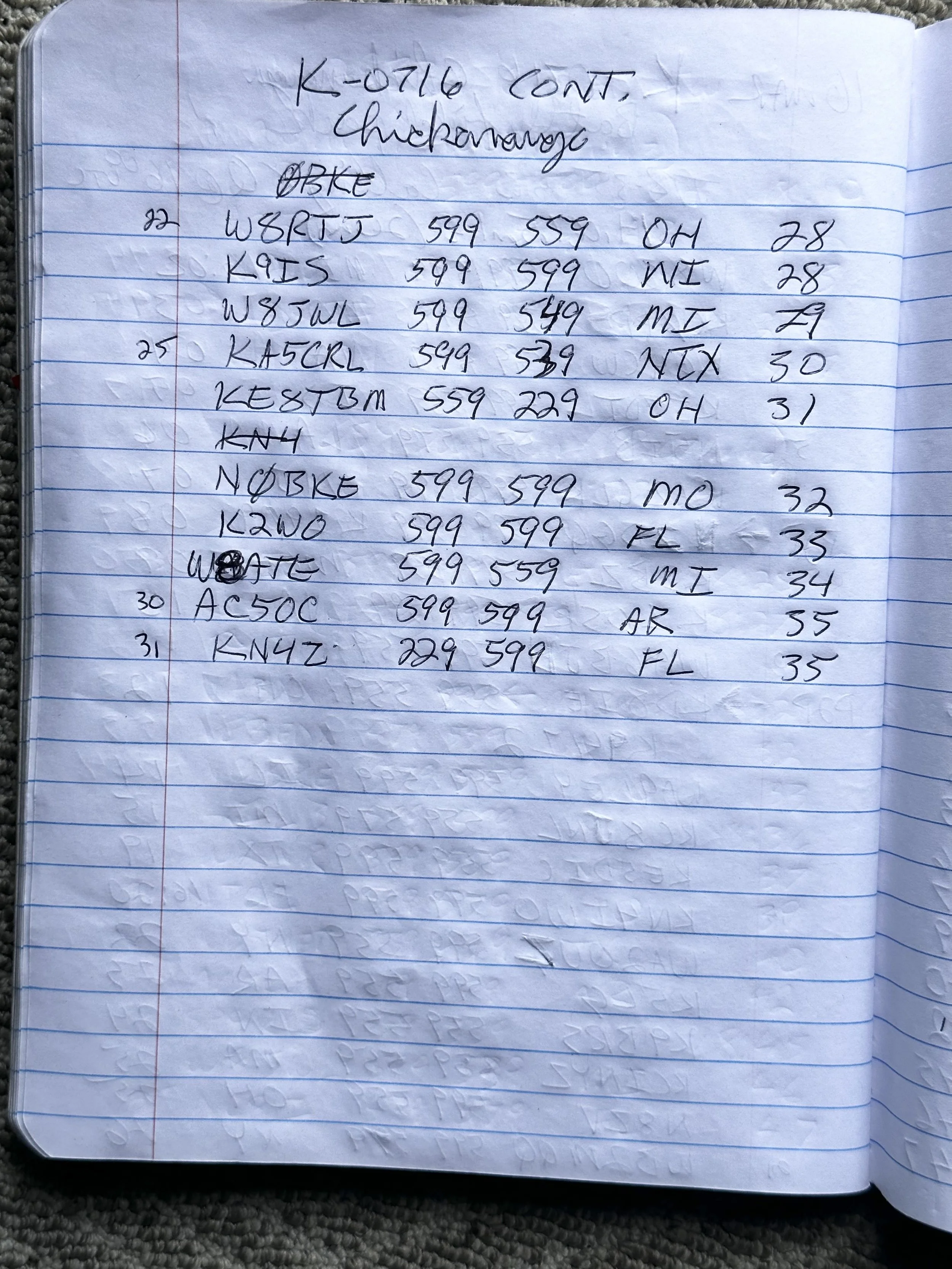
As you can see though, I had a good run of a little pileup and it took me about 35 minutes to clear it. Once it was clear and I took a call from Teresa to sort out some shop problems, I was off to the last park of the day, K-2933. This has been one of my easy parks that if I am in the north east portion of Chattanooga that I can get to and have a nice quiet activation. so I go by there every month or so. I will probably get my repeat offender award for it at some point this summer.

Here is the storage tube I put together out of 2” PVC pipe to keep my growing ham-stick collection from getting damaged when not in use. It was cheap and I didn’t even glue it together, just friction. It fits diagonally in the truck bed with almost not play so it doesn’t roll around at all. Currently I only have 4 ham-sticks in it so I have plenty of room. You can also see the spare radials for the other bands I used here today laying on the ground for band changes. Like a genius, I tuned each band with out the radials for the other bands on the base and to prevent me from having any sort of problems arising from tuned stuff in the area, I just used them like I tuned them. Of course this worked beautifully well, but it did add a little more work. I am going to make the antenna mount to where I can install four ham-sticks at once and since they have such great out of band rejections, the RF for each band should find the right antenna without having to change them out. I just need to put the whole thing together and tune it first.

Mu impromptu sunshade for the Icom IC-705 worked really well.
Another surprise for this trip was that I pressed the Icom IC-705 into service as I have not used it in a while and wanted to play with it some today. I had also brought the Elecraft K1, but just as backup incase the other two radios failed on me…lol. The IC-705 is touch screen technology so it is easy to do all sorts of things like band changes and sending from memory when calling CQ. Plus it has a built in speaker which is nice when there isn’t a lot of noise in the area. Headphones are great when I am alone, but it is hard to explain to a passerby what I am doing if they can not hear the radio too. This is one of the only oughts I have with the Penntek TR-35. It has no internal speaker…
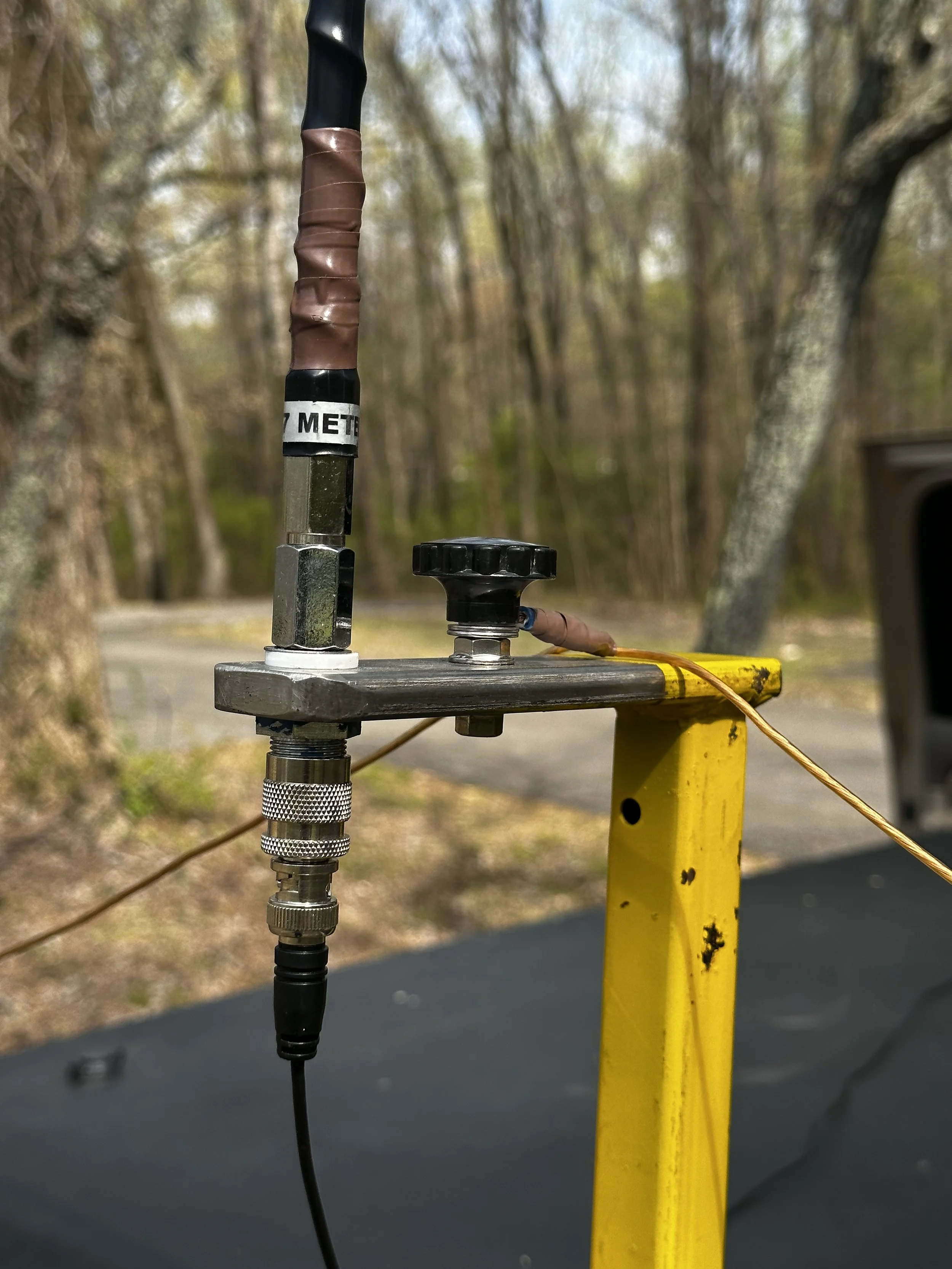
Here is your free tip of the day, most of you probably already know this, but some of you may not. Use colored phasing tape to color code your antenna and matching radials so you know which radials go with each ham-stick or what ever antenna you decide to use. This makes putting the right kit together a simple task instead of frustrating when the SWR is acting strange because you used the wrong radials with the vertical that you have on the mount.
Now as you can see below, I started on 30 meters. I ran into a problem here though, there was some sort of broadband QRM that was spaced in intervals across the whole band space. I finally found that 10.116mhz was fairly quiet and started calling. I got 4 answers before giving up to the QRM and moving to 20 meters where I had a great time free of this pesky QRM that was down on 30 meters. After a solid run of 18 contacts on 20 meters I figured I would give 17 meters a shot before calling it a day. I had somewhere I needed to be later so I had to pack it up by 19:00 UTC. Anyway, I do the band change to 17 meters and start calling. You can see in the log that it took me about 5 minutes to do the band change and get back on the air. This is why I laid all the stuff out like I did. I wanted to make it easy to do till I can get the multi antenna system done. Well I netted another 18 QSOs on 17 before having to go QRT for the day. Total for this park FOURTY in 1 hour and 20 minutes (80 minutes). I could have probably gotten more if I had not messed with the WARC bands and just stuck to 20 meters as it was going crazy. BUT where is the fun in that? I had the activation so why not play on the other bands a little since I have the stuff?


If you see your call in the log and want to swap QSL cards, I only do paper cards and I will respond to all that I get. This was a load of fun and I think next time I will take a helper to help with logging and band changes and stuff, I went solo today and it was … quiet… at times. This makes for a great times if you don’t mind the solitude, but for some it might be a problem. I was busy all day so it didn’t bother me in the slightest. Just be aware of that.
So till next time, get your radio out!!!
72
David WK4DS
A bunch of POTA activating in one day.
The sunspots were being nice to me today with my tiny ham radio and CW key…

The amateur radio of choice for today is the Penntek TR-35
Well I went to a bunch of parks today. It wasn’t planned, I just found myself in the right areas to be able to get to several parks in one day, so Carpe Diem! I found out later that I only needed two more to get a rover award so now it is on! The first level is 5 parks in one day. The goals go up from there to insane numbers of parks. I am convinced that at the peak levels, you have to operate mobile with vehicle mounted antennas. You just dont have time to activate 20, 25 or even 30 parks in a single day otherwise. It takes me ten minutes to get into the park, stopped and just get the antenna deployed then just as much time to break it down. So all that wasted time has to be eliminated. It would have to be a military style operation to be honest, having someone log for you too if you wanted it to go easily, but 5 or ten should be easy enough…right?
Back to what happened today…
I first made a short stop at my local haunt of K-2169 Cloudland canyon state park. Then I spent the mid day with the family and doing some chores. I wanted to get in an activation before I went to father/daughter brunch and was able to do that with ease. Unfortunately, I had to leave the activation before I wanted to, as there was a decent pile up going and I really don’t like to leave anyone hanging…but the kiddo was waiting for me so off I went.

This parking lot is literally at the bottom of the mountain.
I ended up at the foot of the mountain this time as it saved me a solid 20 minutes of driving by not going to the top of the mountain. This allowed me to stay on the air a little longer and added about 15 QSOs to the log because of it. Signals were strong even with the mountain right beside me. I was honestly impressed with how strong a lot of the ops were on my ham-stick. I used 20 meters as I wanted to be sure to secure the activation in the time frame I had, which was only about 30 minutes from the time I powered the radio on. This is why I didn’t goto the top of the mountain, the drive up there would have eaten all the operating time. As you can see though, the inbound signals were strong and I got a lot of good reports back as well. This location isn’t all that bad to be honest as long as there is room to deploy the counterpoise wires.


Later in the day, after brunch with Sierra (KK4RJW), I was near Harrison bay state park so I figured I would try to get another activation before the day drew to a close. (I was also working on a youtube video for my photography channel and wanted somewhere fairly quiet to record it and this sounded like a good spot). During the weekdays these parks are normally ghost towns and I usually have free reign of the place. This is why I like them for recording video content.


The park is home to a really nice marina and boat ramp and I chose to setup in the far corner of the parking lot where the boat trailers are parked. There was plenty of room here for my radials so no one even gave me a second look. I opted for the 17 meter band as I wanted to see what I could do with it and I wasn’t under the time constraints like I was earlier in the day.

I noticed a lot of these trees were blooming at this time too. I think these are called red bud trees, but to be honest, I am not sure. They sure were pretty though. So I thought I would grab a quick photo and add it to the blog for color.

Since I was wanting to record the footage for my video, I stopped calling CQ after I got 15 QSOs in the log. I always like to go over by a couple so that if I find out I copied a bad callsign, I still have enough for an activation. This one went a little slower since I did the whole thing on 17 meters and didn’t bother to change bands during the activation. You see, right now, to change bands involves me going to the rear of the truck and changing whip antennas as well as the counterpoise wires as these are all tuned independently. I will eventually build the mount that holds 2 or three of these at once (maybe all four) and I will retune the radials to work with all of it set up at once. I checked the ham-sticks and they have unreal selectivity with there being only one resonant null on the nanoVNA across the whole spectrum up to 30mhz. There aren’t even any harmonic bands, just the one they are tuned for.

Well on the way back from Harrison bay, I drove right past Booker T Washington state park…so I said to myself “Self, we should activate this one too” and with that I swung the truck around and went back to get 10 more contacts with the TR-35 and my newly minted ham-stick collection. Turns out this was a good call as you guys came in the clutch! Wow! FOURTY QSOs in short order!
I got there and setup near the playground on top of the hill. These are old campsite spaces that the park no longer uses for camping. The parking spaces are still paved and the grill is still at most of them so people still use the sites to do cookouts now. This in turn makes them perfect POTA parking spots as I spoke with the park ranger and he said it was perfectly fine to setup in these spaces and play radio anytime the park is open. As you can see below, it makes for a great location and there is plenty of room for the radials if I back into the space.

The radials dwarf the ham-stick antenna but the sure do work well.
This time I chose the 30 meter band to start with and then changed over to the 20 meter band to finish up as I was getting a lot of calls from this location. Doing the band change is not really that bad but it is slow enough to make you not want to do it a lot. I think the multi mount for the antennas will make this a great all day rig where I will setup for several hours and want all four bands.

Signals at Booker T Washington park were strong today!
I have figured out how to get the radio to rest on the dashboard of the truck so that I can free up more space on the armrest for the logbook. If fits here perfectly and allows me to connect the headphones and key with just the right amount of room on the wires. It also gets the VFO knob out of the way so I don’t bump it and push myself off of frequency (which I have done in the past). It is still in a location that I can access easily though for speed changes, memory access and such.

Below is my “POTA tote” that I was gifted at Christmas last December. It holds all my POTA stuff and a bunch of extra things too. The tote almost has two complete rigs in it at this point there is so much redundant gear in it. But it is convenient and I can just grab it and goto a park as the ham-sticks live in the truck full time now in a pvc storage tube I made for them (see photo below). I keep them, the trailer hitch mount and the radials all in the back of the truck together so they are ready to deploy when I arrive on location. Easy.


After a good little run of QSOs on 30 then another one on 20 meters, I cleared the pile up and called QRT to go find the wife and have some supper. Little did I know at the time, but I was over half way to a Rover accomplishment. I now know that I only needed two more parks to get the first level award in that and I already know which two I am going to use… LOL So next time I will get my 5 in one day.
Thanks for following along on my little CW adventure in ham radio. 72 WK4DS
A “quickie” POTA activation…lol
What happens when you plan to do something “right quick”? That’s right, it doesn’t happen like that at all. Haha.

I had about an hour of free time today between activities with the XYL and K-2169 was … technically… on the way to meet her, so LET’S POTA!
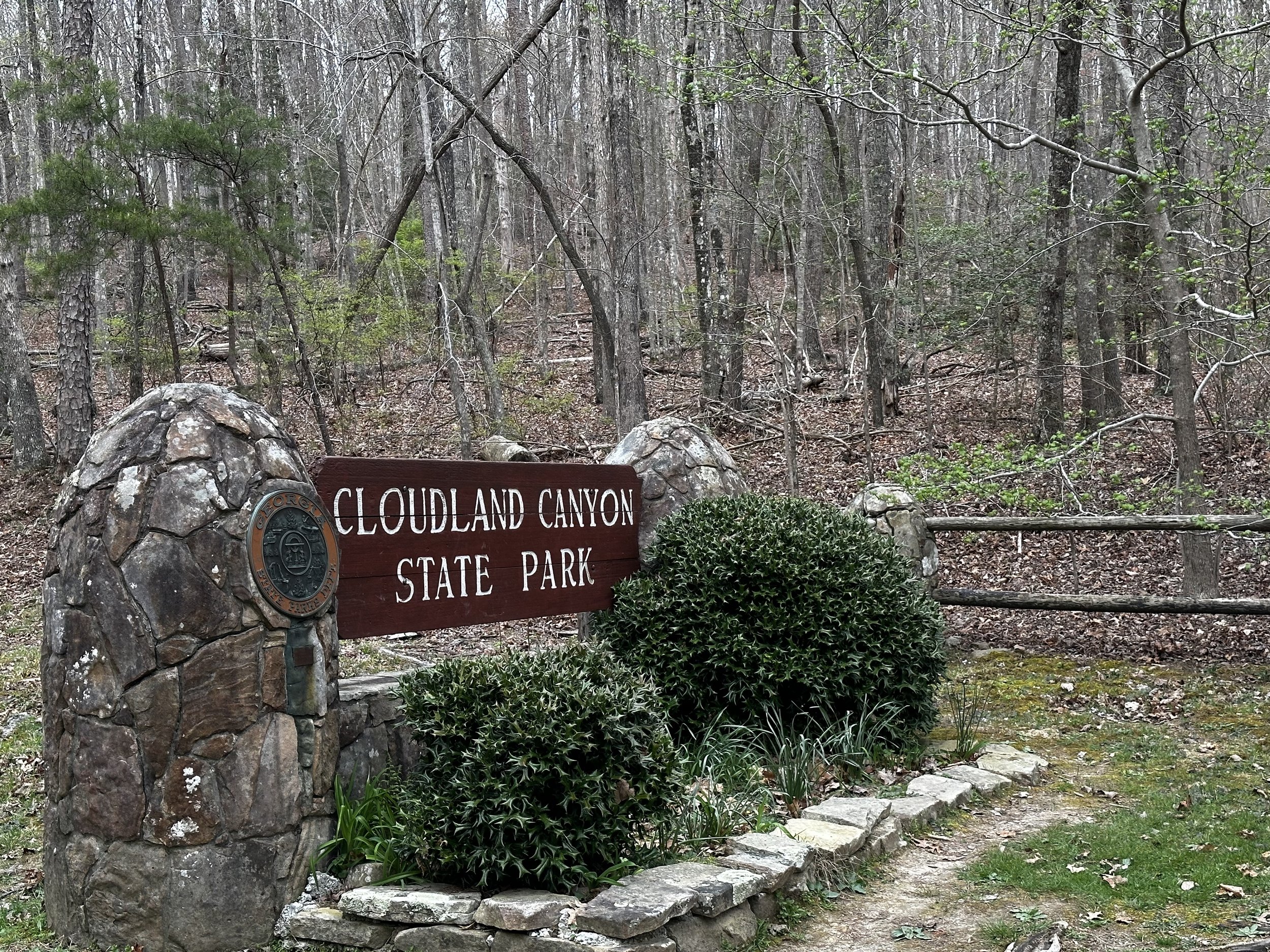
K-2169 Cloudland Canyon State Park is a 15 minute drive from my house so if you look at that park on the POTA site, you will find I go there a lot. Today, I wanted to get setup quicker than normal, which means I opted for the lower parking lot. This parking area is next to the canyon proper and is where I like to setup my wire antennas in the warmer months.

The lower lot was pretty sparse so I was able to get in a corner, out of the way, which also afforded me the ability to use the side of the truck to shade me from the setting sun. I grabbed a camp chair out of the back of the truck, threw up the 17m hamstick and got on the air. The truck tire made the perfect “table” for the Penntek TR-35 QRP radio too. I used the battery to tie down the coax so it would not slide off the truck and pile up on me (like it did right before I sat the battery on it) and made the station nice and tidy.

I started on 17m calling CQ as I heard quite a few stations having QSOs. After calling CQ for a few minutes I got an answer from NA7C in Utah and then a little later KJ7DT came in strong as well from Idaho. But then I called for a long time with nothing coming back so I decided to change bands and see if I could finish up on 20 meters.

Once on 20 meters, I found a clear spot and started calling CQ again. Just a moment later KJ7DT came back again! This time even stronger!!! Idaho was booming into Georgia today. That gave me hope! So I worked Paul leisurely, as he was the only one to answer my call, and then cleared him to find myself in a ginormous pileup! Where did everybody come from!?!?!? Good Lord I had trouble pulling out single stations. I have never really had to deal with a legit pileup before. Oh sure, I have had 4 or 5 stations call at once but this sounded like 20 or 30! I start plucking out callsigns and in the process of the next 38 minutes I put 38 QSOs in the log. That has to be some sort of a record for me!

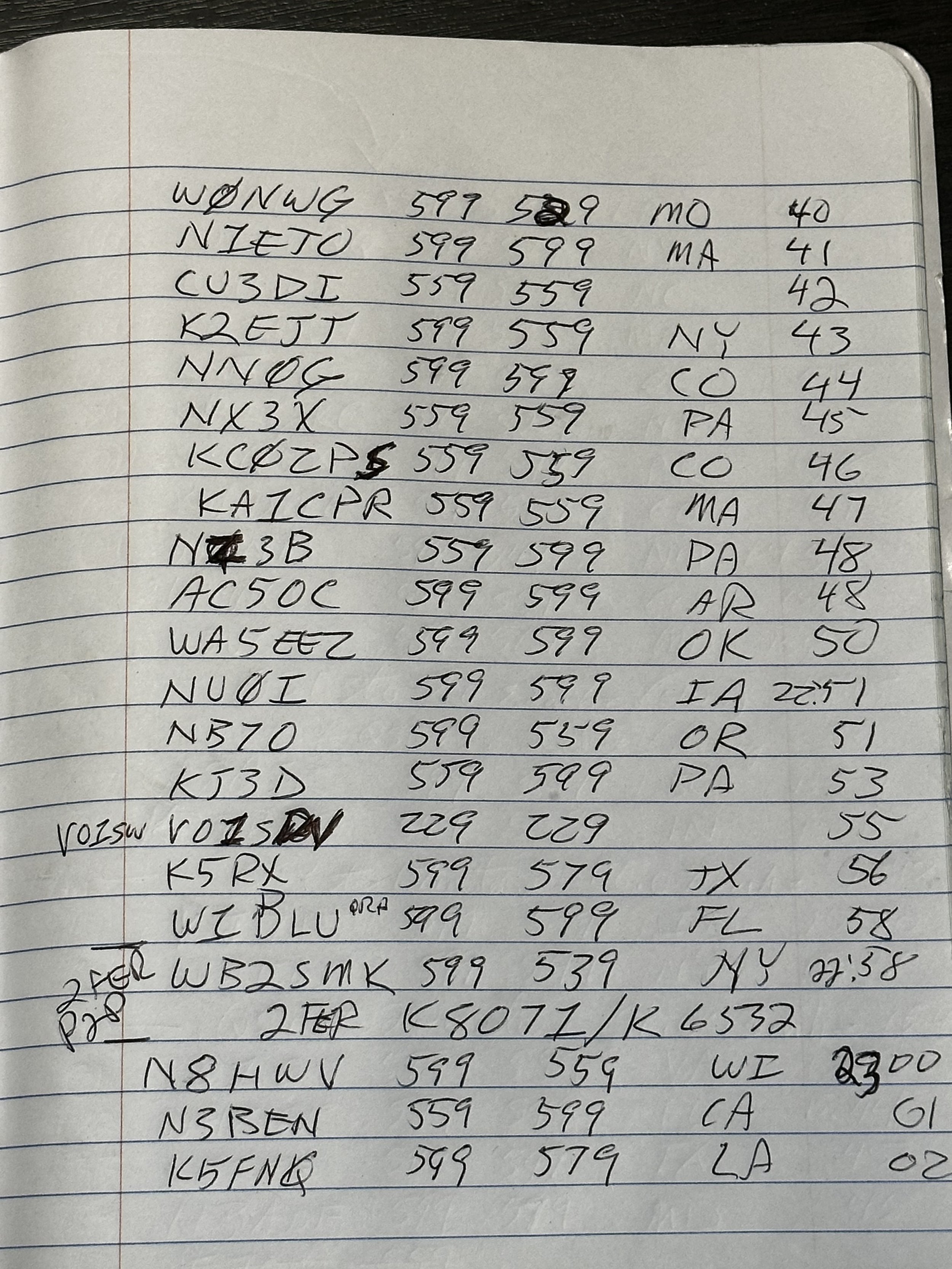
Some items of note from today that I found interesting were that I worked KJ7DT back to back on two bands without coordinating that with him, then I ended up working three DX stations today with one of those being DL1AX in Germany, another was VO1SW in Canada and finally CU3DI in the Azores! I even worked a Park to Park for a 2Fer! Sweet! Speaking of sweet, the dogwood trees are in full bloom as well making for a beautiful scene on top of a 40 QSO run on my tiny little QRP radio in just under an hour and that includes an antenna change!

Check out the QSO map I got from the HAMRS app showing the spread. Side note about HAMRS, if the op isn’t found in the Hamdb database, then search them on QRZ and get their grid square and add it to the QSO info if you want them to show up on the QSO map. This is how I get non-POTA ops to show up.


Here is the USA map without the tags so you can see the radiation dispersion of my 5 watts and a hamstick antenna.

I think that I could have most likely worked most of these ops today with SSB and it would have been successful. 20 meters was that strong today. This comes on the heels of the previous evening where I worked Ian in New Zealand on 10 meters via greyline! This has been a good 24 hours for radio! Confirmed via QRZ in real time no less! I am sending him a real QSL card anyway but that always gets me excited. It isn’t everyday that I can even hear New Zealand on 10 meters much less them hear me.

Here is another tidbit about me. If at all possible, I will always clear the pileup before going QRT as I know some of them are needing my park for one of their goals and if I can help them with their goal, whatever it might be, I want to do that. I had not initially planned on staying for an hour but it was so rewarding that I just couldn’t power down the rig. Lol
Today was a pleasant surprise and I look forward to more like it in the future.
72 and I hope to hear you on the radio!
de WK4DS
Activating an Off-road Vehicle Area is not always a great idea.
Sometimes things look better on paper…
But in execution, they are not a great ideas.
This is the story of me (WK4DS) at K-5493 Franklin-Marion State Forest.

On my way over to the park, I passed through South Pittsburg, Tennessee to shoot a little photography first since it was on the way to the top of the mountain to do an activation…
When I arrived at the park location I liked, it was perfect weather and quiet and as you see from the photo, I had the place all to myself. Well, that changed in about 15 minutes from the time I took this photo. You see, this “park” on the POTA map is actually a state forest with OHV trails on it. I parked in a clearing that is about 100 yards off of the paved road and is next to an old forest service fire tower. The luxury to this site is that it is literally on top of the mountain and 100 yards of gravel road from the pavement. So I have a great elevation profile because of that and easy access to a good site.

This is an old forest service fire tower. It was on the other side of the clearing and is so old that it had trees growing through the framework and the building at the top had no floor in it anymore. I remember these in use as a kid, but at some point they stopped using them, and from the looks of this one, it was probably in the 90s. There was another feature that I noticed as well… Have a look at the photo below and take a guess what made all those holes…
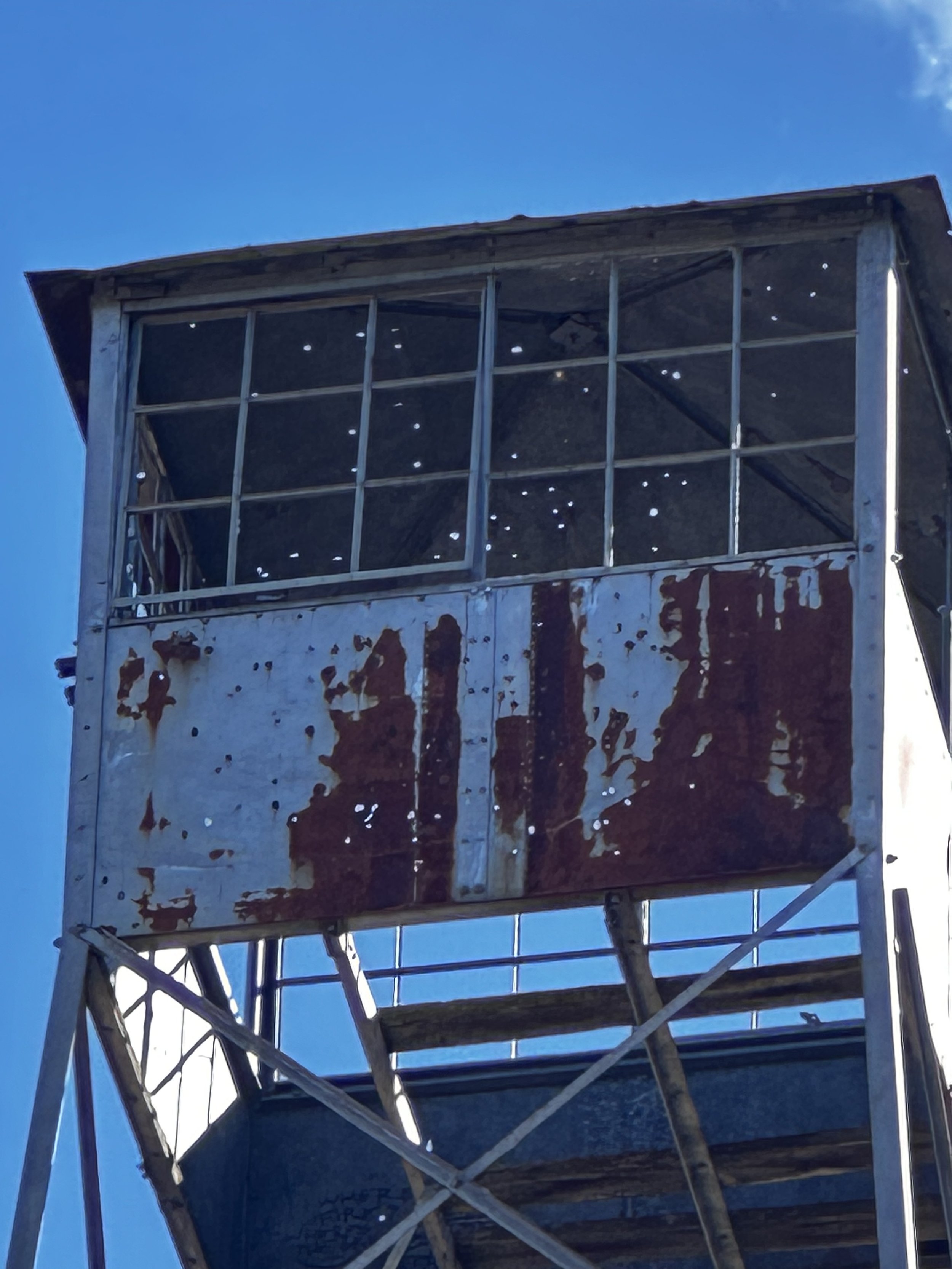
I cant go up there and see, but I am pretty certain those are bullet holes. That is one thing that “rednecks” are good for, shooting things like this… I don’t know where this mindset comes from, but they tend to do things like this. It is unfortunate too as this is basically destroying relics from our local history for simple entertainment.
Another thing that I ran into on this trip was that the little adapter shown below that goes on my headphones has failed. It was causing some heavy shorting issues and I ended up figuring out that if I spun it to the right position it would not cause a problem, but spin it just a little and it would make terrible feedback. I didn’t have a spare either so I ended up using it and just being super careful with it…Always have a spare is the lesson here.

In the photo below you can see what I am talking about when I say there were ATVs going by while I was operating. Lots of ATVs would pass through at times, like 4 to 6 in a group at once. These vehicles also don’t have great mufflers either so it would be hard to hear while they were going by…


Since it was nice weather, I wanted to use the truck bed cover for my operating position and because of this, I was right next to the antenna. Also if you will notice, there was a couple more hamstick antennas this time. I picked up a 17m, 30m, and a 40m Shark brand hamsticks from Chatt Radio and spent the morning before the activation today tuning the 17 and 40m antennas. I didn’t do the 30m unit yet because I ran out of time as I wanted to try an activation today and I still had to make all the parts for the radials for the 30m antenna from scratch… Once I got the 17m radials made and tuned and then cobbled my 40m hamstick radials together so it would work (I think I need to revisit this one at some point and make better radials for it), I was off to the races! This design of antenna and mount work extremely well for their size.

Today’s weapon of choice is the Penntek TR-35. This radio has everything you need and nothing you don’t. It is just a great little CW rig that is simple to use and works really well.

This is a close up of my 17meter radial tie down, that I dubbed “Gen 2”, ground weight design. I can remove the weight easily from this plastic connection plate and use it on a different radial if I wanted to change bands or something like that. This worked really well and was easy to setup and tear down too. My old design coupled the weight to the radial making it a dedicated weight, which is simpler to make, but not as versatile to use as the weight is part of the radial.

Below is the complete antenna kit as of today. This doesn’t show the mounting bracket that I made to install these on, you know the big yellow one, right? But here are the radials and antennas that I currently have tuned and are ready to get on the air. Once I get time to work on the 30m antenna, I will add it to the stable. The ham-stick is a very viable option for the QRP POTA op. I used these today to get the contacts below and you can see that the signal reports show it works just fine. If you have one, this is something that I suggest you try to use. They need the radials though to get the best performance. I have found that is important. Supposedly they are designed to not need them, using the coax as the counterpoise but they just get out so much better with them tuned to the band with a proper counterpoise.

If you will notice, I make lots of notes as I go in my log, but I had a great day on all three bands. It was cool to get some contacts on 17 and 40 meters today, but if you will notice, all the magic happens on 20 meters… That is where the bulk of my contacts happened today. I also was able to work the same ops on multiple bands which is kind of cool.
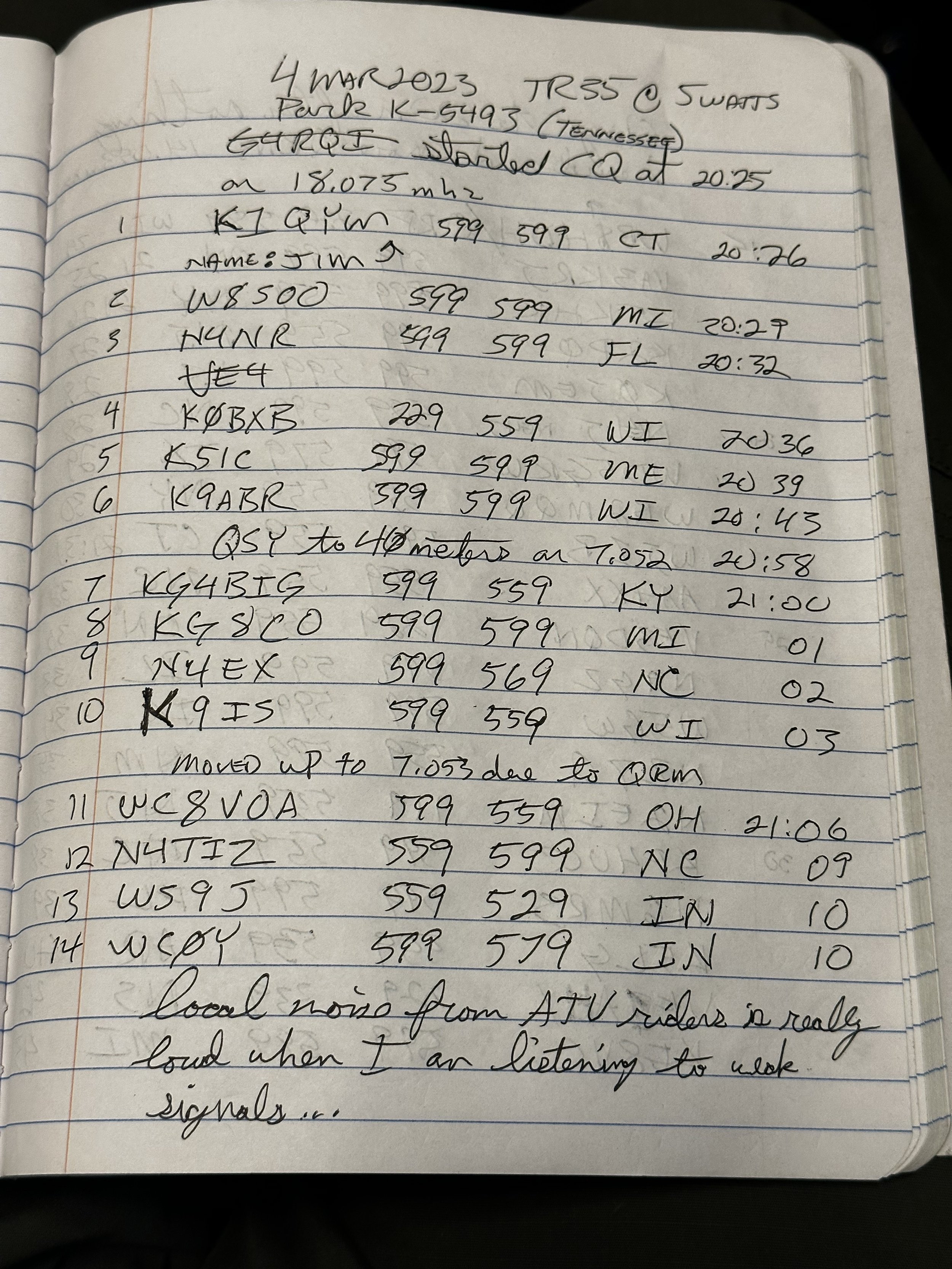


So even if you run into problems with the location like I did, just get the radio out anyway as it just might be the day you put over 70 QSOs in the log! So till next week, get that radio out and throw a wire up into a tree!!!
One tough activation!
You know the conditions are bad when you cant get a single call on 20 meters…

Today was supposed to be like any other day when I do parks on the air but instead things went horribly wrong well almost horribly wrong. You see I was going to ride over to Cloudland Canyon and get a quick activation and then run some errands and do a YouTube video for my photography channel but I ran into a small problem or three.

So let’s get into this. I had figured that I would simply go to the Sittons Gulch entrance and park in the lower parking lot as I had done many times in the past. That part went fine. I get to the parking lot and to my joy there is no one there at all. This allows me to pick the spot that I want, which is the very first space, as I can rig my counterpoise out-of-the-way so that other people can park all the way across the parking lot.

While I was stringing up the antenna system and getting it ready to connect to the radio I noticed some of my old friends from last summer showed up as well. The mosquitoes were already starting to show up this early in the year, so I got out my bug repellent and sprayed the exposed parts of my body, my neck and hands, and got back to work.

Today I used my friend‘s (KV9L), Elecraft KX3 transceiver and had the antenna system up and running within minutes. This is where the problems began. You see I started with 20 m because 20 m has traditionally been a band that I would secure a activation with relatively quickly usually within 10 to 15 minutes I would have enough calls in the log for a official activation.

Well today would be different as it took me a long time to get an activation at all and none of it was on 20 meters. So I set up the radio and called CQ for about 10 or 15 minutes with zero answers. Literally nobody answered me for 15 minutes at all. This was demoralizing to say the least as I always get a contact or two on 20 meters. CW is usually a really good mode when band conditions are tough as you can still hear the other station pretty well. I could hear other stations, but I do not think they could actually hear me as the signal reports on the reverse beacon network were very low. So I moved to 40 m and actually started getting some traction but it still took me a while to get the 10 minimum contacts to get an activation.

As you can see by the extensive notes in my logbook that day it did not produce very much results, but right at the end as I was about to shut down the station and go to do my errands and I had two more stations called me really quickly, so I ended up with 12 contacts on my trip today to Cloudland Canyon.

Above is what my operating position looked like this morning and I always enjoy doing activations where I can be outdoors like this. It is just plain good fun to be able to set up my radio on the back of the truck and just make contact with people all over the world with just a few watts of power. If you have never attempted to do CW or QRP radio operations I highly recommend it as it can be a very, very rewarding mode and power output level to operate in, just be prepared for the potential of not making many contacts lol.
I want to take a minute to thank my friend Aaron (KV9L) for loaning me his Elecraft KX3 transceiver, I have always wanted to play with one. I have never had the opportunity until you loaned me yours. Thank you very much for that! Now if I can just figure out how to keep it… ha ha ha
Activating a park in Hawaii with with the Elecraft K1
I will be honest here, I thought this would be easier…

Let me explain. You see first off, I live on the east coast of the mainland USA where getting an activation completed or even dozens of QSOs in an activation, is rather easy even at QRP power levels. I have done activations with 4 watts and once I think it was only 1 watt. But someone joked in the past, “that is because you are where all the HAMs are at!” Nothing could be truer as I found out.
So here is the setup for the opportunity. We decide after some travel plans fall through, to goto Hawaii (the big island) for a week or so. This is two fold, we want to see the active volcano as that is a bucket list item for us and it is warm in February…which is always a plus. Well, I talk to the wife and come to the conclusion that there will be time to do a park or two while we are there as well. So I start figuring out what radio to bring.

Just read the previous blog post to see what I brought and why (spoiler, it is the Elecraft K1). So once I figured out the radio and storage/travel bag, I started looking for parks on the POTA app.
We are staying in the town of Hilo so I naturally started looking near there for possible parks. My criteria was that I wanted a park that wasn’t blocked by mountains or in a canyon, preferably one near the beach (I mean, who doesn’t want to do an activation on the beach???) and has a tree to allow me to get the antenna up as close to vertical as possible. This last part is going to be the biggest challenge I would come to find out. Since I packed only wire antennas in my kit, I would need something I could throw a line over to haul up a wire with.
Well, the first park I chose was not really suitable as it didnt have any trees near the parking lot and also no tables nears the trees that are there. The next problem showed up on day two and lasted till almost time to leave…the rain… seems Hilo is a literal rain forest and I failed to do the proper research to learn this ahead of time. Maybe I was not supposed to know this so I would take my gear, I don’t know either way, but it rained 14” of rainfall in a 36 hour period of time at one point. yes, FOURTEEN inches fell in a 36 hour period… The rain was near continuous for many days. Well, on day four, we had about 3 hours to kill in the afternoon so I looked at a park in Hilo proper, it is down by the beach and runs all the way down the the royal gardens. I drove by it and scouted the area and found some trees that would hold a wire. This is park number K-6407 (Wailoa River State Recreation Area) and basically it fit all the criteria.

This is where it gets messy… I decide to give it a try as it is a good time of day to reach the west coast of the US. Grey line would be coming across the US for the next few hours and I need all the help I can get with my measly 7 watts. The only problem is that the rain is coming down in sheets at this point… where to setup??? I opted for the car.
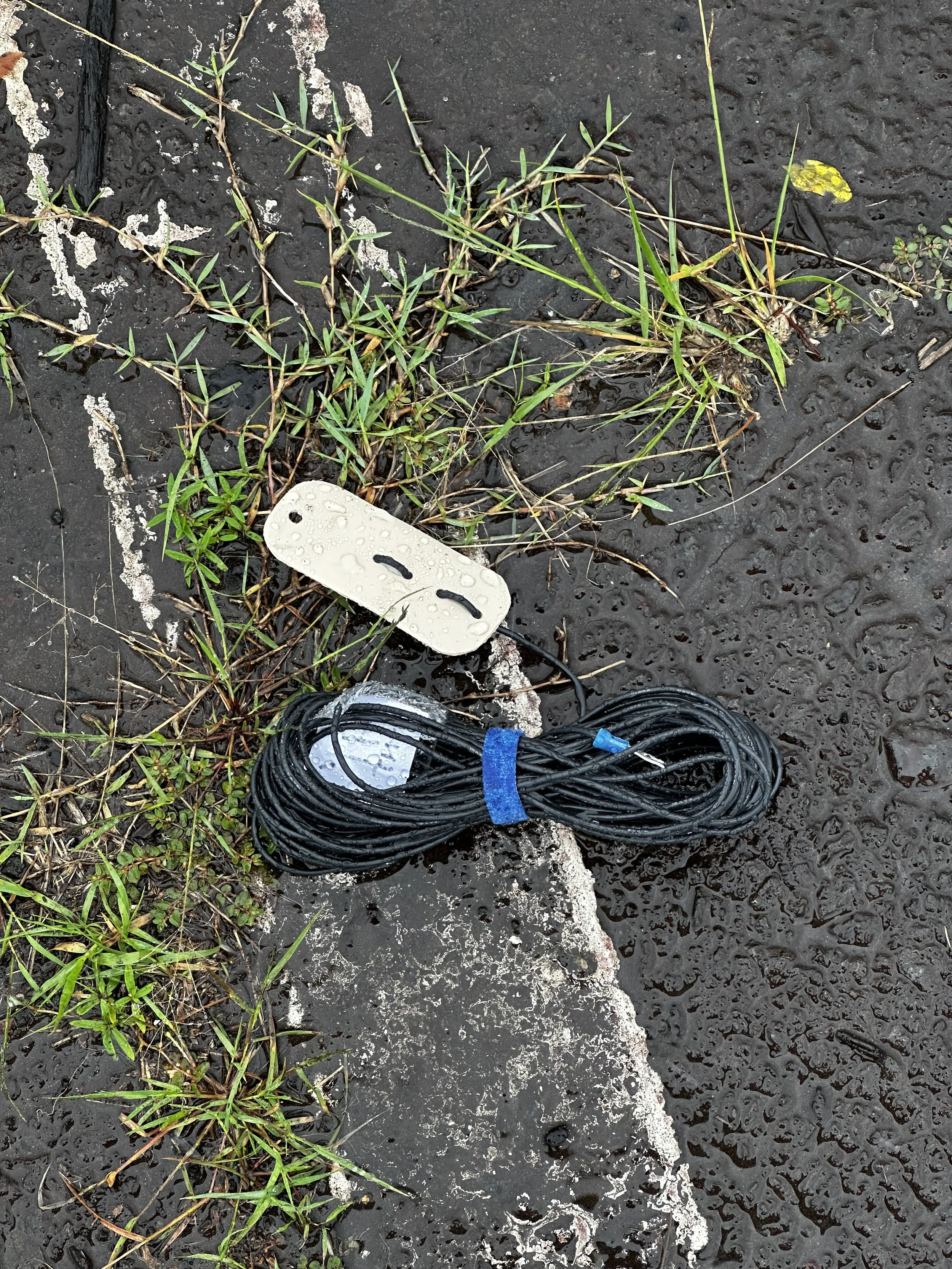
So I get out in the deluge and throw a line over a nearby tree and haul up the antenna which turned out to be more of a sloper this time than a vertical. This antenna is a 41’ radiator and a 13’ counterpoise and is almost resonant on the 40 meter band. I roll the window down a little and run the counter poise and radiator into the car and hook then to the radio.

Once the radio was connected I tried to run the car for the heater and power port only to find it was producing a significant amount of rf hash that the little Elecraft radio couldn’t handle. So I got out the battery and shutoff the car. This actually worked really well, I could hear much better and the car was actually quite warm so I and Teresa were happy. Yep, she sat with me in the car and read a book which I worked you guys on HF.

The next problem I ran into was the contest… I had no idea there was a contest running this weekend and had planned around that literally zero… Well, now what? I went to where I couldn’t hear anyone and started calling CQ and called for ten straight minutes with no answers.
You can see in the log that I got on the air and spent ten minutes finding a clear frequency and called CQ for probably 20 minutes before giving up and moving to 17 meters. Now remember that the whole time this is happening that it is pouring rain. So I am starting to lose hope…
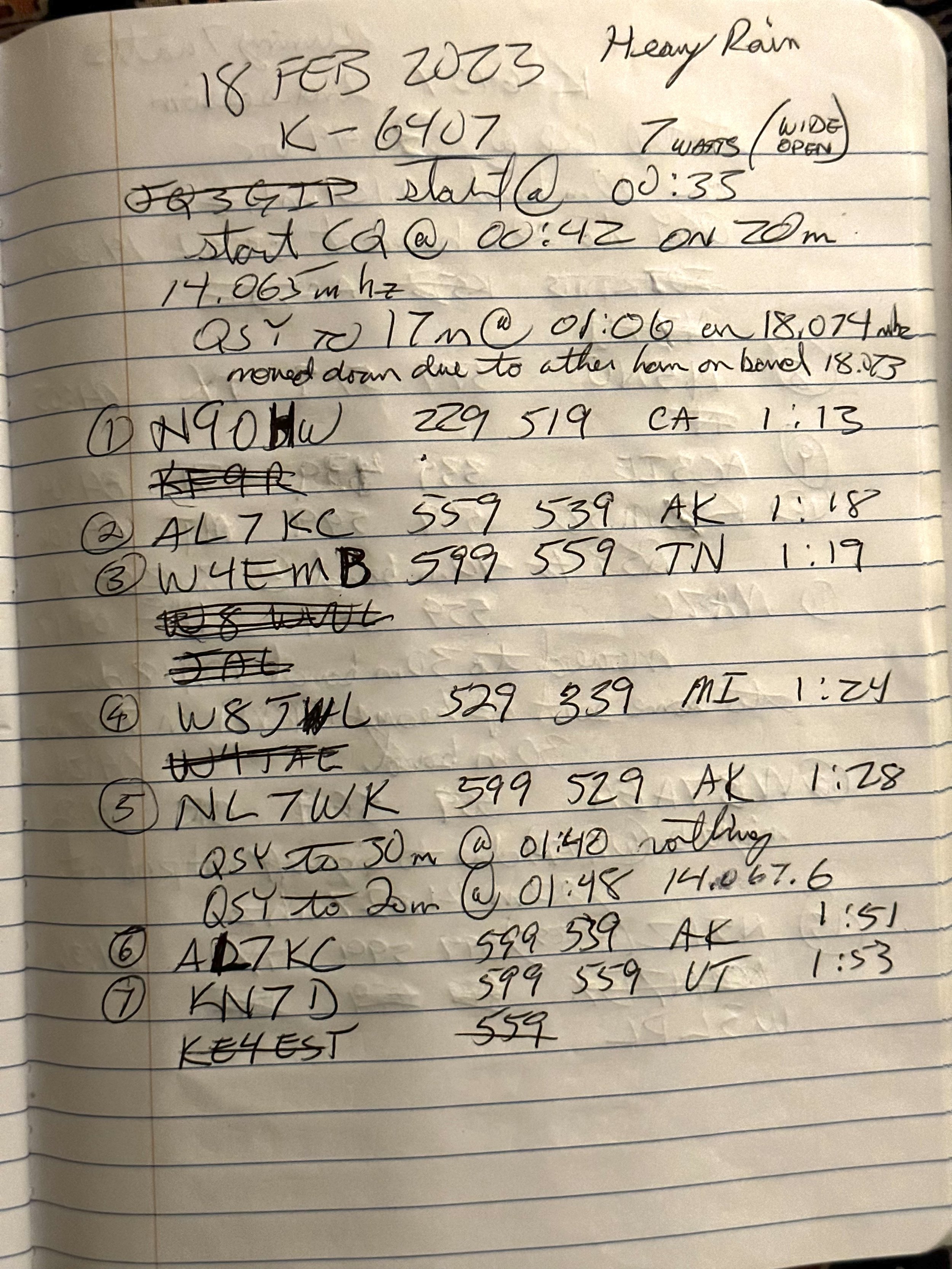
17 meters proved to be MUCH more productive. I found a clear spot tuned up and went to work. Here it still took several minutes of calling for people to hear me. I am going to guess they swung their beams around to me as some of them came booming in to my little wire in the middle of the ocean! I was starting to get somehwere when it seemed my band opening on 17 just stopped so I tried the 30 meter band in hopes of getting something there but no one replied. Next I figured I would give 20 meters another try. I went fairly high in the CW area to get away from the contesters and it seemed to work. I did get a couple of contacts, but it was at this point that I had to pack it up so we could go to the airport to pick up our daughter who was flying in… with 7 QSOs in the log. I really wanted to get this activation and as fate would have it, I started right after the new UTC day began so I actually had time. This was the most difficult hour and half of my POTA life thus far. I had netted 7 contacts in over 90 minutes of air time…I had not anticipated this. Normally, due to the spot page, I get an activation in short order. I have a new appreciation for Hawaii call signs now that I could not have before.
The next thing that happened was fate working in my “POTA” favor. You see the airline let Sierra wait in Maui for an extra two hours due to issues with the gates in the airport. So since the airport in Hilo is 10 minutes from this park I was activating, we just drove back over to the park and I found a better tree to get the wire almost completely vertical this time.
Launching into the “second session” I got on 30 meters hoping to get something there but nobody answered me after quite a while. So I just moved back to 20 meters and again went high in the CW portion. I have never went to 14080 mhz before so I wasn’t sure how this would work. It worked fairly well to be honest, as I got my activation completed during this time part of the time!!!

Since I had my 10 QSOs finally, I wanted to try and work someone on every band I could use on the radio which meant moving down to 40 meters for a while. I finally worked NA7C in Utah on 40 meters with just 7 watts!!!!! I also learned from the RBN that my K1 needs to be aligned. It was consistently off frequency by at least 200 hertz.

So for this trip I took the Gemini travel key as I really like the form factor of this key for these kinds of operations. It is the perfect size and design for ops where there is no surface to set the key on. Also take notice how my trousers are still very wet from stringing the antenna up in the tree. Lol. I wondered how much signal I was losing to the rain… The logbook is a mess because of the terrible band conditions and me making tons of notes about the activation.

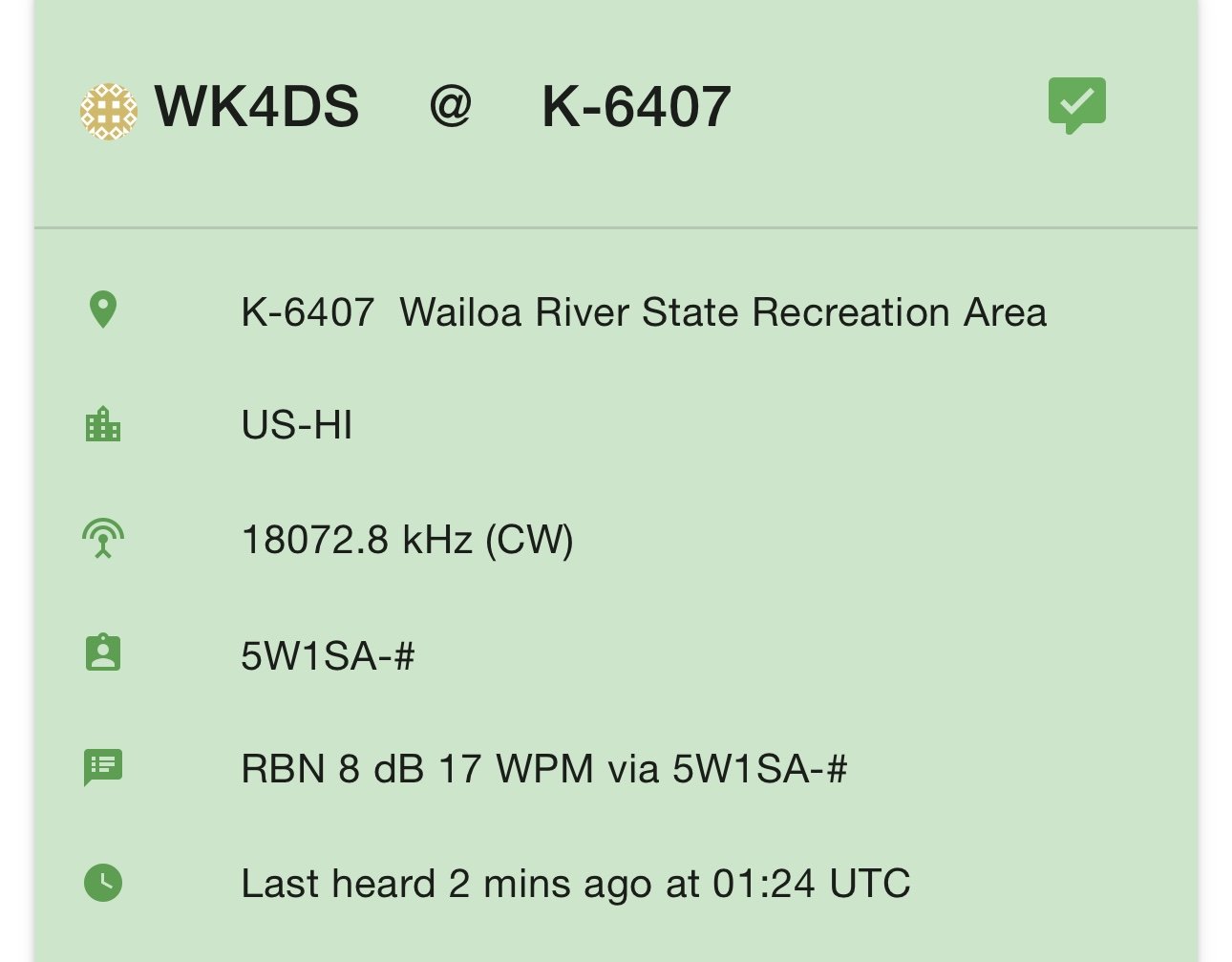
Take a look at my original spot note. Lol I had a big idea there!!!

I was also hopeful when I saw the RBN pick me up. So I knew my signal was propagating out to the mainland. You can understand then why I was getting worried when I got no calls for all that time I was calling CQ on 20 meters…

Here you can see my RBN spot on 17 meters as well. It was weak, but it spotted from two different regions. Check that out. But it was during this time that people actually start hearing me and answering!

I was really impressed by some of the signals too. These people have wonderful radio stations and they are my heros to be honest. Below is a spot from the second session of when I had a couple more hours due to the fight delays and was able to finish the activation.


The QSO map looks a lot like I thought it would other than I didn’t expect the mid west and eastern contacts at all. I also figured on a few Japan contacts to be honest, I really thought I would get a couple with how active the Japanese people are in POTA. I only heard a few “J” calls the whole time and none of them could hear me. So when I was spotted by 5W1SA in Samoa then again by VE6WZ in Canada I was just sure I would get some Japan calls, but nothing. Figures. Maybe I did the grey line wrong…who knows.


So when I wrapped up the activation, the antenna was drowned and when I got back to the room I spread all of it out to dry. Note it took more than one day to dry since it rains here almost nonstop and the humidity wont let the stuff dry very fast. It probably won’t be done drying ít till I get home.
Well, that is the story of my activation from the isle of Hawaii while I was on vacation. Thank you for reading along and now go have some fun! What is your most insane story about an activation? Leave me a comment below and let’s have some fun.
The simplest radio and antenna setup I know of…
Ok, first the setup. I get the opportunity to do some ham radio on the big island of Hawaii. It is with about a two week notice and we are flying. Of course, I have this primal fear of my check baggage not making it to the destination with me or ever for that matter. So I have to carry my radio in my carry-on bag… with me. This bag has to house the radio, power source, antenna and any accessories I need as well, such as CW key, headphones, etc. The other bag will have my camera gear so it is pretty much full already. I will balance the load to get everything in those two bag though.

This is the little radio I finally decided on, the Elecraft K1.
So now you understand what I can take is a small QRP radio with a simple wire antenna and some sort of battery. It will be a cw rig, which typically perform better at QRP power levels anyway. At least this is what I have seen when attempting to work POTA with SSB at 10 watts… The radio I initially chose was the Penntek TR-35. It is really small and has all the bells and whistles I like to have on a POTA outing (which is what I plan to do while there) and I just plain like this little radio. I started immediately working on a resonant antenna for it so I could fore go the tuner and quickly realized that wire antennas are not really reliable for resonance without a lot of extra effort on site. Moving the wire around will change SWR. At least it did while I was experimenting with radiators the other day. I spent several hours with my nanoVNA and an EFHW and found I could easily get the SWR maladjusted by simply moving the counterpoise so I have some more homework to do on that before I am up to speed on that kind of antenna.

This is the situation so far, so now what do I do. Well, the solution is to use a different antenna and that means either bringing a tuner or some other kind of antenna that is more bulky. Well, due to space constraints, I chose to use a different radio.
Backing up and punting, so to speak, I chose the Elecraft K1 and a random wire antenna. The K1 that I have, has an internal antenna tuner that the TR-35 lacks so I don’t have to contend with getting the antenna just right once on location. This is a huge bonus since now I dont have to deal with possibly having something happen to the antenna and not being able to get an activation. I can tune just about anything with the K1.

So what does the kit look like now? I have the following:
Elecraft K1 (4 band radio with ATU)
Gemini travel key
41’ random wire with various radials
(8)AA battery pack for remote power. Emergency backup.
Small earbud headphones
Messenger bag style carry bag to house the goodies. (Peak Design Everyday Messenger)
Notebook and pens for logging
Throw line and weight to get antenna in the trees
Misc. little widgets like the BNC to screw lug adapter and a power cord for the cigarette lighter socket in the car.
8Ah LiFePo4 battery with charger.
There is probably a few more little items I have not mentioned here but you get the idea. This will allow me to setup a QRP CW station and work some epic DX stations that I normally dont hear at my home QTH. At least that is what I am hoping for…maybe I will actually be able to work some of those Japan calls I keep seeing in the evenings! Now I have worked QRP for a long time and I am fully aware that I may not even hear the next island, it is the nature of the beast. But I can usually squeak out at least the ten needed for an activation. So I am hopeful that it will work out. The only caveat is that I will have 2000 miles worth of ocean in basically every direction so the take off angle of my antenna is really important. I am hoping there will be a tall tree so I can get it as vertically oriented as possible. This will give me my best shot at getting an activation.
Oh, to be honest, I am pretty sure that this is not the simplest radio I have ever had, but for a portable system that will cover multiple frequencies effectively, the Elecraft K1 works really well. I really think this rig is a great combination of features and it is sad that Elecraft no longer makes this radio. If you love QRP then I can recommend this little radio…as long as you can live with just 4 bands and CW…which I can.
So there you have it, the radio going to Hawaii… wish me luck!
What draws me to QRP?
This is something I have asked myself over the years…

Penntek TR-35 QRP Transceiver
It seems that it is more than just the low power. It is the lifestyle of using small radios with little power into some sort of cobbled together antenna. (The antenna bit here is of my own doing, some QRP ops use really nice antennas and the performance speaks for itself) It is making contacts on this compromised system. It is using morse code with these little radios, as I also have a love of CW. It is something to do with the kit being small enough to fit into a small backpack including the battery. All this and more…
You see, I have never really wanted to deal with all the headaches that come with using amplifiers. They have all sorts of things that happen with them that you have to build infrastructure to support. Things like making sure your transmission line can carry the power, you HAVE to make sure that the system is properly grounded, all of it. If it isn’t grounded properly then there is all sorts of odd stuff that happens, like the cabinet becoming “hot” with stray RF and can cause RF burns if you touch it. You have a much more complicated system that must be connected correctly or you will damage something. You have to make sure your output from your transceiver is set to the correct level or you can damage the input to the amplifier, and so on. You also have to make sure your antenna is rated for the power you are delivering to it. I prefer simple systems that don’t require all the considerations that QRO involve.

ICOM IC-705 setup for a POTA activation.
QRP doesn’t have to deal with any of this. It does have other considerations though. Things like how efficient your antenna is or what the angle of takeoff is for your antenna. How much loss is in the transmission line? This is a big concern as you are already starting out with limited output power so a lossy transmission line will just exacerbate the problem.
Even with these short comings, I still find using low power to be really rewarding. The personal satisfaction of making a contact with just a couple of watts of power over great distances is intriguing and rewarding at the same time. Now, QRP is not without frustrations, like you answer a CQ just for them to keep calling as they can not hear you. Another problem is QSB will just shut off a QSO due to poor band conditions. Another problem I see is that others will start using the frequency I am on because they can not hear me and do not know I am already in a QSO. This is pretty common to be honest…

Small travel CW keys are really cool to collect.
One thing I have seen is that you either love it or hate it and there really is no in-between. You are either a QRO (high power) or a QRP (low power) ham radio operator… Strange how divided the hobby is in this regard but it is. Anyway, these are some of the reasons I am drawn to QRP operations and not QRO, what do you like about the mode you prefer? Leave me a comment and lets see what people like!
A super cold (for me) POTA CW ham radio activation
Well today was super cold to me after spending a month in central Florida. It was 29 degrees and the wind was howling at park K-2169 (Cloudland Canyon) back in NW Georgia!!! I didn’t let that stop the ham radio bug in me from getting out in the cold and activating a POTA site!
I thought to grab a selfie to remind me of how dumb I was to get out in this cold weather so maybe I would think better of it in the future…probably not, but it was worth a try. You can see how I have the door open on the truck, I was using it for a wind break to keep the crazy gusting winds from freezing me solid with wind chill. That is why I logged in the back seat instead of on top of the bed cover which is my preferred location if I am using the truck for ops.

The weapon of choice today? The Elecraft K1 (4 band version with 40, 30, 20, &17) My particular machine also has the internal antenna tuner as well. I guess you could say it has everything other than the internal battery. This is my second copy of this tiny machine, but I have had a long love affair with these little radios. I sold the first one and literally missed it the day i shipped it off. It only took me a few years to find another one like the first one and get my little grubby paws on it…this time for keeps. Of all my QRP rigs, I place this one VERY near the top.
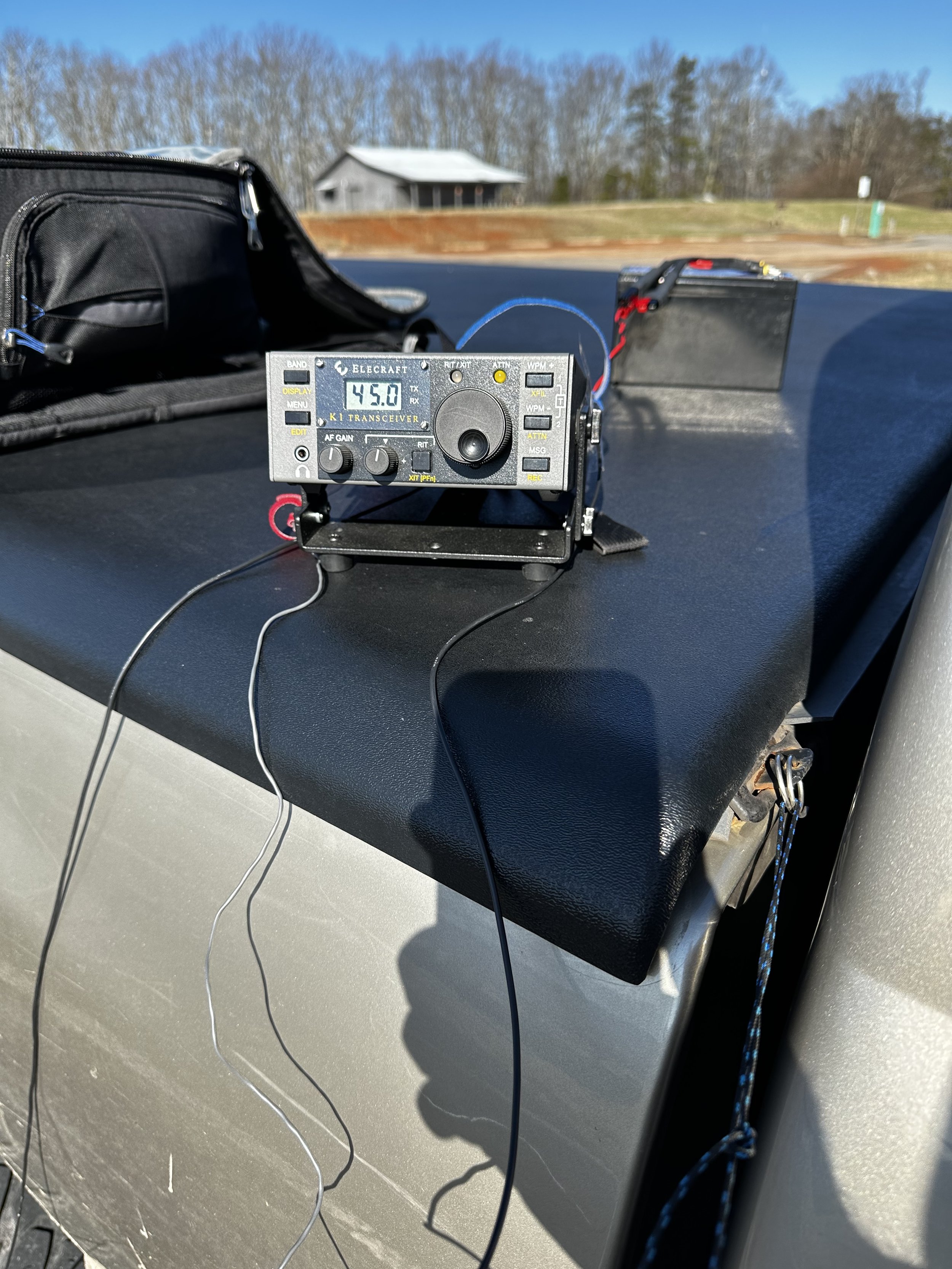
In the photo below we see the Elecraft K1 as seen from the top, I have placed the BNC to screw lug device on the antenna output of the radio and connected the antenna and counter poise directly to the radio with no feedline at all. I did this on purpose to test the system like this for a upcoming project I want to use this radio for in this configuration. This allows me to see how effective it is with a very minimalist rigging. I am wanting the whole thing to be as minimal as possible and still reach the west coast if possible. You see, I have a week in Hawaii and by the time you read this, I should have been there and returned with at least one activation from the Big Island of Hawaii under my belt… only time with tell.

The below photo shows how I took the tension off of the radio with the wire antenna once I strung it up into the tree next to the truck. This is a modified version of a knot we used in the Boyscouts called a taught line hitch. It works REALLY well on tent ropes for tensioning them to the stakes, it also works really well for tying a small cord to the antenna wire to make it to where you can tie it off to something near the radio as well. If you look above at the photo of the front of the radio, you can see the other end of the cord tied to the top cover ring on my bed cover. This end of the cord is tied to the truck with a bowline knot so it can be undone easily when I finish the activation.

Below is the only photo I have ever been able to get of the wire itself and it actually show up in the photo well enough to be meaningful. I threw a line up into the tree and pulled this wire up about 25 feet off the ground with the throw line and it worked really well. I know this is really low for a wire this long, but I was frozen and in a hurry and didnt want to rethrow the line to try and get it higher in the tree. So I used what I had.

OK, so here is the part where I talk about the antenna that I used. This antenna is simply a random wire right at 41 feet long and the counter poise is 13’ long. These are technically not supposed to be resonant on any of the 4 bands I have in this radio, but as it turned out today, the antenna was almost perfect on the 40 meter band with it arranged near the truck body. (it was reacting capacitively with the truck as I could change the SWR by literally moving the counter poise closer or further from the truck. It would also change the resonance of the antenna too, so I used the internal tuner to be safe) I used this to my advantage and worked quite a few 40 meter contacts today. I also cut counter poise wires for the other three bands and plan to set them up and see what the nanoVNA says about them when I have time. Something else I have learned to do over time is to put the wire length flags on the wires. This is simply little pieces of paper with a large number written in sharpie on them and then taped on with a long piece of packing tape to basically laminate them into place. This makes it really easy to know which wires you have without having to guess. All of this wire is high flex, silicone insulated wire and is basically tangle free for the most part, where has this wire been all my life??? Turns out it was on Amazon all along…


Another item I have fallen in love with is these little Velcro cable straps, I don’t know why I didn’t get these sooner, but these things are a wonder of modern technology for wire management and keeping your gear organized. If you have never used them, I highly recommend grabbing a pack of them off of amazon, it will change your life!

So, since I had a way to wander off of 20 meters, wandered I did! I didnt get on 20 meters at all today. Today I stayed on the other three ham radio bands that I could get on and got 16 contacts in about 45 minutes even though it was super cold and I had the power, on the first two QSOs, turned down to 1 watt! Yes, ONE watt! Now, they are only a few hundred miles away to be fair, but still, it is a single solitary watt going the distance here! AA5JF was a little over 200 miles from me and he heard me really well if his signal report is accurate on that little single watt of RF power. The other person (W4EDN) was 265 miles away and I still got a good report. This just goes to show that you don’t need really big guns to have some fun with radio, it is something that even people who can only get small QRP kit rigs and build them can make some contacts. Now, would have I made more with more power? Of course I would, more people could have heard me and I am not contesting that. My point here is people seem to get it in their head that you need 100 watts to be able to have a QSO on HF, when it just ain’t true. Now, I cant speak of phone contacts here as I don’t do very much HF amateur radio on phone modes, I am almost exclusively a CW op…hence the love affair with the K1. So take all that with a grain of Morse code… Once I remembered I was running 1 watt, I noted it at the top of the log and turned up the power to 7 watts (I thoguht I would see how the signal reports changed with 7 times the output power and the log speaks for itself. The first report on each line is what I sent them and the second report is how they heard me. Once I moved to 17 meters I turned the little K1 to 5 watts and left it there for the rest of the activation.

It was easier for me to get some Park to Park QSOs today with the “hunt and pounce” method…but it was more like the “hunt and wait till they can hear me” method actually, all the joking aside, it worked and I got three parks in the log today because of it. I didn’t keep the activation going any longer as I had some chores to do as well as my feet and fingers were getting numb. Numb fingers and toes makes it hard to log and send decent code so I went QRT with 16 QSOs in the logbook for today. All in all, it was a successful trip with me testing all three of the other bands I don’t normally use and the random wire turned out to even be resonant on the 40 meter CW band somehow. What luck! Maybe future me will have written about how my trip to Hawaii was successful and you will see that blogpost in a couple of weeks once I have had time to write it. So till next time, go get your radio out and take it to a part or something.
Dalton Hamfest 2023 for a Ten Tec radio junkie…
Well, it is that time of year again. The Dalton Hamfest is one of our bigger local events and this year did not disappoint. Below is a Omni 6+ with matching speaker power supply (radio in the bottom of the stack) just like the one I use in my ham shack at home. This particular radio was found outside in the boneyard of all places. This is a wonderful radio that would work really well for anyone wanting to get on HF. It is especially good for CW, the receiver is just buttery smooth and wonderfully sensitive…I could go on about this radio for a long time, but suffice it to say, if your into CW and vintage radios, this one is hard to beat. It was basically the pinnacle of CW rigs in my opinion.

Aside from the usual vendors where you can get any number of new radios, antennas or other widgets associated with Amateur Radio, it has become something of a quest for me and Trey (KG4WBI) to find all of the Ten Tec gear we can find and photo document it without buying it! LOL we ALMOST came home with that Triton…(just take a gander at it below) it was in great condition and worked beautifully…
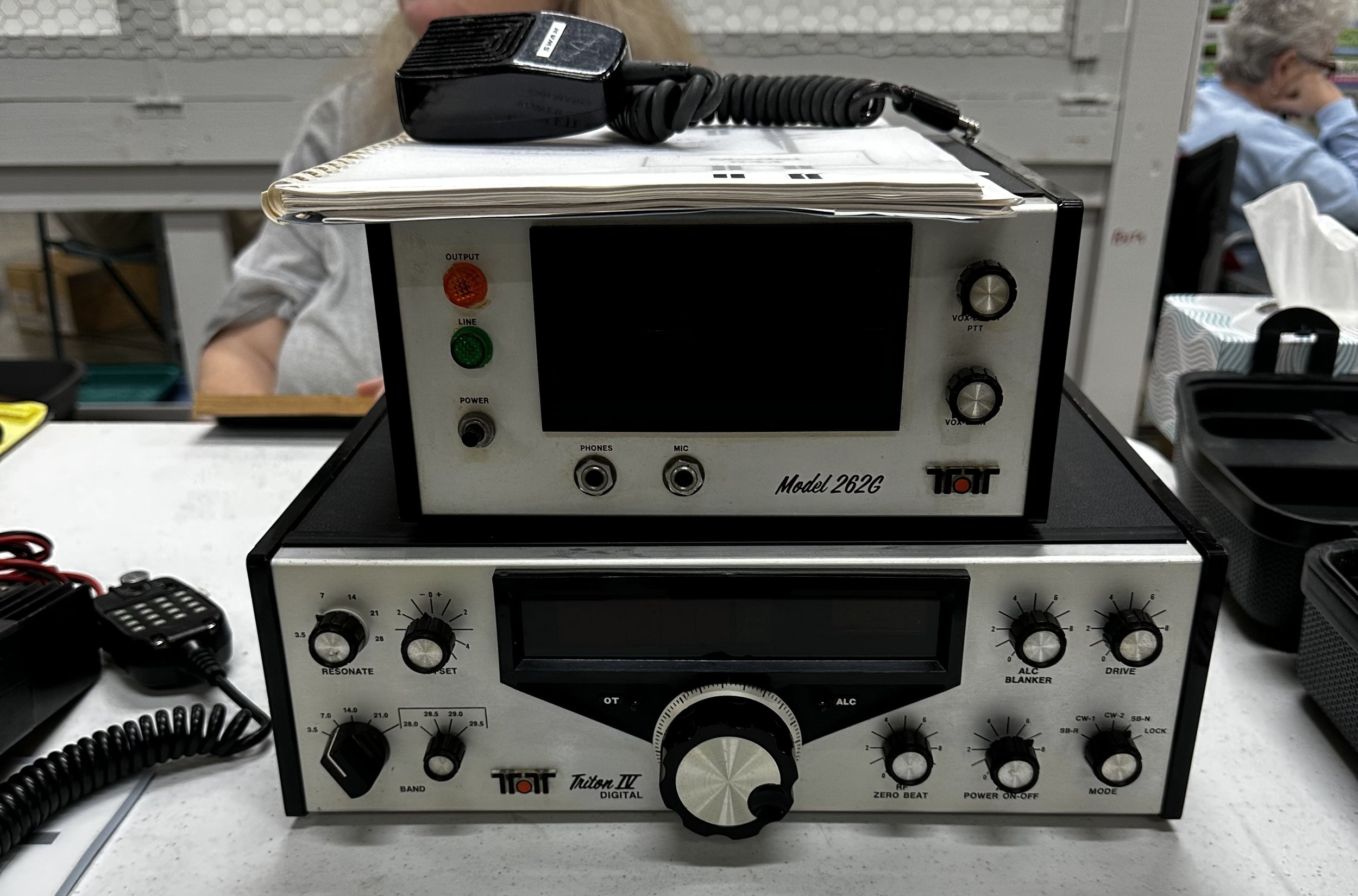
This year netted a incredible pile of photos that really impressed me when I started looking back through them. You see, while you’re walking around, you don’t notice that you have seen so many pieces of equipment until you start looking at the photos you’ve captured of them.


A prime example of this is the fact that we found two of the same kind of antenna tuner. Yet one looks like it was in a smokers ham shack and the other was not. I am pretty sure this is actually the case too as I have never known Ten Tec to do a run of gold trimmed radios or accessories.

Something that I did notice was the wide variety of Ten Tec radios that we’re at the hamfest this time, everything ranging from an old Triton and Argosy (pictured above with the matching power supply) all the way up to an Omni 7! By the way, that Omni 7 also has 6 meters… 😂 Once I added the Collins filters to my Omni 7 it is one of my favorite radios of all time. It works surprisingly well with just the stock filter but the selectivity just gets unreal with the additional 500hz and 300hz mechanical filters made by Collins.

One particular radio of interest that I have always been intrigued by, but have never really thought about buying is the Ten Tec Scout. This radio is unique in that it is a small, portable radio with a fairly powerful transmitter. I think it is 50 watts of transmitter power and to change bands, you replace the cartridge on the front of the radio with a different band module. This allows the radio to remain fairly small and still cover all the HF bands. This is a really forward thinking idea and Ten Tec is renowned for this. The Jupiter radio is a perfect example of their forward thinking, it laid the ground work for the whole Flex line of radios.
To have a whole set of these band modules is fairly hard to do and this gentleman, at the ham fest, had all of them except for one. He was missing the 30 meter module only from what I could see. This was a really impressive kit that he had and it was also in a nice pelican case and the price was really reasonable. This would make for a really awesome POTA rig or even a field day rig.

I guess it just proves that there is more out there available than you think when you just start adding it all up. Since I was just casually snapping cell phone photos as we walked around the ham first, I never really look at the camera roll until we were leaving, and that is when I realise we had seen so many different radios by just this one manufacturer, who is actually out of business at this point. There were even more radios from the typical Icom, Yeasu and Kenwood factions that were everywhere. There was plenty of equipment to choose from is my point.
It was nice to see that someone could still most likely find an obscure, vintage radio that they had been looking for, pretty easily, and to be honest there was a ton of Drake, Hammarlund and Collins radios as well. (That Drake TR7 really had me… I love the color scheme they chose especially well)
I have to give an honorable mention to another radio that is near to me that I have yet to own, and that is the Elecraft K2. There was a 10 watt version of this radio also for sale that day, and I was very VERY tempted to take it home with me…

But explaining to Teresa, why I brought another radio home was not something that I was looking forward to doing, so I left it sitting on the table and maybe cried a little…dont tell anyone… haha.
All was not lost though, as we did bring a radio home between the two of us. It turned out that Trey acquired a 2m Ten Tec HT that has been made out of pure hens teeth. He is actually working towards getting it operational again. He put it on a bench power supply and it did power up but it needs a few little things repaired on it. Currently it does not have a battery but he is looking for a battery to rebuild to put back on it. So if you know of someone that has a battery, even if it is trashed, please let me know as we can rebuild it, as long as it is complete.

Going to a hamfest for me, is more about community than equipment these days. I did grab a few ham stick antennas for my QRP radios when I do POTA activations, but other than that I did not get anything substantial at all. What I did most of the time instead was chat with friends, (whom all I had seen the night before at the club meeting LOL) and made a few more while at the tables talking about the really cool radios we found.
All in all, we had a great time today and if you have never been to a ham fest, I recommend you go to one just to see the spectacle of it. The bigger the better. Until next time, get your radio out!!!
72
de WK4DS
POTA that turns out really good for QRP radio!
Well, today was an unusual day, so lets set the stage… First we go to church and when we get home, there really isn’t much to do so I decide to run over to my local park and get an activation in during the afternoon. This turns out to be the beginning of an adventure for the next few hours that almost DIDN’T happen!

My N6ARA Tiny Paddle got some use today.
You see it all started at home when I was testing a power cord for my TR-35 radio. I wanted to add a cord to the POTA tote that I was assembling and I found one that looked like a good candidate. So I get the radio out and plug it into my shack power supply to see if the QRP rig would power up properly and it did. It worked perfectly. So then I put the cord in the kit as a permeant addition to the POTA tote. Once this test was complete I got my N6ARA paddle out of the other bag and added it to the kit and then I was off to the park.
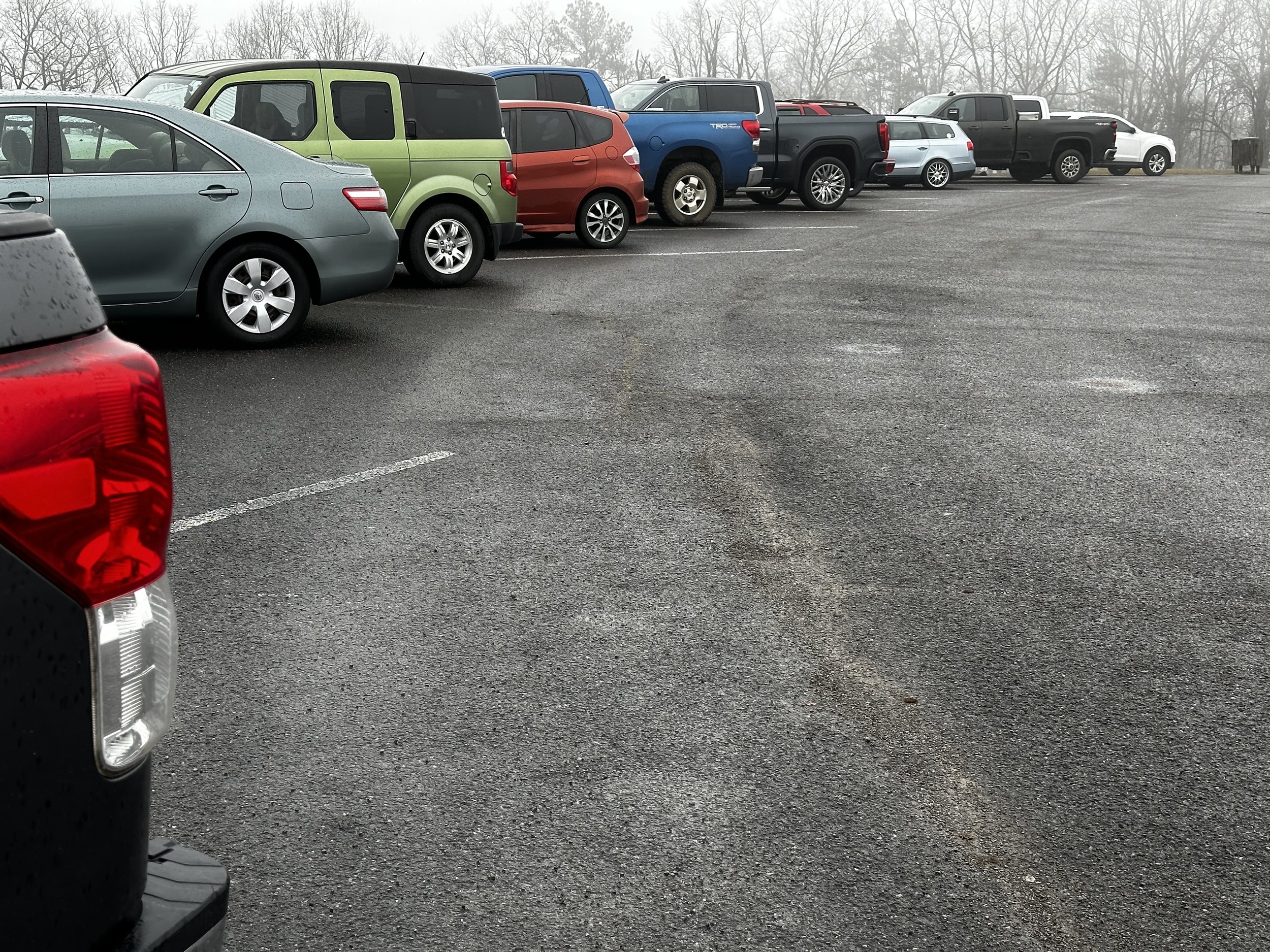

There was at least twenty groups on the course this big! So many people were there playing disc golf!
When I arrived at the park, I was in for a surprise! The parking lot was almost full of cars! This parking lot is normally reserved for me and me alone! LOL! I am used to seeing maybe 6 cars on one end of the lot where the beginning of the disc golf course is located but that is all! There were disc golfers everywhere for some sort of tournament. I was worried I would not be able to setup, but as lady luck was on my side, I found a good spot and got the antenna in place.

This is where things take a turn for the worse. I get the antenna setup and hop in the truck to layout the radio gear and find I forgot the actual radio. I had all the support equipment but no radio. It seems when I tested the power cord that I failed to put the actual radio in the POTA tote… I felt totally defeated to be honest and almost just broke it down and was about to give up. So I thought I would call the wife to see if she would help out and she agreed to meet me half way in Trenton and bring it to me. So I laid the antenna assembly on the ground and ran down to Trenton to grab the radio, hoping all along that no one would bother the antenna laying in the grass beside the parking lot.

This saved the activation to be quite honest about it. It added about 15 minutes or so to the time table to drive down to Trenton and back and fortunately, no one bothered the antenna (seems my worries about disc golfers being curious were unfounded) and I was able to get on the air after all.
This is when I found the next problem… There was some sort of contest this weekend on CW that I was unaware of and the band was super crowded. I was starting to think I couldn’t find an open frequency when I landed on 14.068 mhz and no one was there! At least no one was near enough to me for me to hear them… So I waited a few minutes and listen and nothing. I call QRL a couple of times and then get going. This is noted by the “on air” start time and the actual time I started making contacts. I normally don’t wait a full ten minutes, but this time is was probably 6 or 7 minutes and then it took a few calls to get QSOs coming in… I do other admin stuff while I am listening as well, such as getting my POTA spot on the website and positioning my gear in the truck for max comfort and such.
Another reason I didn’t just move to a WARC band was that I only have a hamstick for 20 meters at this time. I plan to pick up a couple more at the Dalton Hamfest in a couple of weeks from the time of writing this blog… I hope they have some! Below you can see the “POTA tote” and my rig for the day, the Penntek TR-35. This is truly one of my favorite radios and would have been the radio I carried to Hawaii had I been able to confirm that my tuned EFHW antennas would stay in tune in varied setups due to terrain… I plan to test this once I get back from the trip, but we leave in the morning as of this writing and I didn’t have time to test the idea properly prior to leaving.

The log sheet speaks for itself. There is a number of Canadian hams this time as well as the one to Italy as well. I couldn’t believe how many calls I got in such a short time. This was an amazing activation for me and to think, I almost gave up when I failed to bring the radio… Then as fast as it started, it abruptly stopped. When the last entry was written down I called CQ probably 5 more times with no replies so I called QRT and packed up. What an afternoon!!! This just goes to show that 5 watts has the magic if you get on the right band at the right time!


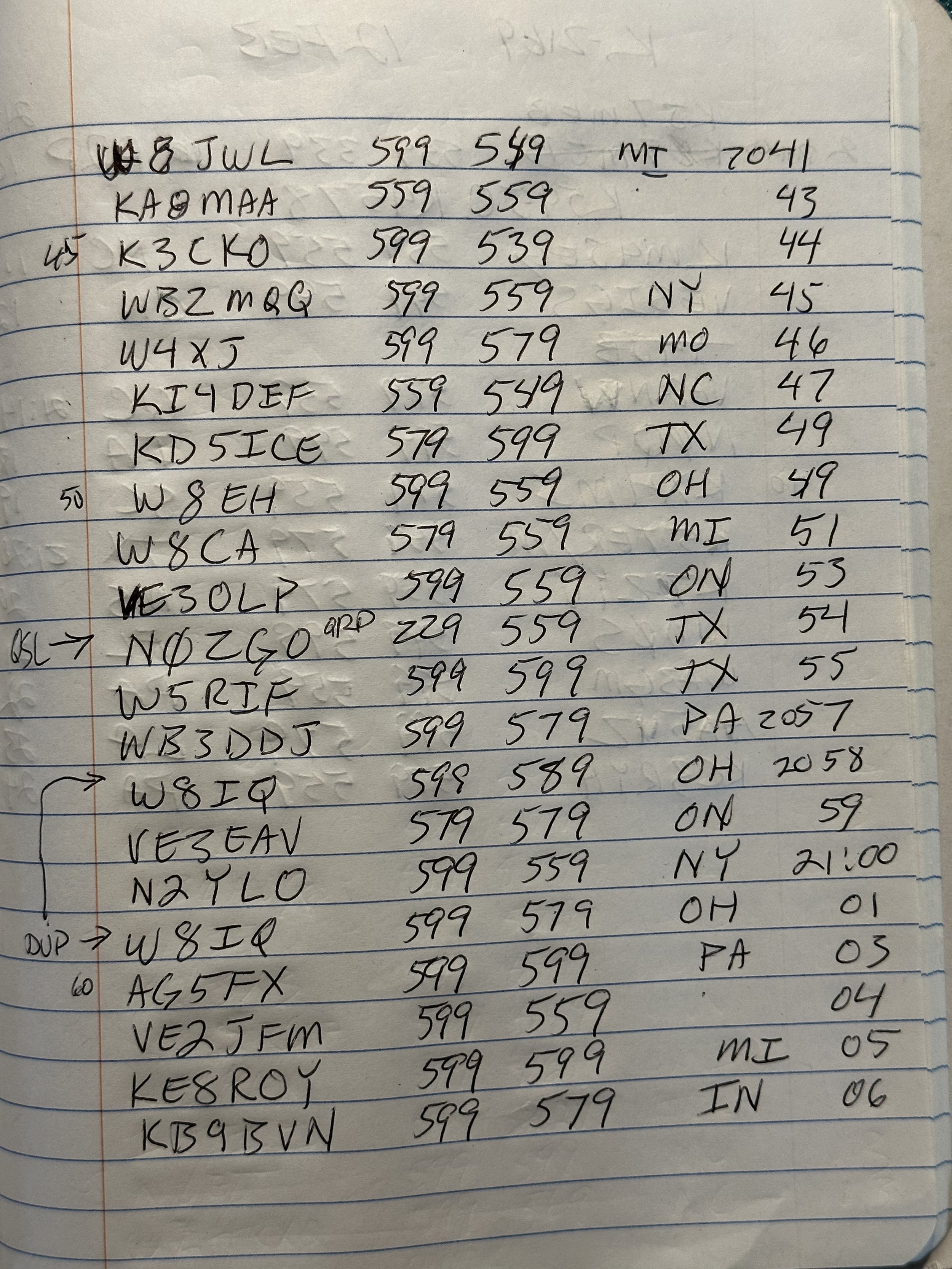

So if your thinking that you wont have a good time with your radio and there is no sense in even setting up, just remember this blog post and how I even forgot the darned radio!!! So get out there and warm up that atmosphere!!!
72 de WK4DS
Today I activated the smallest park I have personally ever seen.

This activation included me having to use my backpack rig in its entirety. I used the ICOM IC-705, wire antenna and the rest of the whole kit from the normal pack I use.

I have been wanting to activate this park since we arrived in Tampa over a week and a half ago, but the park is closed on certain days and I had to arrange it to where I would be in Ybor city, and the park would be open at the same time…with good weather. Today was that day.
I even found a good parking space relatively close to the park and only had the walk about one block. This is unusual for me, as I am never able to find parking that is even remotely close to the location I want to go. So the Lord was already looking down on me on this day.

So this park is really nothing more than a museum with a large patio area that is also fenced with a huge brick and wrought iron wall, on the side of the museum. It sits on about 1/2 of one city block of space, this includes both “park” and building.
So today it is only me, a chicken and the park employees who were cleaning the fountain while I was there.

Ybor city has some sort of ordinance that protects the chickens, and there are chickens literally everywhere.
So in order to draw less attention to me and to not risk getting thrown out of the park for putting antennas in the trees, I opted not to throw a line into the trees to haul up an antenna, but rather instead, ran it across the back corner area and fixed the end of the antenna to the top of the fence gate as shown in the photo.
I ran the radials along the ground. I know this is not a very good setup, but I really only wanted to get the activation and then go shoot some photography as well.
Well, I started on 15 meters since I could see it was open and actually made several contacts there before moving to 17 meters. 17 meters actually netted me some contacts today too!!! Boy howdy! Today, even with my terrible antenna setup, I have landed an activation and still have yet to goto 20 meters. This is in large part to a team of dedicated hunters who are listening with good receivers and MUCH better antennas than what I am using. 20 meters netted several more contacts and I shut down after 50 minutes.

Way back over there in the back is where you can see the table that I used for the activation. It is kinda nice to have a big table to spread all the gear out on when you are doing an activation. Plus, in the middle of the day there is little to no activity in this park so I didn’t have to share space with anyone else too. If I could have escaped the band noise, and put the antenna in the tree (to be honest I probably could have if I had just done it quietly) and it would have been an epic activation.

The whole rig packs really neatly into this old camera bag. Thanks to KV9L for the idea on repurposing a camera bag for my POTA gear. That was genius of him and I had about 4 bags just sitting in the corner not being used at all…

I tied the end of my wire to the top of the wrought iron fence (which I think is actually aluminum but who’s checking?) and then laid it on top of some bushes in between my radio tuner and the fence to get it off the ground a little. I am obviously getting some capacitive coupling with the fence and this may be why I got as many contacts as I did. I also used 10 watts and not 5 today for all but 2 of the contacts… I know it says 5 on the log, but I made the note, that after the second QSO I turned it up to 10 after I took this photo. Something quite rare for me is to run more than 5 watts, but as you can see in the reports, people were barely able to copy me and then it was much easier after that with 10 watts. Once things got going I forgot to turn it back down and so you have it… From the map below, it looks like decent single hop propagation and since I was running such low power and a terrible antenna, I am happy to see even this many contacts.
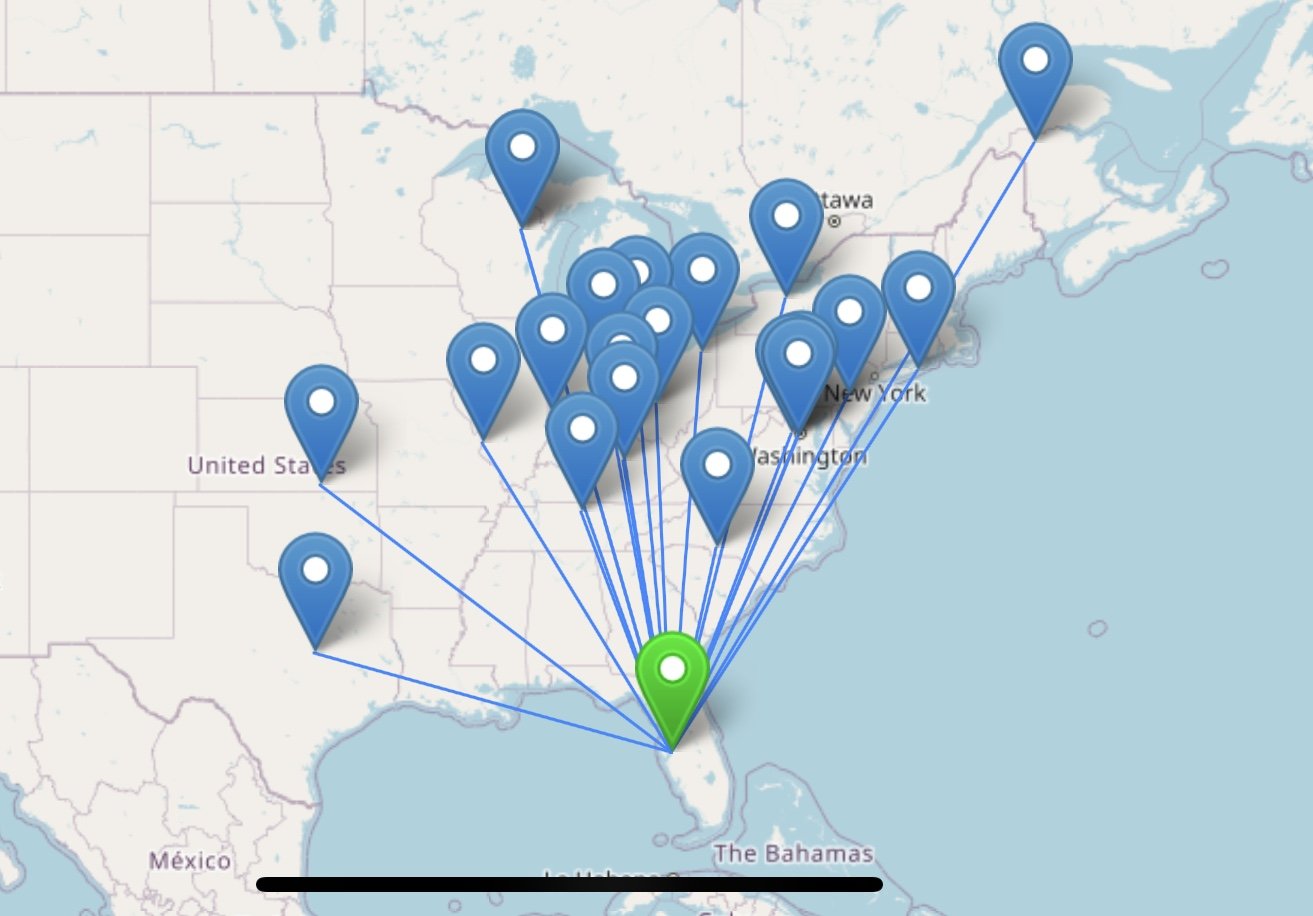

Got K9IS in the log on two different bands today, that is kinda cool and I am starting to recognize several other calls that are showing up in my logs more and more. K4RUM, W8NGA, and WA9VFD area calls I have seen before that I am aware of, I am slowly trying to put names to these calls too as I like to learn the first name if possible. This is just something I like to do.

This is the remote tuner for the IC-705, It is designed to be used with it and it is actually designed to be strung up in the trees as a remote tuner. I made up a 6 foot cable for it that has the power, tuner control and coax all in one cable so it stores more conveniently. It is rolled up in the bag photo on the top right corner of the bag, I just used the spiral wire loom to make up the cable, that way when one of the three cables wears out, I can replace it easily.

Here is the view from the end of one of the radials to the tuner module. I ran two 10’ radials in opposite directions to help the wire get out.

The antenna ran up to this fence section across those bushes, so as you can see, it was really low to the ground. This still got me an activation though so I am happy with it.

You can see the park employee in the background where they were cleaning the fountain. This is why I didn’t bother putting up a wire or even asking about radio, since I was running CW, I wore headphones and I don’t think they even knew what I was doing. No one ever came over to see…
Here you can see the power setup for running the external battery, I run a power distribution block with power poles so I can plug in the tuner and the radio power, then I run them through a power meter back to the battery. Both the radio and the tuner have separate fuses for them so none of the devices are powered without fuse protection.

There was a good bit of rf hash in the area, but then again, there are numerous neon signs and no telling what else in the area, it is right smack dab in the middle of the city here so all bets are off here… I could still hear pretty well once I dialed the filters in a little better.
All in all, it was a great activation and I am happy to add Ybor City Museum to my list of parks. I think I have activated as many parks in Florida now as I have in Georgia! LOL Anyway, get that radio out and power that sucker on!!!
72 (well this time I was using 10 watts so 73 haha)
David WK4DS
Activating POTA site K-5524 in central Florida in January 2023
So I am staying in Tampa Florida for a few weeks in January of 2023 and brought a couple of QRP radios with me just in case I had time to do some POTA… Well, this worked out and I did get to do a few activations.
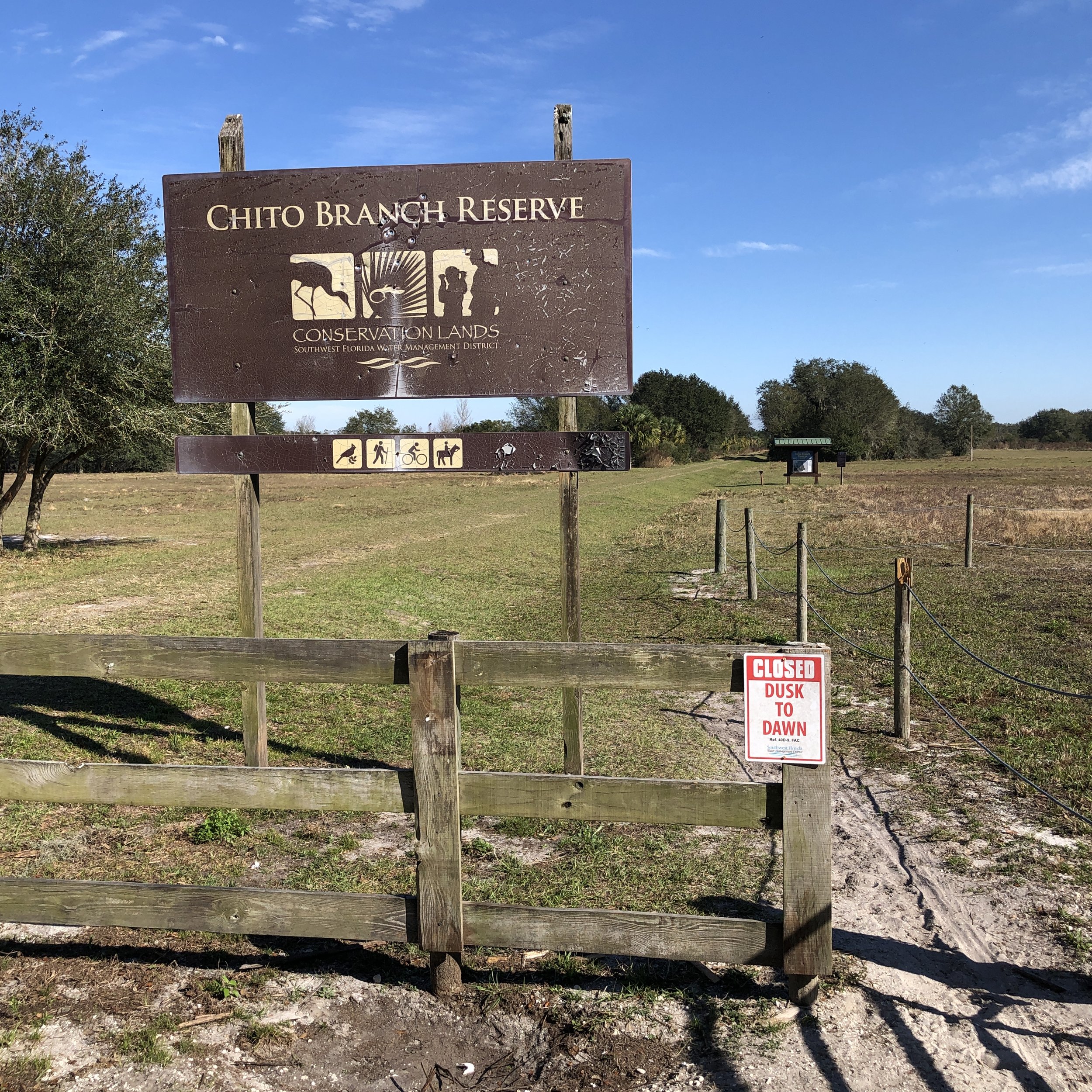
Welcome to Chito Branch Reserve. This is a really nice place tucked into the bustling metropolis of Brandon…or more commonly known as a suburb of Tampa FL… LOL, it is a really nice little area and I was glad to see some people actually using the site for something other than a HAM getting a POTA activation. The lot next to the truck was for horse trailers, but was locked. While I was there, there were two different groups of people that showed up to use the land as well as me. One guy was going on a bird watching adventure and the other was a dad with his two sons who played with several RC machines till all the batteries were drained.


I checked all the maps I could find and from everything I was able to figure out, the parking lot is fully inside the boundaries so I was able to setup the truck-tenna and use it as my power source too.This makes setup a lot more simple as I don’t have to use the throw line and try to hang wire antennas in the trees. I also didn’t know if that was even allowed here either so I was apprehensive about doing that at first.


If you will notice in the photos of the parking area that it is really small, this comes into play a little later when the wife of the guy with his two boys, shows up for a minute. You see when I arrived there was no one there at all and deployed the antenna radials left, and right of the truck. This was not a problem until the fellow with the RC airplane, crashed it into a palm tree and could not get it loose. He ended up calling his wife to bring him a pole so he could fish the airplane out of the tree. When she arrived, she ran squarely over the radial on the other side of the truck. Fortunately, since it is in place with only a weight, it was not a problem to simply pull the wire out from under the car and repositioned it. They apologized profusely, but I told them that it was simply a piece of speaker wire, and it was not a big deal as I had already broken it a couple of times myself and laughed. He retrieved the stick, and then promptly got the airplane out of the palm tree and proceeded to fly until the battery went dead about 20 minutes later lol.

There was some sort of QRM at this site too, but it was not near as bad as the other site. The QRM was some sort of thumping that would happen every so many seconds like clockwork, it was almost like WWV, but more spaced out in time. It was also wide band as it covered the entire amateur 20 m band at once with a single pulse. It wouldn’t run up the band. It was the whole band at once so this was some sort of broad-spectrum noise, whatever it was.
This was not really a problem as I was able to turn down the RF gain about 10% and almost completely eliminated it so I didn’t have to really listen to it all that much. What is it with Florida and these band noise issues that I do not have back home on top of lookout mountain? Lol

I just love the look of the Spanish moss in the trees down here, it has this “ancient” kind of look to it…

Having the cigarette lighter adapter and a Anderson power pole on the end of the cord is a godsend for a QRP POTA operation. The power port in the truck is rated for 15 amps and the cord I bought has a 10 amp fuse in it, so there is no danger of problems there as none of my QRP rigs pull more than 5 amps max. I also had enough cord to reach all the way to the bed cover of the truck so I was able to set up outside and not have to sit inside the truck to do my operation. The weather being as nice as it was I wanted to do that instead. In the photo below you can see the common mode choke I made out of a toroid to keep RF noise out of the radio, I am going to test this to see how much attenuation it produces with my nanoVNA at some point…

I got some new calls in my log since I am 500 miles from home, I have a new areas to call into, like Tennessee and North Carolina!!! Also, I looked, and this is my fourth state! To activate a new state for me is a pretty big deal as I do not travel by vehicle to the states outside of my local area very often. Woo hoo! 46 to go! ha ha ha! Honestly, I do not ever expect to get all 50 states in the log as activating, but it is fun to get a new one when I can.

The operating position for this day. Today I used my ICOM IC705 transceiver and my little travel paddles from a previous blog post, and my headphones that I normally use on the TR35 transceiver. I normally do not use headphones with the 705, but today it was windy and there was a lot of car noise as cars would go by on the highway just a few meters away. Wearing headphones almost completely eliminated this noisy environment and made it easy to copy CW.

This is the bucket of extra stuff I brought in case of problems and it has helped a lot on this trip already. I threw this container of random stuff in the truck before I left, as I wanted to make sure that I did not have a project like an activation get shut down over something as mundane as a cable failing. Also, do not laugh at the small, cheapo multimeter. It works and I was able to do several little simple, troubleshooting type things with it and it also is very small, light weight and compact. Sometimes the simple little cheapie ones work great for what you need them for… Another perk to the cheap multimeter is that if I drop and break it or do something to it in the field and it gets destroyed or someone carries it off or any number of terrible fates, I am only out a few bucks and it doesn’t hurt me as bad as the nice Fluke brand meters I have at home.

38 QSOs in the log is a pretty good day for me, Especially since one is from across the Atlantic ocean!!! MM5DWW was booming into my location and when I looked him up on QRZ, I saw why. This man has an antenna farm to die for, nice kit OM, hope to work you again soon! I am thankful to the Lord that nothing went wrong and that I had wonderful weather too. If you enjoyed this blog post, I would appreciate a like, and if you would share it to your friends, so that I can grow this page.
Thank you, and 72 until next time. WK4DS