WK4DS Amateur Radio Blog
Search Posts
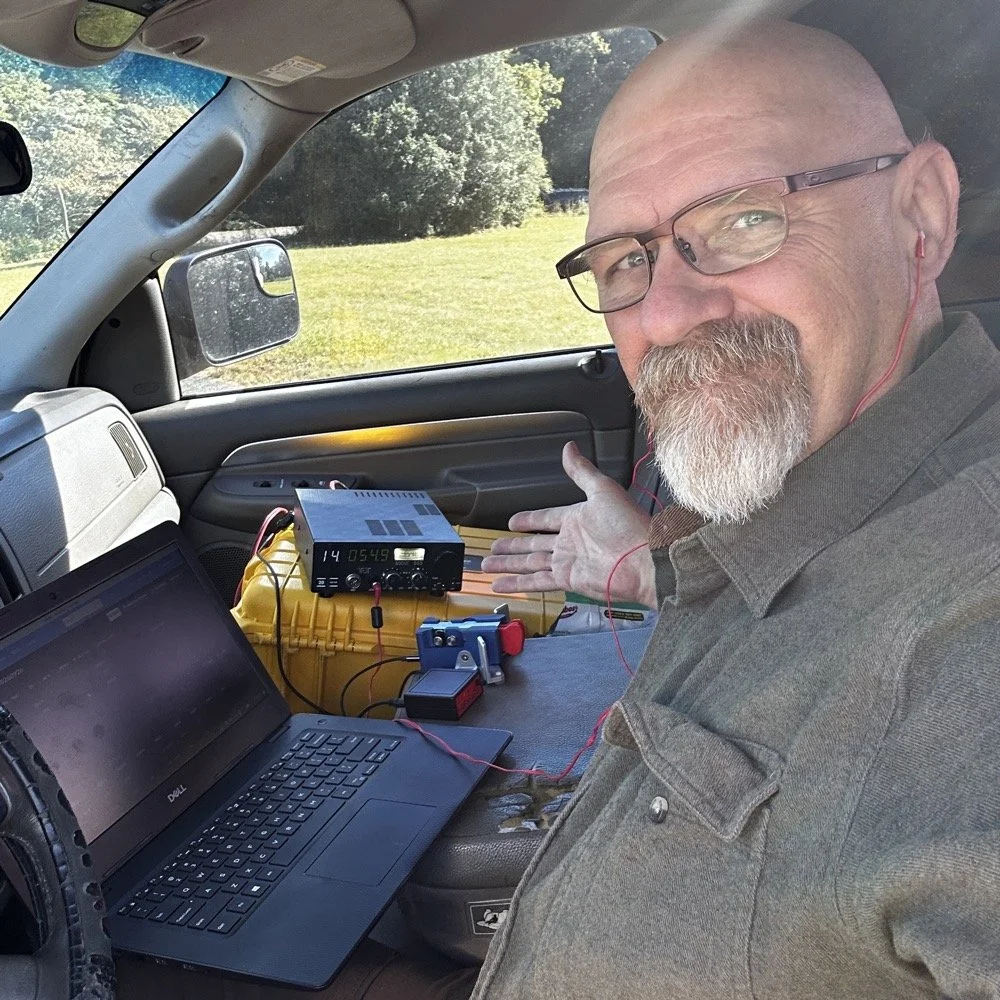
The POTA Scout is good to go!
Today finds me at Cloudland Canyon State Park again but this time on remote battery power! After testing the scout on the bench supply and finding that the radio was fine and my energy in the truck was bad. I decided to test that theory in the field.
Today finds me at Cloudland Canyon State Park again but this time on remote battery power! After testing the scout on the bench supply and finding that the radio was fine and my energy in the truck was bad. I decided to test that theory in the field.
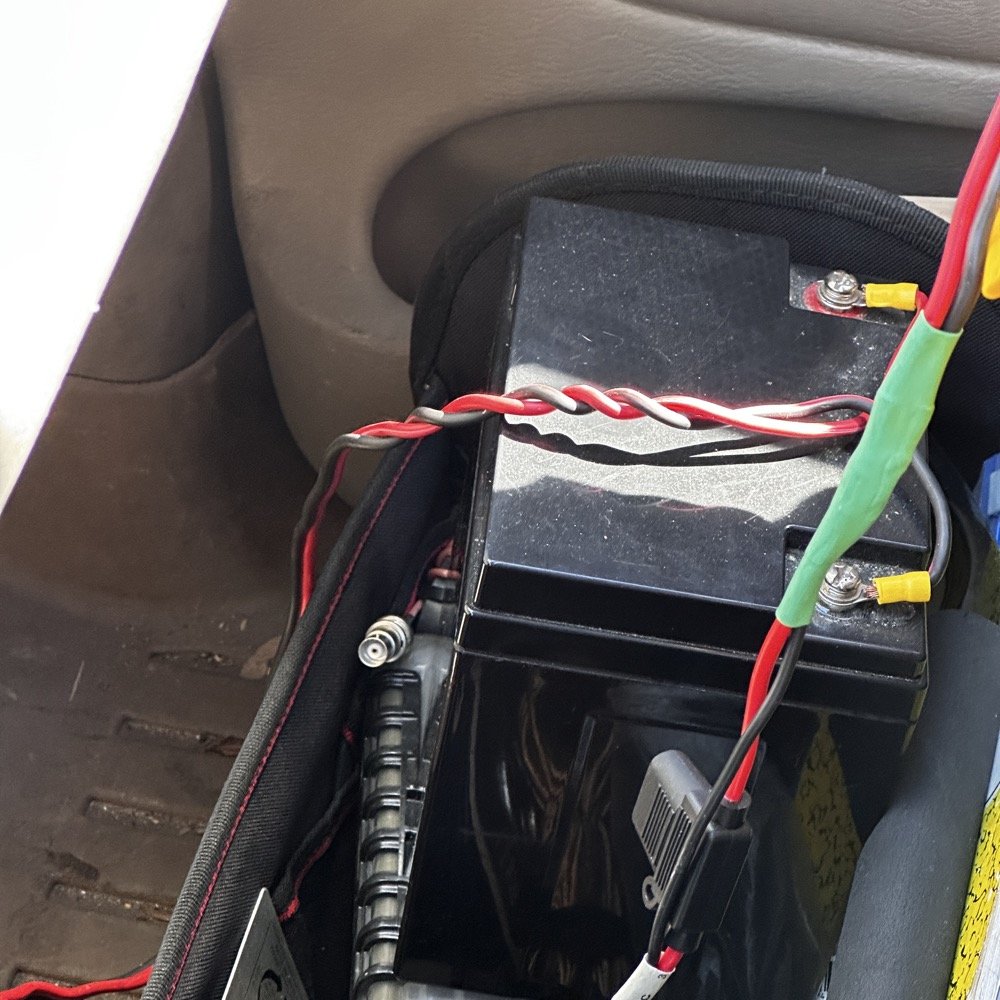
So I grabbed the 36Ah lithium iron phosphate battery I have, charged it for a while, then went to the field with it. I set up the vertical on the back of the truck as I was pressed for time today. I only had about an hour and a half to activate so I figured this would be the more expedient way of doing things.
When I got to the park, there was a few Frisbee golf players on the scene, but nothing else and it was still very quiet, which is great. Today I used a set of antenna radials that are cut slightly different in length, as I wanted to experiment with that too to see if the SWR on the antenna would change with the length of radial changes. It actually does change the SWR as the characteristic impedance to the antenna is dependent on the radial field supporting it from what I can see.
Once the antenna was set up and the radio was hooked up to power, I decided to start on 20 m and see what I could find there. It seemed like a contest was happening so I figured there would be plenty of ops on today.
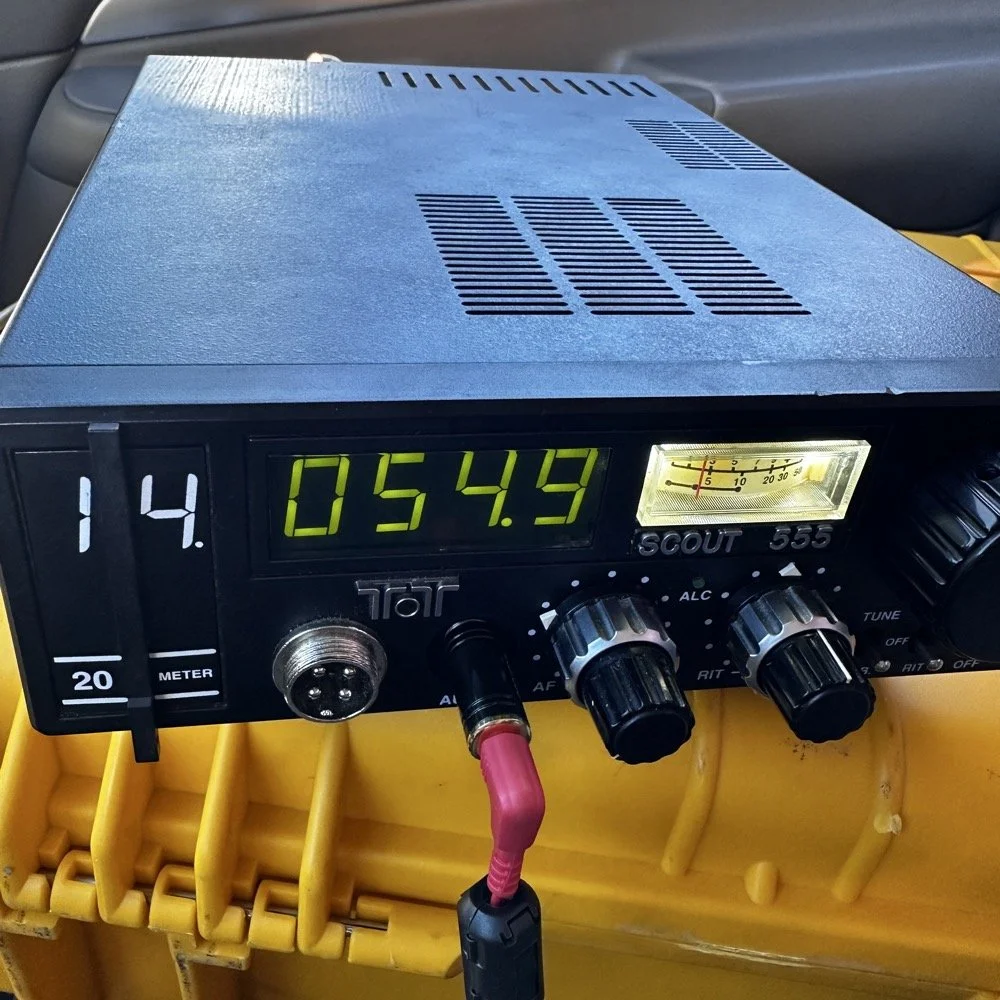
The Scout, as it turns out, works just fine as long as your power source is up to the task. Since I had tested it in the shack on the Astron RS-35M and it worked perfectly, I decided to use the battery so the radio would work like it should. This also afforded me the ability to have fun other than be frustrated over a problem with the system. Sometimes I just want to play radio and not go into diagnostic mode… So I hop on 20 meters like I mentioned and there is some sort of contest happening. I am thinking it was something to do with Germany as they would call CQ DL or something like that…I don’t remember at this point exactly. Point is that I had to find a open spot on the and and from what I was hearing when I powered up the radio, that was going to be hard. I could not have been more wrong… Turns out, that I dialed up something like 20kc and the band was a ghost town! So I find a good spot and get started. The radio shows 14.0549mhz but the radio was operating on 14.0555 in reality. The radio has automatic centering for SSB but on CW, which is where this radio shines…, it has to be adjusted off by the amount of the side tone frequency. That is supposed to be 700hz but the Scout also has another problem, it drifts a little until it is warm. Once the old girl gets warmed up, she is rock solid on frequency, but until then is will crawl up slowly and I have to keep an eye on it to keep dialing it back down over time. It is just one of the little quirks of using an older radio compared to using a new one. My sBitx never drifts because it is an SDR and the program wont let it. It doesn’t sound as good as the Scout though so there is that.
You know what else was at the operating position today? Cool weather is what! I finally didn’t have to run the air conditioner to be able to activate in peace and a little comfort! It was cool enough to start with today that I even wore a long sleeve shirt for a while…haha. As you can see in this photo, there is just what I need to work and nothing else. No spare this or that cluttering the work area. The key, keyer, radio and logging computer and that is all. A simple setup will work for me much better as I am not struggling to find things when I need them or having problems because I don’t have enough space to work.
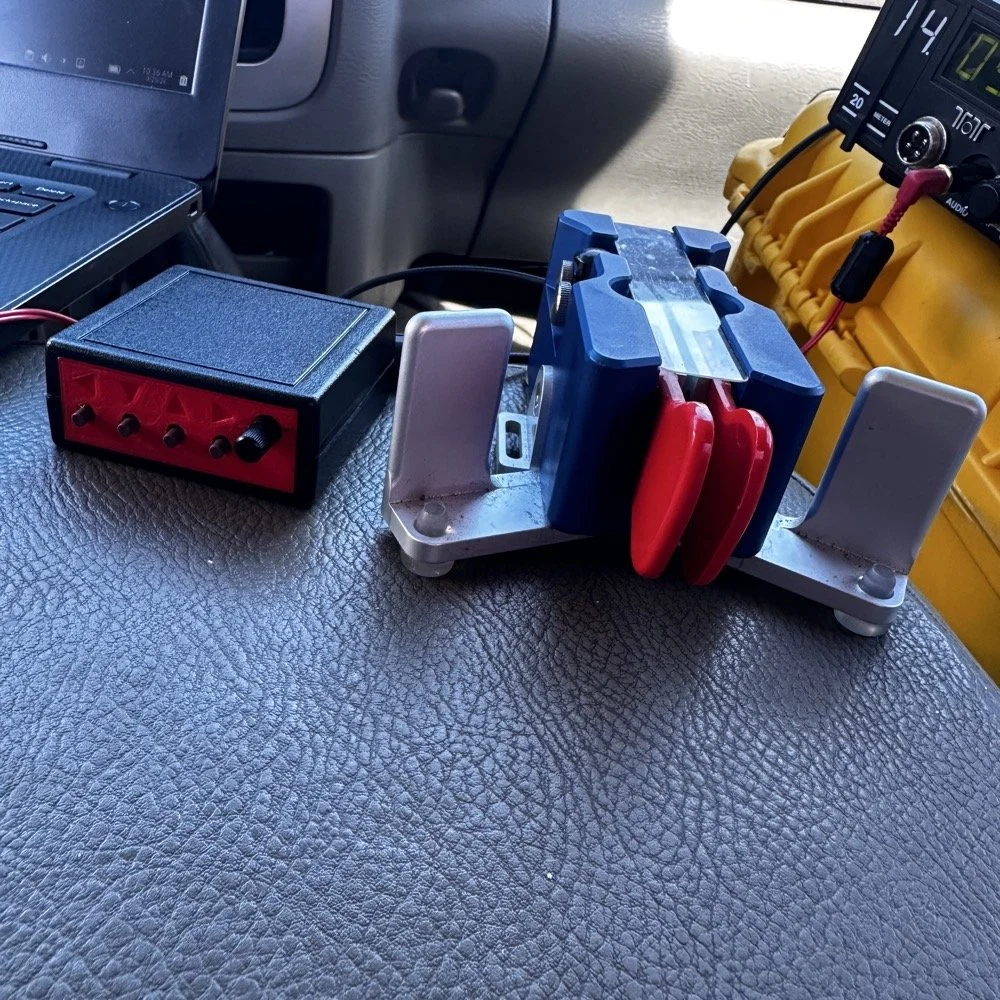
After a while, you will start to optimize your stuff for better or more conformable operating. This key/keyer layout is a result of that process. The keyer is on the left side on purpose. I can see the buttons clearly and I know what the buttons do based on their position on the keyer. Truth is I pretty much only use the first one to send CQ with and the rest almost never get used. One is setup for signing off at the end and the other two are setup for signal reports. I need to repurpose the signal report section as that idea fell apart almost immediately. I found I wanted to send reports that reflected what I heard and not just one of two common values. There was almost no time savings when using them either so those go unused. There was a time when I used the closing a good bit though. When I paper log contacts, it helps to have that little bit of time at the end to write information about the QSO so I use that one when paper logging. Computer logging is instantaneous so it doesn’t have the same need as a paper log book does.
I also us HAMRS to this day for my logging. When I log FT8 contacts, I just key them in manually. I don’t have an integrated software based log to auto-log them and then integrate them into my conventional contacts as well. This leaves me to keying them in by hand later. This really isn’t too bad though and I don’t have hundreds of contacts to worry with when I come home from a park. My log MIGHT have 100 total QSOs if I have an exceptional day out. I think I have broken 100 contacts 2 or 3 times total. FT8 will never be 100 contacts either since I am using the sBitx and it takes time to get a contact in the log with that radio. So I will just sit down at the table and build the log out right quick. If I am computer logging in the park, then I enter them in real time as the radio finishes the QSO. Paper logs are the only reason I have to do it at home now. Back to what I started out explaining here…the CW paddle is on the right as this puts it a little further from my torso as I have long arms and also makes it easier to see the keyer. I also like having a nice key to use when I work parks. I hear people talk about how they don’t want to take their nice key to the field, I am the opposite. I have taken my hand made, custom, one-of-a-kind CW paddles out to the parks numerous times over the years now! I want to use my good paddles. I recommend you do it as well, just pack them well for travel so they don’t get damaged. That was what drew me to the Begali Traveler, the legs fold to protect the handles. On top of that feature, I also store the paddle in a foam lined hardshell case. You can see the case in the photo below.
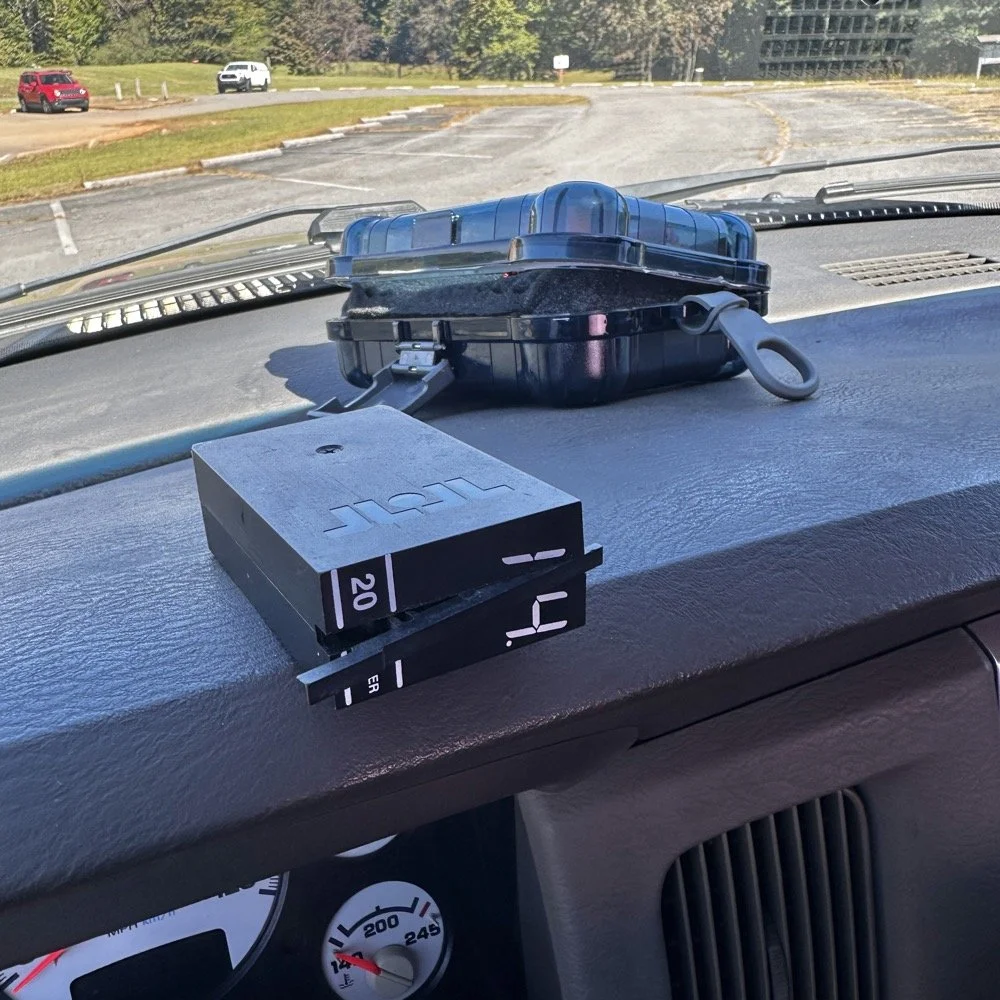
The 20 meter band module was the work horse today, pulling in the lions share of the contacts! I also ran a while on 15 meters and made over half a dozen contacts there as well. 15 meters affords me contacts on the west coast and the desert states. I made contacts with California, Washington, Arizona, and New Mexico today not to mention several in British Columbia as well as nabbing Puerto Rico today too! That is the magic of 15 meters for me when the band opens. I am normally too late in the morning to run 40 meters so I don’t get any local stations like Tennessee or Alabama, but 20 meters will normally net me as close as Texas, south Florida and Kentucky and further. I will occasionally get a local ham on ground wave or line of sight, but it is actually kinda rare. Today saw 34 QSOs come into the log, wit hone dupe, so 33 counted towards my goals. This was also my 240th activation at US-2169 as well! I am currently working towards 10,000 QSOs at this park and I am almost to 8,000 now. So it should happen by the end of next year if I have it my way. 34 QSOs is a good day for me most of the time. The days I get 100 in the log are the days where I spend almost the entire afternoon at the park and the bands are hopping… So if you are a casual operator like me, don’t expect a kilo in one sitting. That kind of performance takes a lot more dedication and skill than what I have. For me, getting a kilo in 20 activations is the norm…haha.
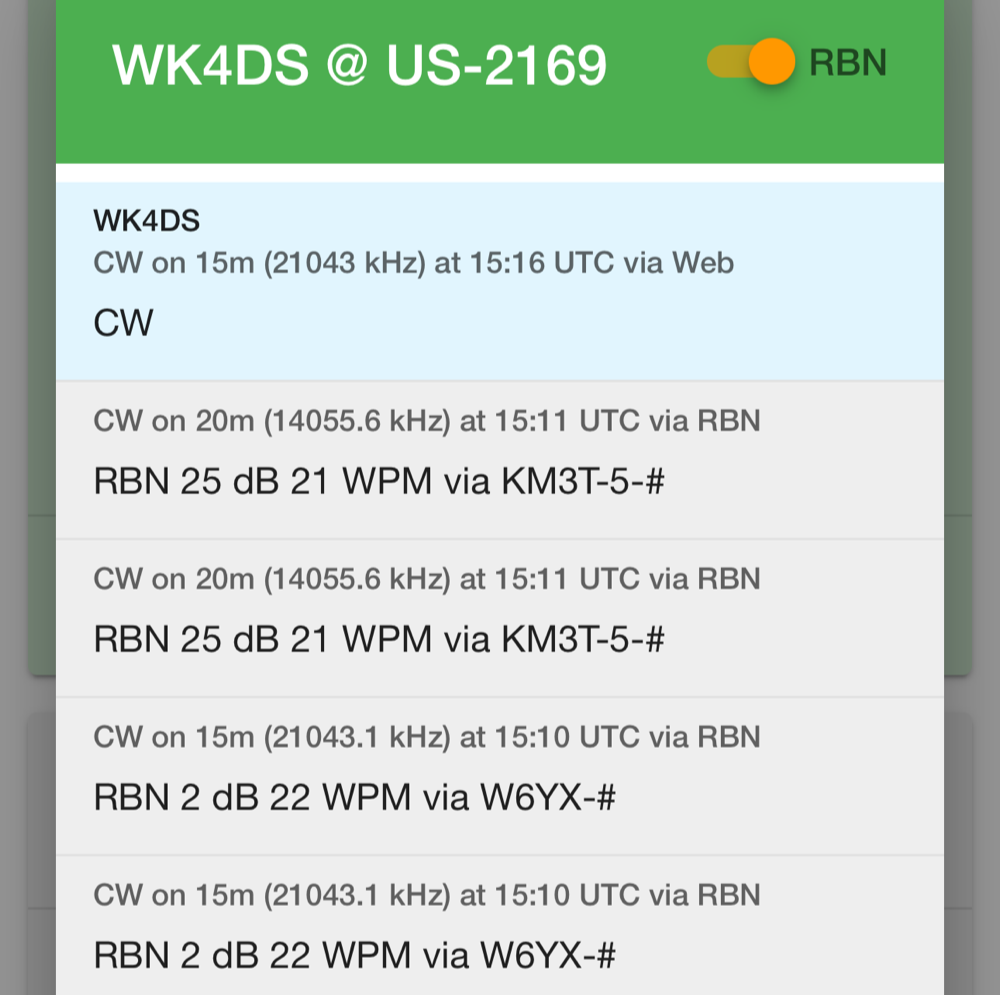
I grabbed this screen capture of the POTA spot log for my call on the POTA site today. Notice anything strange about it? To the casual or uninformed observer, nothing looks out of place. I personally know though that I didn’t hop up on 20 meters once I moved to 15 meters then right back to 15 meters. You see, the antenna takes too long to adjust and I loathe making those adjustments when I could be on the air. So I normally don’t go back to a band I left, but will instead go on to another band I have not used yet. It is a rare occasion for me to go back to 20 meters once I leave it. This was a glitch in the website somehow. I had spotted on 15 meters, then the RBN spotted me many times there, then out of no where the RBN moves me back to 20 meters for some reason! Notice that isn’t someone maliciously spotting me somewhere else to throw off the hunters, it is the RBN glitching out for some reason. I manually re-spotted myself again and it went back, but that was really odd. I don’t think it was a pirate either as those numbers look like what the numbers were when I was on 20 meters, I really believe the RBN simply had a bug in it today, but it is worth checking your spot if you are getting zero calls after a few minutes of calling CQ.
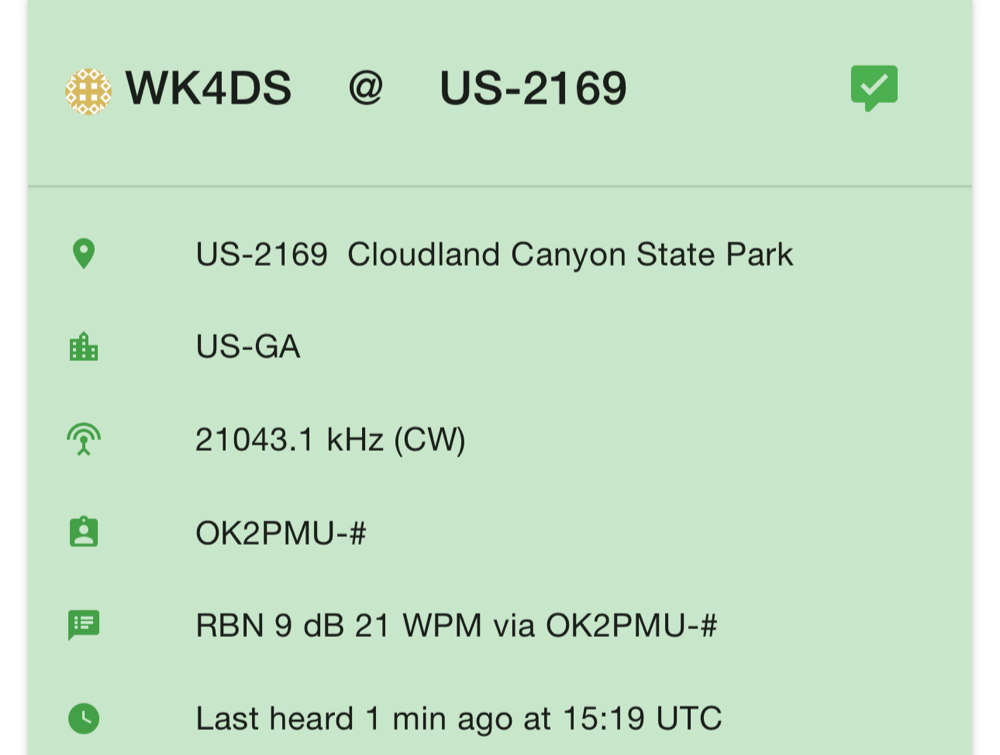
Last thing I noticed today that I want to discuss. This is the perfect example of why I say to go to the higher bands and just give it a try. This is the RBN (Revers Beacon Network) showing me that my CQs were being picked up in the Czech Republic almost 5000 miles away with a signal strength of 9dB. That ain’t bad! That also tells me that I could be heard in the UK, the Netherlands, Germany (this explains why I was hearing that German contest so well) probably a lot more of eastern Europe too. This is kinda cool with a 50 watt TenTec Scout 555 portable HF radio with minimal features. Just take a look at the map below to get a better idea of the distance to that listening station.
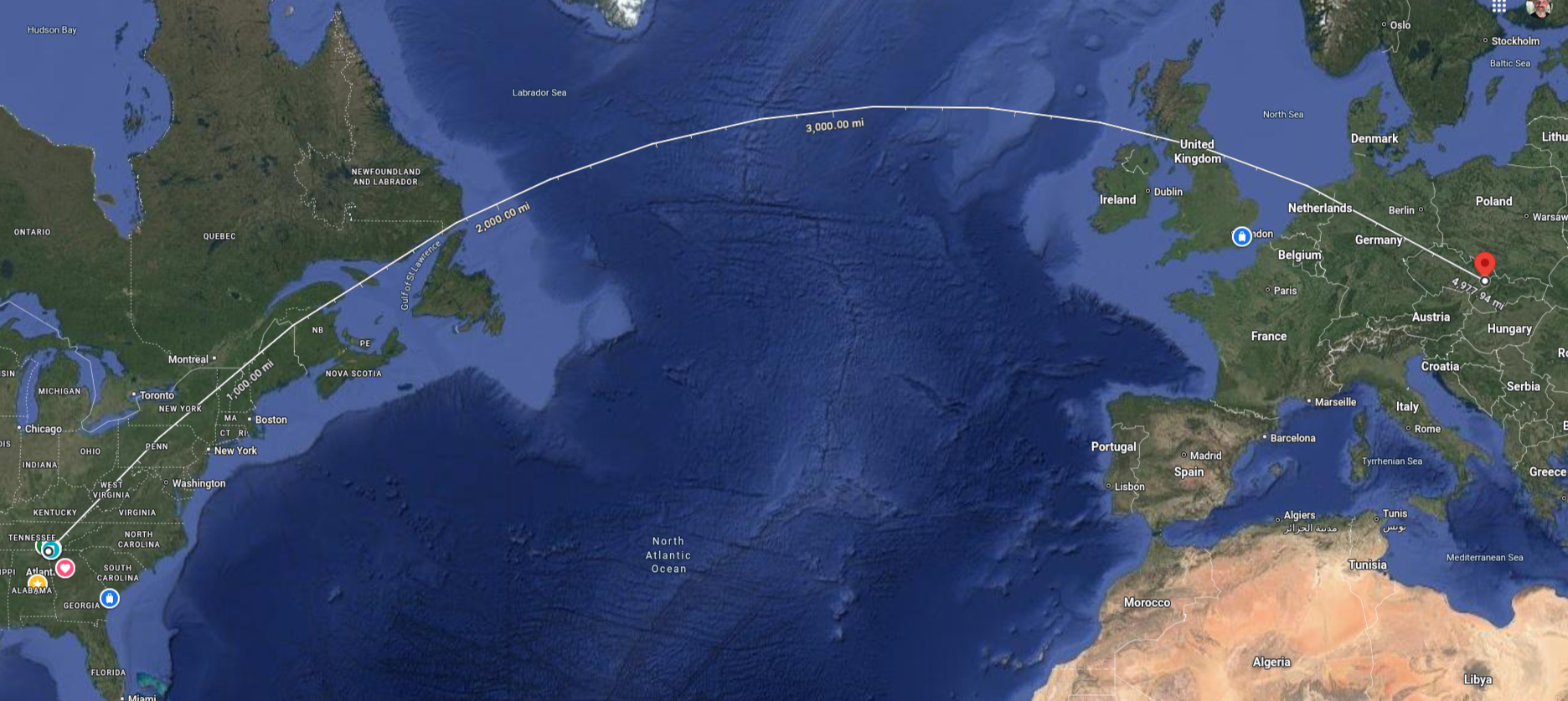
Screen capture of Google Maps showing the path to get to the listening post in the Czech Republic
All in all it was a great day at the park even if I had to wrap up in a shorter time that what I would have liked. I also liked paying attention to the little details and learning some new things like this beacon report and what it tells me about 15 meters on a day when the band is supposed to not be great…
73
WK4DS-David