How important is the time of day when you shoot a photo?
When you take the photo is just as important as what you photograph
Seems there is all sorts of information out there about what to take pictures of, but no one (other than landscape photographers) talk much about the TIME you take your photo. In this article, I want to explore this a little with a simple location that is right down the road from my apartment and show the difference that just a few hours can make in the mood and feel of a location that is being captured.
The camera of choice with my the Leica CL with the TTArtisan 17mm f1.4 lens shot off of a tripod so shutter speed isn’t a problem. I will be maintaining an ISO of 100 for all photos and an aperture of f11 on all photos, so shutter speed will be what I have to change to keep the exposures to where I like them.
The time of day is something that a lot of people think about a little but really don’t put much effort into the planning of the photo. It takes a good bit of reconnoitering to get the location scouted with the vibe you are wanting in the photo. I see these locations all the time, when I am driving around in the day time and when I see them at night it is a completely different scene. Some people like shooting in the daytime, some like the blue hour or golden hour and some, like me, prefer the night… So seeing a night photo while viewing the scene lit by the sun is a problem. I can get somewhat of a visual based on previous photos I have taken of other locations, but until you see it lit by the street lights and 8’ fluorescent tubes, you just don’t know what you will be getting.
I don’t know why I like shooting at night so much, but I do. The low light and the negative space just do something for me and the photos reflect it.

Ybor City has some interesting light that is only available at night.
I do like some blue hour stuff to add the touch of blue sky to my images at times, but not always. Another perk to shooting at night is that it is cooler in the summer months, with temps being generally lower and the sun in not beating down on me, I am more inclined to stay on a location longer and get better images. Street photos at night are a little tougher as I need larger apertures to keep ISO manageable, and this means focus is a lot more of an issue as depth of field is significantly shallower than in the daytime, but it is manageable if you think about it first.
I normally set focus traps and shoot in burst mode and this will usually net me a sharp photo of a scene at night at even crazy large apertures like f1.4 or f0.95… It just takes a bit of practice and patience.
The gear matters…
The gear you use at night matters just as much as the subject you are shooting. If you have the wrong equipment, you simply won’t get the shot.

Fast glass gives you options.
Take for instance, street photography, this is dynamic and has movement in it. For most human movement, a shutter speed of 1/250 second will freeze action sufficiently. 1/200 in a pinch if the subject isn’t moving too much will net sharp photos. Well, to get a decent exposure, you will need fast glass, shot wide open and will still probably need a fair amount of ISO to compensate.
Now, if you are shooting static subjects like buildings or scenes and motion isn’t an issue, you can just let the shutter stay open until the exposure is good, but once you cross about 10 seconds, humans tend to vanish from the scene… Cars make long lines with their headlights as they drive by and things begin to look different. So you can see it all depends on what you want to capture to drive your gear choices here.

I personally like to have fast glass if possible as this is the most versatile lenses. These lenses can still be stopped down for times when you want deeper depth of field and opened up when you need the extra light gathering power of “fast glass”. So whenever possible, I will always opt for the larger aperture option over the smaller, if just makes sense to me to have that extra optional aperture when needed. The old adage “better to have it and not need it than to need it and not have it” comes to mind…
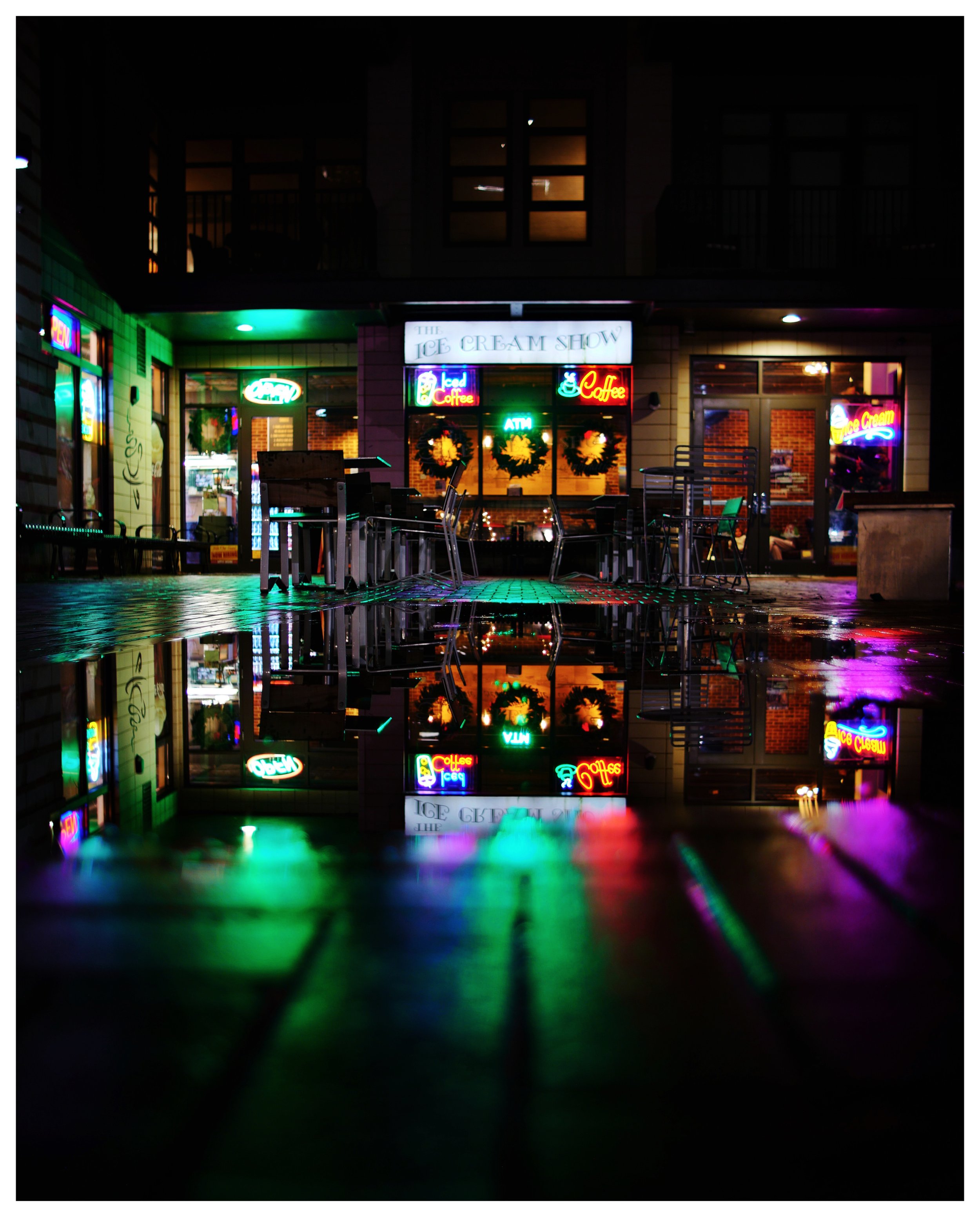
Water reflections are magical in low light or night photos.
Now that lenses are talked to death, what about the camera? Well, honestly any camera will do. It is the least important part of the equation to be honest. As long as it can be controlled manually for all three major functions, it will do. You see, it must be able to adjust shutter speed, ISO and aperture manually to be able to get creative results at night. The camera running in automatic mode will make choices in these controls that will not be what the photographer wants most of the time. It is guessing and will most likely guess wrong… But just about all reasonable cameras will let you control these functions and this is where it gets good…
The time of day.
Back to the original subject. Here are two photos taken from the same location, with the same camera and lens combination, at two different times of day.

Here we have a daytime scene of a garage.
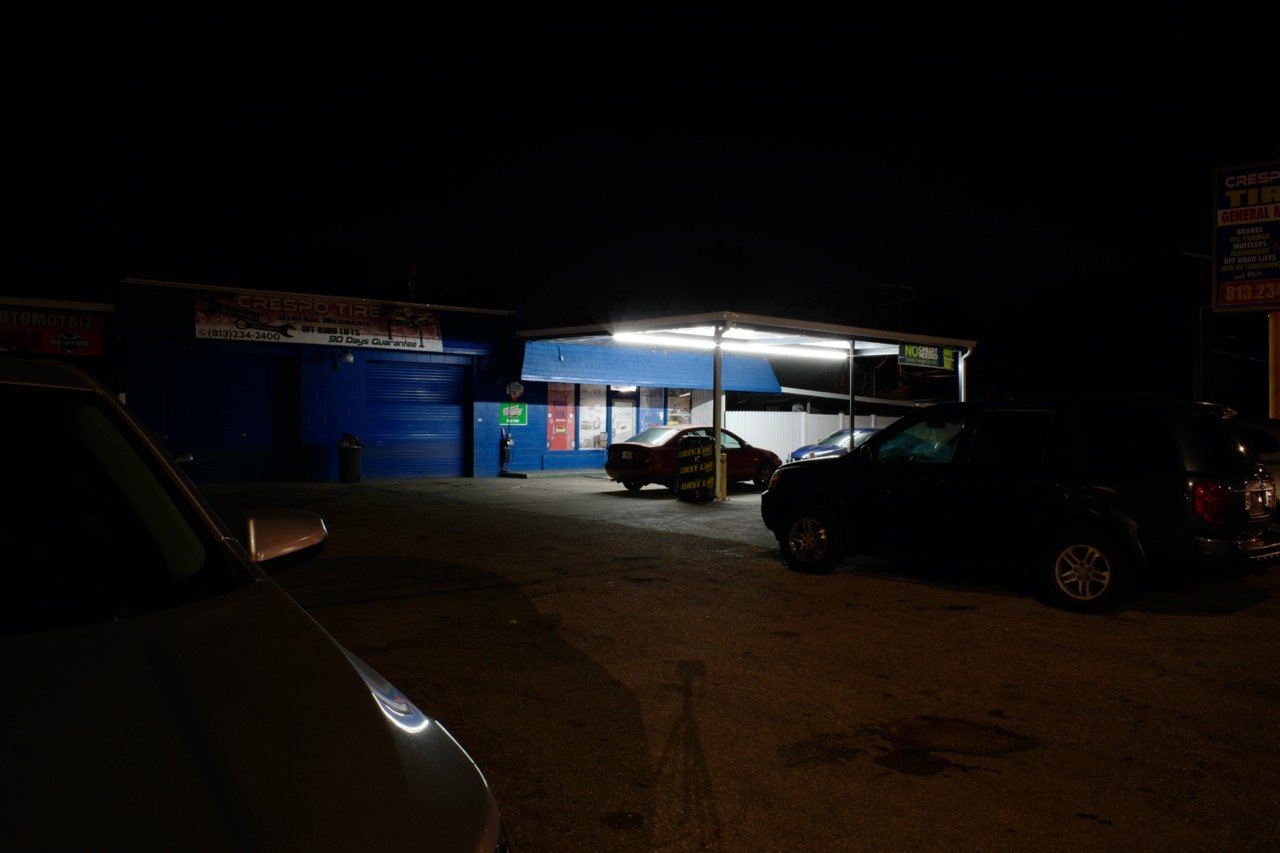
Here is the same composition at night. Notice the change in mood.

Here is the same scene, but the overhead lights are turned off (different day). This changes the mood even more and gives the scene a different feel. Take a look at the scene below of the Dutch Motel sign I found the other evening. The daytime photo isn’t much to look at, but the night time one has all sorts of interesting features that make it unique and otherworldly since it is distorting time so much with the incredible shutter time of 10 seconds!

The Dutch Morel sign isn’t much to ponder during the day…
1/400 second ISO 100 f8
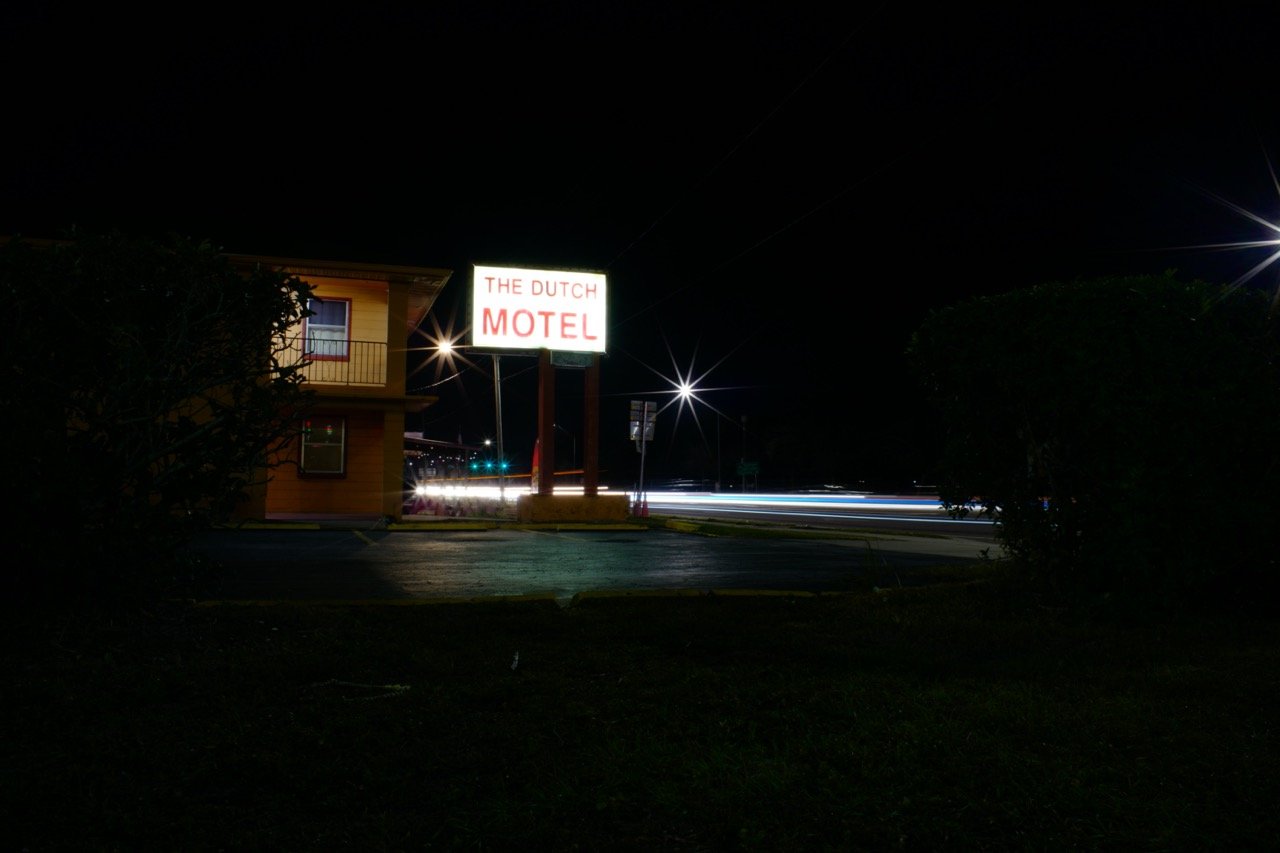
Once nightfall comes and you slow down the shutter, the magic happens
10 seconds ISO 100 f8
This is just a couple of examples too, there are many others that I have noticed over the years. So if you want a certain feel from an image, the time of day absolutely matters. There are some things that a strobe just won’t overcome and the sun is one especially if you are shooting buildings and not portraits.
So if you want to learn more about low light photography, check out my youtube channel here. David Saylors Youtube Channel.
Preserving the Past Through Photography: Documenting Small Town Historic Buildings
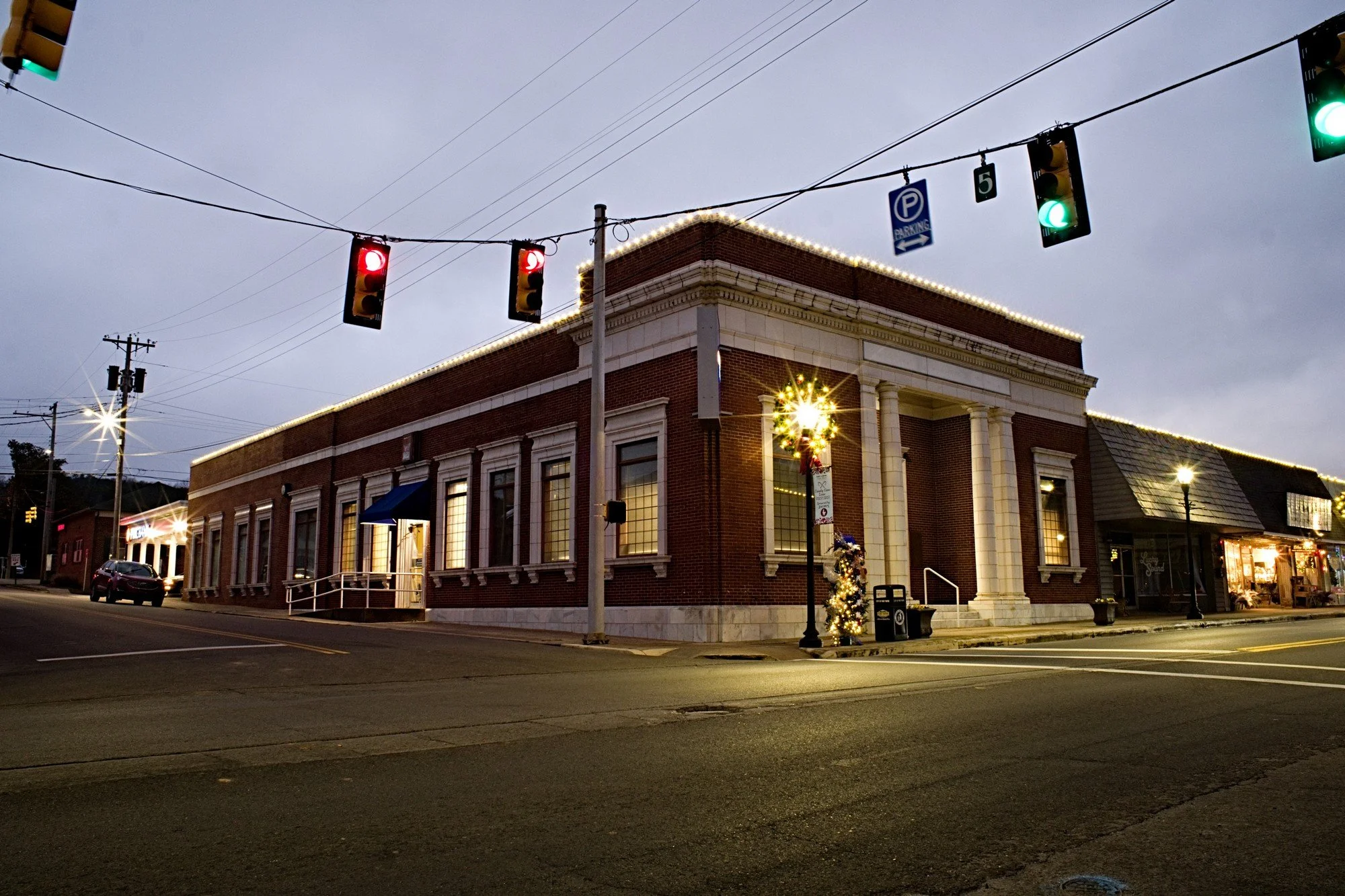
As a photographer, I am constantly on the lookout for new and interesting subjects to photograph. While I love the beauty and grandeur of natural landscapes and cityscapes, I also find a strange allure in the odd and often overlooked subjects that populate our world.
One subject that has particularly captured my attention in recent years is the cityscape of small towns. To some, these areas may seem uninteresting and even dull, but to me, they represent a unique and compelling source of inspiration.

There is something about the charm and character of these small towns that I find deeply appealing. The quaint and often crumbling buildings, the narrow streets and alleyways, the sense of history and community that surrounds them – all of these elements combine to create a visual feast that is unlike anything else.
But beyond the surface level aesthetic appeal, there is also a deeper meaning to be found in these spaces. They represent the resilience and determination of the people who live and work within them, the traditions and values that have sustained them through the years.

Photographing these small town cityscapes is not always easy, as they can often be difficult to access and require a more patient and thoughtful approach. But the challenges only serve to make the process all the more rewarding, as the resulting images capture a world that is often overlooked in the rush of modern life.
Whether it's the beauty of nostalgia or the timelessness of small town life, there is always something new and exciting to discover in these forgotten corners of the world. So if you're ever feeling stuck for inspiration, don't be afraid to venture into the world of the small and overlooked – you never know what you might find.

I have always been drawn to the beauty and mystery of old buildings. There is something about the character and history that these structures hold that captures my imagination and inspires me to create.
But there is a certain magic to be found in shooting these buildings at blue hour or at night. The soft, diffused light of the setting sun casts a warm glow on the architecture, highlighting the intricate details and textures of the building's façade. And when the sun has set and the night has fallen, the artificial lights that illuminate these structures take on a life of their own, creating a sense of atmosphere and drama that is hard to replicate in the daylight.

Shooting old buildings at blue hour or at night also adds an element of surprise and intrigue to the process. These structures are often still in use and powered up, and seeing them in this state – with their windows glowing and their machinery humming – adds a sense of vitality and energy to the image. It's a reminder that these buildings are not just static relics, but living, breathing entities that are integral to the communities they serve.
Whether it's the beauty of the blue hour light or the drama of the night, there is always something new and exciting to discover when shooting old buildings in these unconventional hours. So if you're ever feeling stuck for inspiration, don't be afraid to try something new and experiment with shooting at blue hour or at night – you might just be surprised at what you find.
Tips for Low Light Street Photography in Chattanooga TN
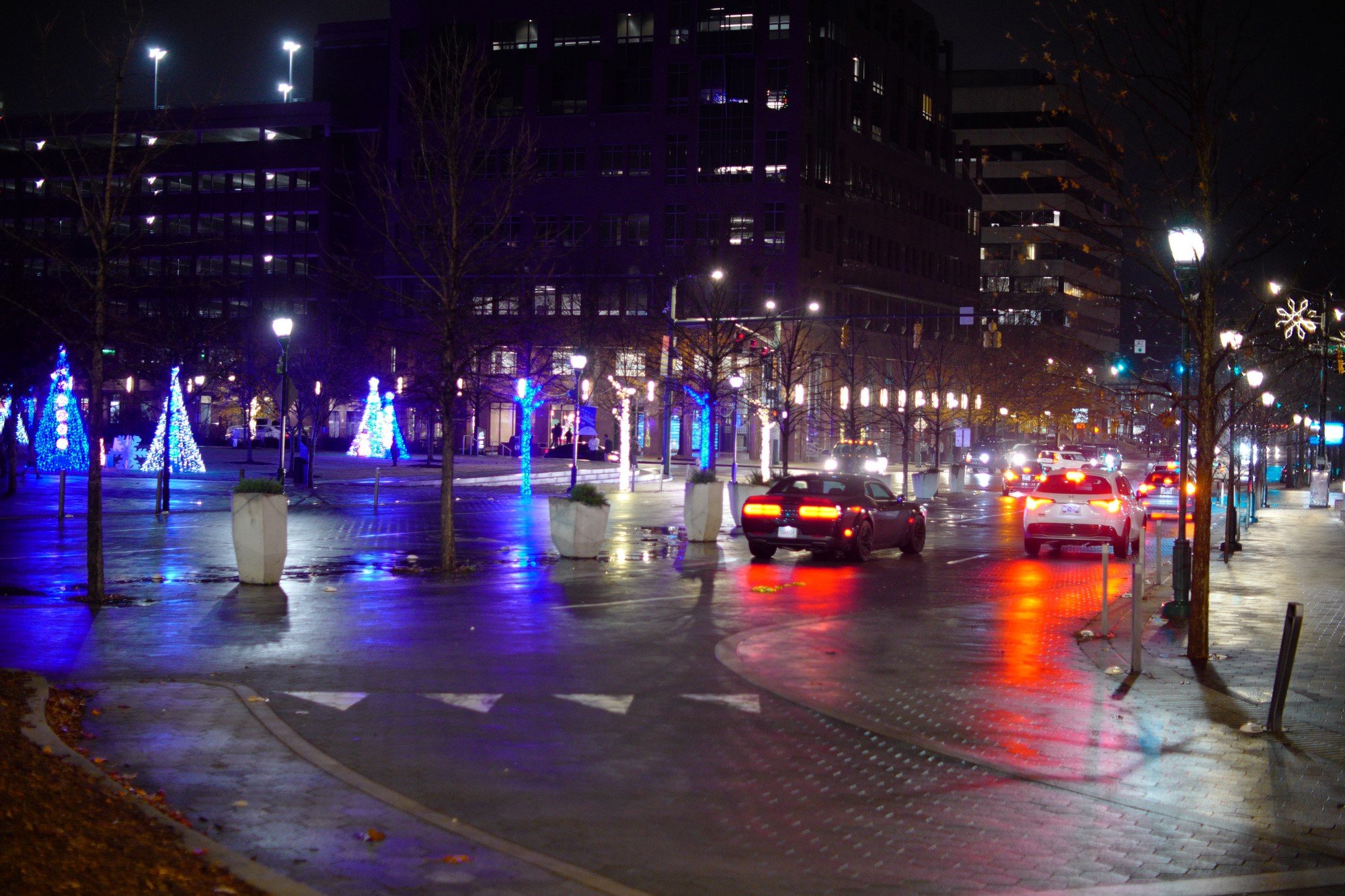
I love low light street photography in Chattanooga, TN because it allows me to capture the city's vibrant and diverse culture in a unique and exciting way. With its diverse architecture, colorful murals, and bustling nightlife, Chattanooga offers endless opportunities for me to experiment with different techniques and styles. In this blog post, I want to share some tips and techniques that I've found helpful for capturing stunning low light street photography in Chattanooga.
First and foremost, it's important to have the right equipment for the job. I always make sure to have a camera with a fast lens and good low light performance. I look for a lens with a wide aperture, ideally f/2.8 or lower, which allows more light to enter the camera and helps me capture sharp, detailed images even in low light conditions. I also prefer to use a full frame camera because it has a larger image sensor, which performs better in low light compared to a crop sensor camera.
In addition to a fast lens and a full frame camera, I find it helpful to invest in a tripod to steady my shots and prevent camera shake. A tripod also allows me to use longer exposures, which can be useful for capturing light trails or blurring movement. If I don't have a tripod with me, I try leaning against a wall or using a lamppost or other stable object to support my camera.

One of the most interesting areas for low light street photography in Chattanooga is the city's historic downtown district. I love exploring this area because it's a mix of Victorian-era mansions, Art Deco buildings, and modern skyscrapers, all lit up at night and surrounded by a lively atmosphere. I always try to find interesting angles and perspectives that highlight the city's unique architecture and history.
Another area I enjoy photographing is the city's growing arts and entertainment scene. From live music venues and breweries to art galleries and theaters, there's always something happening in Chattanooga's nightlife. I love to capture candid moments that showcase the energy and vibrancy of the city's entertainment scene.

In addition to the city's landmarks and nightlife, I always make sure to capture the people of Chattanooga in my low light street photography. I look for interesting characters and personalities, whether they're tourists, locals, or street performers. I use the available light to create mood and atmosphere, whether it's a neon sign or a street lamp. I find that photographing people in these settings adds a layer of depth and humanity to my images, and it helps to tell a story about the city and its inhabitants.

Finally, don't be afraid to experiment and play around with different settings and techniques. Low light street photography can be a creative and rewarding form of photography, and there is no one "right" way to do it. So go out there, get creative, and see what you can capture in the dimly lit streets of Chattanooga or where ever you live.
Until next time, get your camera out and go take a picture with it!
Chattanooga Life #5
Tonight I was waiting on a phone call from the wife about bringing some food to her and thought I would grab a few photos while I was there. I used my Leica CL and the 35mm Elmarit lens and tried to capture what it felt like to be out tonight while it started to rain. This is an example of seeing the setup and taking the time to get the photos while the conditions were right, the time passed pretty quickly and once it was dark, I had to completely change the way I was looking at the scene and come up with new compositions that didnt involve the sky. These photos are not technically in Chattanooga, but Trenton Ga is in the greater Chattanooga area so I consider it basically a suburb of Chattanooga. I had to work the scene pretty hard as the light diminished pretty rapidly due to it being blue hour when I started. Raining is part of street photography and these moody clouds really helped set the mood. What is your favorite time and conditions to capture street photos?


We went to the Smokies for some photography.

Last weekend we went to the Great Smokey Mountain National Forest to meet up with a friend and to do some photography. We try to do it on the weekend of the color peak, but so far we have never hit it right. Lol. This year we tried something a little different and went to Morristown to a camera shop that is there. After perusing Camera Castle for a while, we did a little street photography on Main Street in Morristown. We met some really nice people there and generally had a great time. The second day involved a lengthy hike to a small waterfall called Henwallow Falls that provided gorgeous vistas through the trees as well as some interesting nature with the flora and fauna. The evenings were spent editing the days photos and we even did a YouTube live stream from the cabin! If you get the opportunity to do something like this, I highly reckon you go, it is totally worth it. The link to the video below is just a taste of the fun we had…

