
Chattanooga Photowalk: Leica SL2 + Yashica 28mm Street Photography
Chattanooga's Rossville Avenue is one of those streets most people drive past without a second thought. But stop and look closer—you'll find pre-WWII architecture, a century-old cafe that's about to close forever, and urban decay that looks like a movie set. That's exactly what I did with my Leica SL2 and a vintage Yashica 28mm f/2.8 lens: parked for one hour of street photography and came away with something worth sharing.
Chattanooga's Rossville Avenue is one of those streets most people drive past without a second thought. But stop and look closer—you'll find pre-WWII architecture, a century-old cafe that's about to close forever, and urban decay that looks like a movie set. That's exactly what I did with my Leica SL2 and a vintage Yashica 28mm f/2.8 lens: parked for one hour of street photography and came away with something worth sharing.
Hamilton Parts Distributors: Pre-War Architecture in Chattanooga
Today we find me in Chattanooga yet again and this time I am setup on a side street off of Main street called Rossville Avenue and this road has some really neat old buildings on it, some of which I have photographed in the past but I like to get photos of them as I go along to show how they change with time. I get parked and pay for one hour of parking so I have to make it count. Putting a little pressure on myself to come away with SOMETHING of value in this time allotment.,,

Rossville Avenue in Chattanooga—one of those streets you drive past but never really see. Time to change that.
My first stop is the Hamilton Parts Distributors building that has been NOT a parts distributor for quite some time as of this point…2023. The building is really starting to show its age too with numerous windows bricked up on the sides as well as the front giving it a sort of dystopian imbalanced look. This could be a set right out of a movie or something. I took several photos from different angles today and some look better than others. I really like the front door and the corner that I get today for some reason… Here they are, what do you think?
I love how the building still has remnants of the signage that was painted on it some time in the past. Also look at the foundation material—today it's all either poured concrete or cement blocks and has been for many decades. So I'm going to speculate this is pre-war construction, meaning before World War II, based on these limestone foundation stones.
These stones look like they were repurposed from another construction site that existed before this building did. I've seen evidence of these cut stones going back to the mid-19th century in Chattanooga, so I know these are probably something left over either from a fire or were just cast off when another building was demolished. The people who built this building saw a chance to save a few dollars on this part of the construction.
Also notice that they didn't think these stones were very appealing—they hid them behind a mortar stucco finish as you can see in the front door photo. Practical, but not pretty.
What I really love about locations like this is that they tell stories about how Chattanooga was built. This isn't some sterile modern construction—this is history you can see and photograph. The bricked-up windows, the deteriorating facade, the repurposed foundation stones—it all adds up to a building that looks like it could be a set piece in a dystopian film. And it's just sitting here on Rossville Avenue where most people never even glance at it.

The corner angle showing all those bricked-up windows. Dystopian and unbalanced—looks like a movie set.

The front entrance of the old Hamilton Parts Distributors building. Notice the limestone foundation stones—likely pre-WWII construction repurposed from an earlier building.
Zarzours Cafe: 100 Years of Chattanooga History (Closing Soon)
My next stop was right next door at Zarzours Cafe.

Zarzours Cafe—over 100 years in business and closing in less than a month. I'll be eating there before they close. How could I not?
This cafe has been in business for over 100 years. Yeah, you read that right—a century, as you can see on their sign. And it's closing in less than a month from when I took these photos.
I'd never eaten there before this photowalk, which honestly is a little embarrassing considering how long they've been around. But I made a promise to myself right then: I'm going to sit at their cafe and enjoy the fine cuisine they've been serving for a century before they close their doors for good. How could I let that slide? A business that survives 100 years in Chattanooga—through the Great Depression, World War II, economic changes, everything—deserves to be experienced and remembered.
This is what urban photography is really about for me. Sure, you can go shoot pretty buildings and interesting light, and that's fine. But when you're documenting places like Zarzours that are about to disappear, you're preserving Chattanooga history. These photos matter in a way that just "pretty pictures" don't. In ten years, twenty years, someone's going to search for Zarzours Cafe and these images will be part of the record of what it looked like before it closed.
Back to the walk at hand. I took a couple of photos of the restaurant and parking area and headed on down the street.

Another angle of Zarzours. A century of Chattanooga history about to become just a memory.
Koch Foods and Lookout Mountain: Iconic Chattanooga Skyline
The next stop was at the Koch Foods Processing plant. This is one of two processing plants inside the city that I am aware of. These have been here for decades too so they are pretty much fixtures of the city at this point. One is on Broad street and the other is here on Rossville Ave. It being such an iconic location coupled with the skyline containing Lookout Mtn as well makes for a cool photo to me.

Koch Foods processing plant with Lookout Mountain in the background—an iconic Chattanooga skyline view that's been here for decades.
Main Street Chattanooga: Urban Photography in Action
After the chicken plant, I made my way over to Main street and did a little photography on Main as well. Main usually has something really colorful as well as interesting too, this is why I usually always make my way over and look around for a little while at a minimum…

Same spot, faster shutter speed to freeze the construction scene. Main Street always has something interesting going on.
Leica SL2 + Yashica 28mm: Why This Combo Works for Street Photography
These two photos just go to show what all can be found on Main street even when it is not having some sort of special event. All it takes is a little creativity and time of your part to come away with some interesting photos. Now you might be thinking these are not interesting photos, and you will be right as the photo interest rate will vary from person to person, but I found that these to be quite interesting so I am sharing them with you…lol. The difference between the two photo primarily is the shutter speed as one is really slow to blur the truck and the other is faster so it will capture the whole construction scene with out any motion blur on my part.
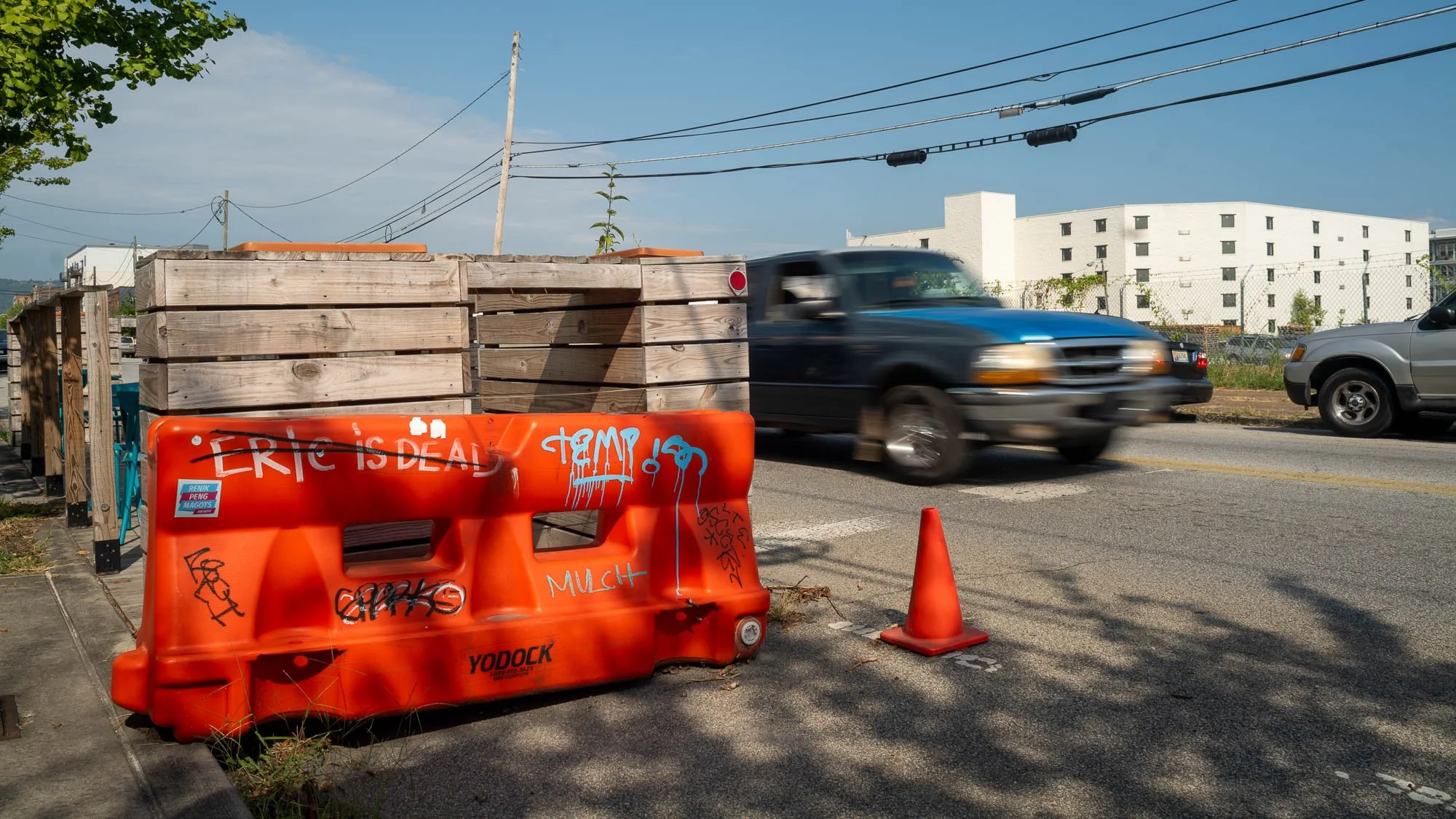
Main Street with a slow shutter to blur the truck. The Leica SL2's IBIS makes this kind of handheld shot possible.
Leica SL2 + Yashica 28mm: Why This Combo Works for Street Photography
The Yashica 28mm f/2.8 is one of those vintage lenses that just works. It's not fancy, it's not expensive, and it doesn't have modern coatings or any electronic connections. But for street and urban photography like this Chattanooga photowalk, it's exactly what I need.
The 28mm focal length gives you enough width to capture environmental context—like the whole Hamilton Parts building facade or the Koch Foods plant with Lookout Mountain in the background—without getting into ultra-wide territory where everything starts looking distorted. It's the kind of focal length where you can work close to your subject or step back and get the whole scene, and either way, the composition feels natural.
Paired with the Leica SL2, this combination is almost perfect for what I'm doing. The SL2's IBIS (in-body image stabilization) means I can hand-hold at slower shutter speeds than I could with any other camera. That Main Street shot where I blurred the truck? That's 1/15 second or slower, handheld, with a manual focus lens. Without IBIS, that would be a blurry mess. With the SL2 compensating for camera shake, it's clean and usable.
The focus peaking on the SL2 makes manual focusing with the Yashica fast and accurate. I set focus peaking to show me exactly where sharp focus is, and between that and the bright EVF, I can nail focus even in challenging light. It's honestly more enjoyable to shoot with than autofocus sometimes—you're more engaged with the process, more intentional about what you're focusing on.
And here's the best part: the Yashica 28mm cost me a fraction of what a native L-mount lens would cost. I get great image quality, I enjoy the process, and I'm not worried about damaging an expensive modern lens while walking around industrial areas of Chattanooga photographing old buildings. It's the perfect urban photography setup.
IBIS and Adapted Lenses: Technical Advantages of the Leica SL2
One thing I want to emphasize about shooting adapted vintage lenses on the Leica SL2 is how much the IBIS changes what's possible. In-body image stabilization isn't just a convenience feature—it fundamentally changes how you can use manual focus lenses in real-world shooting.
With older cameras, the rule of thumb was that your minimum handheld shutter speed should be roughly 1/focal length. For a 28mm lens, that means 1/30 second or faster. Slower than that and you'd get camera shake blur unless you had very steady hands or were bracing against something.
The SL2's IBIS throws that old rule out the window. I regularly shoot at 1/15 second, 1/8 second, sometimes even slower if I'm careful. The sensor is compensating for my hand movement in real-time, which means I can use lower ISOs for better image quality, or shoot in lower light conditions without needing a tripod.
For street and urban photography where you're often in shaded areas or shooting late in the day, this is huge. The Yashica 28mm has a maximum aperture of f/2.8, which is good but not super fast. In dimmer light, without IBIS, I'd be pushing ISO up to 1600 or 3200 to maintain usable shutter speeds. With IBIS, I can stay at ISO 400 or 800 and let the shutter speed drop, knowing the stabilization will keep things sharp.
It's one of those features that doesn't seem like a big deal until you actually use it in the field, and then you wonder how you ever shot without it. Vintage glass on a modern mirrorless body with IBIS is genuinely the best of both worlds.
Some are asking…
Best Time to Shoot Rossville Avenue: Morning light is good for the Hamilton Parts building facade. Late afternoon gives you nice side light on Zarzours and the other buildings along the street. Main Street is active all day, but I prefer shooting there in the afternoon or early evening when the light gets more interesting.
Parking and Logistics: Like I mentioned, metered parking is available right on Rossville Avenue. One hour was enough time for me to hit Hamilton Parts, Zarzours, Koch Foods, and make my way to Main Street. If you want to spend more time, pay for two hours to give yourself breathing room.
Safety: This isn't the touristy part of Chattanooga (it is more for the local crowd in this area) so just be aware of your surroundings. It borders an industrial area, not dangerous, but use common sense. Don't leave gear visible in your car, keep your camera bag close, and stay alert. I've never had any issues, but it's always smart to be aware when you're photographing in less-traveled parts of town.
Support this website by using these affiliate links to shop on Amazon:
Leica M11 Digital Rangefinder Camera
Nikon AF-S FX NIKKOR 105mm f/1.4E ED Lens
Voigtlander Nokton 35mm f/1.4 II
Sandisk 128GB Extreme Pro memory cards
Nikon 50mm f1.8 S Lens for Z mount
Frequently Asked Questions About Chattanooga Photography
Where is the best street photography in Chattanooga?
Main Street and Rossville Avenue are excellent for urban and street photography. Main Street is more polished with events, murals, and restaurants—it's the tourist-friendly side of downtown. Rossville Avenue offers grittier architecture and history. The area around the old Hamilton Parts Distributors building has pre-WWII structures that make for compelling photography if you're into urban decay and architectural history.
For skyline shots, look for locations where you can frame Lookout Mountain in the background—it's iconic Chattanooga and makes for instantly recognizable compositions. The Koch Foods plant area on Rossville gives you that view. Also worth checking: the riverfront, the Walnut Street Bridge, and the side streets off Main where you'll find older buildings and interesting character that don't make it into the tourist brochures.
Is Zarzours Cafe still open in Chattanooga?
As of when I took these photos in late 2023, Zarzours Cafe was preparing to close after over 100 years in business. This century-old Chattanooga institution on Rossville Avenue was a landmark, and I made it a point to photograph it—and eat there—before it closed forever. If you're reading this after 2023, it's likely already closed, which makes these photos even more valuable as historical documentation of Chattanooga's changing landscape.
It's one of those things that makes urban photography meaningful to me. You're not just capturing pretty pictures—you're documenting history before it disappears. Businesses that survive 100 years deserve to be remembered, and photography is how we do that.
Can you use vintage lenses for street photography?
Absolutely. I shot this entire Chattanooga photowalk with a Yashica 28mm f/2.8—a vintage adapted lens on my Leica SL2. The 28mm focal length is great for street photography because it captures environmental context without being too wide or distorted. You get the subject plus the surrounding architecture and scene, which tells a more complete story.
The Leica SL2's IBIS and focus peaking make manual focusing with vintage glass practical and enjoyable even in fast-moving street situations. Plus, vintage lenses have character and cost a fraction of modern glass. For street photography where you're often shooting at f/5.6 to f/8 anyway, vintage lenses perform beautifully. The Yashica 28mm is sharp, handles well, and cost me way less than any modern L-mount 28mm would.
What camera settings work best for urban photography?
For urban photography like this Chattanooga photowalk, I typically shoot in aperture priority mode at f/5.6 to f/8. This gives you good depth of field to keep both foreground and background reasonably sharp while keeping shutter speeds manageable in changing light conditions.
The Leica SL2's IBIS lets me hand-hold at slower speeds than I could with other cameras—like that Main Street shot with the motion-blurred truck. I set a minimum ISO (usually 100-400 depending on available light) and let the camera adjust shutter speed based on the scene. For adapted manual lenses like the Yashica 28mm, I use focus peaking to nail focus quickly and confidently.
If you're shooting architecture specifically, sometimes I'll stop down to f/11 or f/16 for maximum sharpness corner-to-corner, but for general street photography, f/5.6 to f/8 is the sweet spot.
Where can I park for photography on Rossville Avenue in Chattanooga?
There's metered street parking along Rossville Avenue. I paid for one hour of parking which gave me enough time to walk and photograph the Hamilton Parts building, Zarzours Cafe, Koch Foods, and make my way over to Main Street. The parking is affordable and convenient, and the walk between all these locations is pretty short—maybe a quarter mile total if you're hitting everything.
Just be aware of your surroundings. This area is more industrial and local than touristy, so stay alert when you're setting up shots and wandering around. It's not dangerous, but it's also not the Walnut Street Bridge where there are tourists everywhere. Just use common sense like you would in any urban environment.
How do you photograph closing businesses before they're gone?
When I heard Zarzours Cafe was closing after 100 years, I made it a priority to photograph it while I still could. These historical documentation shots become more valuable over time as the city changes. My advice: shoot multiple angles, capture signage clearly, and include contextual details like the parking lot, neighboring buildings, and street views that show where it sits in the neighborhood.
Take both "beauty shots" and straightforward documentary photos. You're not just making art—you're preserving Chattanooga history. The signage, the facade, the surrounding context—all of it matters for the historical record.
And if you can, patronize the business before it closes. I planned to eat at Zarzours before they shut down for good. If something is worth photographing because it's historically significant, it's worth supporting while you still can.
That's one hour of parking on Rossville Avenue in Chattanooga—from pre-WWII architecture at Hamilton Parts Distributors to a century-old cafe about to close forever, to the iconic skyline view at Koch Foods with Lookout Mountain in the background. Not bad for a quick urban photowalk with a Leica SL2 and a vintage 28mm lens.
Chattanooga has so much history hiding in plain sight. You just have to park, get out, and look. Next time you're driving through, skip Main Street for a minute and explore Rossville Avenue. You'll find stories in every building.
Have you photographed Chattanooga or documented historic locations before they're gone? Drop a comment—I'd love to hear about your urban photography spots.
Want more Chattanooga photography and Leica SL2 content? Check out my other photowalks and vintage lens reviews on the blog.

Sigma 90mm f/2.8 DG DN Review: Leica Quality for $600 (L-Mount)
This is the second of two Sigma lens reviews I have done recently and this lens is no slouch either. The 90mm f2.8 DG DN Sigma lens is a very well made little prime lens and this particular copy is for the L mount for Leica and Panasonic cameras. I am sure Sigma makes this lens for other lens mounts as well, but I dont have that list with me so I cant speculate past that.
This is the second of two Sigma lens reviews I have done recently and this lens is no slouch either. The 90mm f2.8 DG DN Sigma lens is a very well made little prime lens and this particular copy is for the L mount for Leica and Panasonic cameras. I am sure Sigma makes this lens for other lens mounts as well, but I dont have that list with me so I cant speculate past that.
Sigma 90mm f/2.8 DG DN: Technical Specifications
Before we dive into the hands-on experience, here are the specs:
Optical Design:
Focal length: 90mm
Maximum aperture: f/2.8
Minimum aperture: f/22
Aperture blades: 9 (rounded for smooth bokeh)
Physical Specs:
Mount: L-mount (Leica SL/CL, Panasonic S-series)
Filter size: 55mm
Length: 2.4 inches (61.6mm)
Weight: 10.4 oz (295g)
Minimum focus distance: 19.7 inches (50cm)
Construction:
All-metal barrel
Aperture ring with 1/3 stop detents
AF/MF switch on lens barrel
Weather sealing: No (one downside vs Leica)
Price:
Sigma 90mm f/2.8 DG DN: ~$600
Leica APO-Summicron-SL 90mm f/2 ASPH: ~$5,395
Yeah, that's not a typo. The Leica costs nine times more than the Sigma. Let's see if that price difference is justified!
What is 90mm Good For? Use Cases and Focal Length
If you're not familiar with 90mm as a focal length, let me explain why this is such a useful lens to have:
Portrait Photography: 90mm is a classic portrait focal length! It gives you nice compression, flattering perspective, and enough working distance that you're not right in your subject's face. The f/2.8 aperture provides good subject separation without going overboard. This is what I'd grab for environmental portraits where I want context but still want the subject to stand out.
Street Photography: At 90mm, you get compressed perspective that makes street scenes feel more intimate. You can shoot from across the street without being obvious, and the focal length picks out details in a way that 35mm or 50mm just can't. It's not a run-and-gun street lens, but for deliberate composition? It's great!
Detail Work: Need to photograph architectural details, signage, or anything where you want isolation without getting too close? 90mm is perfect. I use this focal length all the time for documenting buildings and urban details in Chattanooga.
What 90mm is NOT good for: Wide landscapes (too narrow), group photos in tight spaces (you'll run out of room to back up), and anything requiring fast reaction (it's a slower, more deliberate focal length). Know your lens's strengths!

The Sigma 90mm f/2.8 DG DN with its lens hood attached. Notice how the hood is almost as big as the lens itself! This is a genuinely compact 90mm prime lens.
In the photo below you can see how small the lens actually is. The lens hood takes up almost as much space as the lens itself. That is crazy! With the all metal construction and well made optical formula, this lens is also punching up as they say.
Size comparison showing how small this lens actually is. The lens hood takes up almost as much space as the lens itself. That's crazy for a 90mm focal length! With all-metal construction and excellent optics, this little lens is punching way above its weight.
Some notable differences between the Sigma lens and my Leica counterparts are that the Sigma lens actually has an aperture ring on it that also has 1/3 stop detents. This is really nice as it allows manual aperture control to be basically mapped to a control surface that photogs are accustomed to using. If you want the usual camera control for the aperture, then simply turn the aperture ring to the “A” position and your ready to go. Ít couldn’t be simpler.
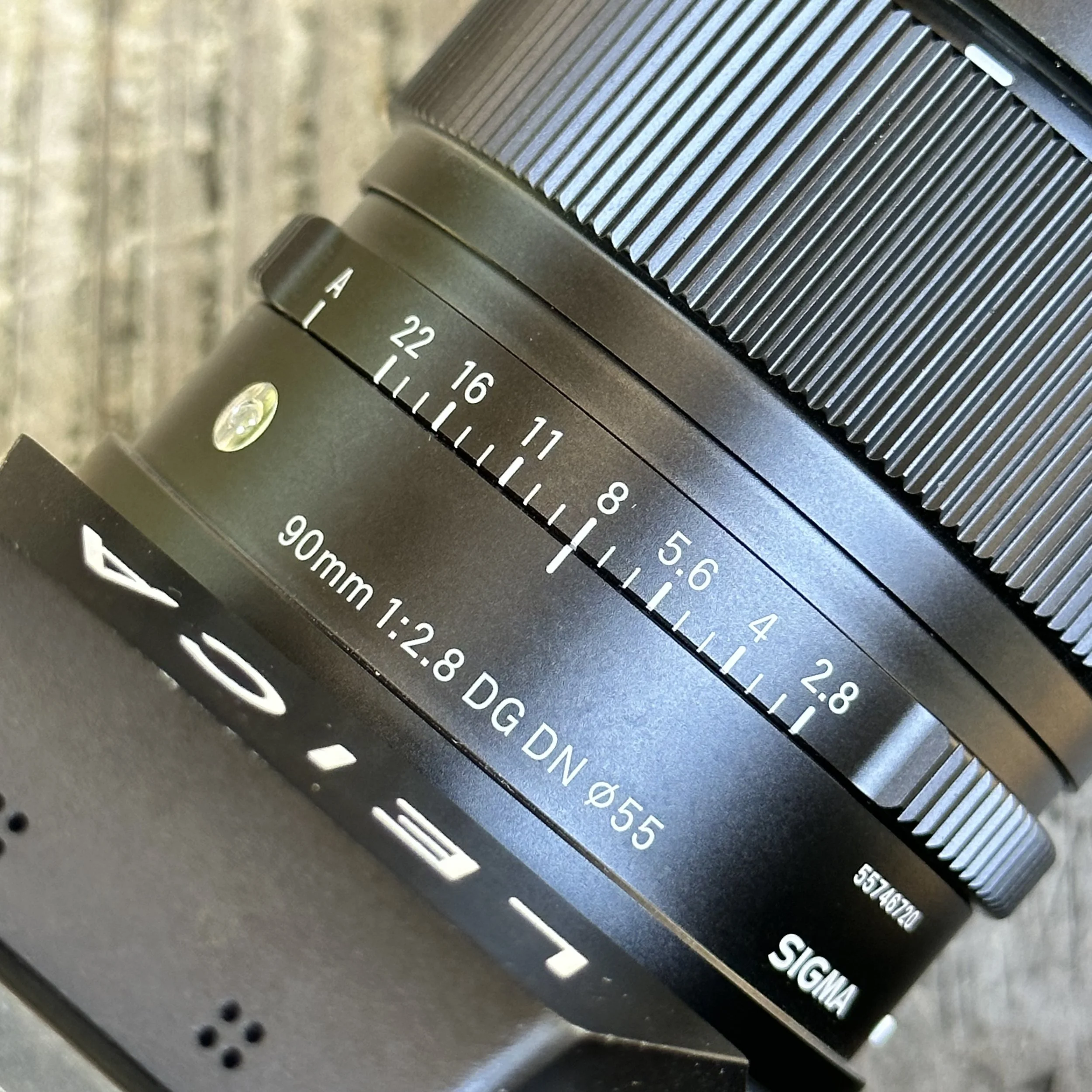
The aperture ring on the Sigma 90mm with 1/3 stop detents. This is a really nice feature that allows manual aperture control mapped to a control surface photographers are already used to. Turn it to "A" for camera-controlled aperture. Simple and intuitive!
The next thing they did on the lens that I am not so sure I like yet is to put a switch to choose between manual and automatic focus. The Leica lenses use a software control to do this and it is pretty simple to implement and once you get used to doing it that way it really is a good system. There are less openings in the lens to let water in and the control is right they with the various auto focus modes all in one spot. The Sigma system has you choose manual or auto on the lens and then if you choose auto, you have to further goto the software and choose the automatic mode you want. It makes choosing autofocus a two step affair. This is probably just a user issue where I lack practice with the lens, but this seems a little clumsy compared to the Leica process. It is possible that Leica didn’t share all the tech needed to make this happen, I don’t know, but like I said I am on the fence on this one.

The AF/MF switch on the lens barrel. This is the one design choice I'm not sold on yet. Leica lenses use software control for focus modes in one step. The Sigma requires you to switch here first, then choose the AF mode in the camera menu. It's a two-step process that feels clumsy compared to Leica's system. Still works fine, just takes getting used to!
Lastly is image quality. The Sigma has it. It produces sharp, distortion free images with good color and exposure. What more can I say here? It really is amazing what you get for the price. These lenses can run with the big boys, in my opinion, just fine. If you pixel peep deep enough you might find fault in them, but only photographers do that. The normal person never digs into the corners or zooms into 500% on a photo so I am not going to rate this lens like that either. The photos look wonderful…just look at the ones below.
Sample Photos: What This Lens Can Do
Let me show you what this lens can actually produce in real-world use. These are all shot with the Sigma 90mm f/2.8 on my Leica SL2:
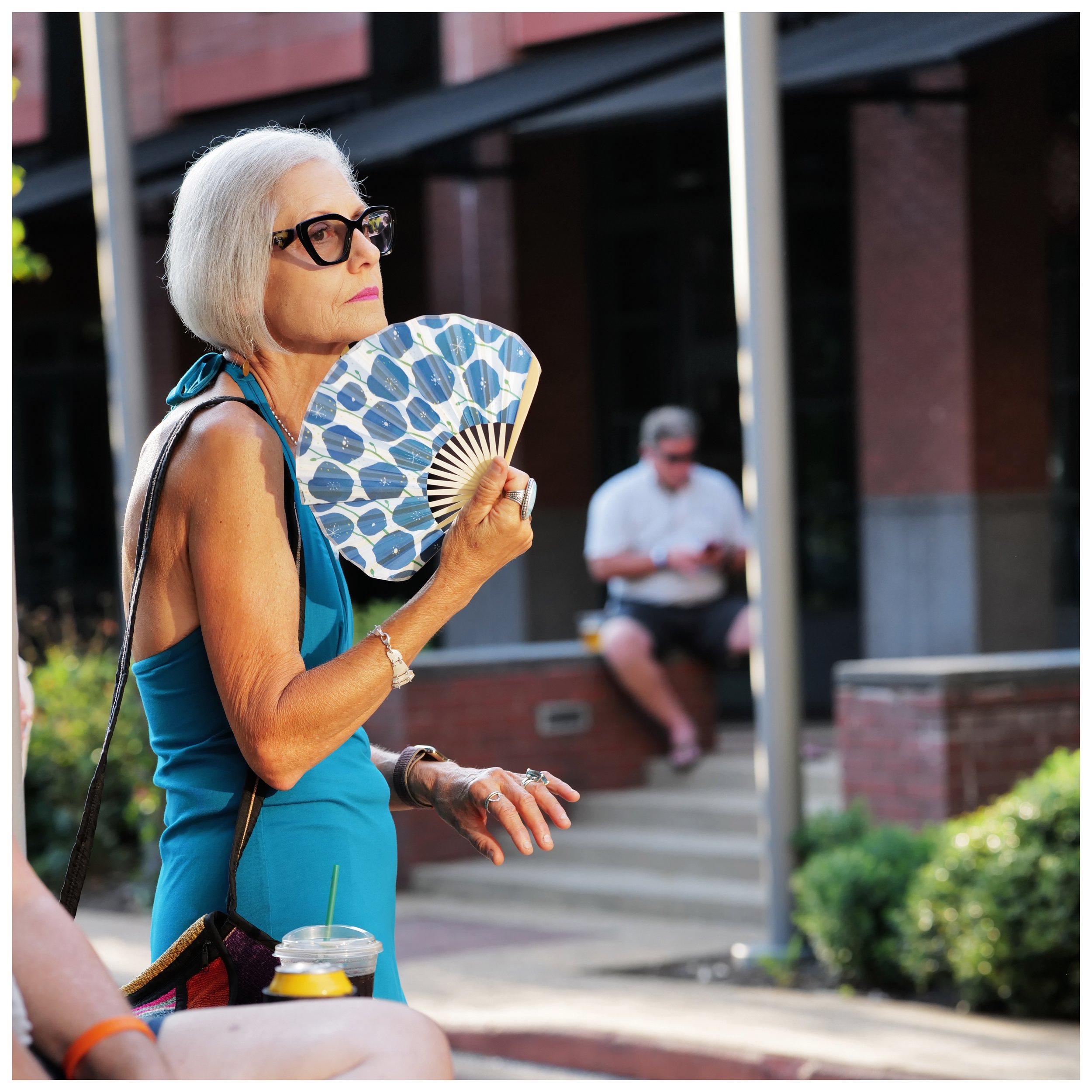
Sample photo shot with the Sigma 90mm f/2.8 on my Leica SL2. Look at the sharpness, color rendering, and contrast! This lens produces distortion-free images with excellent detail. What more can you ask for at this price point?
Look at the sharpness across the frame! The colors are accurate without being oversaturated, the bokeh is smooth and not distracting, and the compression at 90mm makes these compositions work. The first photo shows how this lens handles contrast and detail in mixed lighting. The second demonstrates subject isolation at f/2.8. The third shows color rendering in challenging light.
This is what you're getting for $600. Not "budget lens performance." This is legitimate high-quality glass that happens to cost less than the Leica equivalent.
One thing to note: these photos weren't babied. I was shooting handheld in various lighting conditions, some shots were wide open at f/2.8, and I didn't do any special post-processing beyond my normal workflow. This is real-world performance, not controlled test charts!

Another example of what this lens can do. The 90mm focal length gives you nice compression and the f/2.8 aperture provides good subject separation. The bokeh is smooth and not distracting. This is Leica-quality glass at a fraction of the cost!

More proof that the Sigma 90mm delivers excellent image quality in real-world use. Colors are accurate without being oversaturated, detail is sharp across the frame, and the lens handles mixed lighting well. These aren't test charts, this is actual photography!

Final sample showing the Sigma 90mm's capabilities. Shot handheld in Chattanooga during a block party. The lens is sharp, colors look great, and the compression at 90mm makes the composition work. If you want great glass at a fraction of Leica's price, this lens is the ticket!
Sigma vs Leica: Is the Price Difference Worth It?
Let's address the elephant in the room: Leica makes a 90mm lens for L-mount. The Leica APO-Summicron-SL 90mm f/2 ASPH costs about $5,400. The Sigma costs $600. That's a $4,800 difference.
What do you get for that extra $4,800?
The Leica advantages:
One stop faster (f/2 vs f/2.8)
APO designation (apochromatic correction, minimal chromatic aberration)
Legendary Leica color rendering and micro-contrast
Full weather sealing
Leica brand prestige (if that matters to you)
Probably slightly sharper wide open (though the Sigma is already sharp!)
The Sigma advantages:
Costs $600 instead of $5,400
Still produces excellent images (as you can see from my samples!)
Aperture ring with detents (Leica's is clickless)
Compact and lightweight
You save $4,800 that you can spend on other lenses or, you know, food!
My take: If you're a professional portrait photographer who needs f/2 and perfect optical performance for paying clients? Maybe the Leica is worth it. If you're a Leica SL2 shooter who wants excellent 90mm performance without spending a small fortune? The Sigma is absolutely the right choice.
I'd rather have the Sigma 90mm f/2.8 plus a Sigma 35mm and 65mm for the same price as one Leica 90mm. That's three lenses versus one! Unless you're chasing that last 5% of optical perfection, the Sigma is the smart buy.
Pros, Cons, and Who Should Buy the Sigma 90mm f/2.8
Let me break down the good and the not-so-good about this lens:
What I Love (Pros):
Image quality is excellent: Sharp, great color, minimal distortion
Compact size: Fits easily in a bag, lens hood is bigger than the lens!
Aperture ring with detents: Manual aperture control feels great
All-metal construction: Feels solid and well-made
Price: $600 vs $5,400 for the Leica equivalent
Real f/2.8: Not a variable aperture zoom, consistent light gathering
What I Don't Love (Cons):
Two-step focus mode selection: AF/MF switch on lens PLUS software menu selection feels clumsy compared to Leica's one-step software control
Only f/2.8: If you need f/2, you'll have to step up to the Leica (and pay 9x more)
No weather sealing: Leica lenses are weather sealed, this isn't
Learning curve: Takes some getting used to if you're coming from Leica's system
Who Should Buy This Lens:
Leica SL2 or Panasonic S-series shooters on a budget
Portrait photographers who want 90mm without spending $5,000+
Anyone building an L-mount lens kit and prioritizing value
Street photographers who like compressed perspective
Photographers who appreciate manual aperture rings
Who Should Skip This Lens:
People who absolutely need f/2 or faster
Photographers who require weather sealing for their work
Anyone who already owns the Leica 90mm f/2 (obviously!)
Wide-angle shooters (this isn't your lens!)
Support this website by using these affiliate links to shop on Amazon:
Sigma 90mm F2.8 DG DN for L Mount
Nikon AF-S FX NIKKOR 105mm f/1.4E ED Lens
Voigtlander Nokton 35mm f/1.4 II
Sandisk 128GB Extreme Pro memory cards
Final Thoughts
So in conclusion, if you want great glass at a fraction of the cost of Leica, this lens is just the ticket. Sigma has done a complete 180 from the last time I used one over a decade ago and that makes me happy.
Here's my bottom line: The Sigma 90mm f/2.8 DG DN is the lens Leica SL2 shooters should buy if they can't justify $5,400 for the Leica version. And honestly? Most people can't and shouldn't justify that price difference. The Sigma produces excellent images, feels solid, and costs less than many Leica lens hoods!
The only real downsides are the two-step focus mode selection (which is a user interface annoyance, not a deal-breaker) and the lack of weather sealing. If those don't bother you, this lens is a no-brainer for L-mount shooters.
Sigma has seriously stepped up their game in recent years. I remember using Sigma lenses a decade ago and being underwhelmed. These new DG DN lenses for mirrorless mounts? They're competitive with first-party glass at a fraction of the price. This is exactly what the L-mount system needs—excellent third-party options that don't compromise on quality.
Would I rather have the Leica 90mm f/2? Sure, if someone else is paying for it! But would I rather have the Sigma 90mm plus four other Sigma primes for the same money? Absolutely. That's the math that makes sense for most photographers.
Now get your camera out and go take a picture with it!
Chattanooga Life #5
Tonight I was waiting on a phone call from the wife about bringing some food to her and thought I would grab a few photos while I was there. I used my Leica CL and the 35mm Elmarit lens and tried to capture what it felt like to be out tonight while it started to rain. This is an example of seeing the setup and taking the time to get the photos while the conditions were right, the time passed pretty quickly and once it was dark, I had to completely change the way I was looking at the scene and come up with new compositions that didnt involve the sky. These photos are not technically in Chattanooga, but Trenton Ga is in the greater Chattanooga area so I consider it basically a suburb of Chattanooga. I had to work the scene pretty hard as the light diminished pretty rapidly due to it being blue hour when I started. Raining is part of street photography and these moody clouds really helped set the mood. What is your favorite time and conditions to capture street photos?


Chattanooga Life #4
Well, some days, the people are outside and some days they are not. This day the people were outside… it is nice to see the people getting back to life as usual and that waiting on the world to “turn back on” is just wasteful. I really enjoyed being out among the people of Chattanooga with my camera and getting street photography style photos. It can be tough in Chattanooga with street photography since the city is more spread out, but some days it just works. I finally got a little longer lens (85mm effective field of view) so I should be able to get a little more going forward.




The people here are good people for the most part with a good message… get your camera out and take a picture with it. #streetphotography #photography #chattanooga #camera
Chattanooga Life #3
With the coming of fall in the air, people are starting to get outside a little more, even though the pandemic is far from over… I honestly think people are simply getting tired of being scared of it and are just going back to daily life with the added inconvenience of wearing face coverings. Horse and buggy rides are back in operation and people are enjoying the time spent with them. I’m personally glad to see people getting on with life…#streetphotography #photography


Chattanooga Life #2
“Windowshopping with dad” This image was taken on Market Street 31 JUL 2020
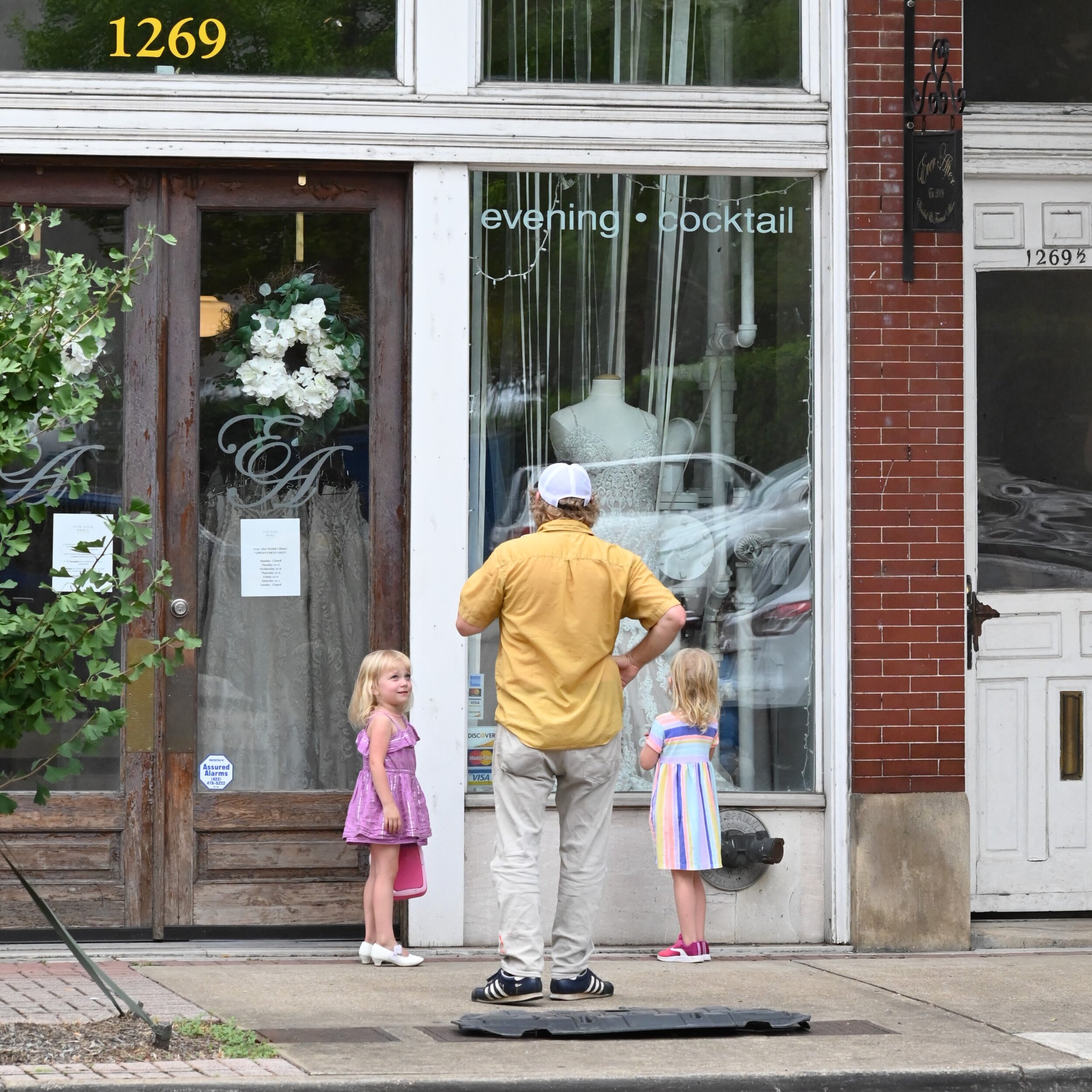
I wonder what she is telling him… Chattanooga street photography is a lot of fun.
Chattanooga Life #1
Ok, so this is going to become something that I work on regularly for the next couple of years. The plan is to post a square photo of something to do with life in Chattanooga as viewed through my lens a few times a week. The first one is of a fellow on a bicycle on Cherokee Street, this city is very “outdoorsy” if you have never been here.

If all goes as I hope, these street photography photos will form a life of their own and might just become a book at some point… I hope you enjoy them as I share them. ~David Saylors