WK4DS Amateur Radio Blog
QSL Mail call !!!

What have we here? Looks like a letter from the Azores!!! I don’t know why, but I have always enjoyed receiving these letters in the mail, and it brings me a little bit of joy to get them. Every time I see one of these, I get excited, no matter how long I have done this. This is why I still have QSL cards that I send out from time to time as well. The clue that it’s a QSL card is the Amateur Radio call signs on the envelope and typically the foreign postage is another clue as I normally do not write letters to people overseas.

Look at that antenna! No wonder he could hear me with my little paltry 5 watts of transmitter power. Normally, the stations that are overseas that actually will respond to my CQs when I do a POTA activation, are using antennas like this, or something similar and very high-quality receivers because I am transmitting into a compromise antenna with just five watts or maybe even less sometimes.

It never fails to amaze me how economically this postcard can be transported from one location on the globe to another for just a buck or two that astounds me due to the economy involved in moving this piece of paper.
Thanks for tagging along this morning while I drink my cup of coffee and read my cool letter from the Azores and until next time get your radio out and go make some contacts with it.
If you enjoy reading my blogs, please lock them and leave comments and share it around and all the usual things that makes my webpage more successful that would really be appreciate it and thank you!
Stranger (Ham Radio) things... have happened to me lately with QRP.

As you know, I have been active lately with POTA (Parks on the Air) and have been going to the local parks near me and activating them regularly. I occasionally get an anomalous call on a band that I shouldn’t get, (due to my compromised antenna or low transmitter power…or BOTH) but simply chalk it up to them have REALLY good antennas pointed straight at me or a tropospheric duct opening or some such, but let me tell you a story about a man named Dave…(cue the Beverly Hillbilly’s music)

I have gotten calls from Alaska with my poorly arranged and noisy wire antennas in the past and a few from our friends “across the pond” in Europe with my lowly 5 watts of transmitter power, but nothing like what happened on the 27th of August 2022.
On this day, I literally had a window of time that was one hour in length, that’s right, just one hour to setup, get an activation (10 QSOs minimum) and take it all down and stow it away. I could not go to my usual location because it was in the wrong direction and would have put me being late, so Cloudland Canyon was out of the running, I only had one choice really. The only location was the Chickamauga and Chattanooga Military Park as it has two sections, one in Georgia (the Chickamauga half) and one in Tennessee (the Chattanooga half) the Chattanooga portion was literally on my way to my meeting so I started looking at the map to find a suitable location that complied with the POTA rules for an activation.
So I find a location on the west side of Lookout mountain right off the highway and drive to it, only to find that there is nowhere to pull off of the roadway. Upon learning this I start exploring my way around the northern end of Lookout Mountain and found a spot called Eagles Nest with a “pull off” big enough to get my vehicle out of the road safely.

I hurriedly set up my radio on the back of my truck and string the antenna horizontally out through the opening along side the trail and across the sign in the photo literally draping it over the sign and tying it into a tree to maintain the horizontal layout just to get the antenna off of the ground a little bit. Then I quickly threw two of my 10 foot counterpoises out on the ground and tuned the radio with the automatic tuner. I did not get out my external battery to save set up time. Since I was running off of the internal battery in the radio it limits the output power to 5 watts automatically.
As you can see from the logbook entries, I started on 40 m and worked my way up to 20 m. As expected I was getting my more local states on 40 meters such as Kentucky, South Carolina, Alabama, Georgia and the like. Similarly with 20 m I was getting stations a little further away like Arizona , New York and Maine. This is completly normal for me on a POTA outing too. Then… right after I finish with Maine, I here this call sign fading in and out somewhat and could have sworn the first letter was a “Y”! So I had him repeat it a time or two to confirm I had copied it correctly and there it was on the logsheet right in front of me…YC2VOC!

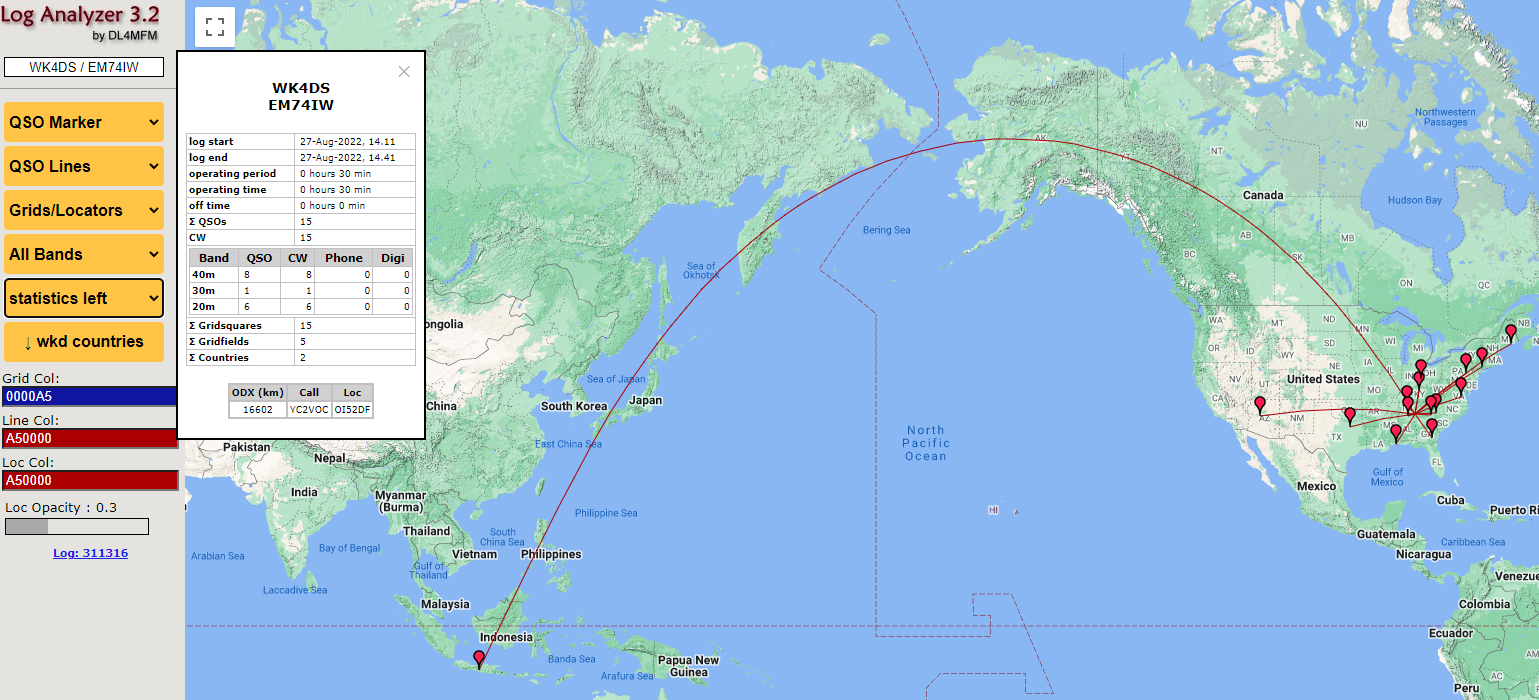
I had no idea at the moment, just how far away he was when we heard each other. So I worked him as a POTA contact and by the last time he had repeated his call, I could hear him pretty well. Still with a little QSB here and there, but I was certain of the call sign at this point. Here I am thinking I am going to hopefully get an activation in with the limited time I have and I get this amazing dx call back from my CQ!!! You see I have never heard that part of the world on my radio before. I don’t have great antennas (if your new to ham radio, it is immensely important to have good antennas to reach the farthest parts of the planet from your location) nor do I have them at elevation for proper gain benefits either. This means I normally hear the US, western Europe and some central America for the most part… I just couldn’t believe my ears that day.
There are numerous places on the web to get the great circle distance like I have here, this one is part of Log Analyzer 3.2. This maths out to about 500 milliwatts per 1000 miles or better said, 2063 miles per watt! . The conditions were just right between him and I that day to make it work with only 5 watts of output power on my end.

I want to say thank you to Galih for working with me that day to get the contact in the logs and tell all of yall reading this blog, that if you get out and turn on the radio, you just might have a conversation with someone in Indonesia!
The Elecraft K1 goes out for a POTA activation!

So I finally got my Elecraft K1 out of mothballs and took it for a spin to K-2169 the other day. (I actually have already used it once before but had put it back in favor of the IC-705 as it has more widgets and such.. Anyway, I finally just bit the bullet and took it with me to my favorite shady location at K-2169 and setup for some “on air” fun.
The one thing I like about the K1 is that it has an internal antenna tuner installed. This simplifies the set up and breakdown of the radio at the location by eliminating the entire external antenna tuner connection series of events.


I am running two 10’ counter poises at this time, mainly because I have them and it seems to help to have both connected. I want to run my VNA over them to see what it looks like with one and then two at some point.
This one simple thing alone saves me an easy five minutes of set up time. So it was fun for that fact alone but the other things that make the K-1 unique are that it is such a simple radio to operate as well. I like that the VFO works really well and the radio has enough controls to do everything you need while on an activation and nothing more.

Another thing that I like about the K-1 is that the headphone jack is wired for stereo headphones from the factory. This seems like a trivial thing but with the 705 and the TR 35 they are both factory wired for mono headphones or one ear only listening. This is not what I enjoy using therefore I either have to buy a adapter or figure out some kind of bizarre wiring scheme to get both ears to have signal on those two radios, but on the K1 just works.

I keep my K-1 in the original aluminum briefcase that I have had for over 20 years now. The radio and accessories have fit nicely in it for all of this time. I do carry the 705 backpack kit when I activate with it because the EFHW antenna that I am using is in that bag. Rather than pull stuff from one bag and put it in another I just take both and pull what I need from each one. I do like you using the N6ARA paddle that I have with my 705. It works really really well and I am probably going to get a second one for a spare when I wear this one out.


Yes, I did make that key you see in there. It is made from scrap industrial materials and works exceedingly well to be as simple as it is. I love making some of the things that I use on the air and my keys are one area where I do that. At some point I want to build a radio from scratch, but I have no time right now to dedicate to a project of this magnitude, so I will just stick to the simple stuff and have fun on the air.


Getting back to the activation I was kind of in a hurry that day so I hurriedly threw my throw line over the first large tree branch to get my EFHW in the air and it took me four attempts to get it over that branch which is normally a quick one throw shot for me! ha ha… There goes the whole doing it in a hurry part. Once I got it over that first tree limb then it’s a simple matter of pulling the antenna over that limb re-tying the throw-weight and throwing it into the second tree to pull the final end of the antenna up where this photo shows.

This makes the antenna run about 60° north east when I string it like this but it seems to work really well from this position.
It is no secret that the bands have been terrible lately but I was still able to get 23 contacts in about an hour, maybe a little bit longer, with this activation. This particular activation put me at 19 activations at K2169. I really wanted the Repeat Offender award so I went back the next morning and setup the entire assembly the next day and reworked 14 more contacts to have my 20th activation at Cloudland Canyon State Park. I have been working on this award for quite some time and finally got to the minimum 20 to complete it. Now I think I will start branching out to other nearby parks and activate some of those as well. I will still go to Cloudland Canyon very regularly as it is really close to my home and I can go over there almost any morning for an activation. It is the only park that is within a 30 minute drive of my house that I have available to me. The area I live in is park dense, to a degree, but they are actually spread out somewhat due to the topography of the area.

I am going to wrap up this blog post by saying that if you have not tried parks on the air I would recommend it highly. As well as if you have not tried Morse code, I would recommend that as well. Mainly because both of those are very fun for me… Until next time.
72
David
WK4DS
How high does your antenna need to be?

The sag in the wire makes the center height of the “horizontal” run less than 3’ above the ground and it still worked really well.
So over the past few days I have been thinking about how high does my antenna actually need to be. Turns out it doesn’t have to be very high at all. I have done two park activations in two days time and on both days I never raised the antennas any more than 9 feet off the ground. That’s right! 9 feet max! Almost had them running dead horizontal from the picnic table 65 feet away from me. No throwing the hoist line multiple times to get it in a good spot or even having to throw it at all actually, I just tied it off to a limb that I tossed the end of the line over without even adding the throw weight to it!!! Easy peasy!!!

A quick look at the QSO maps for these two outings shows that the radiation pattern is typical for a low altitude wire antenna. Pretty much omni-directional or a “globe” shaped pattern. Also these tests were done on days that had pretty bad solar activity and the bands were in terrible shape. I think this is why there is not near as many western stations as compared to other activations. Also note the signal reports on the logs and that they were not really bad when the bands would open as I was strictly running 5 watts QRP power also.


The low position creates a very obvious take off angle as the contacts on this outing are almost in a perfect circle around me!!!
So all in all, I would say that if you want to be on the air for a while, go to the trouble of getting the antenna as high as possible. On the other hand, if you want to get a quick activation in on your lunch break or if your doing a RADAR run of some such, it seems that getting the wire up off the ground a couple of feet works good enough to get an activation in less than an hour. I am going to repeat this test in the fall with literally laying the radiator on the ground and I will take my VNA and see what it looks like in all three positions. This helped me to understand that it really doesn’t seem to matter if you cant get your antenna up high enough for proper directional effects.

The end insulator is only about a foot above my hand here and is even under a tree!!!
I strung my antenna almost horizontally from the picnic table on two different park activations at two different parks to see if I would get more or less contacts with a really low antenna and the results are in. Seems that if you cant get your antenna really high up (for the lower bands) that is seems not to matter if it is 20’ high or 3 feet about the hard deck. My logs for the two activations look like any other day when I stress over getting the wire up high into a tree. The only real benefit from getting the wire up really high is it prevents others from tripping over it by not noticing it. This was my only real concern while activating both parks, although I did go at times when I knew that there would be fewer people and at Booker T Washington state park I was literally the only person in the area I was in. I just didn’t want problems during my experiment, so I chose times that would protect park users and my gear and preventing the gear from being a trip hazard as well.
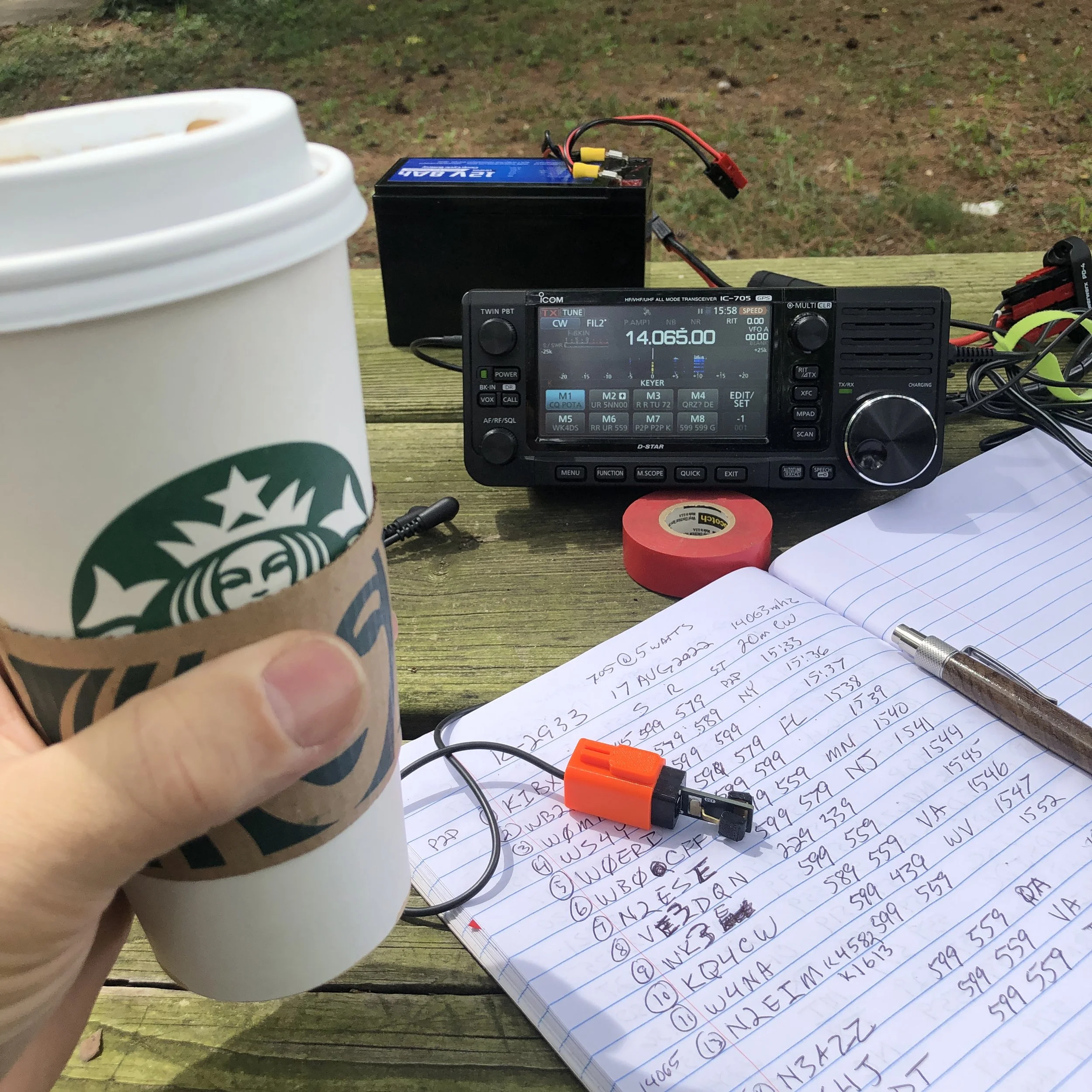
If you don’t have coffee, is it even a legit activation???
The signal reports were cyclic as the band would open and close, but all in all, I was getting good reports even though I was running 5 watts through a tuner as well. I like doing these kinds of experiments as it allows me to see just how bad the setup can get and it will still work… lol. All kidding aside, this worked way better than I thought it would and setup was FAST. I really liked that part about it.
Thanks for reading along, I hope you enjoyed it and if you did, please hit the like button and dont hesitate to leave a comment too. I love comments!!!
72
David - WK4DS
Huntsville Hamfest 2022 AAR
So it has come and went again, the Huntsville Hamfest was alive and well this year with a strong showing from major companies as well as a sizeable boneyard! Who doesn’t like a good boneyard?!?

We started our morning by grabbing some coffee in Scottsboro on our way from Trenton and heading over to Huntsville. Since we had paid online we did not have to buy our tickets at the gate and we were able to immediately register, get a pin and go on into the Hamfest. I have to admit, I was a little bit taken aback when we got into the show iteself by seeing all of the vendors that were there. There were so many vendors in new equipment, product manufacturers and the boneyard was unbelievable. It was like I had went back in time 20 years to a hamfest. I have always been more interested in the boneyard than I have in new equipment so we focused most of our time wondering the boneyard looking at things from days gone by and occasionally buying stuff.

This was the second trip to the truck of the day… lol
We bought so much stuff that we had to go get a little red wagon cart out of the truck to haul it all back with. I finally bought an amplifier and a power supply to drive it, as well as a few antenna tuners and some other little odds and ends, OH YEAH! and a 20 meter hamstick for my POTA ops to reduce the kit size if possible on some outings. I don’t even remember what Roger bought other than the STACK of those green hard shell cases from GigaParts! Lol, I think he ended up with 4 of them before he was done! HaHa. He has so many portable radios that he wants to kit out and these are almost perfect right out of the chute. a little work and some closed cell foam and mine will house my Argonaut and all the associated stuff to use it for an activation.
We saw so much cool stuff that it is hard to remember it all. Things like vacuum tubes galore, along with all the panel meters ever made at one table, and if you look close enough, you can even find vintage crystals in a cigar box here and there.


It was a kit builder’s paradise! We found so many parts to build amps and tuners with and there was a table with nothing but little project kits (I failed to get a photo of that though…) .

We grabbed some lightening arrestors as you can never have too many of those… then started looking for cool old Ten Tec stuff. I was actually looking for two very specific things made by Ten Tec back in the day. One was a Hercules II amplifier and the other was the Collins mechanical filters for my Omni 7 radio. If you happen to read this and know where I can at least get the 500hz Collins filter I would really appreciate it.
Here are some of the Ten Tec rigs we found, minus the Pegasus and the Scout that I forgot to grab a photos of…

The mighty Orion 2 contesting rig even made an appearance!


Something else we noticed early on was the incredible number of Ameritron AL-811 amplifiers that was there! It seemed like every other table had one on it. That is an exaggeration of course, but it did seem like every time we looked up we saw another one. We saw so many that it actually became a little running joke between me and Roger.

About 2 o’clock in the afternoon we realized we needed sustenance and grabbed some nutritious options from the snack bar onsite. As an aside, I have realized that I am now officially vegetarian too. At some point I figured out that I am allergic to beef (probably the result of a tick bite), so I decided to join my daughter, who is vegetarian due to medical issues arising from PANDAS, in being vegetarian as well. Something you need to understand here, I hate vegetables. Yeah, I said it. I cant stand vegetable soup or okra or butter beans, just cant stand most vegetables, but I am figuring it out…ever so slowly.
I don’t know what the big deal is with the whole division in the dietary community too, I just don’t order meat and mind my own business…simple. But you see these vegetarians throwing fits over restaurants not offering things compatible with their diets and meat-a-tarians making fun of the herbivores. I just dont get it, but who knows (obviously not me). I just know that if I don’t eat beef, I don’t wake up in the middle of the night with hives head to toe and itching all over for an hour.
Anyway, I got the fries and pretzel and they were quite delicious. Yes, the pretzel has butter on it and it was awesome! (I am not vegan…lol)

Once fueled up, it was back into the fray. Here are a few photos of some of the highlights I saw…


These keys were amazing! If you want a wonderful key built by a ham, this would be one that I would suggest, they were simply subline.


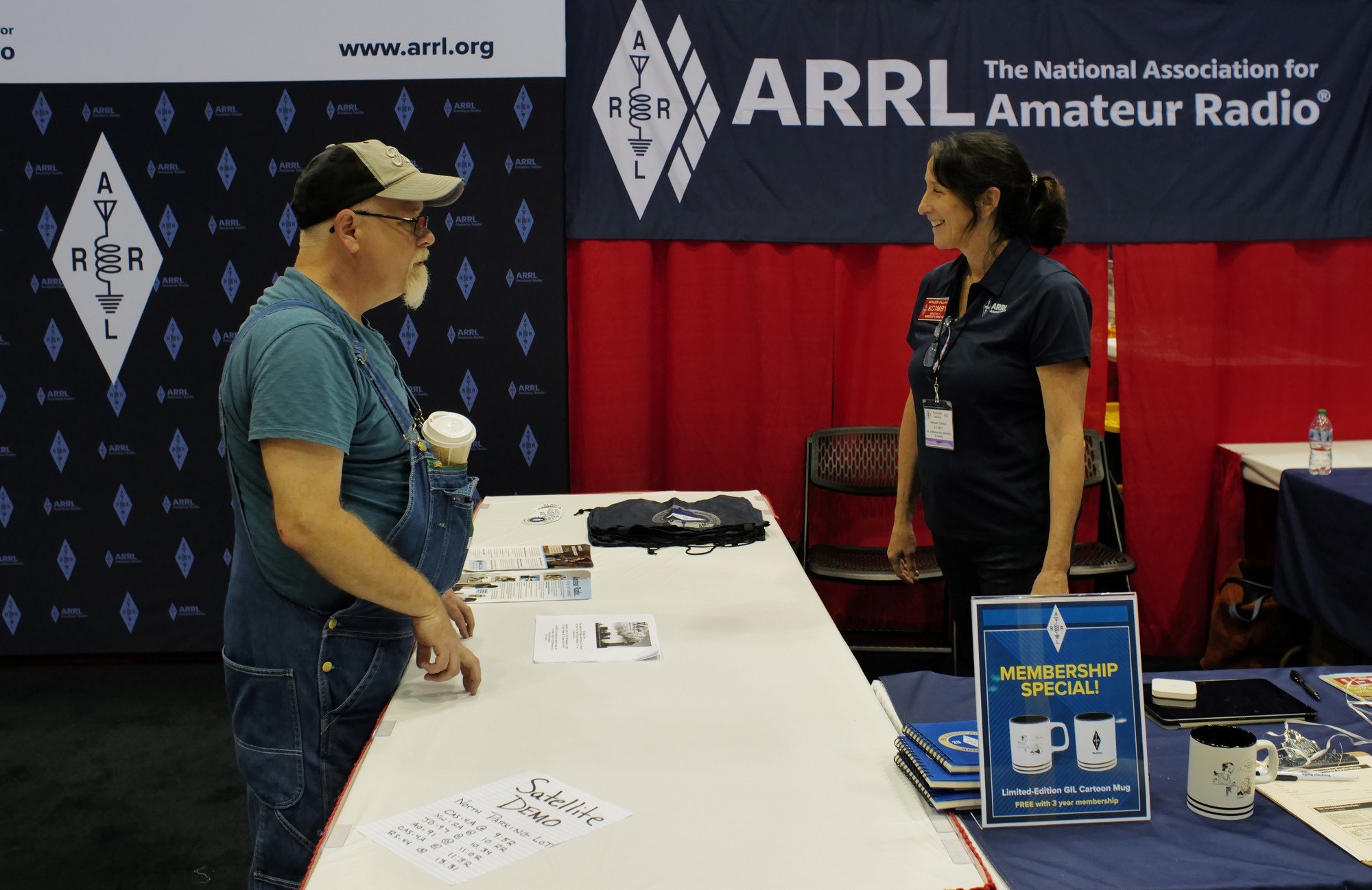


I even found the youtubers. Lol.
At the end of the day, we finally called it a done deal and headed home with our new treasures. All in all it was a great show and if you are within reasonable driving distance, I would say to give it a shot next year, it was well worth our trip this year to say the least. Thanks for following along and I hope you enjoyed the tour!
72
David - WK4DS
High Temp Activation
Today I went to my favorite park and set up my IC705 radio to work an activation on Park K – 2169. The only difference today that was unusual was the fact that it was in the mid-90s here in Georgia, this usually is not a big deal but when I finally got my radio set up I was in the direct sun. This causes the radio to heat up very quickly and I found myself with a radio that was so hot that I could almost not touch the case in less than 30 minutes. So I moved the radio to inside my backpack to where I could shield it from the Sun as the shade moved closer and closer to my operating position. Eventually the shade got to the end of the table and I was able to get the radio out of the Sun. For the period of time that I was working 17 m I learned that the reverse beacon network was not picking up my CQs and the POTA site was not posting my spots either. These two items combined caused a very long and “quiet” period of 17m operation… HaHa. I finally got 11 contacts on 17 m after considerable time of what seemed like endless calling of CQ. I had my antenna strung high in the tree, probably 25 or 30 feet up, ran up over a large limb on the first tree and horizontally at a slight upward slope to another tree as shown in the graphic I made from the photo I captured. I am still using the N6ARA tiny paddle for my travel key and it works wonderfully to this day. I have done well over 15 activations with this key now and it keeps on working perfectly. Once I moved to the 20 m band the game kind of picked up for me as I was able to make another 24 or so contacts in short order. This being mostly due to the RBN starting to see me and I was able to get the POTA spot to take when I moved to 20. The band would fade in and out some as I was working but for the most part I was able to work contacts about one per minute. It seems like that is the maximum speed that I am able to work a Morse code contacts with the speed I am able to operate (about 20WPM) and with the exchange information I choose to send. All in all, it was a wonderful day to get out and play with my radio and to get an activation in at the same time. My next activation will either be with a Ten Tec Argonaut 5 or my PENNTEK TR–35 radio as I want to try one of those out for an activation soon. I have had the TR-35 for a while now and have only used it a couple of times in the shack at home so far. This is a travesty as it is a wonderful little radio. I hope to take it on trips in the future as it is SO small!!!
If you have not checked out the parks on the air, set up an account with them and look at what they are doing. It is a wonderful program and has lots of activity for the amateur operator. There is usually a mode that is something that you would enjoy doing, that will have people on the air almost all the time. Whether you are into digital, CW, voice, or any other mode that people use on the air there is usually something going on with POTA. I even had two traditional QSO contacts today during my activation, complete with name exchanges, QTH exchanges, and even our rig exchanges. So there is no hard and fast rule as to what information is traded in an exchange but they do normally have a minimum of signal report and usually the hunter will send the state they are residing in (but it isnt required from what I can tell), that is about it, anything else is fair game. If you want to know more about it you can go to the Parks on the Air website to learn lots more about it.
Thank you and 73
WK4DS-David

I started with keeping the battery in the pack but eventually had to also put the radio in it to keep them both out of the direct sun.

ICOM AH-705 Antenna Tuner with my homebrew cable I made for it that has power, coax and control cable all in one bundle.

Antenna ran into the trees with the counterpoises run along the ground underneath them.

The IC-705 is a wonderful little radio that works really well for portable operations.
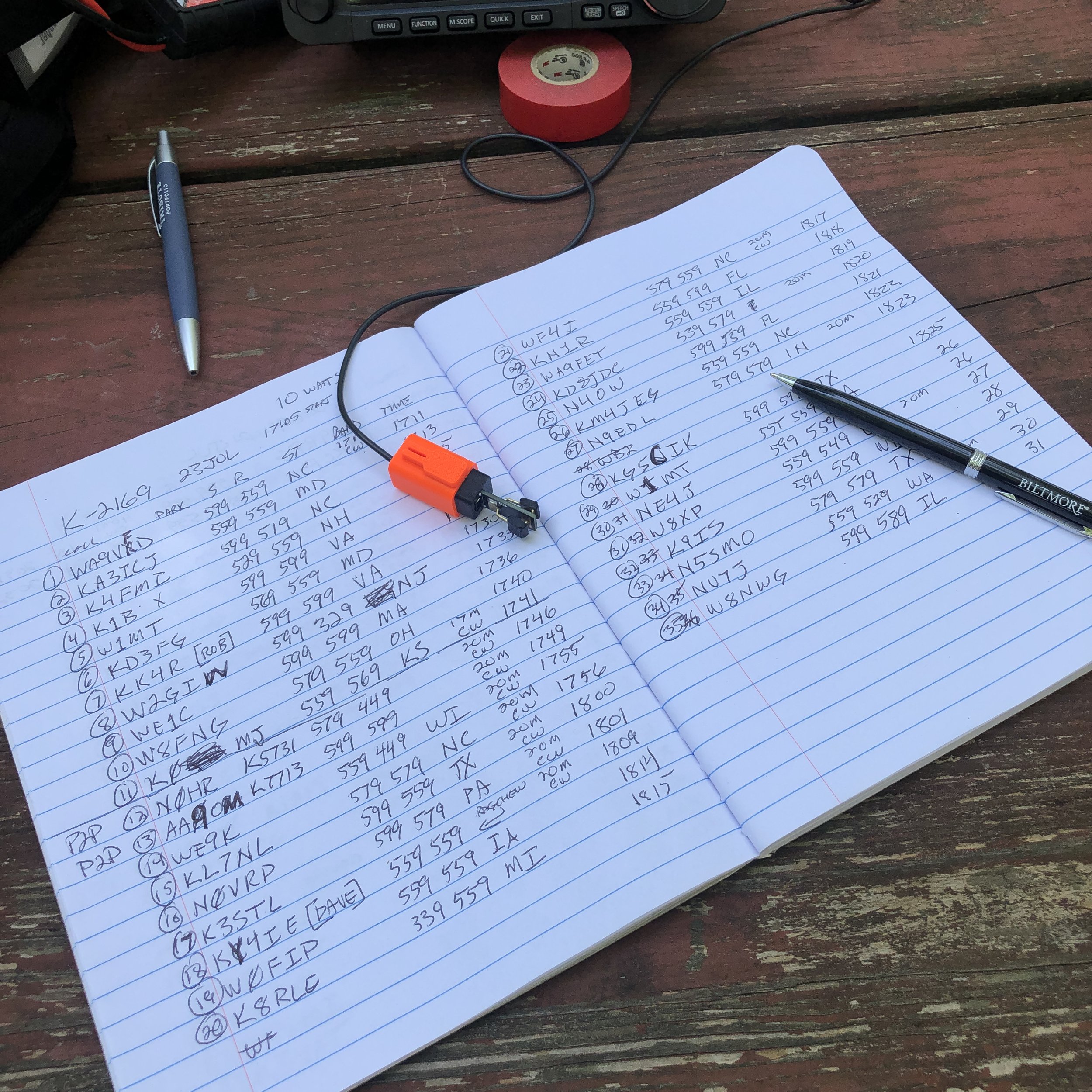
Not a bad day running 10 watts into an EFHW wire antenna!
10 things to do during the terrible band conditions with amateur radio

Now before we go too far into this blog post you need to know this is satire. I thought that this would be a fun diversion from the frustrations associated with the bands currently in 2022. So if you came to this blog post to get legit tips on operating during poor band conditions then this is probably not the blog post for you. With that out of the way, let’s have some fun.
Let’s get the easy ones out of the way first. Like…
Install a 180’ tower and a 20/40 beam antenna. We all know that a better antenna is the first step to better signal, so why not start there? I mean, isnt this what second mortgages are for?
Locate a 5 kilowatt amp… You will have countless hours of fun running a high current rated 220VAC circuit for it. It could easily double as a coffee table in the corner of the shack or as a nice space heater in the winter months to keep your cat warm.

Beacon mode. Now here is a novel idea. Your radio could be running in beacon mode, calling CQ fruitlessly anyway, and you could be free from sitting at the operating position and could instead do something less valuable… like go mow the yard…or better yet, scope out where you are going to put that tower.
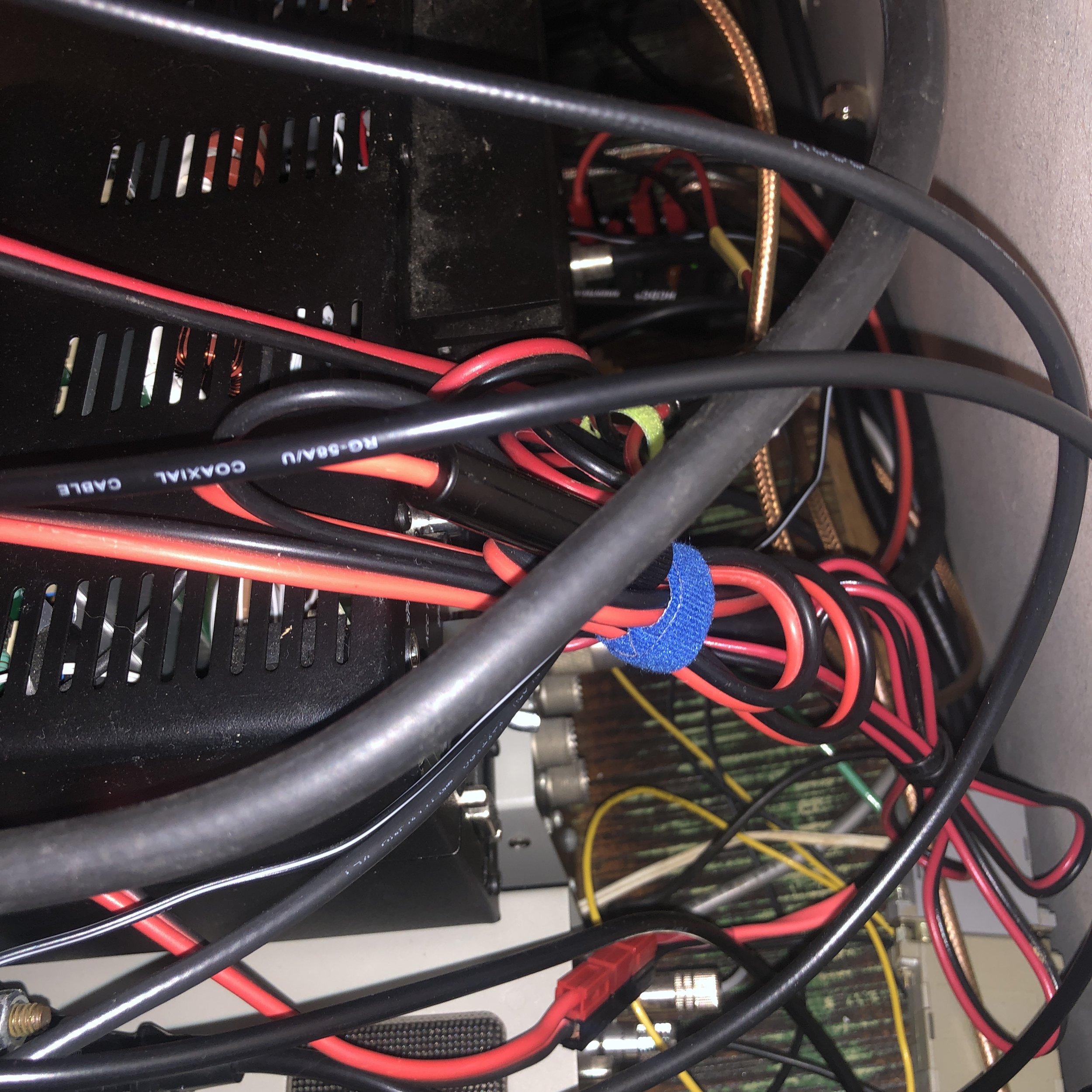
Straighten up the wiring in your shack. Lord knows we could all use some wire management in our lives. So what we all need to do is turn off our perfectly functioning radios and then go around behind them and start messing with all the wiring, I mean, what could possibly go wrong?
Marriage counseling. We are all edgy lately due to the terrible propagation and the frustration with trying to complete QSOs that are normally easy, Instead of getting mad, why not instead take the XYL on a date to her favorite restaurant? You could even take her shopping…I know, I know…that might be too much, but you could try???
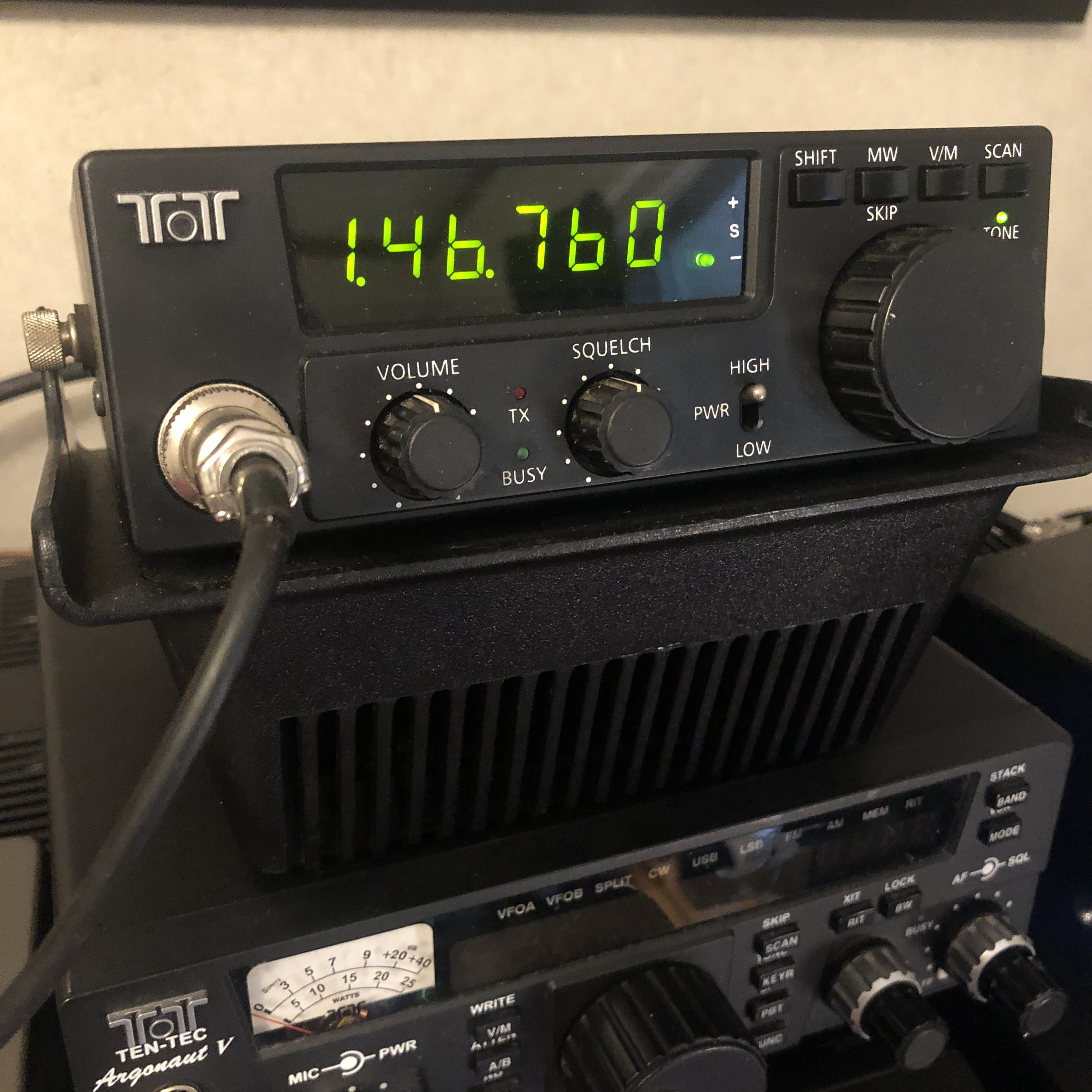
Repeaters. Now hear me out, if the bands are this bad, shouldn’t we reconsider what “DX” really is? How about we start working some local DX since it seems that 50 watts on 2 meters can still open a repeater these days.
Alternative QSOs. You can still goto a ham fest and make “eyeball” QSOs with people, don’t forget your QSL cards too, people still like to exchange them. Do these go in the LOTW too???
QRP Radio. We all know how frustrating QRP can be even in the best of band conditions. Since many of us are accustomed to having 100 watts or more at our disposal to make contacts with, why not try using LESS power during these terrible times??? I mean, you could just get it over with up front and not have to wonder why you cant make contact, you know for a fact what the problem is and you have an easy scapegoat?
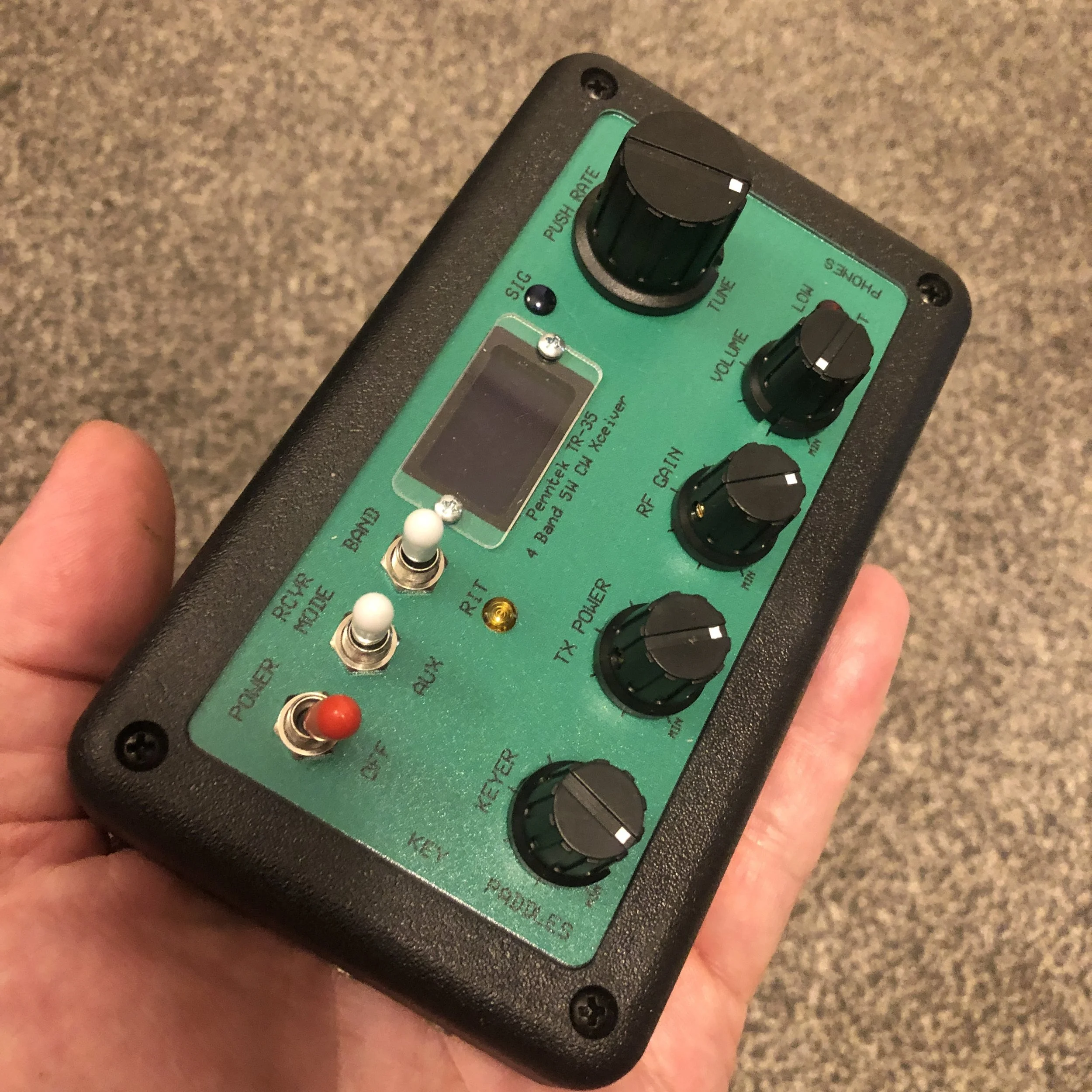
Kit building. Now is the perfect time to get one of those kits and spend some quality time cussing at the burned fingers from the surface mount devices and heat sensitive ICs that you have to solder…
Read a blog. I think this is a great idea to be honest. You can subscribe to this very blog with a button somewhere on this page and then you will get all the notifications when I publish the next one. Honestly though, take some time to just call CQ if you want, maybe, just maybe someone will answer you…
Thank you for going down this rabbit hole with me for a few minutes to read this little blog, I just had this idea and thought I would share it with you guys and gals and have some fun with it. Leave a comment with what you think should be on this list that I left off. I would love to hear what all of yall think.
73
David
WK4DS
Straying from 20 meters…

In the course of the most ham radio operators career on the air they will find that they spend a lot of their time on the 20 meter band. This is because 20 meters is a very good band for propagation and is almost always open to communications. The problem with a band that is open like 20 meters is that every amateur radio operator that has a HF radio is on 20 m, well at least it seems like that is what is happening…
Another thing about me is that, I really am not into contesting either. This means that the 20 meter band is not available to me on the weekends as there is pretty much a contest every weekend…and for good reason! Contesting is a very popular activity in amateur radio around the world. Although for me, I just am not super into it.
The WARC bands do not get used in contesting so on the weekends I find myself dialing around 17 and 30 meters alot.

The N6ARA Tiny Paddle has really started to grow on me, I like the size and how well is just plain works. it is effortless to send good code with this key. I can highly recommend these is you want a small light weight key for things like SOTA and POTA.
Another thing I like about the WARC (World Amateur Radio Conference) bands is that the 30 meter band is reserved for data modes only. Did I mention my favorite mode is CW and wouldn’t you know it, the powers that be consider morse code a data mode… So I can goto the low end of 30 meters and almost always find someone to chat with. That is something to remember too, the WARC bands are pretty narrow and many modes share them, so sticking to the gentleman’s agreement on where your mode normally operates will go a long way towards being efficient with these small band allocations and making sure we all have room for our modes.

The rig setup is really a lot simpler than this photo makes it look. I wanted to get an overview photo of the whole thing for once to show the relationship of the parts. This rig would look like this if it were on 80 meters or 12 though so this photo isn’t strictly about the WARC bands…
A lot of people do not use the WARC bands very much as they are not the conventional ham bands. I tend to enjoy using these bands as they are normally quieter and less crowded than the conventional bands. Another benefit is that the POTA program also uses these bands as it is not a contest oriented program other than award chasing like any other awards system (Think ARRL W.A.S. or something similar).
On the day that I decided to activate on the 12 meter band I was looking to confirm that it was open to communication and decided to check the 10 meter band to see if it was open. I did this because I couldn’t hear any stations other than someone operating FT8 and had no idea how far away they were. This is a common practice as normally if a higher band has propagation, then the lower one will as well. I found that the 10 meter band had beacons coming into my location in the state of Georgia from California with clear audio and this gave me the confidence I needed to try and activate a park on the 12 m band.
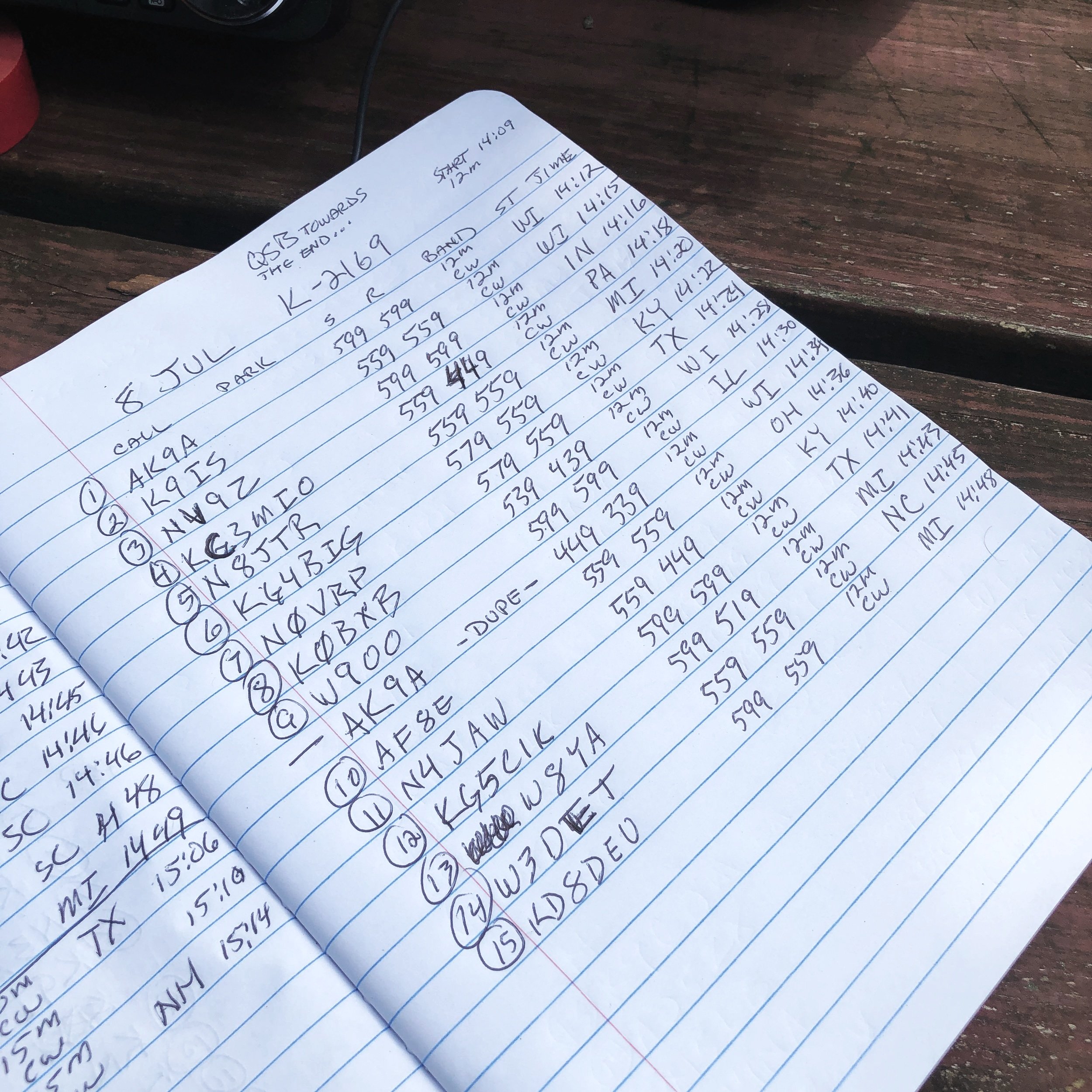
As you can see from the logbook I did get a successful activation on 12 m and it was a lot of fun. There were periods when I did not get a call back from my CQs but, for the most part, they came in fairly steady for the whole time I pursued the activation. This just goes to show that you can get an activation on something other than 20 m if you want to and it also gets the radio warm doing something other than the usual.
Get out there and get on the air.
73
David
WK4DS
Long lost friends in amateur radio
I have been doing POTA (Parks on the Air) for a couple of months now and have started to notice a few call signs that show up in my log more often than not. One of thsee calls is K9IS. Steven has “hunted” me at almost all of my activations, to the point that I now know his name when he calls me. His call sign just kind of “jumps” off the page at me for some reason. I dont know why this happens but it does occasionally. Maybe this time there was another reason???

Here is the dejavu part of the story. I was talking to my buddy across town (KG4WBI) on the repeater one night and we got to talking about the contact I made to Alaska from my jeep on a RCI Ranger 2950 10 meter radio using CW and I wanted to know the output power I was using that day, (Trust me this all ties together at the end) So I remember that I had used that particular QSL card in my WAS card set for my Alaska card, so I dig out the box and start going through the stack to find the Alaska card and what do I stumble across? A QSL CARD FROM K9IS FROM WHEN I HAD MY OLD CALLSIGN OF KG4WBH!!! Seems that day I was playing with my Rockmite 40 I had built and he was using a Ten Tec Argonaut 5. I just recently bought an Argonaut 5 and plan on doing some activations with it using a straight key soon. (Like next week if I can get the cable built). Anyway, this blew my mind that we had made contact so long ago and now we are meeting on the air reguarly to make POTA contacts and we didnt even know it.

I was using a Rockmite 40 that day and it only uses about 500milliwatts of output power, hence the QRPp note.
I reached out to Steven and shared my little discovery with him and we both had a good laugh out of it. Neither one of us had remembered the QSO back in 2003 on April Fool’s day…till I found that card. This is one of the many reasons I like using paper QSL cards. It is fun to me to wax nostalgic and read back through these cards at times. Especially the ones with additional inserts sent with them that had background info about the operator or some cool little tidbit about the local area where they lived. It is a treasure trove of information. You should look into using paper QSL cards if you have not done it before. It isnt for everyone, but at least take a look. If you want to send just select cards on occasion, you can even make simple cards in photoshop for a specific event and just print photos of them, that has worked for me in the past more than once. I even used the discount version of Photoshop… GIMP. Anyway, let’s climb out of that rabbit hole and get back to the original story. HAHA
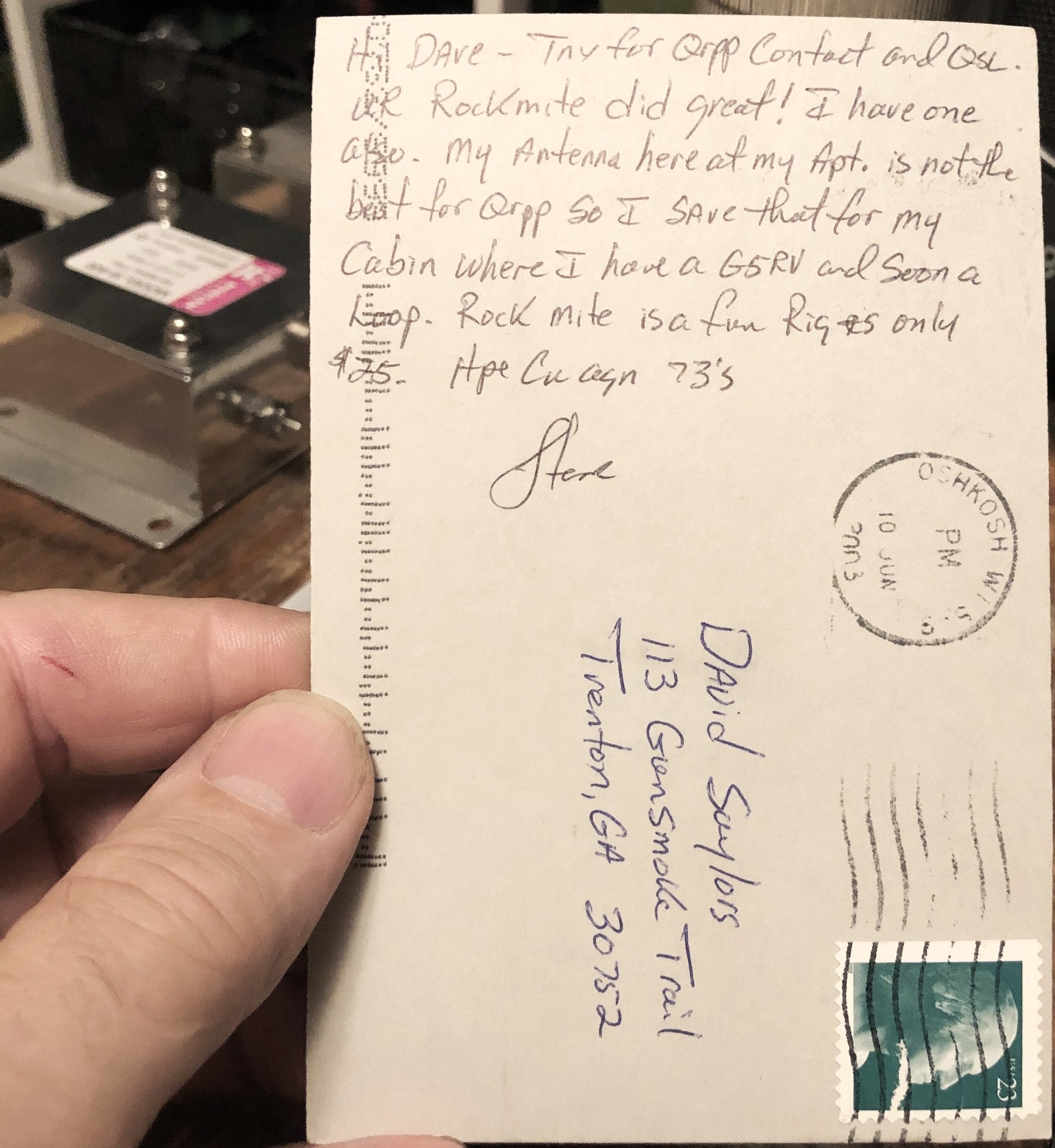
This is why I like paper QSL cards.
PS: By the way, the output power to Alaska that day from a modified 102” stainless steel whip mounted on the back corner of my jeep was just 8 watts. The bands were good to me that day.
PSS: If you noticed, my old callsign and my buddies call sign are sequential. We did this on purpose as we wanted to try to have sequential calls when we decided to get our licenses. I have since acquired a vanity call after getting my Amateur Extra ticket, but Roger still has his original call even though he now has his General.
What have I learned from documenting my antenna position?
The short answer … nothing world changing really.
But honestly I have learned a lot about what it takes to make contact with a QRP radio. The most important part is you setting up the radio and trying to make contact with it. I know this sounds obvious but it is often overlooked as people will look at the band prediction information like the space weather forecast and such and get paralysis through analysis from, this. They will not even bother to turn on their radio. This is a sad result that generates no activity and creates a group of operators that do not operate…
The next best thing I have learned from doing this small experiment is that I was not collecting near enough data to have a informed answer in any way, shape, or form. I was literally only recording my transmitter power, the signal reports (and this is totally subjective and not accurate really), and the antenna direction then generating a QSO map of my contacts from that time. This is not enough information to have any sort of relevant value to even bother with documenting the antenna position or elevation or any of that stuff. What I did learn though is that the antenna elevation and the counterpoise make a large difference and how well the antenna performs if you’re using wire antennas. I would attempt to get the wire as high in the trees as possible and it always seemed that the radio would here and talk much better when I did.

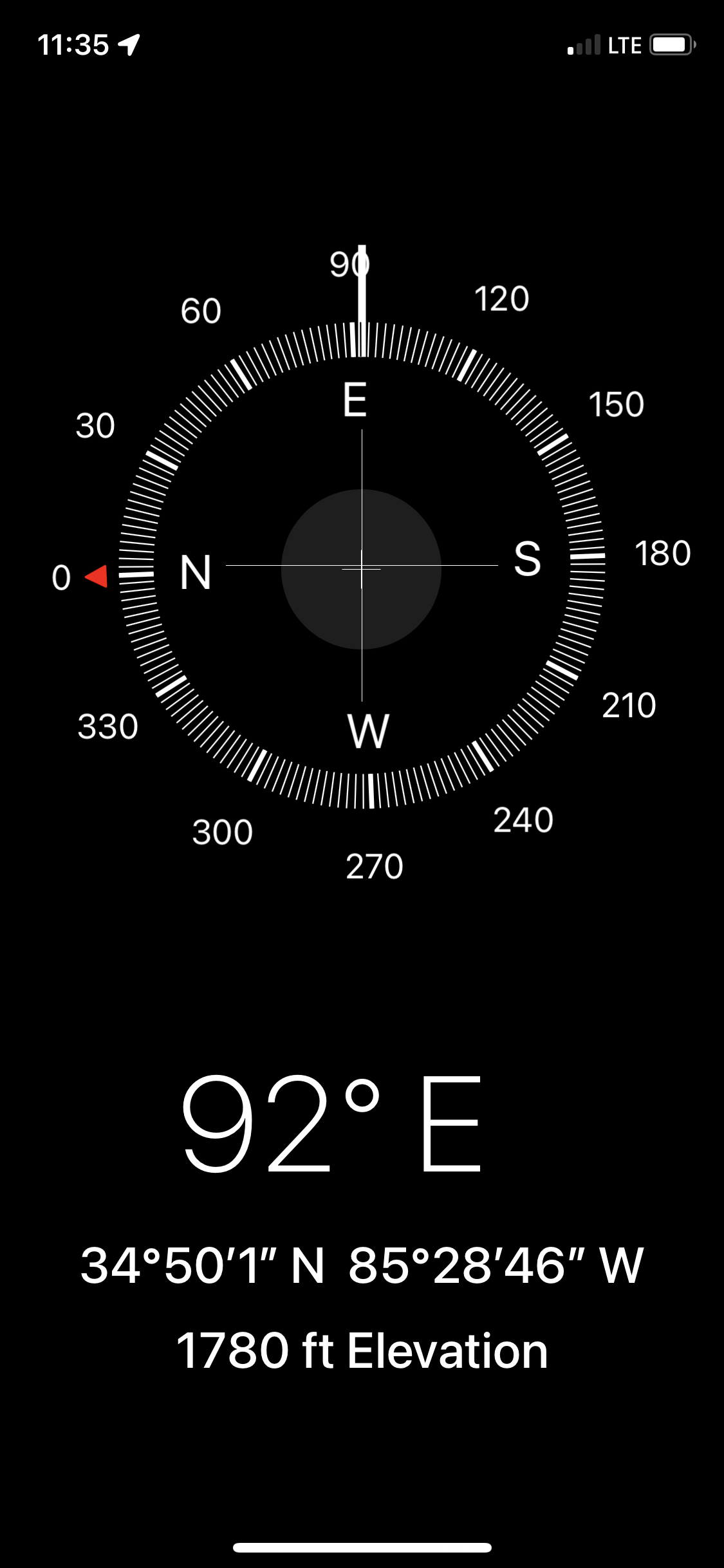
Antenna direction
I posted once on Facebook about this phenomenon of antenna direction and the location of the contacts and a reply was made that I had a omnidirectional contact chart mainly because I was where the radio operators were also at. This was said as a joke but it actually had merit. This actually made a lot of sense. What the charting of my contacts does show is that there is almost 0 NVI (near vertical incident) with wire antennas strung in the trees. Almost all of my QSO contacts are several hundred miles away usually showing that the near vertical incident is almost nonexistent with my wire antennas.
What this has basically taught me is that even if the prediction is for poor band conditions get out and try anyway this will normally result in you at least making a few contacts if not getting an activation in a park or just having a good time in general you don’t have to sweat it too much just get the wire up in a tree put out a counterpoise of some form and the antenna will do its job once you tune it with a tuner. It’s all the better if it is a resident antenna anyway as you do not have to tune this antenna to be able to use it.

Antenna Direction
Parks on the air is a wonderful activity and I really would recommend you try it out if you have not done it already it is a lot of fun and I get to operate QRP radio in the park and I’ve become the DX! This is something that I have never experienced under normal operating conditions as a US amateur operator. It is literally not something that happens to me normally. So if you want to try out being the “DX” this is an easy way to do it without breaking the bank from having to travel lol
The WK4DS POTA Hunter Station Amateur Radio (and a little ragchewing too)
What does a simple POTA hunter HF station look like? Just like any other HF station… This is what mine looks like currently. If you haven’t already figured it out, I have a Ten Tec fetish and I don’t care 🤣 The Omni VI+ was a dream rig back when I first got into radio and I could not afford one at that time, but as time went on, I was able to piece together a nice station sans amplifier…for now… and I have really enjoyed using this old girl on the air. I also have the 238 manual tuner in the closet as well waiting on a time when I will need it.


My current station mainly consists of a Ten Tec Omni 6+ with matching power supply and automatic antenna coupler that I run primarily into a vertical antenna I have out in the yard. I still need to finish the installation of my wire antenna in the front yard in the trees so that I will have a second antenna to work with that will complement the station. I also have a splitter worked out to where I can set up and use my QRP radios in the shack easily. This allows me to test the radios and learn how to use them before I go into the field to do an activation. This reduces the stress of figuring out the radio in the field while trying to make contacts.


My current key of choice is the Ten Tec KR 40 keying module, this key is designed to work with their older radios and is able to do all sorts of things other than just keying output. It is an electronic work of art to simply be a key lol. I also have my other regular keys that the radio will operate with since it has a key input and a paddle input on the Omni. Not to be left out I also have a Logickey K3 keyer that I am going to get working as well. This will also make me have memory keying with my Omni since it does not natively have a memory keyer built in.


I am planning on adding a second HF rig to the shack to complement my Omni 6+ so that I can have the Omni calibrated and have a couple of small issues repaired on it and while it is out. Having the second rig makes it to where I will still be able to operate. I am currently searching for one of several radios to fit this position in my shack, such as the Ten Tec Jupiter/Omni 7, the Ten Tec Eagle, the Ten Tec Orion, or even something simple and small like a Kenwood TS 590 or similar. I really want nice filtering as I like to listen to CW on the air regularly and it is very tiring to listen to the bands with a lot of band noise. A radio with good roofing filters or IF filtering makes this a much more pleasurable experience. That is all my ham shack at home has in it to hunt stations with. My current antenna is a 17 m vertical that I can tune all the way down to 40 m and still have a decent signal going out. This is why I want to put a large wire antenna in the front yard. I really want to be able to work the lower bands and the large wire antenna will allow me to do that. Thank you for following along today and if you have not done it yet please subscribe to my blog thank you very much and hope to see you on the air soon. last but not least I have a good old 2 m radio to get on the local repeater and talk Symplex to my local buddies with. Everybody has to have a 2 m rig to get on the repeater ha ha.

73 WK4DS
ARRL Amateur Radio Field Day 2022 After Action Report from a CW op.

Well that fateful day has come and went, fun was had, radios were used and new skills were learned.
I want to thank Ms. Dana K4GCA, for hosting us on her property so graciously, this made the whole event feel so much better. You see, this is our first field day without her late husband Brian (K4GC) who passed away unexpectedly last year. We miss Brian dearly and it made this field day even more special to be allowed to operate the site from his back yard.
This was the first year I have been to a field day event in many years. A lot of new faces have came onto the scene since the last time I did field day with the K4SOD amateur radio club. It was good to see old faces as well as the new ones and to put faces to call signs is always a good thing.

Roger KG4WBI brought several radios and antennas and proceeded to build a huge antenna array on a push-up pole to connect his Ten Tec Argonaut to via hamstick dipoles. I had to leave before the system was built completely and go to church for the evening but when I came back I went back over to the site to operate some CW on the air..

Once things got underway, they setup the SSB station in the back workshop and got to work. Ricky W4EMA getting on the air here on Roger’s KG4WBI Alinco DX77T HF rig while Steve KI4WJG waits his turn at the controls. Thanks to KK4IJR Kevin for many of the photos in this article, but somehow we didnt get a single image of him!!! LOL


It is strange how CW will draw a crowd I did not think most people enjoyed it but it was a huge conversation topic the whole time I was trying to work contacts. The guys were truly interested and it surprised me. I was looking around trying to find contacts with the Argonaut but since it only has 5W of output power it was very difficult to get through the band QRM and make a contact. I spent the better part of almost an hour trying to make five contacts, it was very different from the parks on the air style of operating.

I finally gave in and we used Josh’s KN4RTY Yeasu 891 to up the power output and to get through and make some contacts. At this point my confidence was boosted somewhat and I was able to get back on the Argonaut and it’s five watts of output power and make a few more contacts with it before I called it quits at 2:48 in the morning local time(5:48 UTC).


Getting to use the Argonaut was a special treat as those radios have been out of production for many years maybe even decades at this point. Roger had went to the trouble of having this radio professionally tuned, aligned and cleaned so that it would be in pristine operating condition for the night. Ten Tec transceivers are amazing radios especially for the CW operators. They seem to specialize in that type of radio communications with their transceivers. If you really enjoy using CW in my opinion, you really should look at Ten Tec and Elecraft radios, these radios excel at that mode. Now don’t get me wrong, all amateur radios, pretty much, work really well with CW. It is just a subset of all the amateur radio operating modes so don’t think you have to have a certain brand of radio to use CW, I just prefer Ten Tec radios.

I decided to take two different CW keys with me to the field a side. One was my straight key I made some 20 years ago but since we were using it on the Argonaut 2 I had to change the cable to an RCA cable to be able to connect it to the radio. The other key was my serial number 1 “prototype” WK4DS paddle and I love this key greatly so I put it in a waterproof hard shell storage box with some closed cell phone to protect it during travel. These two CW keys are my primary keys that I use when I work outdoors or sometimes indoor operations. I have others as well, but these are my favorites.

My logbook is a mess! I would get the call first then get their exchange info before even calling them, this way i could listen to the exchange and just confirm what I had written down already. This made code copy at such high speeds much easier for me. You see, I am kinda slow at copy right now… lol…

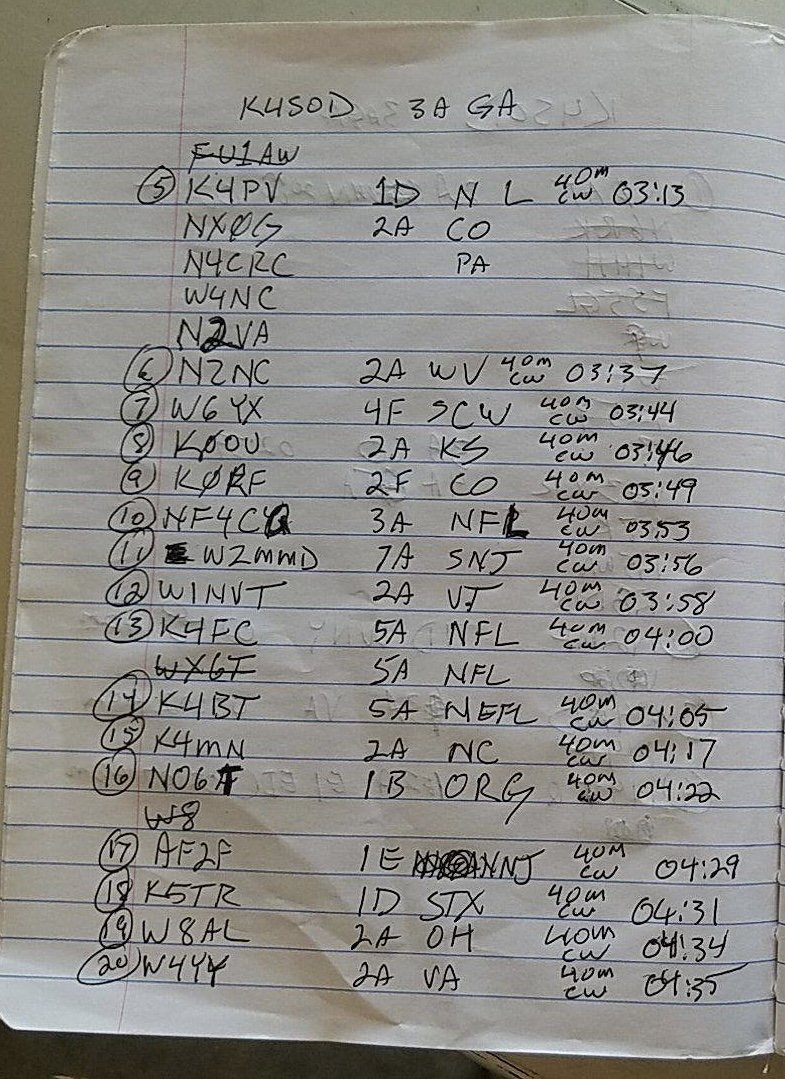

It was a really good time and I really enjoyed meeting with people that I had not seen in a long time it makes me realize how great this community really is. If you have not gotten out and interacted with the local hams in your area I highly recommend it. Until next time get your radio out and go make a contact with it will see you later 73 WK4DS
A quick trip to Prentice Cooper WMA for a POTA Activation...sorta
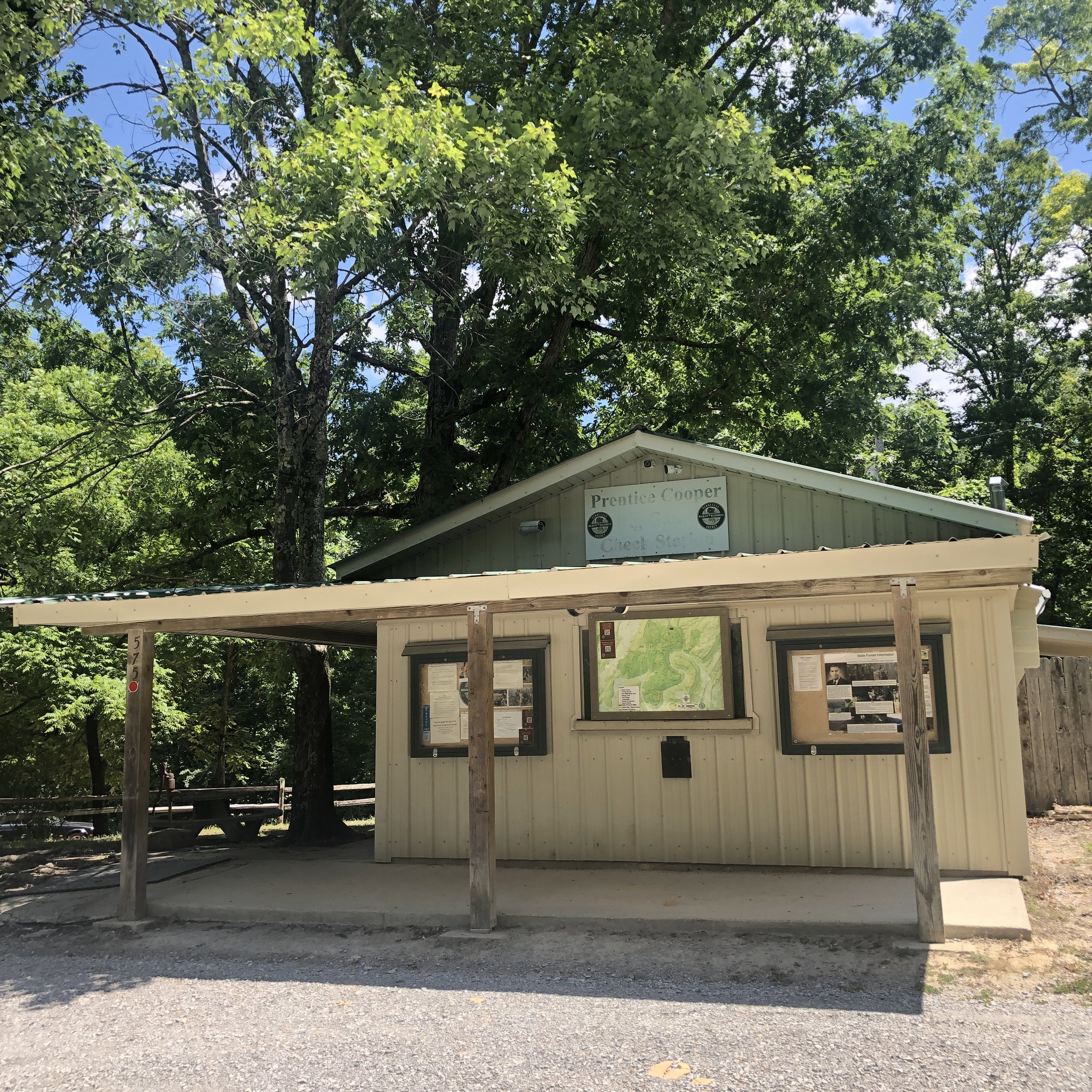
This day was like any other day, I had not really planned on activating a park, but the radio was in the truck and I was there and I had about 2 hours… sooooo.
It all started on Father’s Day weekend and I was going up to scout a location for the next morning to shoot a sunrise photo or two with my daughter for father day. I was already in Chattanooga nd had a few hours to either go shoot street photos in the noon day sun or I could check out a place called Snooper’s rock… I chose the later.
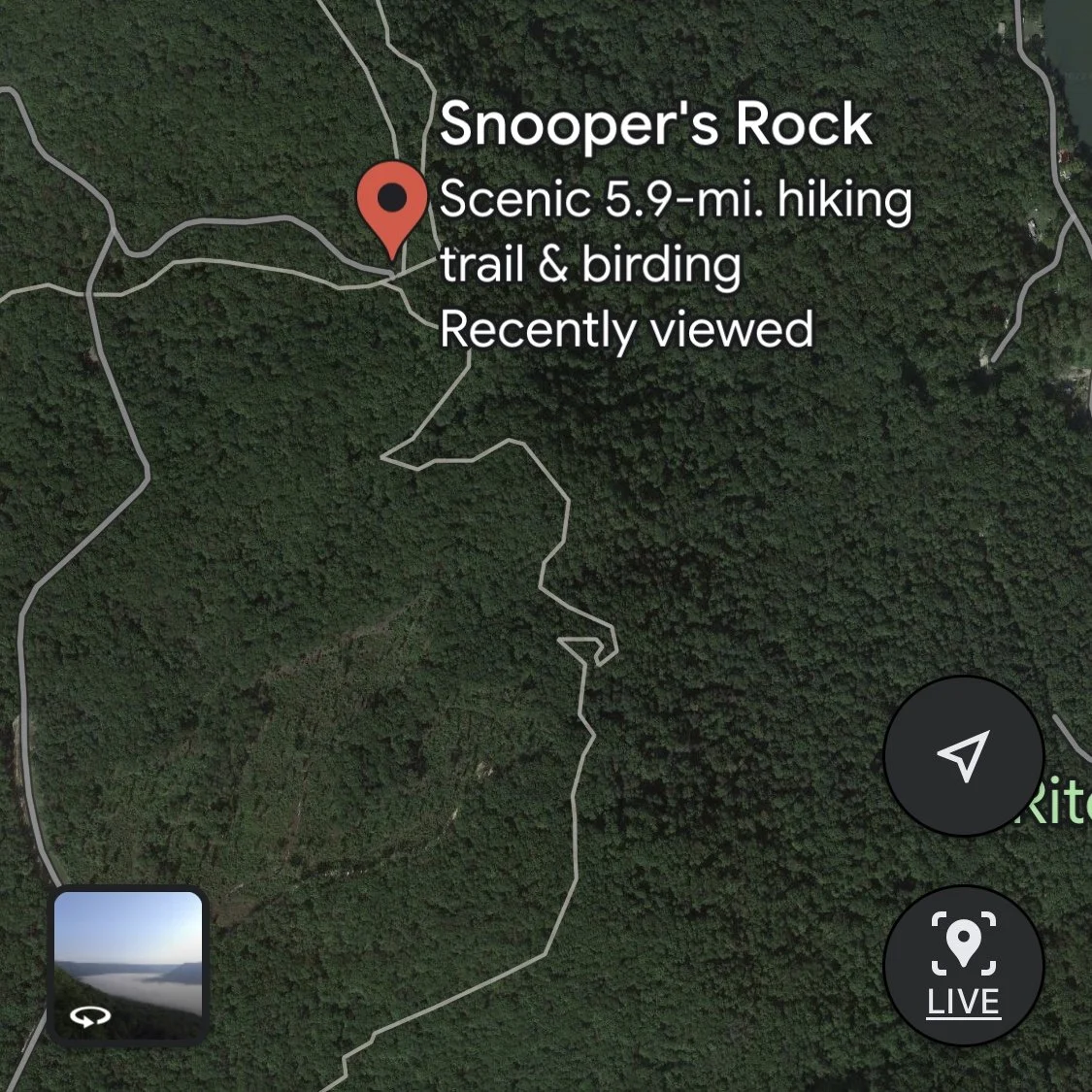
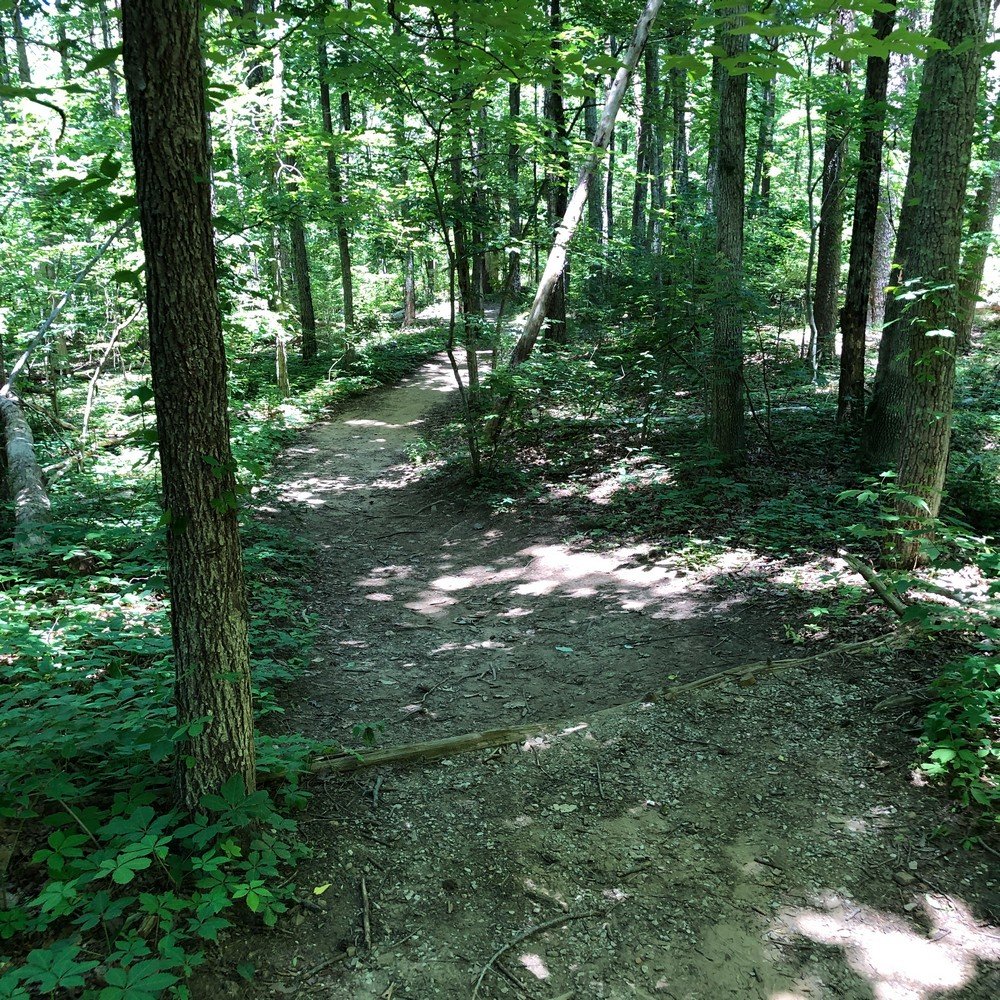
After a nice 30 minute drive, I arrived at the WMA (Wildlife Management Area) to scope out the location and found that the spot for the AM photo op was easy to access and it left me with plenty of time to actually get on the air. SO then I start looking for a suitable location to string up a wire for an antenna this is where I started running into problems, the trees around the parking lot were dense and had a lot of underbrush preventing me from throwing a line pretty much at all. So I start driving down the side roads till I find one that has a pull off and the woods are fairly open allowing me to get the throw line up into a tree without too much trouble.

The antenna was running 64 degrees north east… is this area of the compass all that I am allowed to use??? LOL I go to a different park in a DIFFERENT STATE and the antenna direction is almost identical to Cloudland!!! Anyway, it was run over a limb and went back down towards the ground at the far end where I tied it to a tree. I figured that my low antenna would be offset by the fact that I was on top of a mountain and finished setting up the radio station.

This time, instead of getting out the ICOM 705 I decided to use my old time QRP rig that I have had for many years…. the vaunted Elecraft K1/4 with internal antenna tuner. I love this old radio for no particular reason other than it is cool. I just like using it for some reason.

I didnt want to spend a lot of time messing with the settings so I ran it as I have always ran it, with a straight key. If you will notice the straight key is home brew, I made this key out of scrap materials in my machine shop so I could have a simple key for when I did field activations. This key is very usable and is easy to use on the air. It is also a great conversation starter as well ha ha. Another thing to note about this set up is that I do not need an external antenna tuner to run this rig. Since it has an internal antenna tuner in the radio I simply connect the antenna connector straight to the radio and get on the air.

With the radio set up I quickly got on the air and did a little hunting first. I fairly quickly got a couple of park to park contacts one being a special event station and then I moved to 17 m where I made three or 4 QSO contacts then the band kind of fizzled out and I moved to 20 m where all the ham radio operators seemed to be. In pretty short order I had a completed activation and was able to get off the air so that I could go meet the wife for lunch.


All in all it was a really great quick sample and sweet activation of a new park for me in Tennessee 73s and I hope to see you on the air soon de WK4DS
After Action Report for K-6243 Activation - Learned something new today.
Today was going to be a short activation, in and out and on to my street photography I was planning to do… Well, we all know how the best laid plans go, don’t we? Yeah, I didn’t go shoot street photos at all. lol.

Today was a typical day, I worked till noon, then sneaked away to go do some radio and photography. I grabbed the bag and realized my log book was full so I needed to grab a notebook at the store on the way to the park, that was the first thing that slowed me down. then there was a HUGE traffic jam on the interstate that forced me to take surface streets for half of the drive which basically doubled the drive time. So now I am an hour behind when I planned to start…

The next thing to happen was that the map software took me up to the W road. Which is quite harrowing if you have never driven up it before, there are YouTube videos about it if you want to know more. So I finally get to the parking area, which only has 4 spaces mind you, and there is ONE left! I took that as a sign that things were going to improve and set out searching for a location. I hiked down to the falls and took a couple of photos then started looking for a place to set up the antenna. So this is a wilderness area and not a park, this means that the usual manicured fields with picnic tables were conspicuously missing from this park entirely. Ummmm…. I didn’t bring a chair either. So I end up finding a small log on the side of the trail and a side trail that was off the beaten path somewhat. Another problem I didn’t anticipate was the dense underbrush that was at this location. This one thing alone almost made me just give up and go take photos instead, but I found a small clearing with a tree I could get to near the trail with a high limb so I gave it a shot, got a line up and pulled up the 30’ wire for a radiator since I planned on working 17 and 20 meters only this trip.


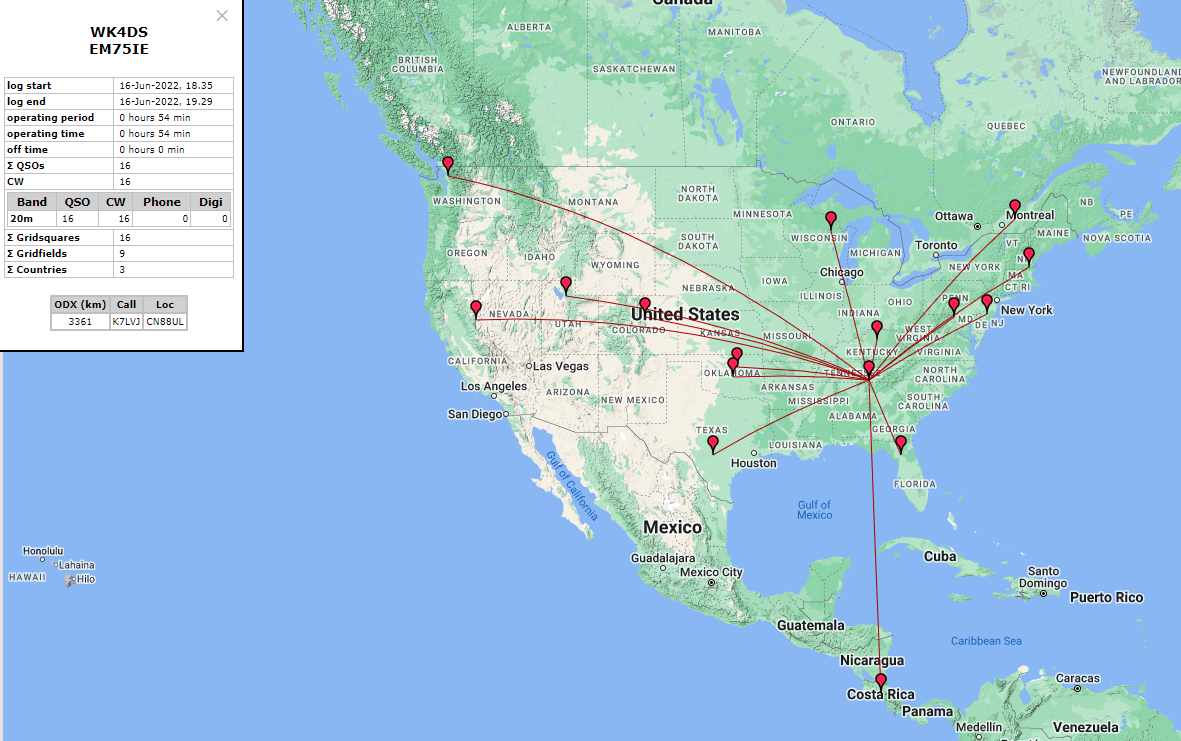
Well, I hooked up the radio and laid it on the backpack and got settled in for the pile up I was about to have. I called CQ at 5 watts CW for at least 15 minutes solid without a single hit… at all. Then just as I was about to give up thinking the bands were closed, I get a call from KA3ICJ in North Dakota of all places!!! Still thinking it was the antenna as the signal report was 339 for my signal and he was much louder than that, so I shut down the rig and replace the 30’ wire with the 65’ wire and then use the 30’ for the counter poise. I gave in and turned the radio up to 10 watts too as I wanted to get this activation in so I could go shoot photos too. I noticed a large difference in the band noise this time, tuned up and started calling CQ again. Things were different this time. I started getting called from basically everywhere it seemed, New Jersey to New Mexico then Oklahoma to New Hampshire were all in the log now and in less than 20 minutes of using the longer antenna, I had the activation! With the 10th contact being TI5JON from Costa Rica!!! (He was actually closer than K7LVJ as it turns out who was 3361 kilometers away… lol)

Not long after I got a Canadian VA2YZX who was coming in quite strong. What is neat is that I can look at the logbook and see the band fading in and out from the signal reports. Just take a look at the page and see what I mean. When I hit an hour from when I made the first QSO to the last one, I went QRT and packed up the gear, by this time though, it was time to go meet Teresa (KG4WHE) for Pad Thai…

What are the things I learned from this day?
Things take longer than you think. I left way later than I thought I needed to, not accounting for factors like traffic and stopping for supplies added to my time delay.
Scouting is a good idea before committing to an activation with wanton disregard. Had I done this, I would have known a wire antenna is almost impossible to hang at this location.
Bigger antennas work better, sounds silly but it worked in this instance.
Don’t give up just because your first idea doesn’t work.
Don’t get yourself down if you don’t accomplish everything you wanted to do in a day, it will be alright.
HAVE FUN
As a side note, when I changed from the 30’ to the 65’ wire the tree I was using was too close to make the wire a sloper so I just ran it over the limb (about 25’ up) and back down to about 8’ above grade to a sapling which I tied the rope to. The Antenna was lined up with 32 degrees NE today. See the map below where I overlaid the compass roughly to see what the antenna was doing. This made the wire into an inverted V style random wire of sorts. It seemed to propagate in basically all directions really well for some reason. I need to look into this more. It worked really well.

Thats it for now, 73 and get out there!
de WK4DS
What is my POTA Amateur Radio activation kit as of July 2022?
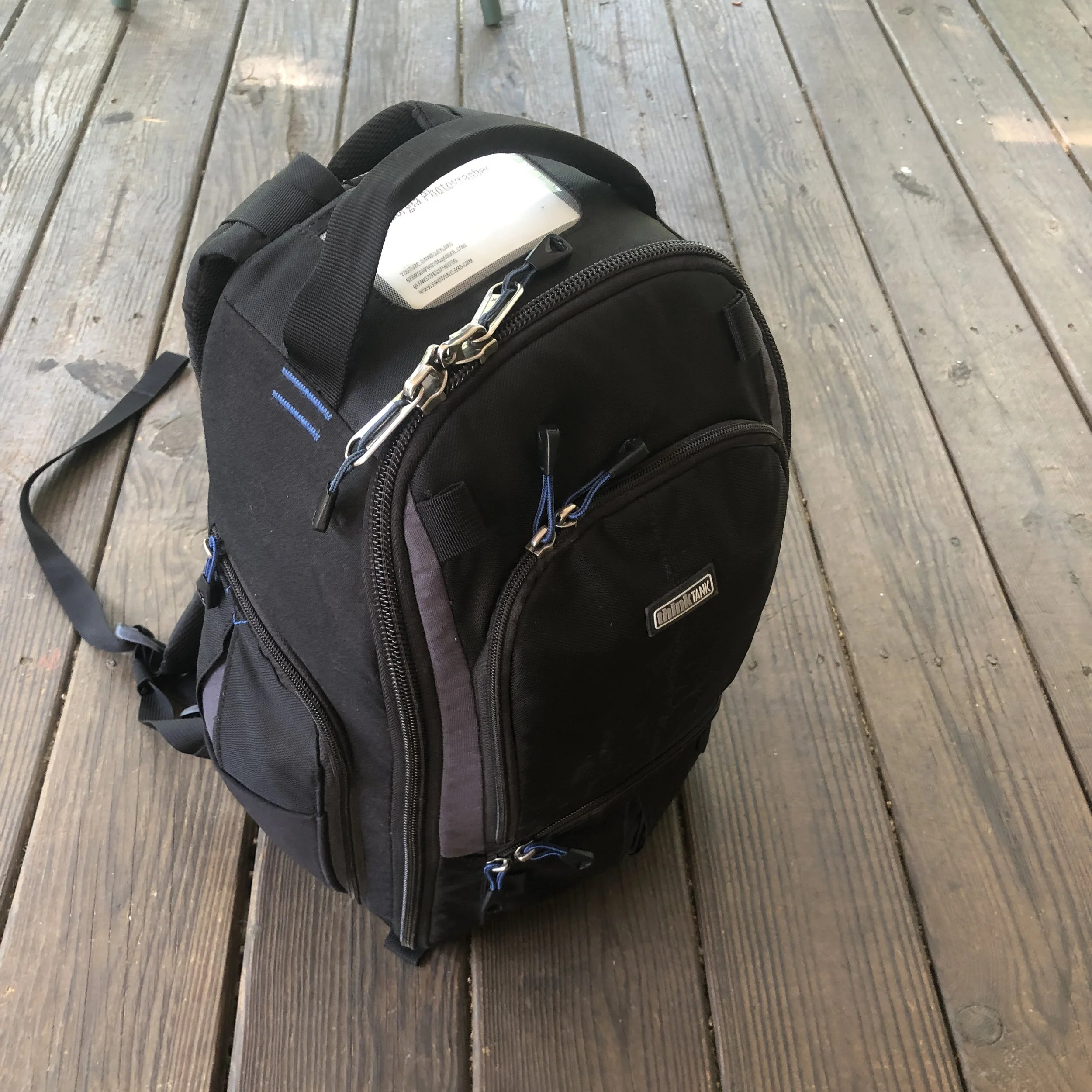
So my kit has always evolved, but I am trying to fine tune it to either make it lighter or easier/faster to setup or breakdown. Those are my main concerns as I am also only a daylight operator at this time so there is nothing about lights or such in my kit currently.
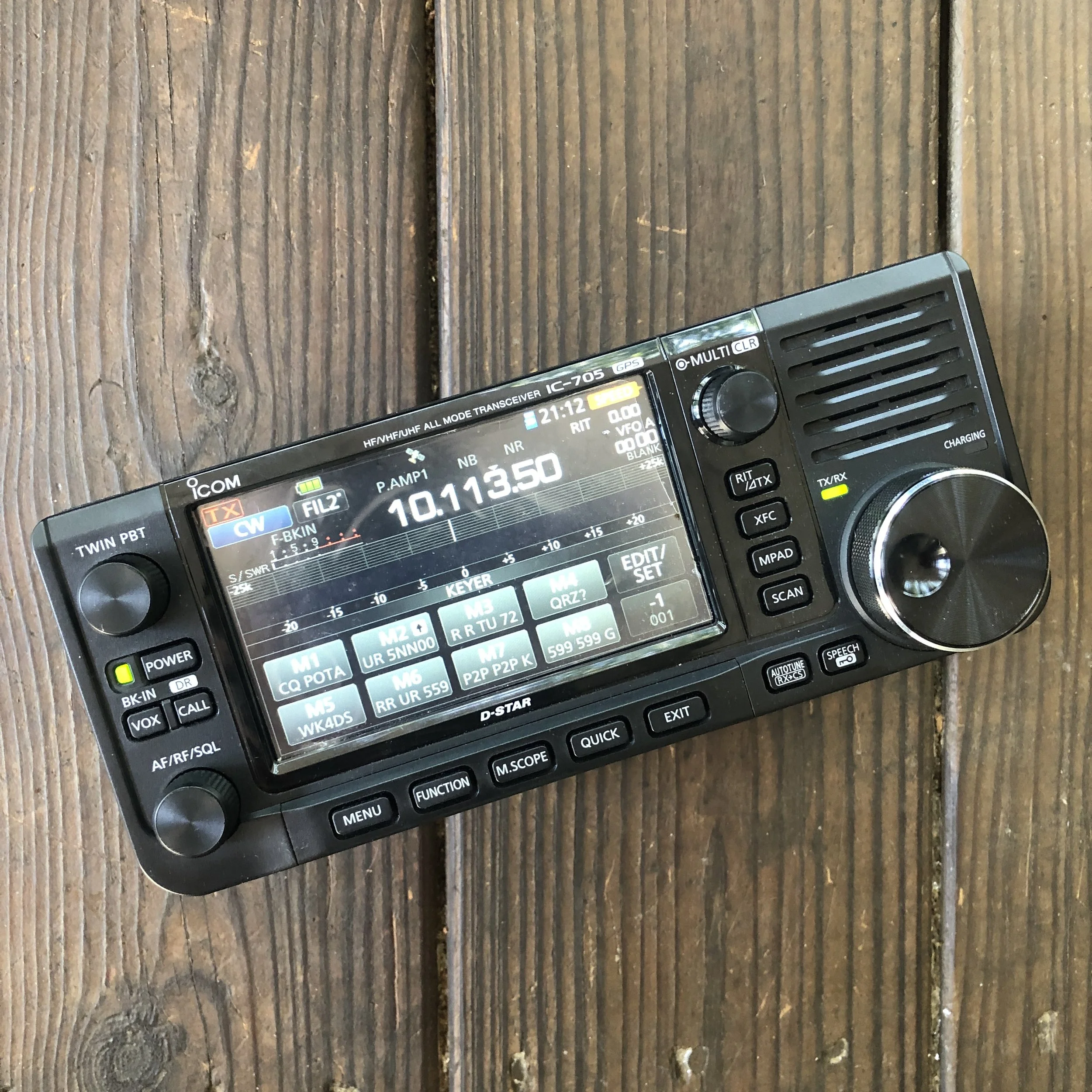
I think the first part to discuss should always be the RADIO! So my current setup consists on an ICOM IC-705 with matching antenna tuner. This rig will do all sorts of stuff that I have not tapped into before, it is even capable of VHF and UHF! It literally is an all purpose radio. I have only used it with SSB and CW so far though and really like the memory keyer functions a lot. They are super easy to program and easy to use. I am planning on setting up a simple RTTY system as it will natively decoder built in and a simple winkeyer will encode CW to RTTY and let me use that mode without a computer. All the better… LOL
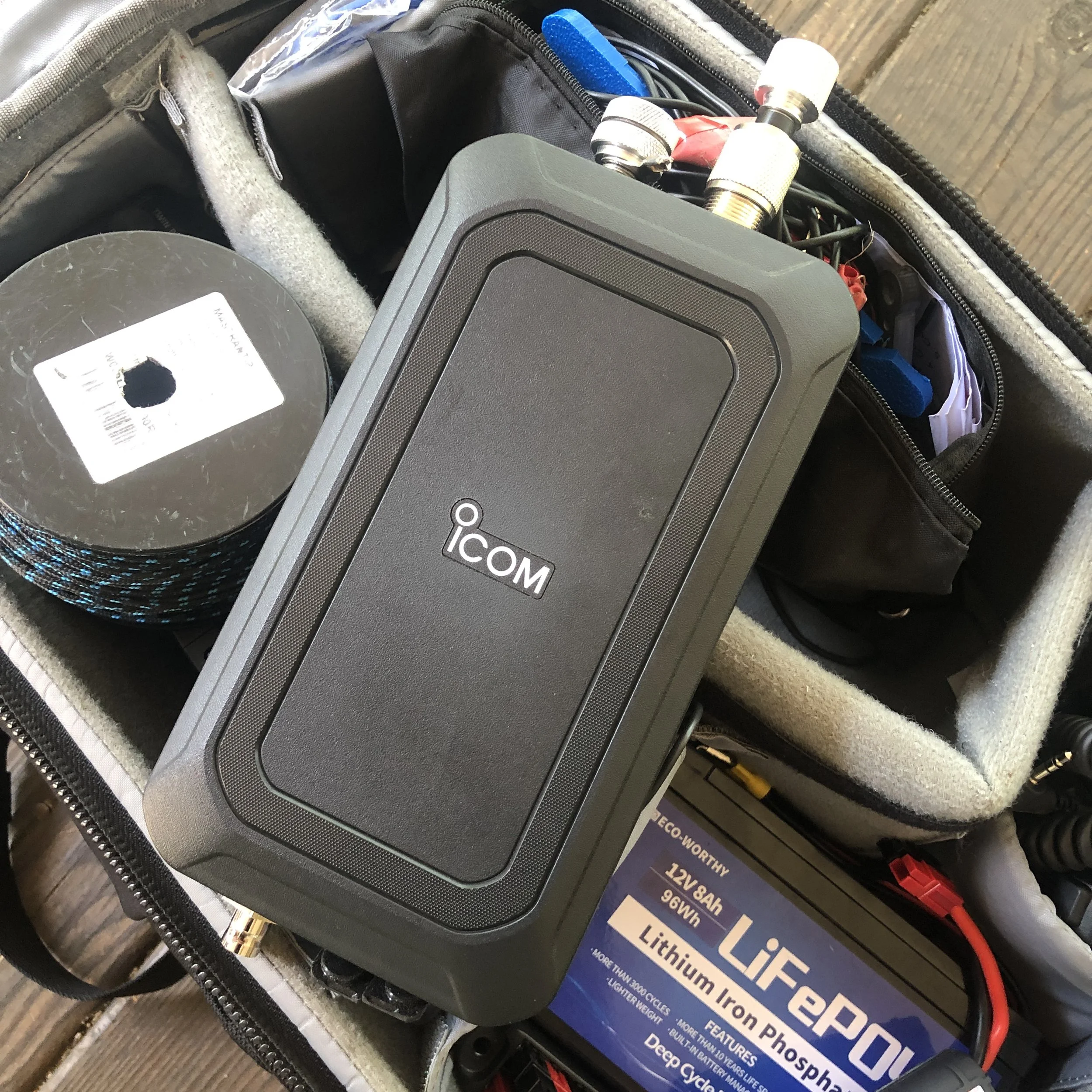
Next item to discuss is the antenna tuner. I just bit the bullet and bought the ICOM AH-705 remote tuner too while I was at Gigaparts… Can we say buying frenzy? 😂 Well, I am glad I did, it has performed flawlessly the entire time without issue and the cool thing about it and the radio is that they both have their own battery systems in them. This means you don’t even have to bring a remote power source if you don’t want to and still operate up to 5 watts. I have done this twice now, once because I was in a hurry and didn’t want to spend time building out the external power system and the second time was when the external battery went dead from me not charging it. The tuner is simple to use as it is designed to connect either a BNC coax or use the included adapter and connect the wire antenna directly to the tuner, which is what I have been doing up to this point. It also ships with the cabling to connect it to the 705 but the power cable is not included, they do give you the connector so you can build a cable yourself, which is exactly what I did, complete with powerpoles and a fuse holder… lol.
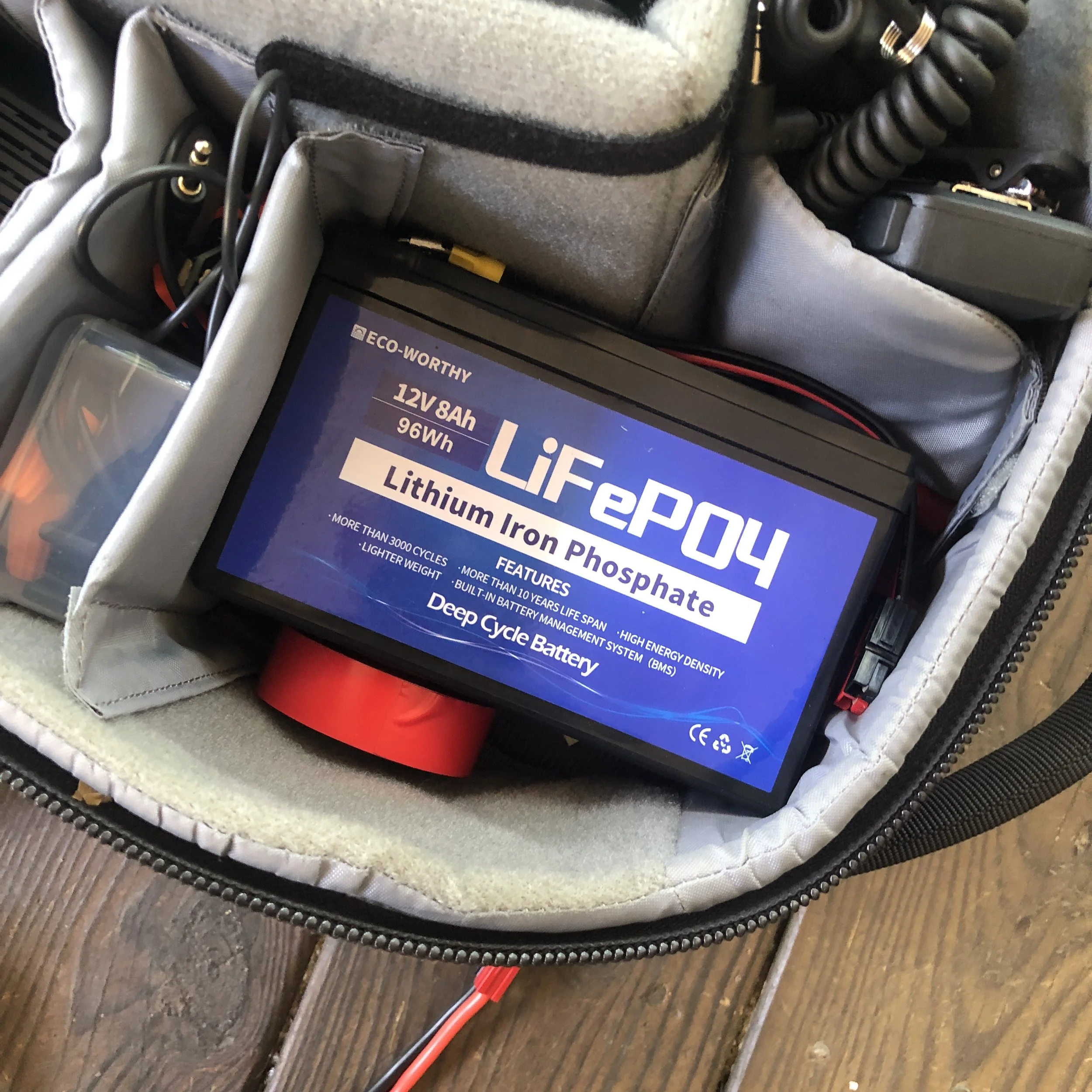
The next item in the system in the battery. The current cell is an 8AH LiFePO4 (Lithium Iron Phosphate) and is the size of the batteries that are in UPS power supplies and kids power wheel toys and such. I started out using the sealed lead acid battery, and quickly realized that the newer battery was half the weight but with the same energy…maybe more… So I upgraded soon after putting the kit together. Best idea ever! I made up a pigtail with two power poles on it and it stays on the battery all the time. Another thing that is great about QRP is the wire sizes are so much smaller too. I am using 16ga wire for the power cords because that is plenty for my 10 watts of transmitter power and my tuner.
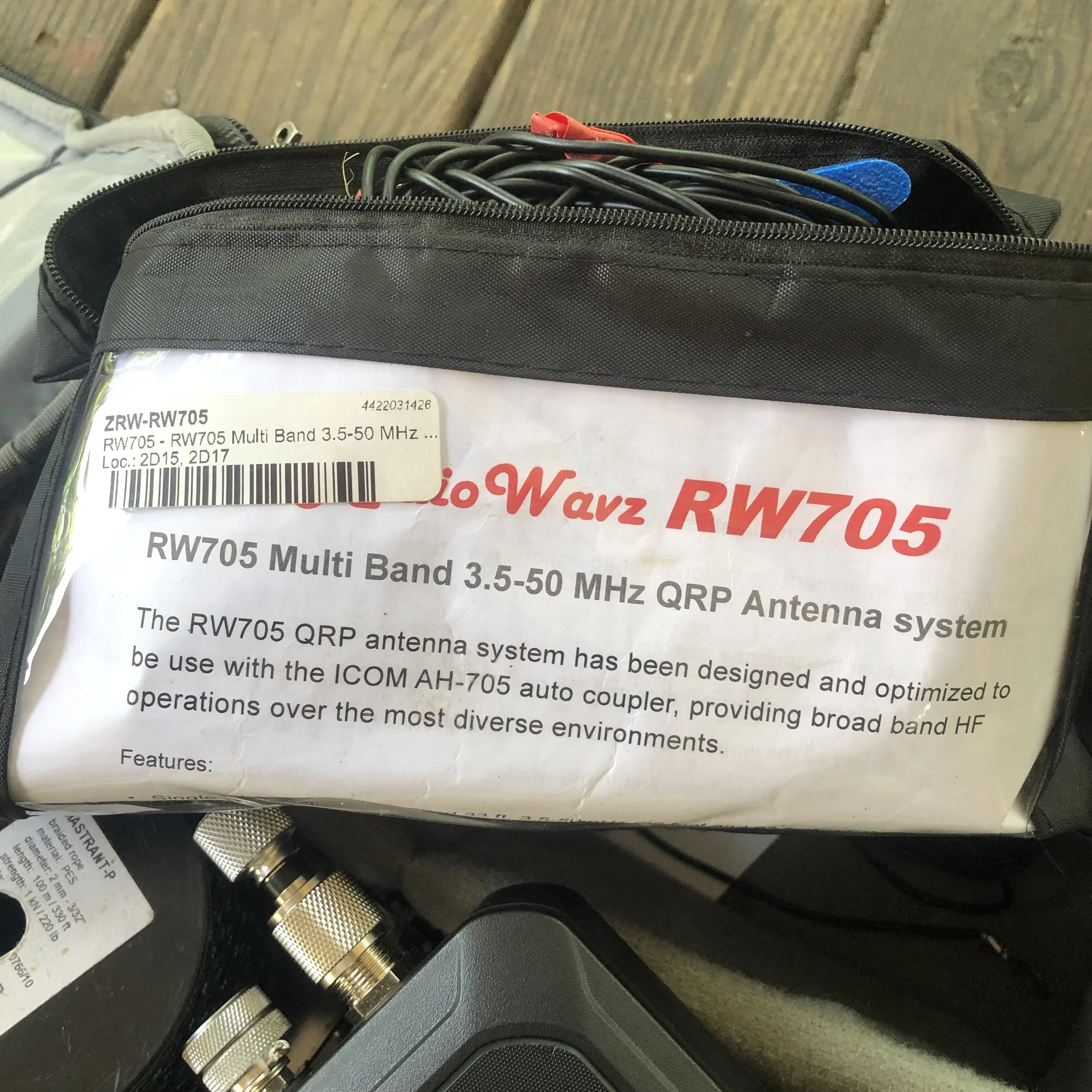
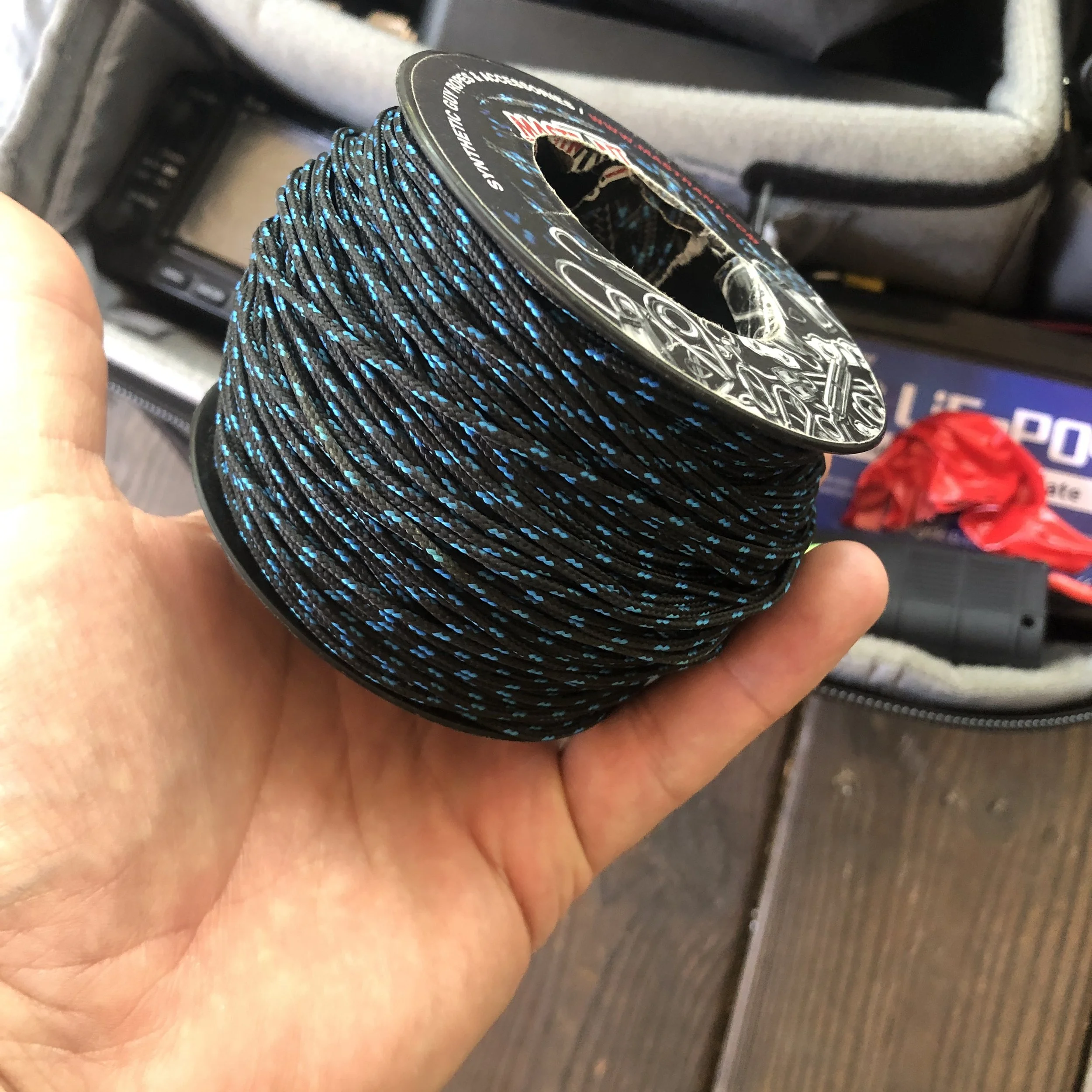
Next is the Antenna, I use a EFHW (End Fed Half Wave) wire antenna system that I bought called Radio Wavz RW705, it is a wire antenna kit with a whole bunch of widgets to help get the antenna setup. I also bought a small spool of 2mm arborist throw line and made a throw weight for it out of some stainless steel I had in the machineshop. I end up using the throw line as the distal end support line most of the time. This kit is great as it has a 33’, 66’ and two ten foot counter poise wires so if space is tight you can run the 33’ radiator and it works pretty well. I like running the longer wire with the 33’ wire for the counter poise though as it just seems to pull in the weaker signals better.
Right now, I have 3 QRP portable style radios, the IC705 and Elecraft K1/4 with internal ATU and a Factory built WA3RNC TR-35 that I have yet to use… Soon, very soon though. I really like the form factor of the TR-35 as it is really compact. I will probably be rotating those three radios through my pack as time goes on so they will all get some use. To be honest though, the IC705 will spoil you with all the features and the wonderful receiver in it. The touch screen is cool too but I dont have to have it, it does make things easier and some things harder… Anyway, on to the next items.
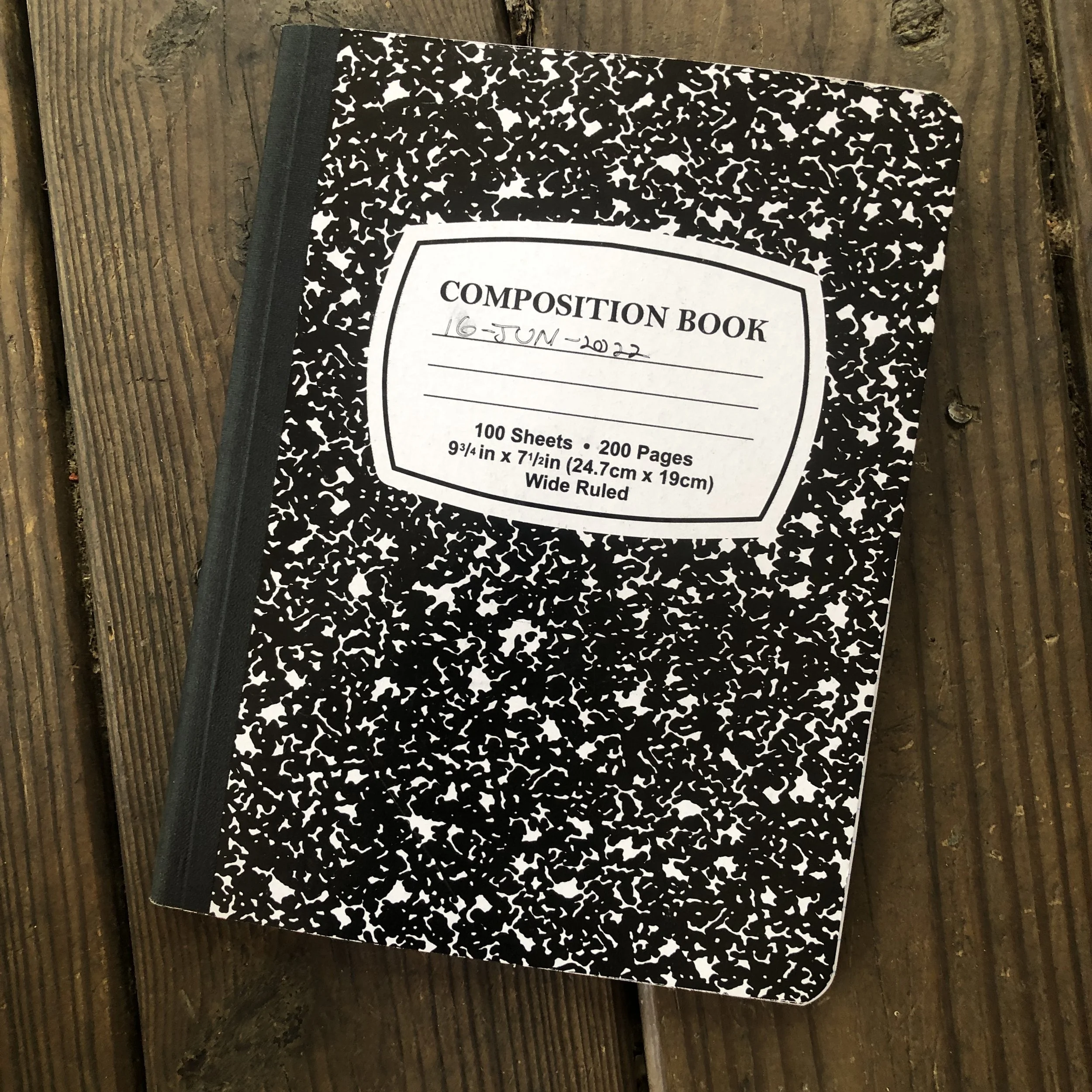
I dont log in the field with software at this time, I am not that dexterious to be hjonest, so I use good old pen and paper. Batteries dont go dead in a notebook… I carry three pens normally, two at a minimium. I have had one choke on an outing already so that solidified that part. I also have redundant antenna adapters for the tuner in case I drop one in a storm drain or some such. I also have a flash light a roll of red electrical tape, this serves two jobs, one I put it on the low part of the antenna when I am at a picnic table so people can see the wire if the happen to wander into the area and it is also electrical tape! I have a powerwerx voltmeter and the PD4 powerpole distribution block
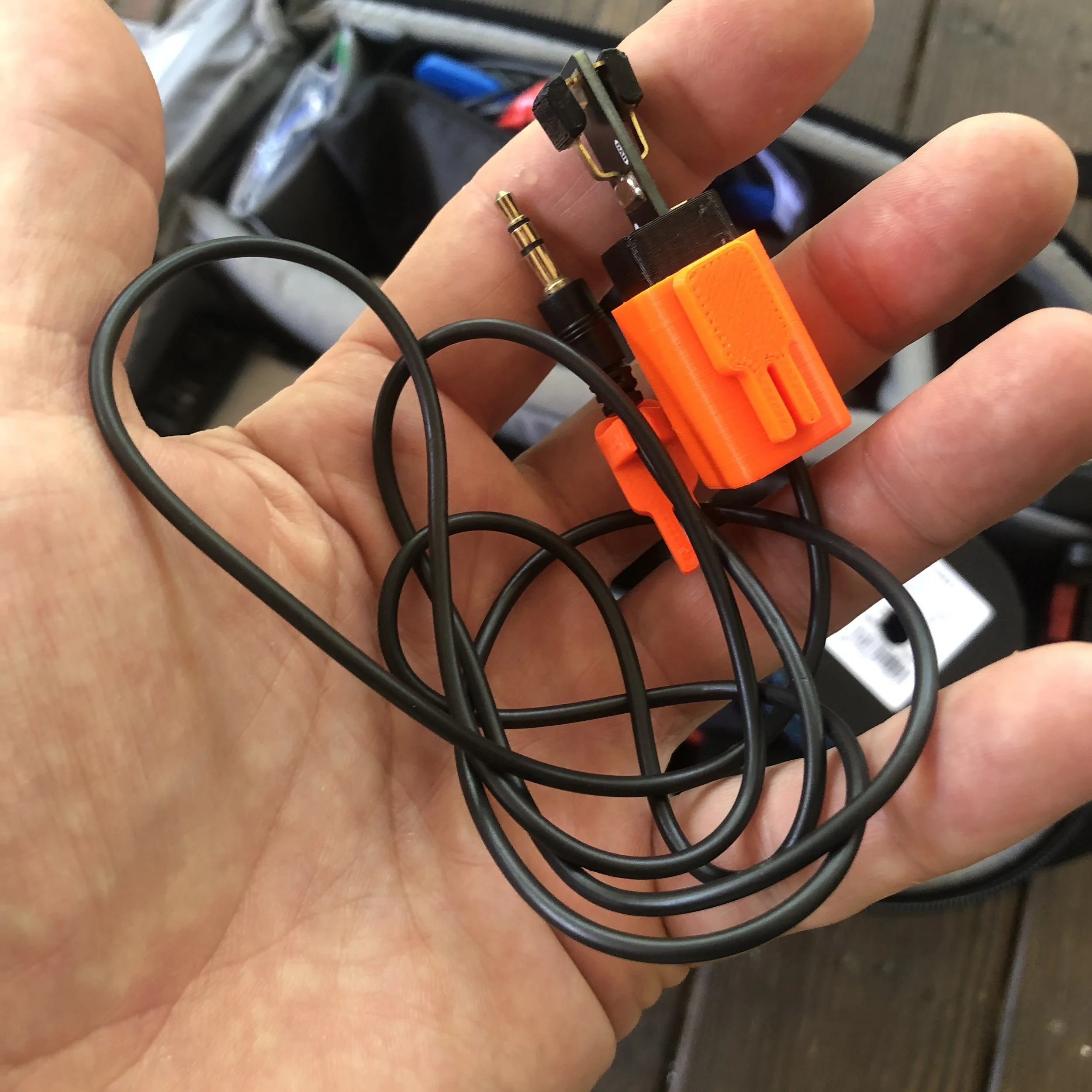
I carry the handmic to the 705 and the N6ARA tiny paddle, I bought a eBay dual lever key and it has failed twice on me so far, I am currently looking for a spare key so if I break the N6ARA key I can still operate. It will probably be some sort of small straight key to be honest. I like CW more as it seems to work better in QRP scenarios. I will try to get voice contacts from time to time, but they are hard to do with 10 watts.
All of this is carried in a surplus camera backpack style bag from Thinktank Photo. They are my favorite company for travel camera bags as they seem to just last forever and are designed really well, even for ham radio!
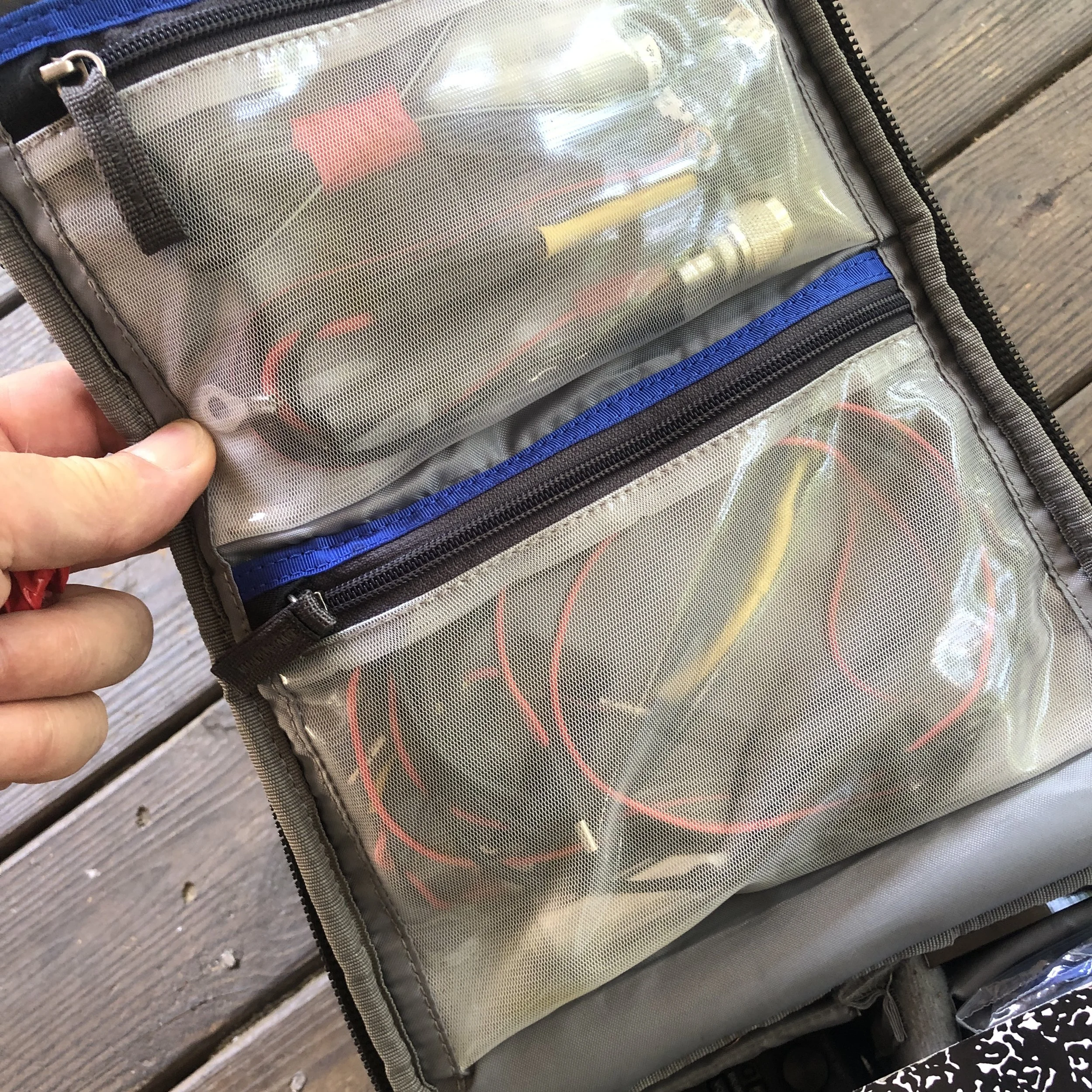
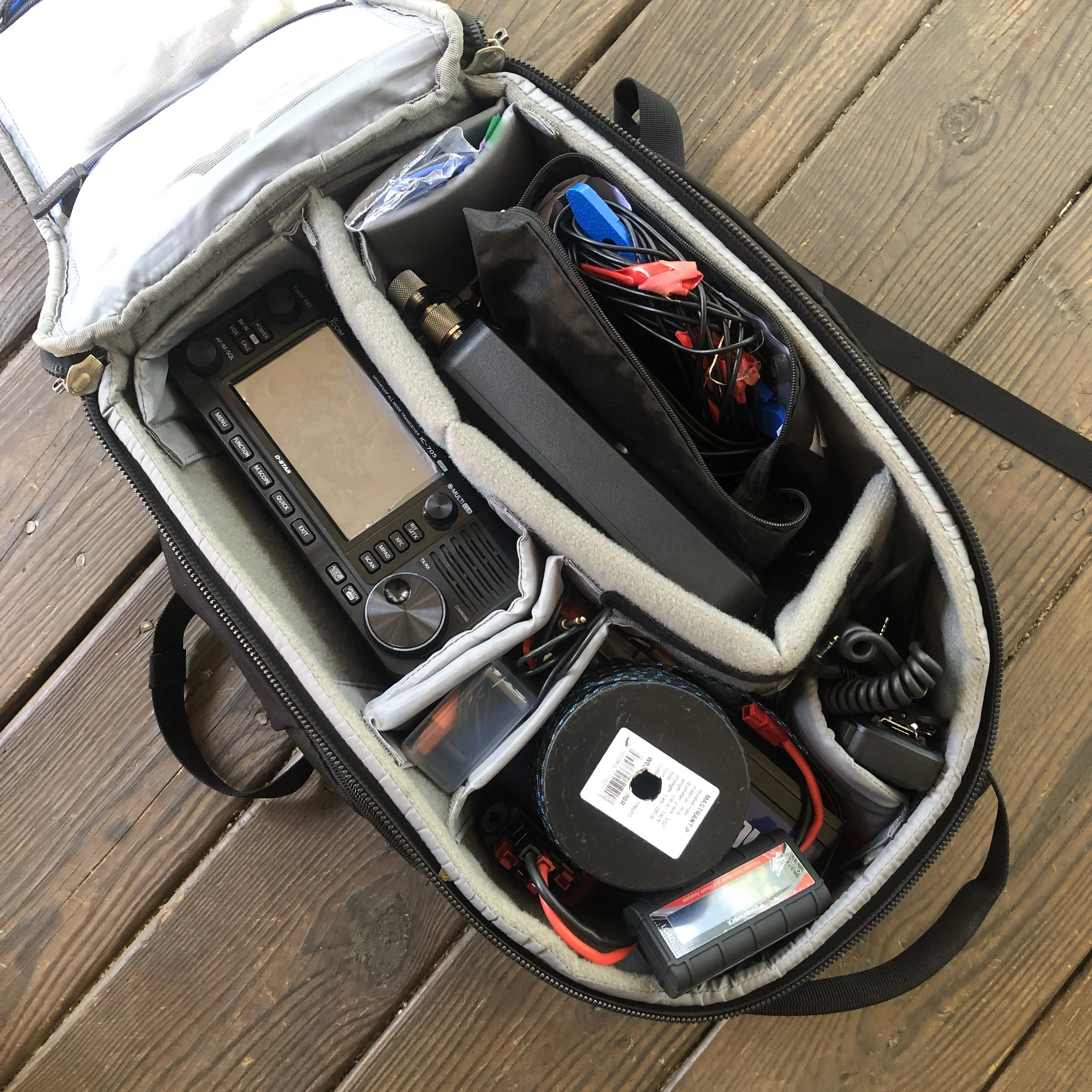
Thanks and 73! de WK4DS
Back to K-2169! I get the luck of the draw and the bands cooperate!

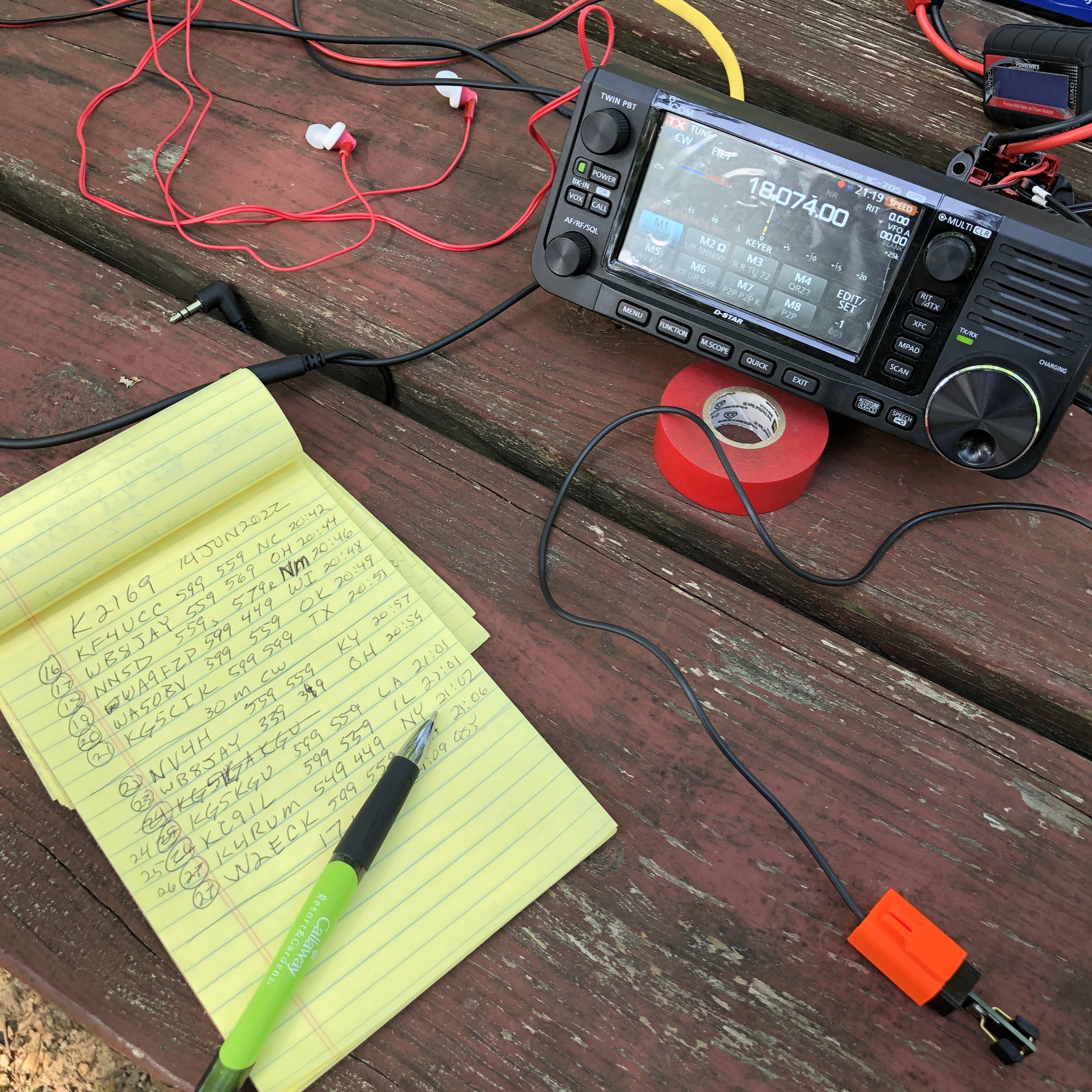
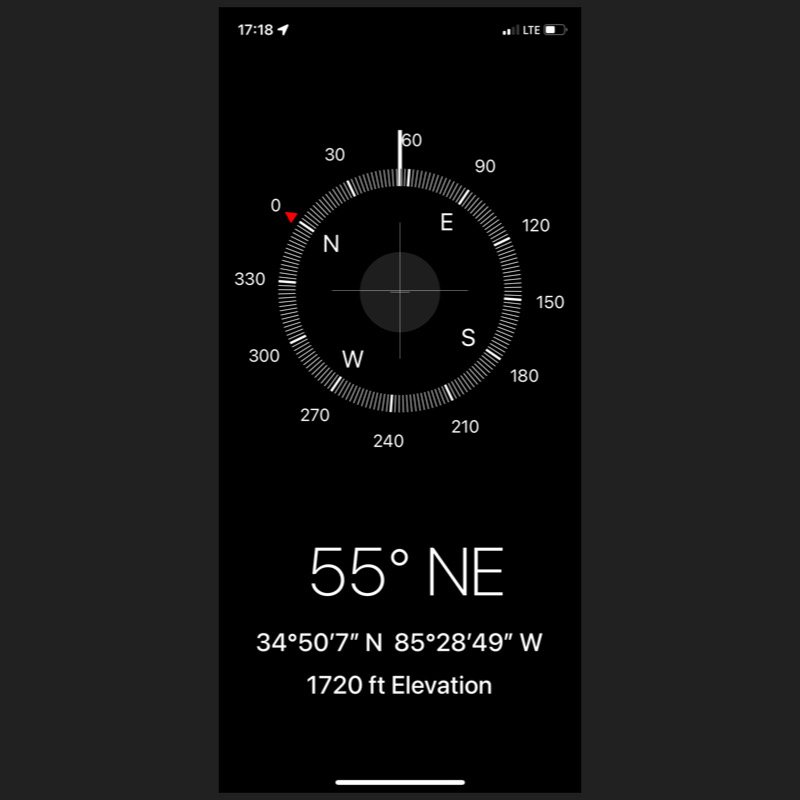
Well, it has been a week since I activated a park so I had a few hours this afternoon and a charged battery, lets POTA!!! So I grab my bag and head over to Cloudland Canyon State Park and my usual spot has people in it and they looked like they were going to stay a while so I went to my second location of choice and it was all clear! Got the antenna up on the first throw this time! The sloper was facing 55 degrees NE to the high end without a single branch near it! I strung out the 20 meter wire for a counterpoise and hooked them to the tuner, antenna done! Cranked up the radio right at 20:00 UTC and I started calling CQ on 12 meters for nearly 15 minutes with zero replies! So I moved down to 15 then to 17 where I pounced on XE1XR in Mexico to start things off right. Not hearing much else, I go to 20 meters and literally find every HAM that has ever turned on a radio! Yeah, 20 was open… so I found me a spot and started calling CQ. I didn’t have good internet today for some reason so I sent my friend KV9L a text and got him to spot me, but then the reverse beacon took over after that I think because in 19 minutes I had garnered 15 QSOs and making this trip a valid activation! Well I didn’t stop there as I still had plenty of time to play radio so i kept calling and you guys kept answering. I logged KG5CIK at 20:51 UTC and moved to 30 meters for a minute to see what I could do there. I ended up with 6 QSOs on 30 meters then hit 17 again but no one was there and then finally back to 20 to finish out the day. Got a couple of park to park QSOs this time as well as K9IS whom I log almost every trip out and CU3AA in the Azores! I am always amazed at what just a few watts of rf can do! That was a good trip for me today, ended up with 37 QSOs in just at 2 hours time. That has to be some sort of record for me, I am sure of it. lol…
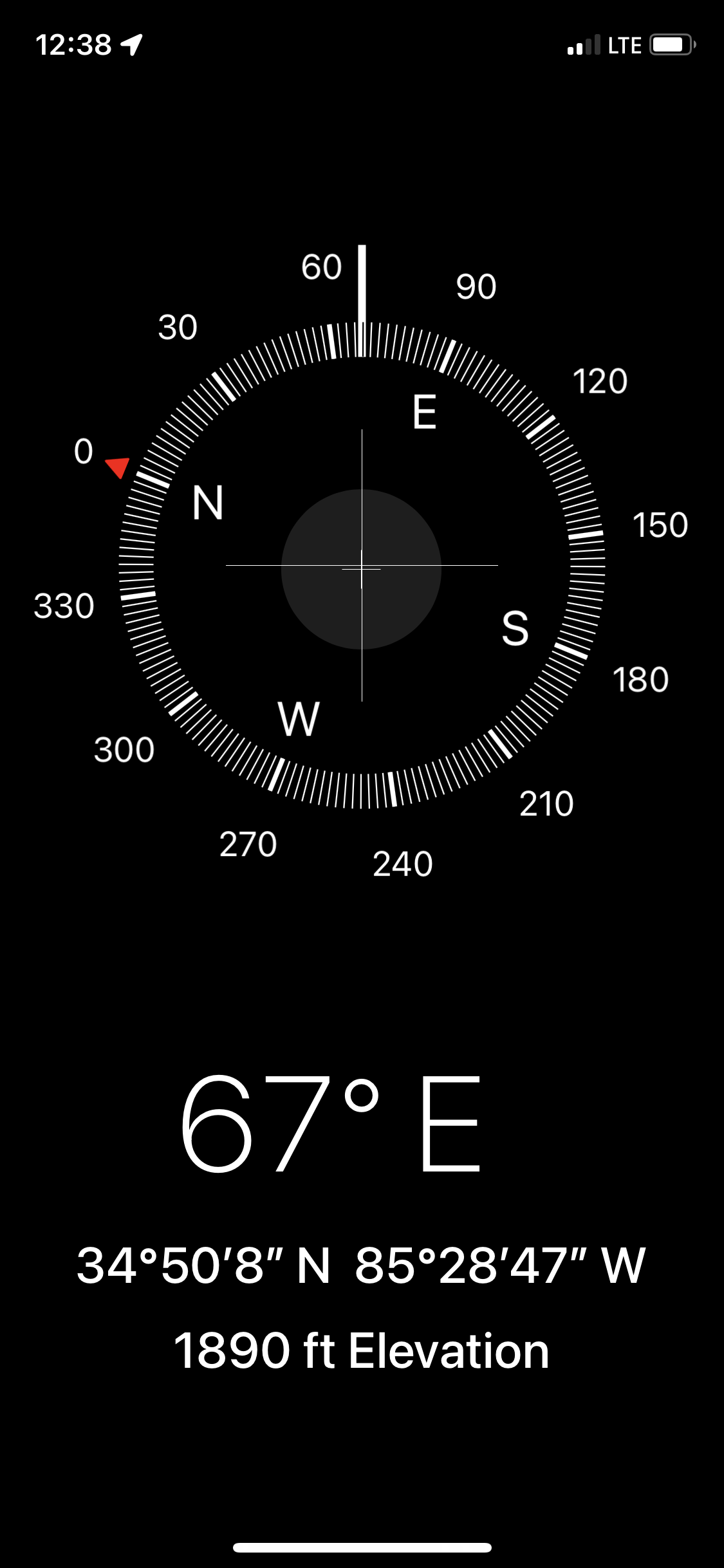
Compass I use is from my iPhone and it works pretty well as it also has a bunch of other data from the location as well. This is the direction the high end of my sloper was facing with it hanging at close to a 30, maybe 35 degree angle. Compare that to the QSO map for propagation reference info. I like this simple kind of research, alot of it is not documented, but I think it is enough to give me an idea of what I can do with the antenna when I string it up.
I overlayed the compass onto the qso map to see what it was doing and the results are kinda cool to see visually.

Using this tiny little travel key takes some practice as it is not super easy for me to master, it works really well but it is very small and I am used to large heavy bench keys that sit by themselves and do not require two hands to operate, this is what I am talking about. The key itself performs VERY well. I really like the little guy.

If you will notice, my logbook contains only CW contacts today, this is because of two things, for one, I love using CW. For some reason I have always enjoyed using this mode on the air, even though I am not very good at it… and number two, nobody could hear my calls on SSB today. I think it takes a little more than 10 watts to bust through a pileup… lol. I do get some SSB from time to time and plan to try some RTTY and FT8 as well in the future…once I learn how.
Thanks for your time and 73
de WK4DS
Got something magical in the mail today from my POTA radio time!

When you embark down the road of ham radio you learn a lot of history as part of the journey.. A little piece of that history is QSL cards. QSL cards are super interesting to me as I am pretty sure it is one of the only times that a person involved in an activity will go to the trouble of documenting and sharing that documentation with the other involved party to confirm it happened. A QSL card is usually nothing more then a post card with the contact data on it, sometimes mailed like a post card sometimes in an envelope. Then there are “nicer” cards that will have photos on them, but the ones I REALLY like have personal hand written notes on them. Those are the best to me. If you are active in radio very much on HF at all, you will end up with at least a few of these in your mailbox. The usual courtesy for me is to reply to all cards I get in the mail, I once actively sent cards to all my contacts that I made, but I no longer do that due to the costs involved, but I will always reply to one sent to me…always.

I find it charming to keep this tradition alive, but it can get complicated too, before you throw your card in the mail, be sure to check to see how the other op handles their QSL cards, there are several ways to do it , just so your aware. Most of these are done to help either save time or money and sometimes the DX station will have rules as well as sending a “green-stamp” to offset return postage or an SASE to help them with the expense of sending those exotic cards over seas.
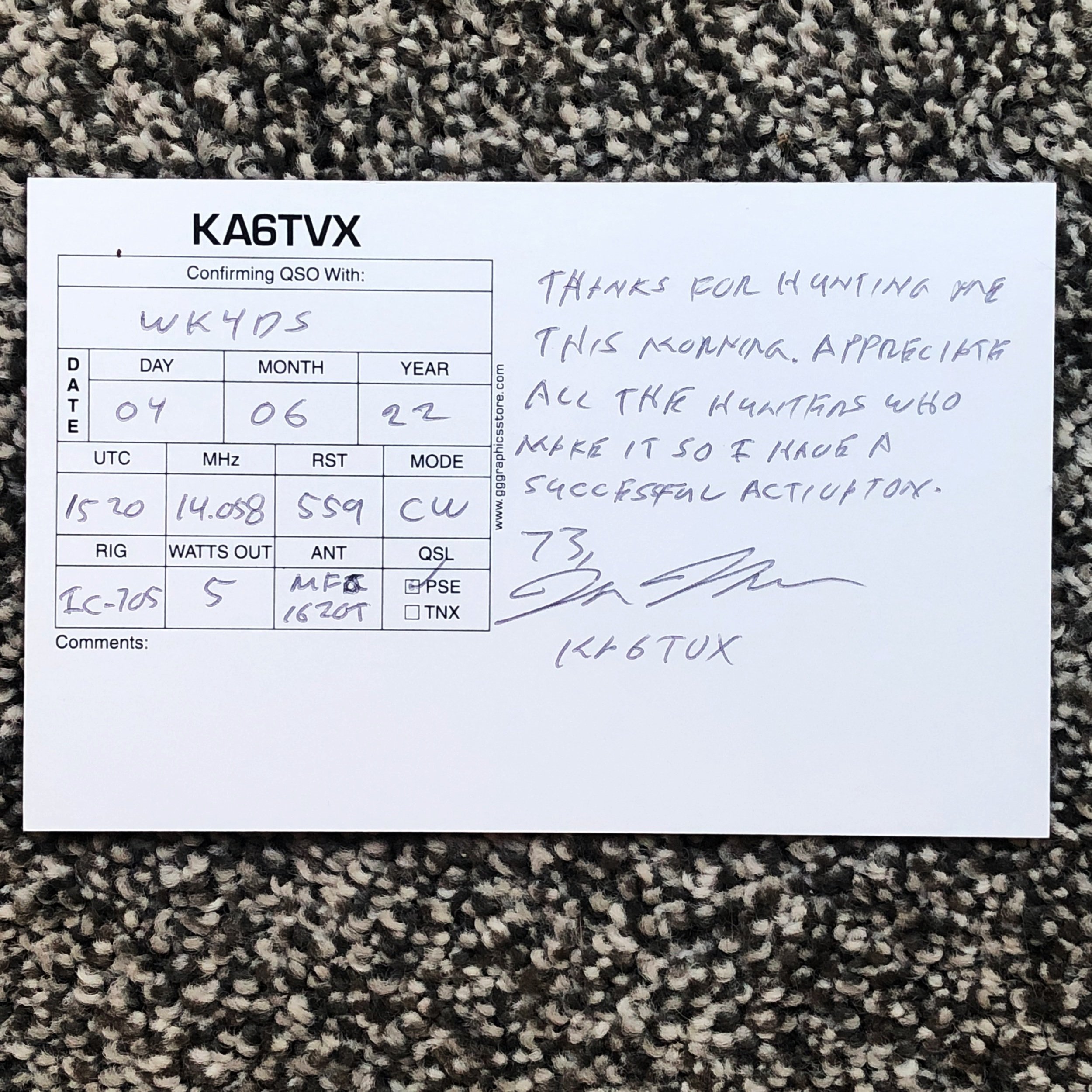
Since I have been out of radio for sometime, I am honestly needing new cards. I think I will go with photo cards this time and not add any special logos so they will translate to all types of radio like voice modes and even digital.

Customizing your QSL cards doesn’t have to be a once and done thing either, I have routinely made custom QSL cards in the past by just doing some photo editing and then printing photos and writing the QSL info on the back. I would always mail these in envelopes as I didn’t want the post office sorting machines abrading the photos. But this is just one way to make the card, you can literally write a letter if you wanted to… The rules are not set in stone here.
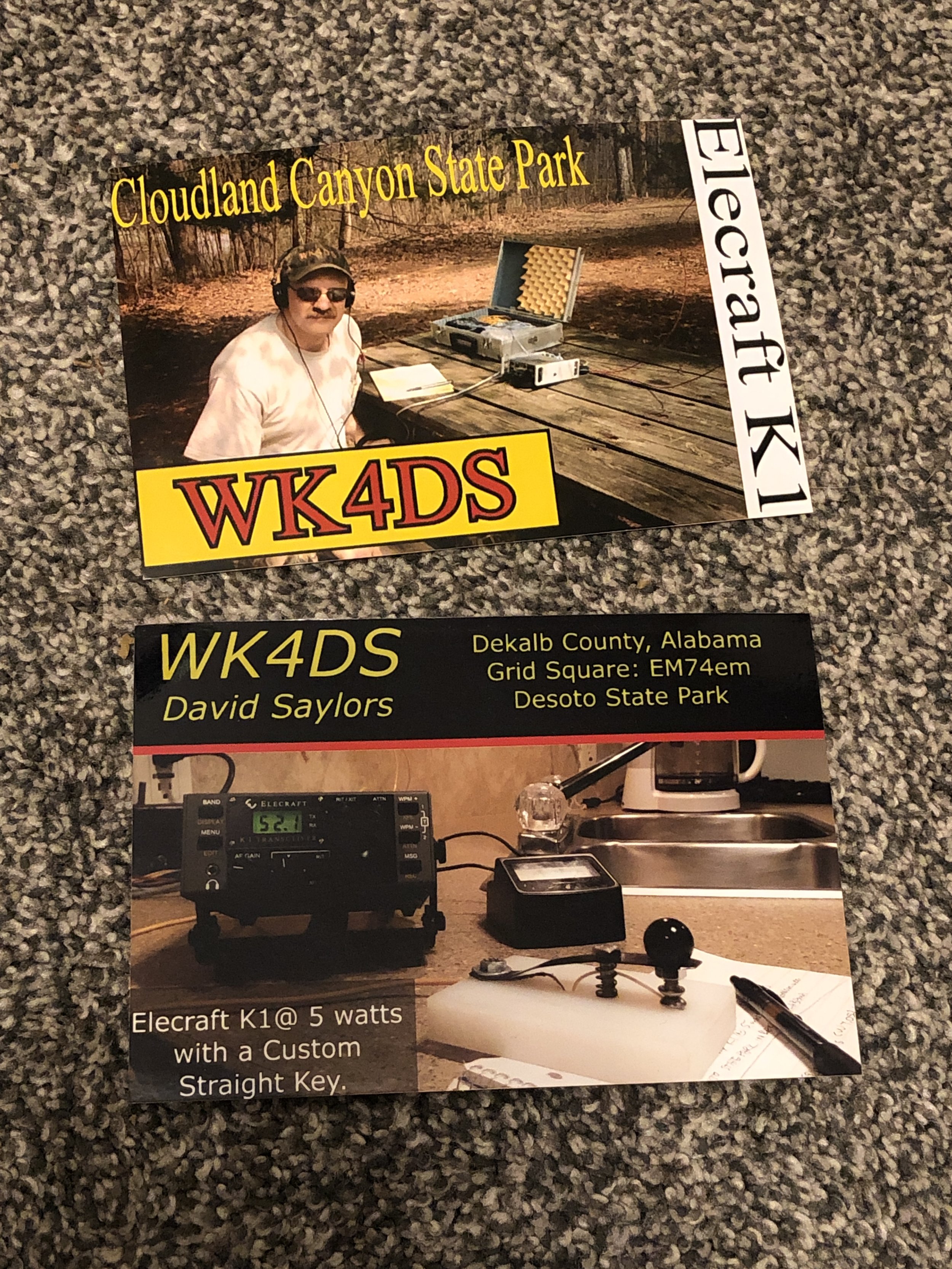
I always enjoyed getting these kind of “shack” info letters, it was always interesting for me to see what the other op was using when we made contact. Sometimes it would be a 10,000$ power house machine and sometimes it would be a homebuilt rockbound radio that cost 25$.

Yes, we had a QSO and he was transmitting with 250 milliwatts! The note about the contact is below.

So I hope if your new to amateur radio that you will consider sending some cards out and going the extra mile and personalizing them as well. Have some fun with it! That is what it is all about anyway!
Tough conditions, dead batteries and a lot of amateur radio fun.
This is a tale of a guy who thinks he is going to get a “quick” POTA activation and then go grab some photos as well… It didn’t go like that…at all.
You see I thought I had this whole Parks On The Air thing dialed in and have even built a little “kit” to activate parks with that I can just grab and go. I am repurposing an old camera bag (a story for another day) and it organizes the QRP rig perfectly for activations. Soooooo, this is how it goes on that fateful day. I have a few hours in the afternoon on June 8th 2022 and tell the wife I am gonna “run” over to Cloudland Canyon state park and get a quick activation and then be back in time for supper with the kids later. I grab said POTA bag, hop in the truck and head over to my spot to activate K-2169.

Well, I should have heeded the warning when I got there I guess as my favorite location on top of the hill was occupied with a group of teens on a day trip from a local school. I circle through the parking lot really slowly surveying the area and decided to park for a bit and see if I could figure something else out when I catch a break! They start packing up to leave!!! So I wait patiently for them to vacate the location I want to use and once clear, I move the truck and grab my gear.

Setup was frustrating this time as I had to throw my line 7 times to get a good location like I wanted (turned out later that really didnt seem to matter, haha). I FINALLY get the line up in the tree and then hook up the radio and we are off to the races! Well, I was off to the races, seems nobody could hear me. It took several minutes of calling CQ to get my first contact. Normally once I get one, then I will end up with at least an activation (10 contacts) within about the next ten minutes. Not this time, it took a full ten minutes to get the next QSO in the log! So then I figure I would go hunting some other parks and I did get one then another! NO! It was a SOTA op that is didnt hear well… lol. Well after that I got my hopes up again as I got a run of 5 in about 25 minutes. As I would be just about to give up and try something else, I would get another one and it would keep me in place a little longer. So I am an hour in and only have 8 contacts at this point, I need 10 for a technical activation, so I REALLY want to get two more before having to shut down the operation. It was at this point that I realized why I was getting the 339 reports…THE REMOTE BATTERY WAS DEAD!!! I’m thinking at this point. Really doofus, your brought a dead battery to an activation??? Well, yeah, I did… So I am now running on the battery that comes with the 705 which will only produce 5 watts output. I can hear stations but they cant hear me… I head over to 30 meters and bag N3VO for the 9th QSO in the log, it is basically time to break down the rig, but I need one more contact to have an activation, so I go back to 20 meters and switch to SSB, after trying to get through 4 pile ups without no success, I score a park to park on my last QSO of the day and get my 10th contact securing an official activation. This one was close, but I made it, I quickly broke the rig down and headed home…

So if you think you cant make it work, there is almost always a way to do it, even if you have a dead battery and the bands are terrible for QRP and you have to switch modes, you just might get it done.
73
WK4DS
First Post about my radio activities and discovering POTA

Ok, brief history lesson. I got my first license way back in 2002 as KG4WBH and quickly found out that I had a love for the CW operating mode. I never turned my cards in but I have WAS in a shoebox under my bed…lol. I have thought about putting them in a frame, but I keep procrastinating.
Fast forward to today, I have been inactive for a bunch of years and then ran into a new friend in my photography hobby who is also licensed (KV9L) and he told me about this new thing call POTA… To be honest, I have never really been the contesting type as I never really enjoyed fighting a pileup just to have the DX station get tired and go QRT before I could get through, you see I have also never owned an amplifier either so I have had 200 watts max (TS950 SD) to work with. I also learned at some point, who Ten Tec was and fell in love with their radios. Currently use an Omni 6+ as my base station and am looking for a nice backup machine as well… I have had a couple of Jupiters over the years and love them too, great little machines.
Anyway back to today, I am going to start writing about my activations and such on here and sharing them to social media from here. I have been tracking some technical information as well as sharing my contact maps and a few photos of the locations when I do an activation. There is only about 8 or 9 so far so I have done and wanted to build an archive of them that was on my site and not on a social media site. I am an avid night shift hunter as well so you might just hear the old Omni replying back from Georgia if your out in the evening…

My POTA activation station is a little different. It consists of a ICOM 705 with matching antenna tuner and a battery power pack with a wire antenna. I normally use an ICOM 705 or an Elecraft K1, I am mainly using the 705 though as it works really well and is simple to use. The K1 is also a great little radio though and will be making appearances soon on my activations to come.

Well that’s it for this one, thanks for tagging along today, hope to hear you on the radio!
73
WK4DS