WK4DS Amateur Radio Blog
Search Posts
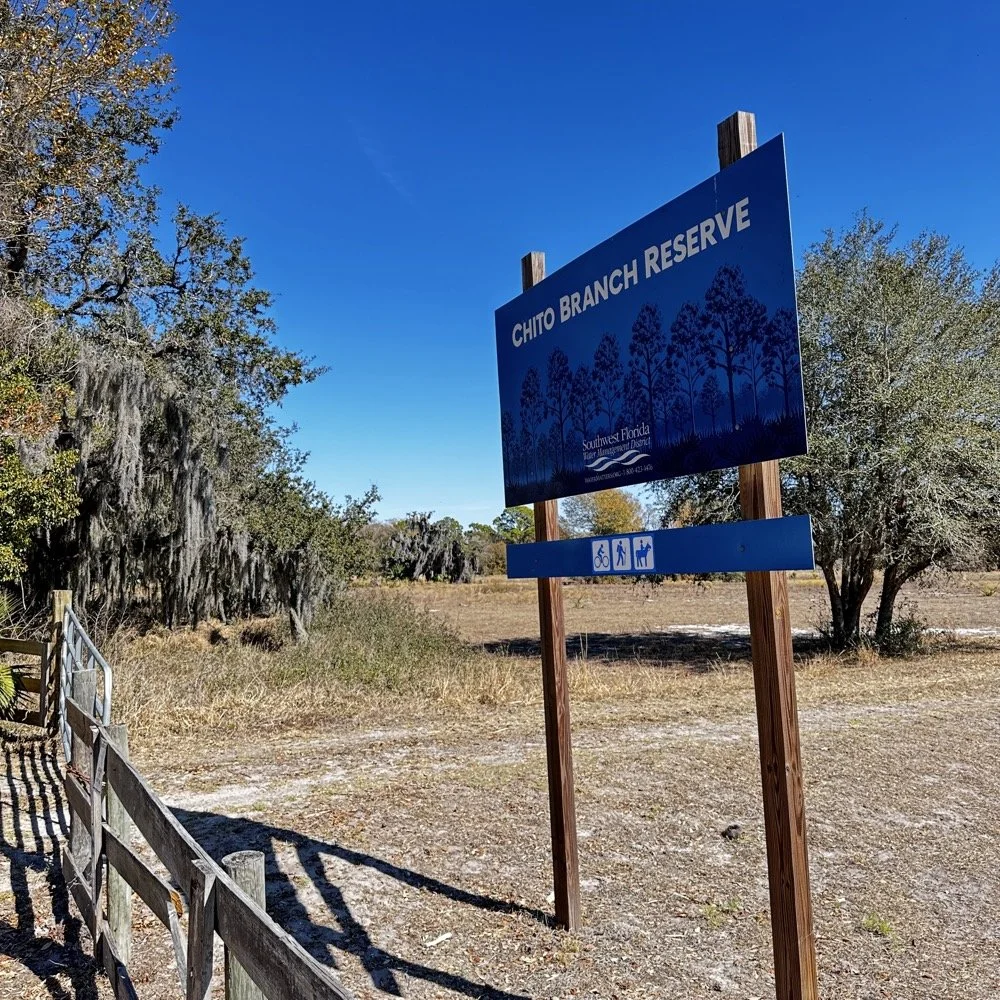
Chito Branch Reserve: First FT4 Contacts, Meeting a Fellow Park Hunter, and the Quest for 1000
Doug's been activating Chito Branch quite a bit lately, and if I'm being honest, we seem to be in a friendly race to see who hits 1000 contacts from this park first. Spoiler alert: he's winning. But it was great to finally shake hands with someone who understands the appeal of spending beautiful Florida mornings in a park with Spanish moss hanging from the trees, headphones on, working the world.
February 10, 2026 • US-5524
Sometimes the best part of a POTA activation isn't the DX you work or the pile-ups you run! it's meeting another operator face-to-face who's been chasing the same goals you have. Today at Chito Branch Reserve, I finally got to meet Doug, KQ4SXW, in person.
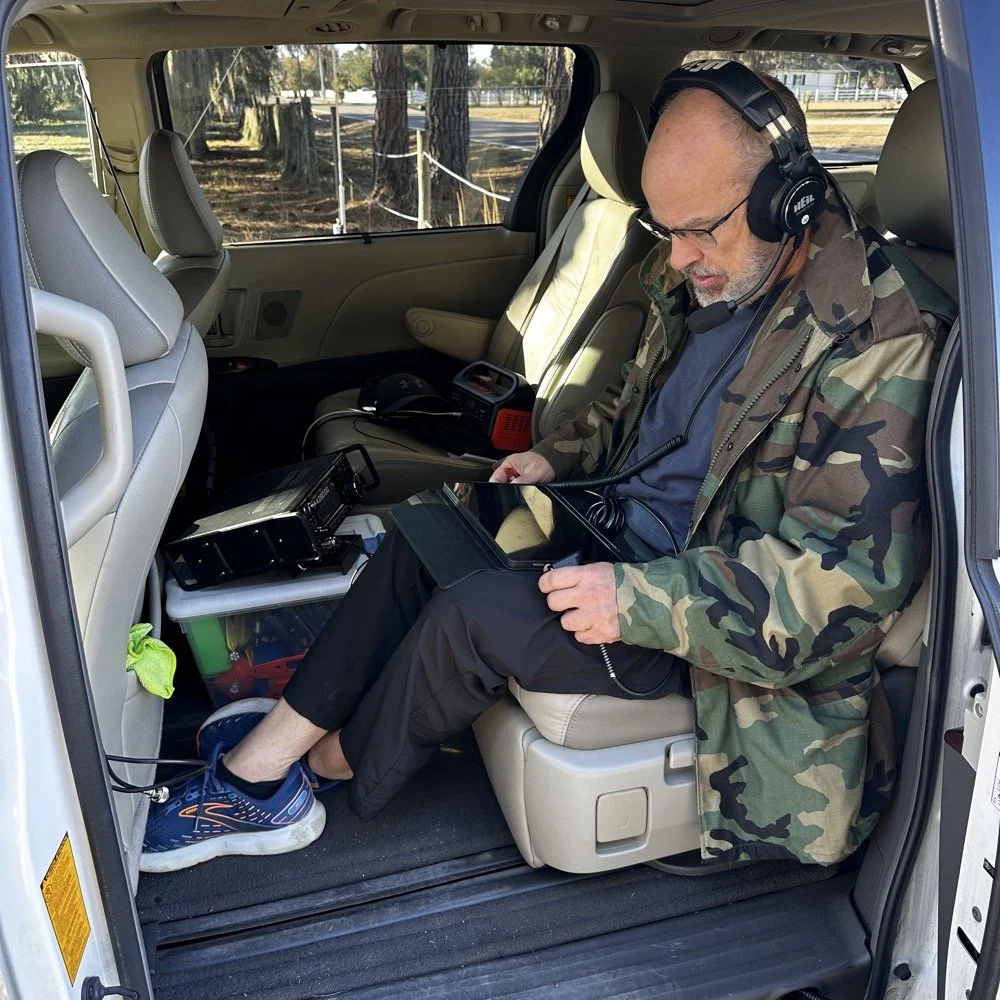
I finally got to meet Doug, KQ4SXW
Doug's been activating Chito Branch quite a bit lately, and if I'm being honest, we seem to be in a friendly race to see who hits 1000 contacts from this park first (well, between us at least). Spoiler alert: he's winning. But it was great to finally shake hands with someone who understands the appeal of spending beautiful Florida mornings in a park with Spanish moss hanging from the trees, headphones on, working the world.
The Setup
I rolled into Chito Branch mid-morning with my usual portable arsenal. The park is close to where I'm staying in Tampa, which makes it an easy choice for activations, and I've been systematically building toward that 1000-contact milestone. As of today, I'm sitting at 769 QSOs logged from US-5524, so I'm getting close.
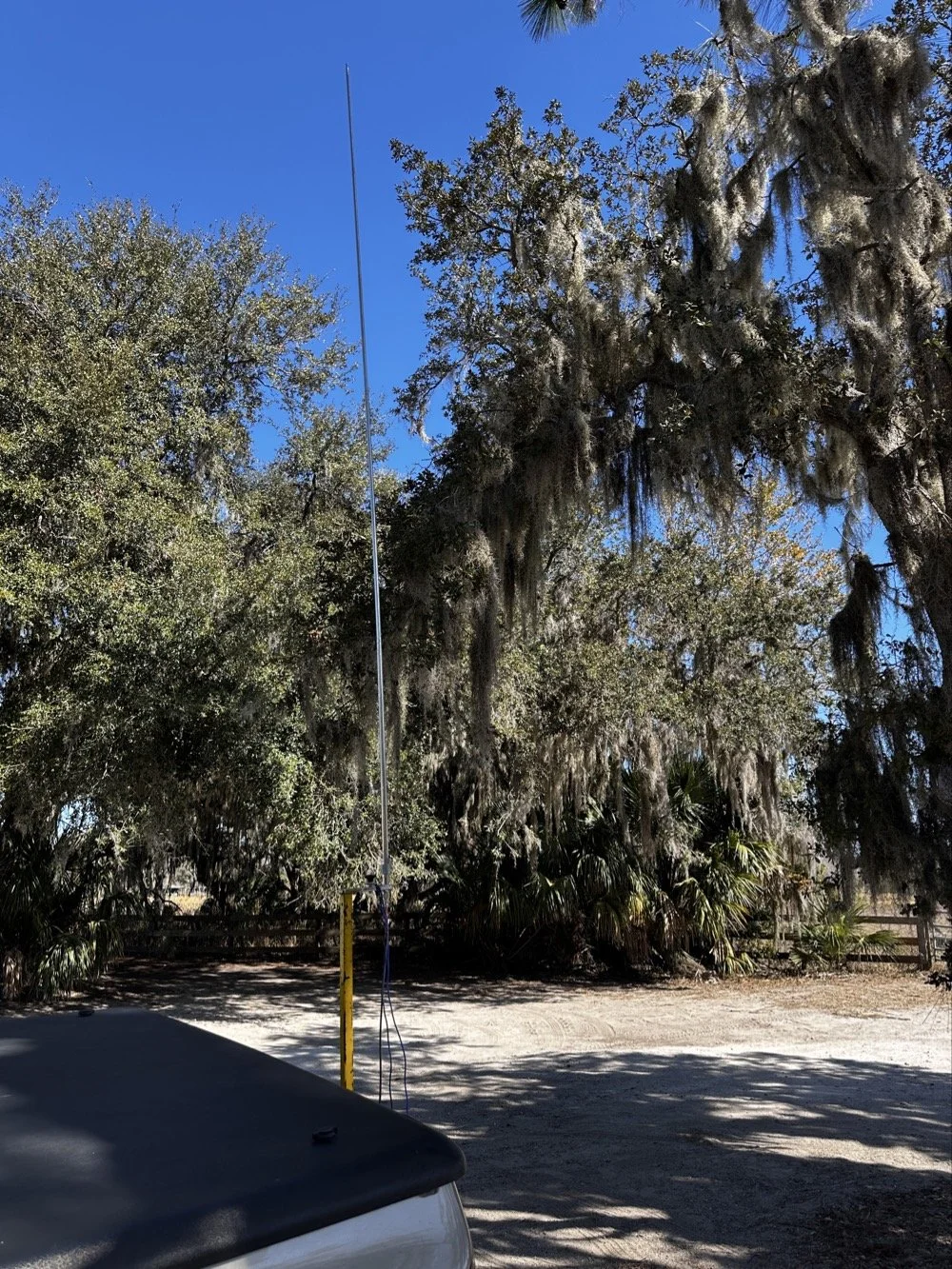
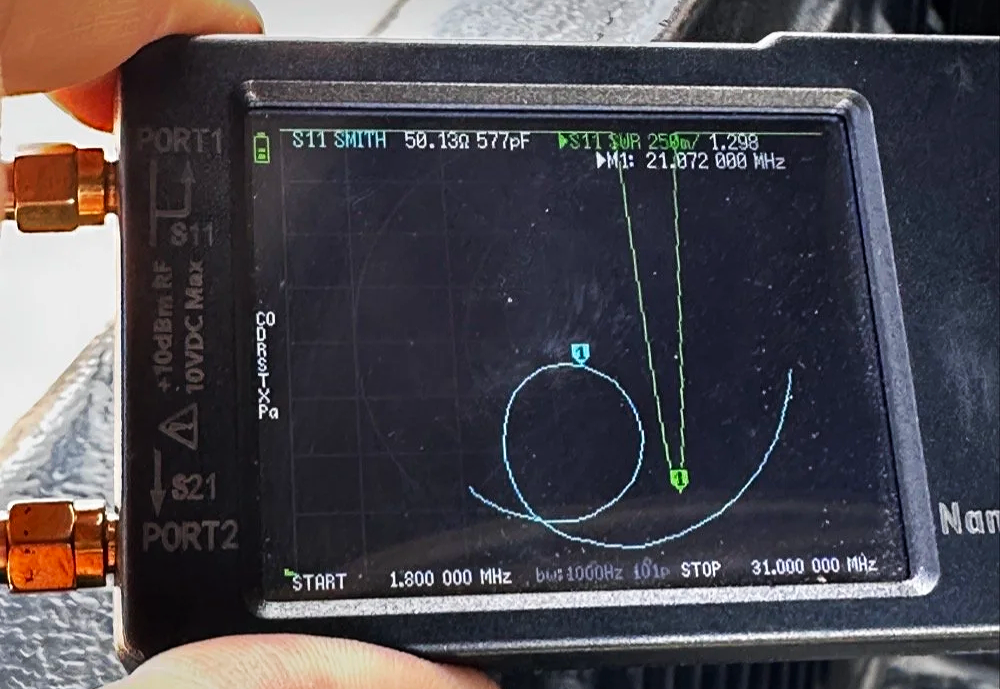
For antennas, I ran my 1/4-wave vertical with two counterpoise wires, tuned for each band. Simple, effective, and quick to deploy. I use the nanoVNA to utne the antenna with. As you can see in the plot above, I get it to something less than 1.5:1 SWR and call it good, I have found that if I get it to that level that I dont have any trouble making contacts at all. I have done OK with the SWR higher in the past…much higher actually, but it is a lot tougher to make contacts like that.
The main rig was the sBitx V3 from HF Signals for digital modes, and I brought along the Ten-Tec Scout 555 for some 15-meter CW work since the bands were looking promising.
Speaking of which… let me tell you about my grid square insurance policy.
A Sticky-Note Solution to a Real Problem
If you operate FT8 or FT4, you know that your grid square locator needs to be correct. It matters for awards, for logging accuracy, and frankly, for not looking like you don't know what you're doing. Recently, I completed an entire activation with the wrong grid square set in the software.
Not ideal.
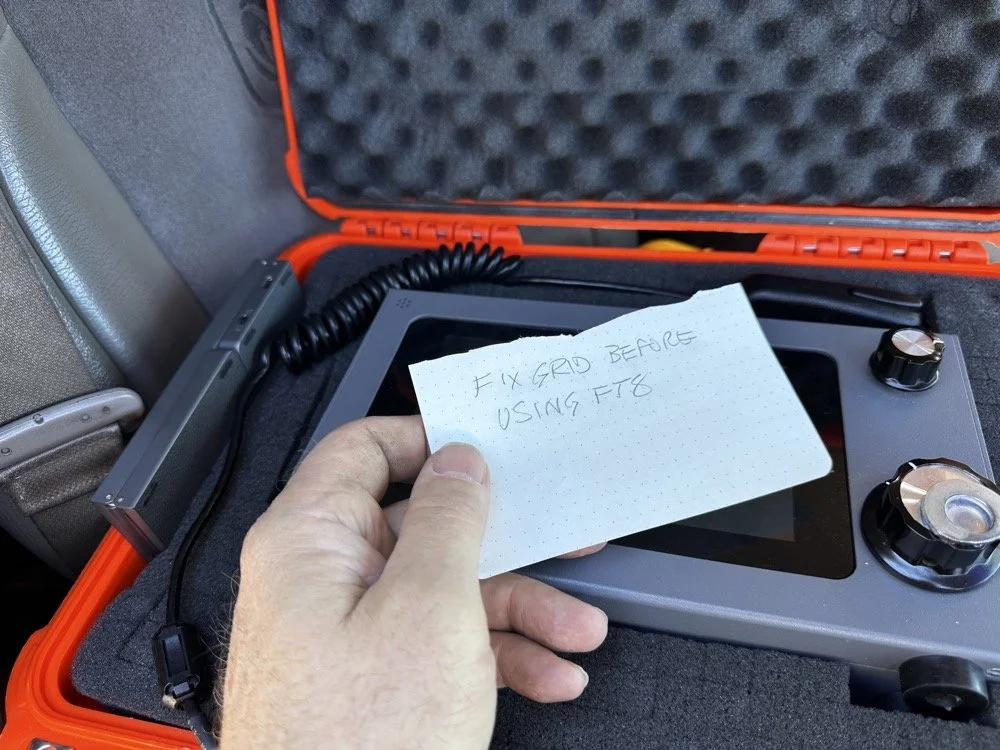
Sometimes the best solutions require the simplest answers…
So I came up with a foolproof solution: I now keep a note in my radio case that says "FIX GRID BEFORE USING FT8." It sits right on top of the sBitx when I open the case, impossible to miss. I also store the Bluetooth keyboard in the case with the radio so I can easily update the grid square in the field without fumbling around with the tiny on-screen controls.
Is it a high-tech solution? No. Does it work? Absolutely. Sometimes the best fixes are the simplest ones.
Starting with FT8 on 20 Meters
After getting the sBitx fired up…with the correct grid square, thank you very much… I started the activation with FT8 on 20 meters. I spotted myself on POTA and the responses started rolling in. There's something satisfying about watching those waterfalls fill up with decodes and seeing callsigns appear in the queue.
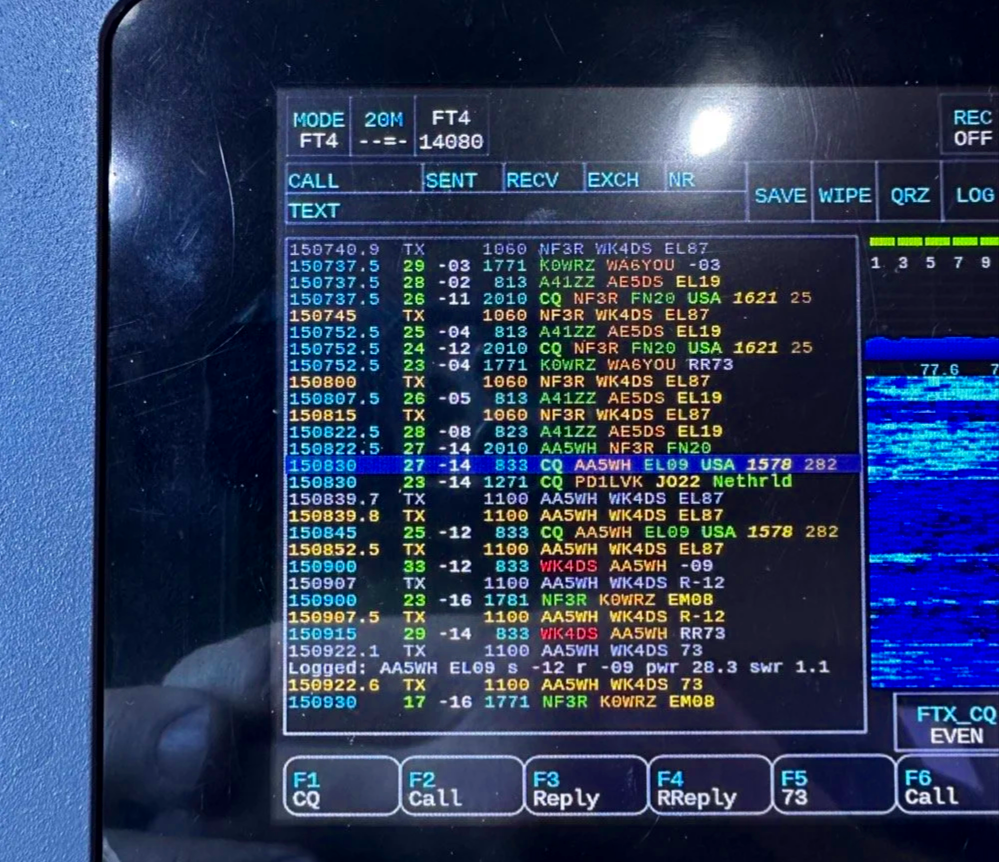
My very 1st FT4 QSO with the sBitx!
I worked through a solid session and logged about 18 contacts on 20-meter FT8. The band was cooperative, signals were good, and the activation was off to a strong start. Something to note about my sBitx V3 is that it has developed a sort of internal noise on 20 meters that lingers in the CW portion of the band. It goes down in frequency as the radio warms up so I have to figure out what is causing this problem when I get home the next time. I have it on the list right next to fixing my microphone pre-amp circuit for proper operation as well.
First FT4 Contacts at a POTA Park
After the FT8 run, I decided to try something new: FT4. I've run plenty of FT8 from parks, but FT4 was uncharted territory for me in the field.
FT4 is faster than FT8, cycling every 7.5 seconds instead of 15, which makes it great for contesting or when you just want to move quickly through a pile-up. I updated my spot on POTA again and started calling CQ. To be honest, I had used it a little in the shack before with no luck so I didn’t hold my breath today, To me utter surprise, I saw a QSO forming in the call feed on the left! Then it finished and logged it! I hurriedly got out my phone and snapped a quick photo to share with you guys…
First contact: AA5WH on 20 meters. Clean decode, solid signal, contact in the log. Then I switched to 15 meters and worked N1KLF. Two FT4 contacts, my first ever from a park, and honestly? I was pretty stoked. There's something satisfying about trying a new mode and having it just work.
15 Meters CW Was Alive
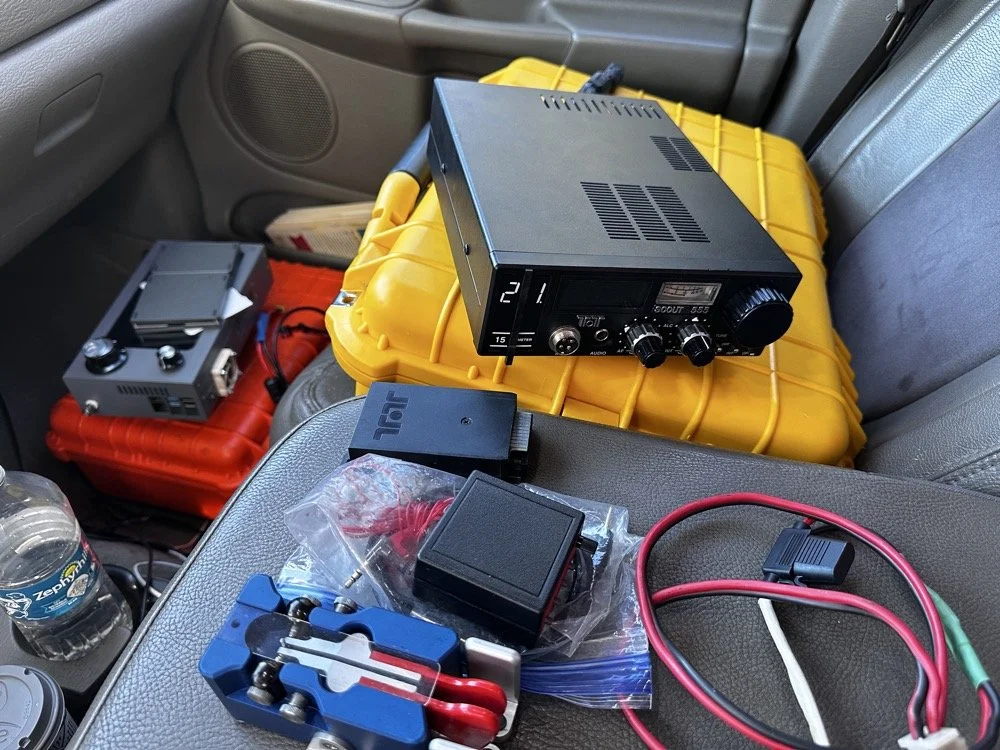
The TenTec Scout 55 is pictured with the HF Signals sBitx V3 where I was changing over to CW after working 2 digital modes today.
After the FT4 session, I switched gears completely. I packed up the sBitx and pulled out the Ten-Tec Scout 555 for some CW on 15 meters. The band was in great shape, though there was a bit of QSB rolling through. I got the radio all connected up to the keyer and then plugged in the Travler. My Begali Traveler key has become one of my favorites—smooth action, compact enough for portable ops, and it just feels good. It is sensitive, but that is how I use my keys, I prefer a light action myself and that is why I made my own paddles back in the day. N3ZN (Tony) and I2RTF(Pietro) make some of the nicest keys around at the moment and I am glad I have one from each.
DX Contacts That Made It Worthwhile
Right out of the gate, I snagged some DX that made the whole activation worthwhile:
EA4MZ in Spain
DD1LD in Germany
YV1GIY in Venezuela
PY5XT in Brazil
Four different countries, all on 15-meter CW with 40 watts and a telescoping 1/4 wave vertical, what more can you ask for? Days like this remind me why I love this hobby. Some of them were a little on the weak side but the Jones filter in the Scout actually helps if you open it up instead of closing it down. This seems counter intuitive, but opening the filter up just ever so slightly will let a lot more of the other operators signal though and just a little of the background noise, it is almost like having them turn their power up 50% or something, if you have not tried it with your Scout 555, I suggest you find a signal you can barely hear and give it a shot.
43 QSOs and Counting
By the time I packed up, I had 44 contacts in the log, though one turned out to be a duplicate, so 43 that counted. Not a huge number, but solid for a few hours of casual operating across three modes (FT8, FT4, and CW) and two bands.
Meeting Doug in person was the cherry on top. It's always good to connect with like-minded people in the hobby, especially when you're both chasing the same quirky goals. A thousand contacts from one park? Yeah, it's a bit obsessive. But things like that are what makes it fun.
SIDE QUEST TIME:
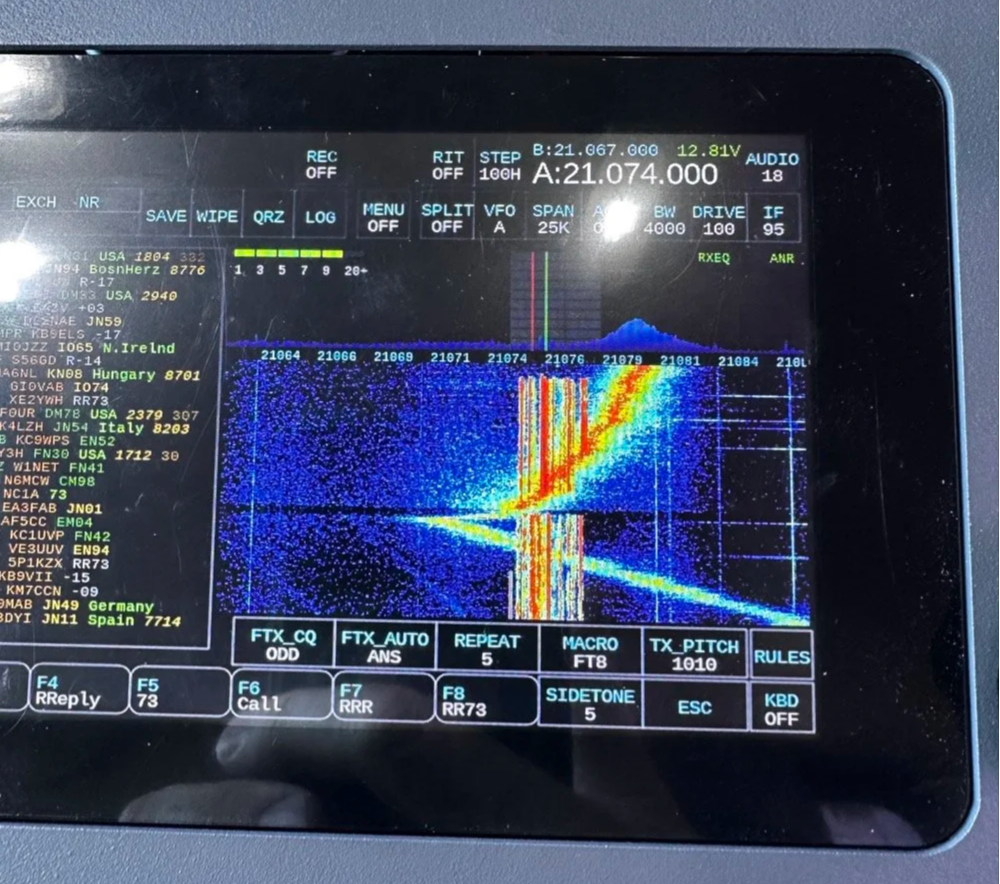
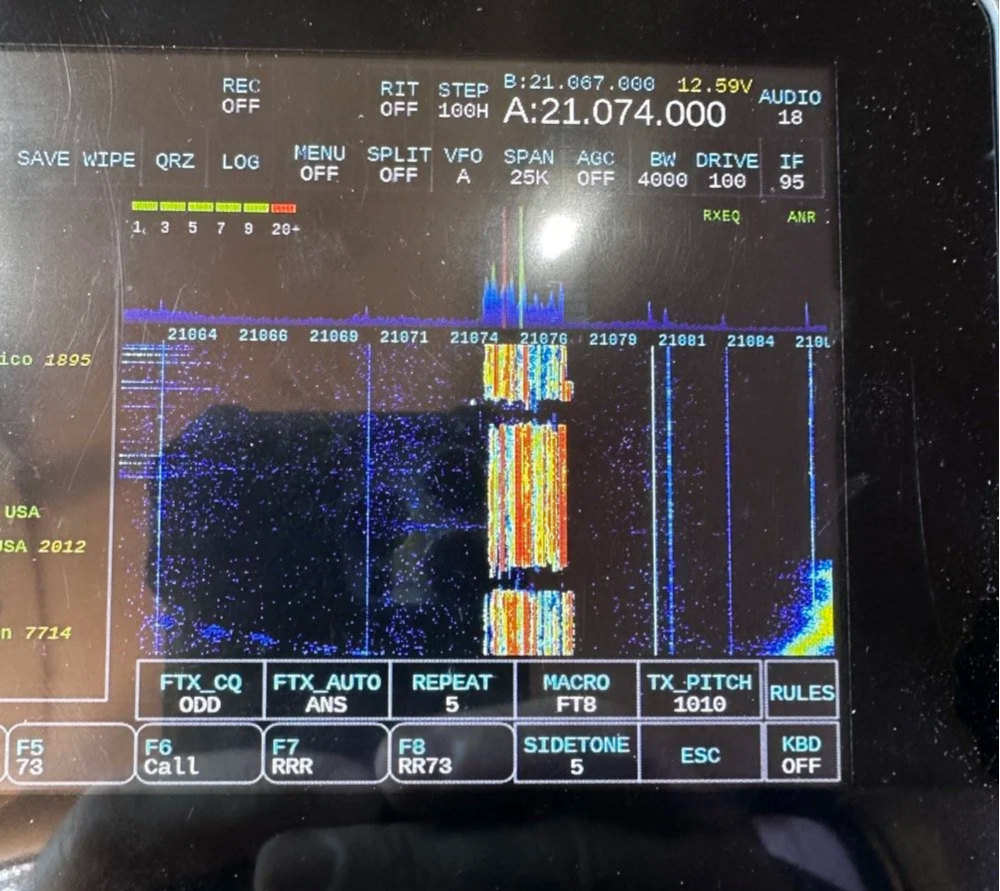
I ran into a unique problem today that is worth mentioning here. I was charging my computer with an inverter that I have wired into the cab of my truck. I was also running the truck so I could power the inverter and charge the computer as well as the sBitx V3 at the time. Well it turn out that I have some issues with this inverter that need resolving. The next few photos show the RF hash that this inverter is producing when under load! It is unreal how bad it was, I couldn’t believe all I had to do was simply shut off the engine and unplug the power cord from the logging computer and it went completely away…
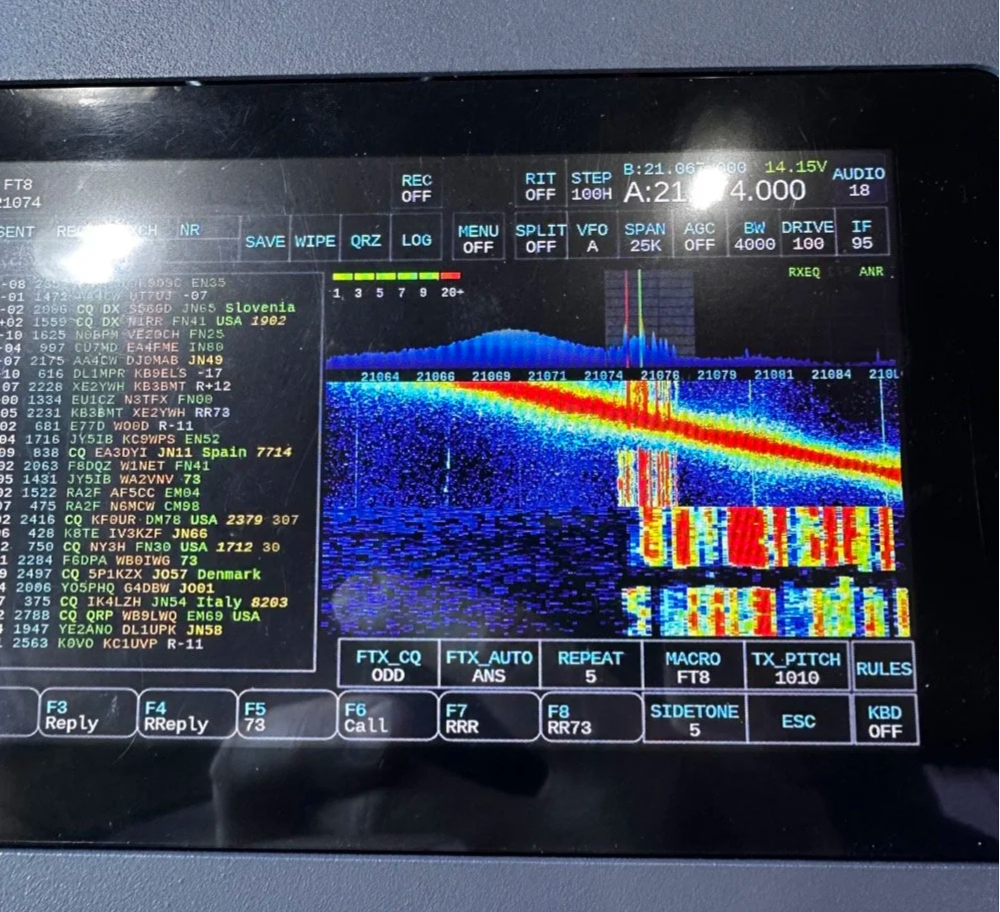
The above photo shows the hash of running both devices on the inverter with the engine running on the truck.
The next photo shows what happened when I shut off the truck and unplugged the computer.
The last photo shows what the band looked like once I went around to the other side of the truck and powered off the inverter completely. This goes to show that you need to check these things if you plan to use RF devices like radios in the presence of RF trash generating devices like this inverter… Better inverter coming up!
END SIDE QUEST
Hit me up!
231 contacts to go until I hit the big 1000 from Chito Branch. At this rate, it'll take a few more activations, but I'm not in a hurry. Well, maybe a little… Doug's still ahead of me.
If you're in the Tampa area and see someone set up at Chito Branch Reserve with a vertical antenna and a tablet running digital modes, stop by and say hello. Chances are it's either me or Doug, and either way, you'll be in good company.
**Gear Used This Activation:**
- **Radios:** HF Signals sBitx V3, Ten-Tec Scout 555
- **Antenna:** 1/4-wave vertical with dual counterpoise wires
- **Key:** Begali Traveler
- **Digital Mode Software:** JJ and the sBitx 64 bit Development team version 5.301 (FT8/FT4)
- **Computer:** Dell Inspiron with Linux and HAMRS
- **Accessories:** NanoVNA for antenna tuning
Have you tried FT4 for POTA activations? What's your go-to mode for portable operations? Drop a comment below or find me on Facebook or shoot me an email on here.
What is FT4 and how is it different from FT8? FT4 is a digital mode similar to FT8 but with a faster cycle time (7.5 seconds vs 15 seconds), making it better suited for contests and quick pile-ups.
What equipment do I need for POTA FT4 activations? You need an HF transceiver capable of digital modes, a computer or tablet running WSJT-X software, an interface between your radio and computer, and a suitable antenna for your chosen bands.
Where is Chito Branch Reserve located? Chito Branch Reserve (US-5524) is located in the Tampa Bay area of Florida and is part of the Southwest Florida Water Management District.
How many contacts do you need for a valid POTA activation? You need a minimum of 10 QSOs to qualify for a valid POTA activation.
You can help support this website by using these Amazon Affiliate Links:
QRP/Portable Radios:
Antennas & Tuning:
CW Equipment:
Power & Accessories:
Organization & Transport:
BONUS ITEMS
73,
David WK4DS
POTA at US-0716 with only Digital Modes...
My plan was to only use FT8 and get the activation as quickly as possible, but in the end it ended up a little differently. This POTA park is a national military park commemorating the battle of Chickamauga during the US Civil War in the late 19th century. It is now a recreational hot spot along with a tourist destination so they have all the trappings of a outdoor recreational area along with the monuments about the war. This trail head was across the street from where I parked the truck today.

Another reason for the singular mode was that it would only require the use on a single radio this time since I am currently using the Ten Tec Scout along with the sBitx SDR for my POTA activities. I only deployed the sBitx SDR today so I could stay inside the truck and run the air conditioner as well since I didnt need to hear as well as I would if I were doing CW or SSB.
By only using one radio the rain that moved through the area didn’t hamper my activity at all. I was able to get setup quickly enough that I beat the rain and was on the air before it started to fall.


I like this location on sunny days since it is in the shade, but today it was overcast and rainy and this didn’t really matter. I did like it because it is “RF Quiet” and there is little to no RF noise except when certain cars drive by that are a little noisy.

I used my field expedient sealing technique again today, I know this is not a real seal but it will shed water long enough for me to complete my activation and then I can break it down and stow it in the truck easily enough. Long term would be a different story, but it works well for me like this for simple short time frames like a POTA activation.
This time since I was going to stay on 20 meters, I simply deployed the two radials that are associated with that band and I ran them at right angles just to see how it would perform, it looked great on the nanoVNA with the SWR running about 1.2:1 across the digital portion of the band.


I meant to get a photo of the waterfall and somehow ended up with an image of the transmit signal and associated info…figures. The point was going to be that the 20 meter section of FT8 was filled with ops today. So much so that is was hard to find a spot to send from. The band segment was that tightly packed today. I had to frequently move as I would go for several cycles with out so much as a hint of someone answering me only to find out that a strong station had setup on top of me and was sending over my little 20 watts. Get a contact, listen to the band a minute and find a new clear spot and repeat. This was the modus operandi for the day. I considered at one point of moving up to 15 meters just so I could more easily find band space, but talked myself out of it since I didn’t want to get out in the rain and change antennas and then worry with the tune of the radials and such.
After getting my minimum of ten contacts on FT8 thereby securing the activation, I wanted one more just so I could have a little buffer if one was a pirate of some such. Turned out that this was a huge problem as it took me a long time to get that last QSO in the log, I even went over to CW thinking it would be easier (which it was not) and finally got that last station… The QSB (signal fading in an out) was so bad that I could almost not hear strong stations that were normally easy to copy, but I did get the one I wanted before going QRT for the day. I grabbed the photo below to show the band fade and it is kinda visible in the signal on the lower edge of the waterfall, but it would go from what I would call S9 to nothing in literally 5 seconds, they signal would just vanish. I was blown away with how bad it was and then I checked the space weather and saw why, there is a ton of solar activity causing terrible band conditions right now…figures.


11 contacts in almost an hour is not a great hit rate for me where I am used to working about 1 CW contact a minute and a FT8 every two to 3 minutes, but it was fun none the less. Any day I can get out and do POTA is a good day. Until next week…
73
WK4DS
Triple mode activation at US-2169 with 2 radios!
Today was a good day for POTA as I was able to get contacts with 3 different modes in a single activation. Did I mention it rained too?

So today saw the deployment of so many hard shell cases to the park. I went ahead and staged both radios in the truck cab so if it started raining (which it did) I could have access to both radios anyway without having to get outside in the rain. Today saw me use the sBitx V3 as well as the Ten Tec Scout 555 Amateur Transceiver. I like Ten Tec radios when it comes to CW so I wanted the Scout for this mode. I forgot though that I have not outfitted this radio with an external keyer like I did the Argonaut 5. So with the Argonaut still tucked away in the bed of the truck, I just decided to send everything today by hand.
As you can see in the photo below, I ran the hamsticks so I could stay dry inside the truck if it started raining… seems today that was a good call. I only put out the 20 meter radials and the 20 meter ham stick. I thought about hopping on 15 meters for a little bit but the closer the rain clouds got the less I wanted to be handling lightening rods…. I mean, antennas in these conditions.

I checked it with the nanoVNA and the shape of the curve today was such that the CW portion was really well centered and was 1.1:1 on SWR with the chart climbing to 2:1 at the upper band edge. This was completely usable so I didnt bother to tune anything further and just got on the air…and by “tune” I mean “moving the radials around till the SWR plot moves to where I want it in the frequency spectrum”…lol. I can push and pull the SWR null on the VNA by changing the location of the radials in relation to the truck. I am assuming that I am simply tinkering with the capacitance and inductance of the radials as compared to the antenna and it allows me to correct for things…most of the time.

I first worked a few SSB stations before giving up and heading down to the CW portion of the band to see what I could find down there. Seems there was plenty to find as once I setup on frequency and called CQ a couple of times, I had a nice little pileup that lasted for about 15 minutes straight. I was able to work 15 contacts in that time as well. For me, this is “efficient” CW and really fun.
SSB seemed to be thin on stations today and the band was not really happy with this mode, I struggled to get just 5 contacts in the log today on this mode and normally it is much easier to land many more contacts here with the 50 watts that I was able to use. Maybe I bumped my mic gain and had it turned down or something, I just wasn’t getting any takers on SSB for some reason…

The Ten Tec Scout 555 is almost the perfect POTA radio in my book. It needs a nice brick wall IF crystal filter in my opinion, to be fair, as nearby stations would bleed in on the QSO with their energy sometimes. I could tighten up the IF filter width, but the stations would still numb the receiver occasionally and I think a nice 500hz 8 pole crystal filter would be pretty sweet here to solve that… I am looking at a nice audio filter but who knows…I might just try making an IF filter myself at some point. Once I had cleared the pile up I put away the Ten Tec Scout 555 and deployed the HF Signals sBitx V3 (mine is actually a V2 but I have performed the V3 update so going forward I am going to call it a V3)
The only mode I used the sBitx on today was FT8. I wanted to work a few FT8 contacts as well and had synced the time with the internet prior to leaving the house today so I knew it would be good to go. Boy did it deliver on the promise of getting me some FT8 contacts! Once again I stayed on 20 meters and just ran with it as I am also a little bit lazy at times and this was an easy win for me...haha.

I really like the layout and implementation of the sBitx. It is a really fun little radio. Although this radio is missing some stuff inside but that it what makes it so economical too. Things that some people might call “nonnegotiable” like shielding between the RF and computer sections… but I digress. It works for me even with the little rough around the edges stuff here and there.
Now, below is what the sky started looking like by the time I finished playing with CW and decided to get on with FT8. It was scary dark and ominous and then the rain started to fall. I really didn’t mind the rain as I had taped up the coax connection on the antenna and was confident it wouldn’t give me any trouble. What I didn’t factor in was the lightening…


Well, the rain fell and got more intense and more intense as I happily worked FT8 on 20 meters. After a few minutes, the waterfall on the radio exhibited a strange phenomenon. It turned yellow and red (the colors representing the strongest signals)… the whole thing was showing a 599 +30dB signal that covered the entire segment of 20 meters I was watching. This happened to be 6khz of spectrum on the waterfall and at first I thought something was wrong with the radio. Turns out, the radio is fine, this is simply what happens when the atmosphere charges up with static right before a lightening strike! I noticed after a couple of cycles that I would hear thunder off in the distance and then the waterfall would return to normal and slowly start to turn yellow and red again, till I would hear thunder and the cycle would repeat. This was fascinating to say the least, what was more intriguing though was that I continued to make contacts with that much band noise in play. FT8 is a true weak signal mode if I ever saw one.

This is what I am speculating is static charge up in the atmosphere in the photo above of the FT8 waterfall. For those that dont know, this mode does a sort of “talk and listen” thing where your radio sends a message for 15 seconds, the listens for 15 seconds for the other station. So the waterfall wont display anything while I am transmitting since the receiver is turned off. You can see that the cycle right before I sent and how the band was fine and then I send for 15 seconds and then when I go back to listen again, the band is filled with noise.

Let’s shift gears for a minute, the internet is an amazing place. I made this contact at 16:53 UTC and got this email notification just a few minutes later. That is pretty awesome to be honest about it. I remember mailing cards and it might take a month to get one back…


After I finished the activation and waited on the storm to pass, I wanted to do a simple test of the sBitx for a ham that had sent an email asking about the sBitx and how bad were the “birdies” on any given band. I dialed through the 20 meter CW portion up the the FT8 region (14.074mhz) and found what is noted below. In the above photo, you can see the strongest birdie I encountered on this band. That color means it is quite strong in signal level, so if a station was on that frequency, you would not hear it.
I noticed some were strong but they are also very localized. Literally only 200hz wide at the most. I don’t know if this is really band or not, but there were 4 distinct birdies in just the CW portion of the band. If you were worried about this before and didn’t want to have buyers remorse later, then consider me “taking one for the team” as I didn’t have this intel before. I can still recommend this radio for field expedient FT8 and POTA activations as it just works. Sometimes it will ignore a reply to your CQ on FT8 so you have to pay attention to the display on each cycle, but it mostly catches them.


Something I have learned about propagation is that the three modes I am using carry different levels of signal quality to make them effective. SSB (single side band for the newcomer) takes the award for needing the best band conditions of my three regular POTA modes. If the bands wont allow SSB to work or all the stations are “down in the noise” then I move to CW which requires much less propagation to work for me (especially with a good receiver). BUT it pales in comparison to FT8 when it comes to signal to noise ratio. I am blown away that when CW contacts are fading in and out and are in the noise floor that FT8 will be active and I can easily make contacts with it.
This is a day when SSB was “in the mud” but CW was rocking and rolling and had it been in poor shape, I would have went to FT8 for my ten before quitting and going to lunch. Lol
73 - WK4DS
Dual radio POTA activation? Sure!
Today I setup both the Ten Tec Argonaut V as well as the sBitx V3. This was because i was not sure if the sBitx V3 would hold up the entire time. You see, it has had an ailing 5 volt regulator for a while and I was planning on replacing it later today, but first… POTA!

So I go to US-2169 and setup in my usual spot and get out both radios so that I can work CW on the Ten Tec if the sBitx flakes out on me. It didn’t, but since I had already gotten it out, I used the Ten Tec Argonaut V anyway and worked what CW I could with it. You see, today was another day that I stayed above 20 meters the entire time. That was the plan from the outset and it was quite successful too. I love using 15 meters in particular since it goes over seas easily for me. I will usually work several DX stations if the band is open and today is no exception. I worked 5 DX stations over an 18 minute span of time, not bad for a 15 watt radio… I worked so much FT8 is short order that I almost didn’t need to setup the CW station at all, but I wanted to work some CW anyway so I just got on the air with it and this is how it went.

The operating position was a little crowded today but not too bad, I used the hard case for the Ten Tec Argonaut V as a table of sorts to sit the radios on so I was able to move them back and out of the way of my writing surface. This left plenty of room for the nanoVNA and my other small items I use when activating a park. I have gotten really comfortable with setting up like this, I can set this up in just minutes and it requires zero use of the park infrastructure (such as trees or picnic tables) over the parking space I would consume either way and some space for my radials.

So in a previous blog post I had mentioned that I was going to use the smith chart on the next outing to show how you get way more information about the antenna under test with it instead of the simple SWR graph and here it is. Contained below is the 15 meter plot from 20.5mhz to 21.5mhz and the marker is resting at the upper limit in the photo. The center line across the chart is purely resistive measurements, anything above this line is inductive and anything below this line is capacitive in nature. As you can see on the display, the line representing the span I am looking at, 20.5 to 21.5mhz, is all above the line showing that my antenna system is inductive in nature so it will have some inductive reactance to the signal. The very center of the chart where the smaller circle intersects the line is 50 ohms - resistive (right below the flag from my measurement). As you can seem the further you move away from this point, the further from 50 ohms you get.if it were to be something like 100 ohms, you would need a 4:1 transformer to correct the impedance mismatch, this is why antennas need transformers. The characteristic impedance of the antenna is not usually 50 ohms which is what the transmitter is designed to see.
In the second photo I have switched the chart over to a simple SWR plot versus frequency and you can see how it is easier to read for the lay-person. It does give you the data you need in the firld really quickly and make it easy to know if your antenna is short or long and if your radials are good to go and such. This is what i use most of the time in the field to just make sure the antenna is presenting a good load to the transmitter.


In the above photo I learned something strange about the sBitx today. The two clocks don’t have to be synchronized to work. FT8 is not time forgiving, your radio time marker has to be fairly accurate (within so many milliseconds or maybe a second or two max) or it wont make connection at all with the other stations. As you can see in the lower photo, FT8 worked perfectly and I made several contacts with this mode so the computer clock must not matter at all… I don’t know what is going on here but it works so I dont question it.


Today saw a bunch of DX early on which always makes my day. But all in all it was a great day for POTA and I was stoked to get 21 calls in the log. Until next time, dust off that key or microphone and see if you can get a park or two into the log.
David
Digital only POTA Activation using FT8 on the sBitx V3

So today was a good day for radio. I had a block of time and wanted to see how hard it would be to get the activation only on FT8. I know it is possible to do this, but I also wanted to do it on 15 meters too and that is where the problems come in. You see the last couple of weeks have been tough for 15 meters operations what with the solar flares and CMEs and all. So to secure the activation on the higher bands will be… interesting…
I get to the park and in the spirit of time savings I chose to go to Sitton’s Gulch which is significantly closer and saved me almost and hour of driving (well, 40 minutes as it is 20 minutes on to the operating position at the top of the mountain and another 20 back to the point at the bottom). I also was happy to see the parking lot was almost empty too. This gave me to opportunity to setup in the corner next to the changing sheds which is a good corner for my antenna radials. This gets them out of the way so that people dont trip over them going to and fro…

I set up in short order for the 15 meter band and get started calling CQ. I call for several minutes and then switch over to answering CQ calls that I see in the waterfall for a few more minutes with zilch to show for it. Literally nothing. I am starting to wonder if there was some sort of flare that I was not aware of or some such as that as I was getting stations into the radio but no one could hear me. I chalked it up to that they must have been running a kilowatt and my paltry little 12 watts into a compromise antenna just wasnt getting it done today.

One of the things that I like most about this radio is the clean layout of the FT8 mode. It is not cluttered with an endless array of different information and on screen settings. The other programs, while very versatile and powerful, are rife with buttons and information that really is not needed for simple QSO contacts. The sBitx could be a little easier though so it is not perfect either. One thing that has come up a couple of times is that it needs the ability to be able to sort the information display to just stations calling CQ so you can pick one easier. I agree with this as it can be tough to grab a calling station in that 2.5 second window of time. So being able to sort by CQ would be a big help there. One other thing that is mildly frustrating is that there is no way to scroll the display so if there is a lot of stations on the band then you will not be able to see them all. It pushes them off the top of the screen and then they are just gone.
Today though, there was plenty of room to see both even and odd stations so it was not a problem. I was glad to see there was a good amount of activity on the 17 meter band.

The truck cab sure it a convenient operation center for POTA!!! I find it almost perfect to be honest. It is so close that I have used it all winter without modifications but at some point I do think I want to modify it. I have been considering the Kenwood TS480 as a permanent installation in the truck just for POTA, but then I would still need either a computer or the sBitx to operate FT8 in thr fireld. This just circles back to using this radio like you see in the photo below till something better comes along.


Here is the antenna setup for today along with the nanoVNA I used to measure it while I “tuned” the system. Tuning literally involves just moving the radials around till the SWR reads as low as possible. Sometimes it involves adding another radial to the system to get the SWR below 2:1 (which is my personal high limit) and I have even done odd things like run one REALLY long radial way out to give the lower bands a chance at working. This has worked really well too when I want to use 40 meters with a hamstick.
To answer some obvious questions that will show up, yes, there are two nanoVNAs in the box…long story but I have two now. Haha. The case came from GigaParts as they had a bunch of them at the Huntsville hamfest one year for super good prices and I got a couple of them. This one houses the nanoVNA and multimeter and the other holds all my POTA radials. You can see it above on the truck bed cover. I plan to get more of these at some point as they are super useful containers for small equipment like you see here. That is why I wrote on the lid of the yellow one, plus it identifies it as mine as that is my handwriting too.


As you can see though, I had a pretty good run on 17 meters FT8, securing the successful activation just in this mode alone. I never like to stop at just ten so once I had worked everyone I could hear I moved down to 20 meters and worked two more there before calling QRT and packing up. 20 meters is the campground of POTA these day and if you want to simply claim a quick activation then go there, it should not take long to get your ten if you are pressed for time. I know some people do activations on their lunch break and 20 meters is great for that. If you want a bigger challenge though, move up to the higher bands. Seems here lately that when 15 meters is open I will work a ton of dx stations and the lower I go in the bands to closer to home the stations. So if you have not ventured higher in the bands, I recommend you give it a shot sometime, you will most likely be pleasantly surprised
WK4DS