WK4DS Amateur Radio Blog
Search Posts
Ham Radio Activation for POTA at Park K-2169

Well today started out like any other day… hahaha I always wanted to start a story like that…Anyway…
So this day did start out like any other day actually, but it would turn out to be a very different ending. I had a few hours to be able to activate a park and decided to grab my bag and head over to K-2169 for an activation. I had planned on staying a few hours and maybe doing as many bands as I could. When I got to the park they were running an excavator near my usual spot, so I went to the top of the hill where my other good location is and found them mowing the grass with riding lawnmowers!!! ha ha. Figuring that the excavator was quieter than lawnmowers I went back to the first location and started setting up my station. It was at this point that I realized that I might not get an activation today,
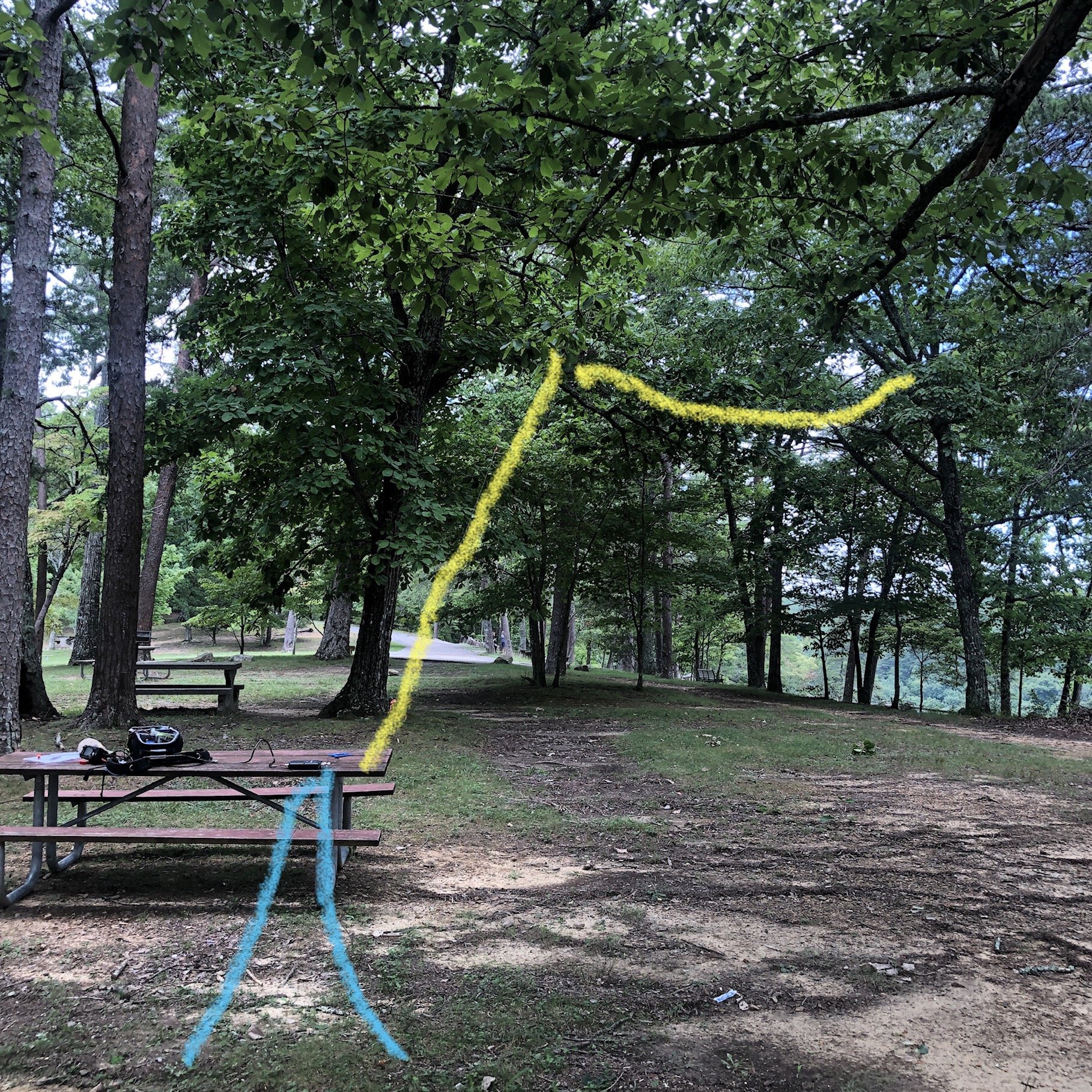
The yellow line approximated the radiator and the two blue lines are the counterpoises. This is a 65’ EFHW wire antenna.
You see the pop-up storm clouds had started to roll in and thunder was in the distance. This normally doesn’t happen till later in the afternoon but just for me, the clouds made an exception I guess. I was halfway through setting up the antenna when I started hearing thunder in the far southern edges of the sky. Upon receiving this valuable information I hurriedly finished getting the antenna into the tree with a decent elevation, got my radio out and quickly got on the air.
Once again the Lord was on my side and I had good propagation while I was operating my station. There has been a strong solar storm recently and the bands have been in the trashcan so to speak. Taking a quick look at my log shows the band fading in and out slowly over the hour or so I operated today.

Signal reports as bad as 339 and 229 were common at the beginning. at the end the signal reports were more like 599 & 579 regularly with strong signals coming in from far away states.

Today I used my Icom IC-705 with the automatic tuner and hurriedly assembled the system so I could get the activation as quickly as possible. I had even planned out my escape had the rain started to fall while I was operating. I set up my station so that all I had to do was disconnect the long wire antenna from the tuner and could literally put everything in the backpack (kinda like a bucket of sorts) and just carry it all over to the pavilion to get out of the weather. I had planned, that once the rain had passed, I could go and collect my antenna or hook back up the station and finish the activation should I just need a few more contacts to get my ten.


A closer look at the custom knobs I made for my AH-705 tuner as the wing nut on the ground stud is terribly slow and the red plastic knob now lives somewhere inside the inner fender well of my truck… I happen to be a machinist so this was a simple task for me.
Turns out, I did not need to worry about any of that, I had 25 QSOs in short order before the storm clouds really got close to me. The clouds were up overhead by the time I had broke down my station, that was not a problem though since I was already packed and ready to head to the truck. All in all it was a good activation even though I was constantly worried about the impending storm rolling in from the south. I guess the moral to the story is don’t give up just because the weatherman said it is going to rain, we all know how accurate they are!! ha ha.
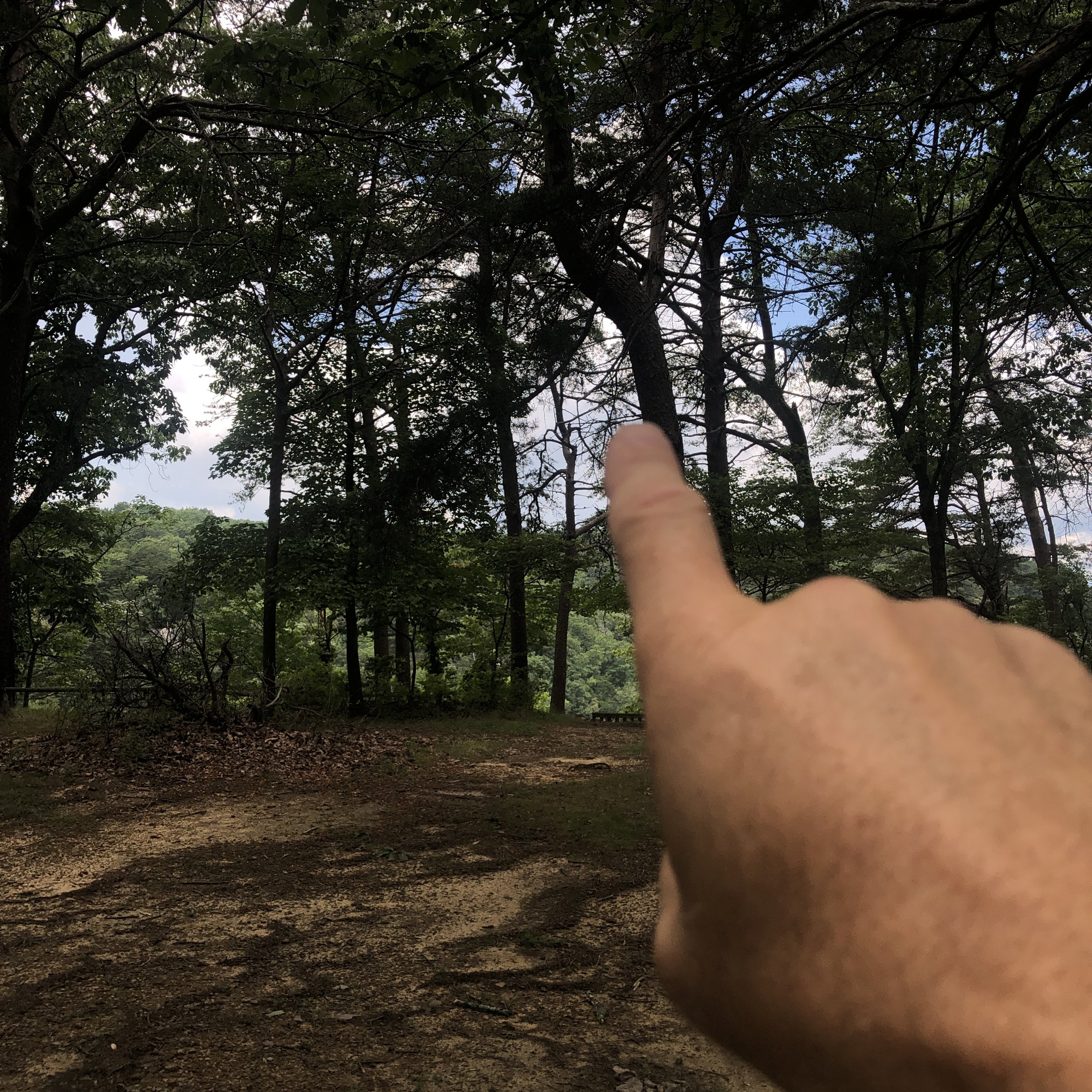
Looking through the trees towards the front heading my way, and thus cutting my activation short today…
If you enjoy reading these blogs, please consider subscribing and maybe even liking them so I will know what people enjoy reading.
Thank you and 73
de WK4DS
How high does your antenna need to be?

The sag in the wire makes the center height of the “horizontal” run less than 3’ above the ground and it still worked really well.
So over the past few days I have been thinking about how high does my antenna actually need to be. Turns out it doesn’t have to be very high at all. I have done two park activations in two days time and on both days I never raised the antennas any more than 9 feet off the ground. That’s right! 9 feet max! Almost had them running dead horizontal from the picnic table 65 feet away from me. No throwing the hoist line multiple times to get it in a good spot or even having to throw it at all actually, I just tied it off to a limb that I tossed the end of the line over without even adding the throw weight to it!!! Easy peasy!!!

A quick look at the QSO maps for these two outings shows that the radiation pattern is typical for a low altitude wire antenna. Pretty much omni-directional or a “globe” shaped pattern. Also these tests were done on days that had pretty bad solar activity and the bands were in terrible shape. I think this is why there is not near as many western stations as compared to other activations. Also note the signal reports on the logs and that they were not really bad when the bands would open as I was strictly running 5 watts QRP power also.


The low position creates a very obvious take off angle as the contacts on this outing are almost in a perfect circle around me!!!
So all in all, I would say that if you want to be on the air for a while, go to the trouble of getting the antenna as high as possible. On the other hand, if you want to get a quick activation in on your lunch break or if your doing a RADAR run of some such, it seems that getting the wire up off the ground a couple of feet works good enough to get an activation in less than an hour. I am going to repeat this test in the fall with literally laying the radiator on the ground and I will take my VNA and see what it looks like in all three positions. This helped me to understand that it really doesn’t seem to matter if you cant get your antenna up high enough for proper directional effects.

The end insulator is only about a foot above my hand here and is even under a tree!!!
I strung my antenna almost horizontally from the picnic table on two different park activations at two different parks to see if I would get more or less contacts with a really low antenna and the results are in. Seems that if you cant get your antenna really high up (for the lower bands) that is seems not to matter if it is 20’ high or 3 feet about the hard deck. My logs for the two activations look like any other day when I stress over getting the wire up high into a tree. The only real benefit from getting the wire up really high is it prevents others from tripping over it by not noticing it. This was my only real concern while activating both parks, although I did go at times when I knew that there would be fewer people and at Booker T Washington state park I was literally the only person in the area I was in. I just didn’t want problems during my experiment, so I chose times that would protect park users and my gear and preventing the gear from being a trip hazard as well.
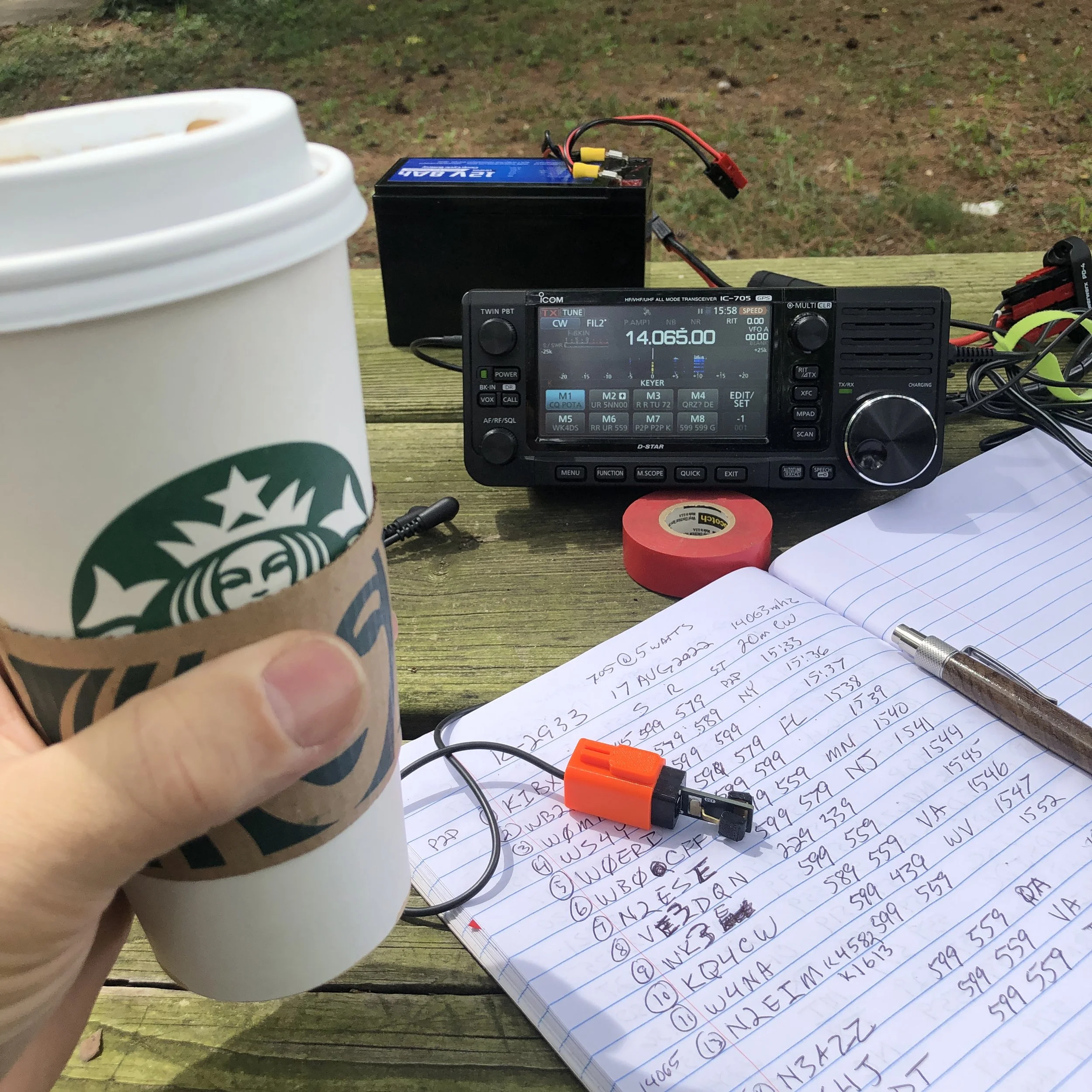
If you don’t have coffee, is it even a legit activation???
The signal reports were cyclic as the band would open and close, but all in all, I was getting good reports even though I was running 5 watts through a tuner as well. I like doing these kinds of experiments as it allows me to see just how bad the setup can get and it will still work… lol. All kidding aside, this worked way better than I thought it would and setup was FAST. I really liked that part about it.
Thanks for reading along, I hope you enjoyed it and if you did, please hit the like button and dont hesitate to leave a comment too. I love comments!!!
72
David - WK4DS
High Temp Activation
Today I went to my favorite park and set up my IC705 radio to work an activation on Park K – 2169. The only difference today that was unusual was the fact that it was in the mid-90s here in Georgia, this usually is not a big deal but when I finally got my radio set up I was in the direct sun. This causes the radio to heat up very quickly and I found myself with a radio that was so hot that I could almost not touch the case in less than 30 minutes. So I moved the radio to inside my backpack to where I could shield it from the Sun as the shade moved closer and closer to my operating position. Eventually the shade got to the end of the table and I was able to get the radio out of the Sun. For the period of time that I was working 17 m I learned that the reverse beacon network was not picking up my CQs and the POTA site was not posting my spots either. These two items combined caused a very long and “quiet” period of 17m operation… HaHa. I finally got 11 contacts on 17 m after considerable time of what seemed like endless calling of CQ. I had my antenna strung high in the tree, probably 25 or 30 feet up, ran up over a large limb on the first tree and horizontally at a slight upward slope to another tree as shown in the graphic I made from the photo I captured. I am still using the N6ARA tiny paddle for my travel key and it works wonderfully to this day. I have done well over 15 activations with this key now and it keeps on working perfectly. Once I moved to the 20 m band the game kind of picked up for me as I was able to make another 24 or so contacts in short order. This being mostly due to the RBN starting to see me and I was able to get the POTA spot to take when I moved to 20. The band would fade in and out some as I was working but for the most part I was able to work contacts about one per minute. It seems like that is the maximum speed that I am able to work a Morse code contacts with the speed I am able to operate (about 20WPM) and with the exchange information I choose to send. All in all, it was a wonderful day to get out and play with my radio and to get an activation in at the same time. My next activation will either be with a Ten Tec Argonaut 5 or my PENNTEK TR–35 radio as I want to try one of those out for an activation soon. I have had the TR-35 for a while now and have only used it a couple of times in the shack at home so far. This is a travesty as it is a wonderful little radio. I hope to take it on trips in the future as it is SO small!!!
If you have not checked out the parks on the air, set up an account with them and look at what they are doing. It is a wonderful program and has lots of activity for the amateur operator. There is usually a mode that is something that you would enjoy doing, that will have people on the air almost all the time. Whether you are into digital, CW, voice, or any other mode that people use on the air there is usually something going on with POTA. I even had two traditional QSO contacts today during my activation, complete with name exchanges, QTH exchanges, and even our rig exchanges. So there is no hard and fast rule as to what information is traded in an exchange but they do normally have a minimum of signal report and usually the hunter will send the state they are residing in (but it isnt required from what I can tell), that is about it, anything else is fair game. If you want to know more about it you can go to the Parks on the Air website to learn lots more about it.
Thank you and 73
WK4DS-David

I started with keeping the battery in the pack but eventually had to also put the radio in it to keep them both out of the direct sun.

ICOM AH-705 Antenna Tuner with my homebrew cable I made for it that has power, coax and control cable all in one bundle.

Antenna ran into the trees with the counterpoises run along the ground underneath them.

The IC-705 is a wonderful little radio that works really well for portable operations.
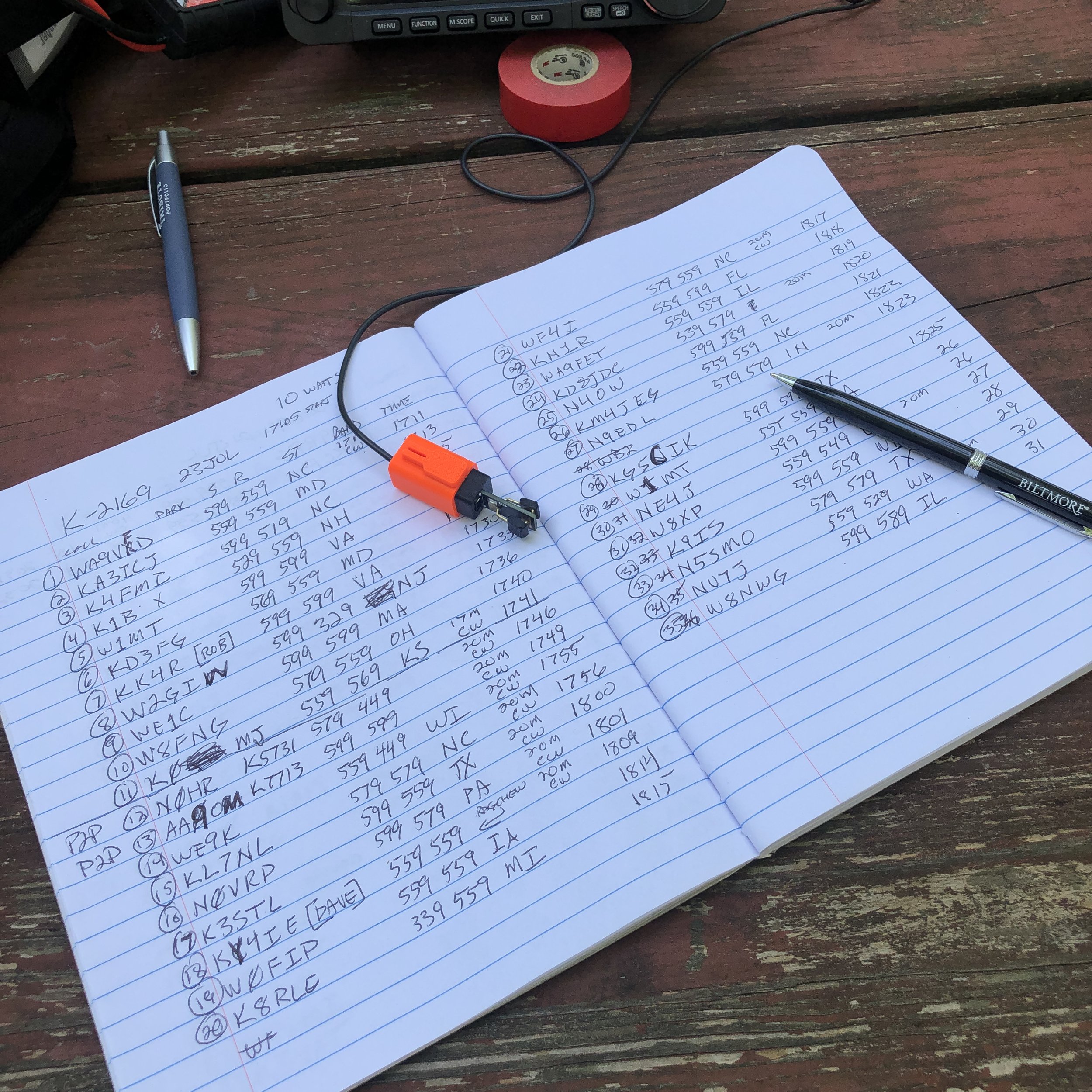
Not a bad day running 10 watts into an EFHW wire antenna!
Straying from 20 meters…

In the course of the most ham radio operators career on the air they will find that they spend a lot of their time on the 20 meter band. This is because 20 meters is a very good band for propagation and is almost always open to communications. The problem with a band that is open like 20 meters is that every amateur radio operator that has a HF radio is on 20 m, well at least it seems like that is what is happening…
Another thing about me is that, I really am not into contesting either. This means that the 20 meter band is not available to me on the weekends as there is pretty much a contest every weekend…and for good reason! Contesting is a very popular activity in amateur radio around the world. Although for me, I just am not super into it.
The WARC bands do not get used in contesting so on the weekends I find myself dialing around 17 and 30 meters alot.

The N6ARA Tiny Paddle has really started to grow on me, I like the size and how well is just plain works. it is effortless to send good code with this key. I can highly recommend these is you want a small light weight key for things like SOTA and POTA.
Another thing I like about the WARC (World Amateur Radio Conference) bands is that the 30 meter band is reserved for data modes only. Did I mention my favorite mode is CW and wouldn’t you know it, the powers that be consider morse code a data mode… So I can goto the low end of 30 meters and almost always find someone to chat with. That is something to remember too, the WARC bands are pretty narrow and many modes share them, so sticking to the gentleman’s agreement on where your mode normally operates will go a long way towards being efficient with these small band allocations and making sure we all have room for our modes.

The rig setup is really a lot simpler than this photo makes it look. I wanted to get an overview photo of the whole thing for once to show the relationship of the parts. This rig would look like this if it were on 80 meters or 12 though so this photo isn’t strictly about the WARC bands…
A lot of people do not use the WARC bands very much as they are not the conventional ham bands. I tend to enjoy using these bands as they are normally quieter and less crowded than the conventional bands. Another benefit is that the POTA program also uses these bands as it is not a contest oriented program other than award chasing like any other awards system (Think ARRL W.A.S. or something similar).
On the day that I decided to activate on the 12 meter band I was looking to confirm that it was open to communication and decided to check the 10 meter band to see if it was open. I did this because I couldn’t hear any stations other than someone operating FT8 and had no idea how far away they were. This is a common practice as normally if a higher band has propagation, then the lower one will as well. I found that the 10 meter band had beacons coming into my location in the state of Georgia from California with clear audio and this gave me the confidence I needed to try and activate a park on the 12 m band.
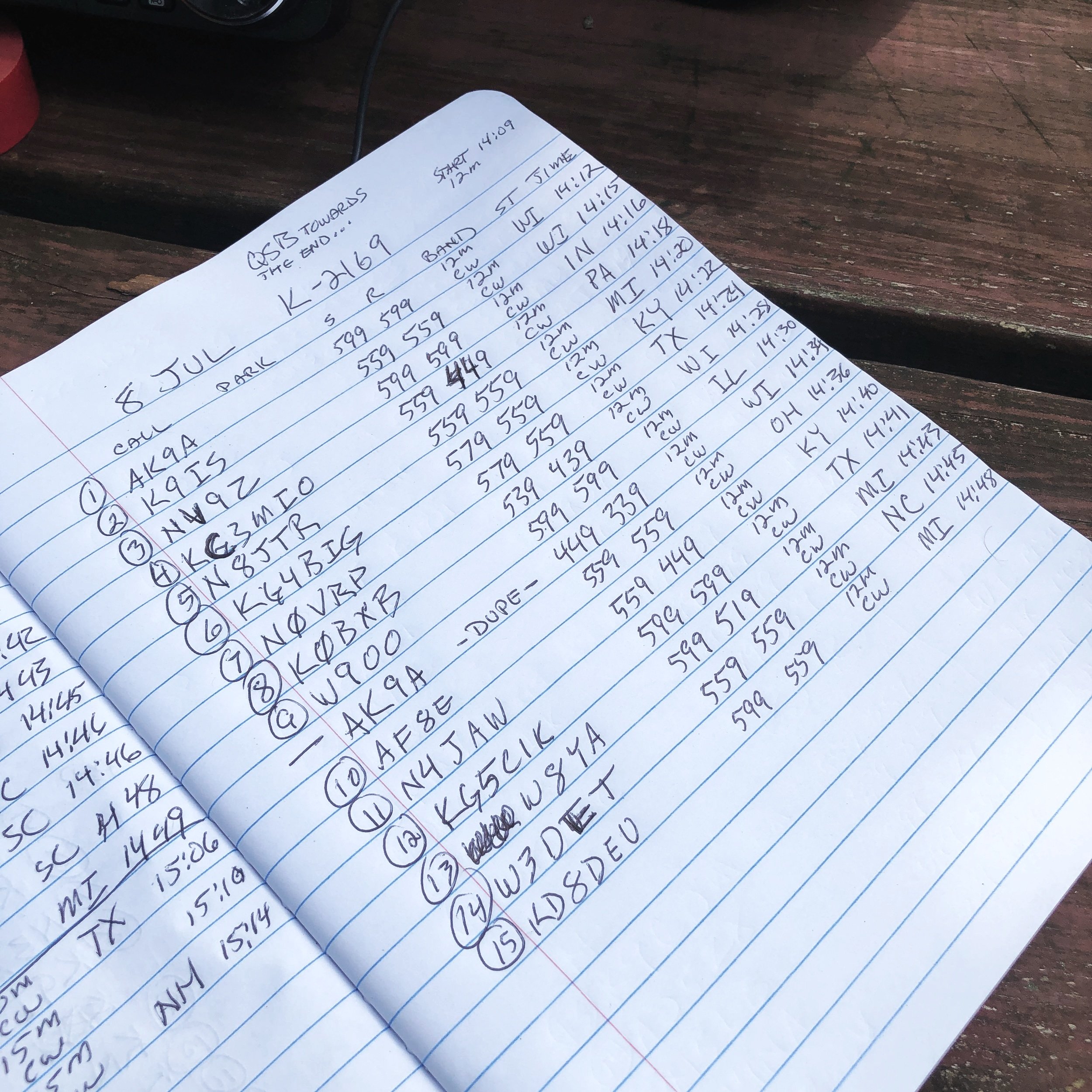
As you can see from the logbook I did get a successful activation on 12 m and it was a lot of fun. There were periods when I did not get a call back from my CQs but, for the most part, they came in fairly steady for the whole time I pursued the activation. This just goes to show that you can get an activation on something other than 20 m if you want to and it also gets the radio warm doing something other than the usual.
Get out there and get on the air.
73
David
WK4DS
Long lost friends in amateur radio
I have been doing POTA (Parks on the Air) for a couple of months now and have started to notice a few call signs that show up in my log more often than not. One of thsee calls is K9IS. Steven has “hunted” me at almost all of my activations, to the point that I now know his name when he calls me. His call sign just kind of “jumps” off the page at me for some reason. I dont know why this happens but it does occasionally. Maybe this time there was another reason???

Here is the dejavu part of the story. I was talking to my buddy across town (KG4WBI) on the repeater one night and we got to talking about the contact I made to Alaska from my jeep on a RCI Ranger 2950 10 meter radio using CW and I wanted to know the output power I was using that day, (Trust me this all ties together at the end) So I remember that I had used that particular QSL card in my WAS card set for my Alaska card, so I dig out the box and start going through the stack to find the Alaska card and what do I stumble across? A QSL CARD FROM K9IS FROM WHEN I HAD MY OLD CALLSIGN OF KG4WBH!!! Seems that day I was playing with my Rockmite 40 I had built and he was using a Ten Tec Argonaut 5. I just recently bought an Argonaut 5 and plan on doing some activations with it using a straight key soon. (Like next week if I can get the cable built). Anyway, this blew my mind that we had made contact so long ago and now we are meeting on the air reguarly to make POTA contacts and we didnt even know it.

I was using a Rockmite 40 that day and it only uses about 500milliwatts of output power, hence the QRPp note.
I reached out to Steven and shared my little discovery with him and we both had a good laugh out of it. Neither one of us had remembered the QSO back in 2003 on April Fool’s day…till I found that card. This is one of the many reasons I like using paper QSL cards. It is fun to me to wax nostalgic and read back through these cards at times. Especially the ones with additional inserts sent with them that had background info about the operator or some cool little tidbit about the local area where they lived. It is a treasure trove of information. You should look into using paper QSL cards if you have not done it before. It isnt for everyone, but at least take a look. If you want to send just select cards on occasion, you can even make simple cards in photoshop for a specific event and just print photos of them, that has worked for me in the past more than once. I even used the discount version of Photoshop… GIMP. Anyway, let’s climb out of that rabbit hole and get back to the original story. HAHA
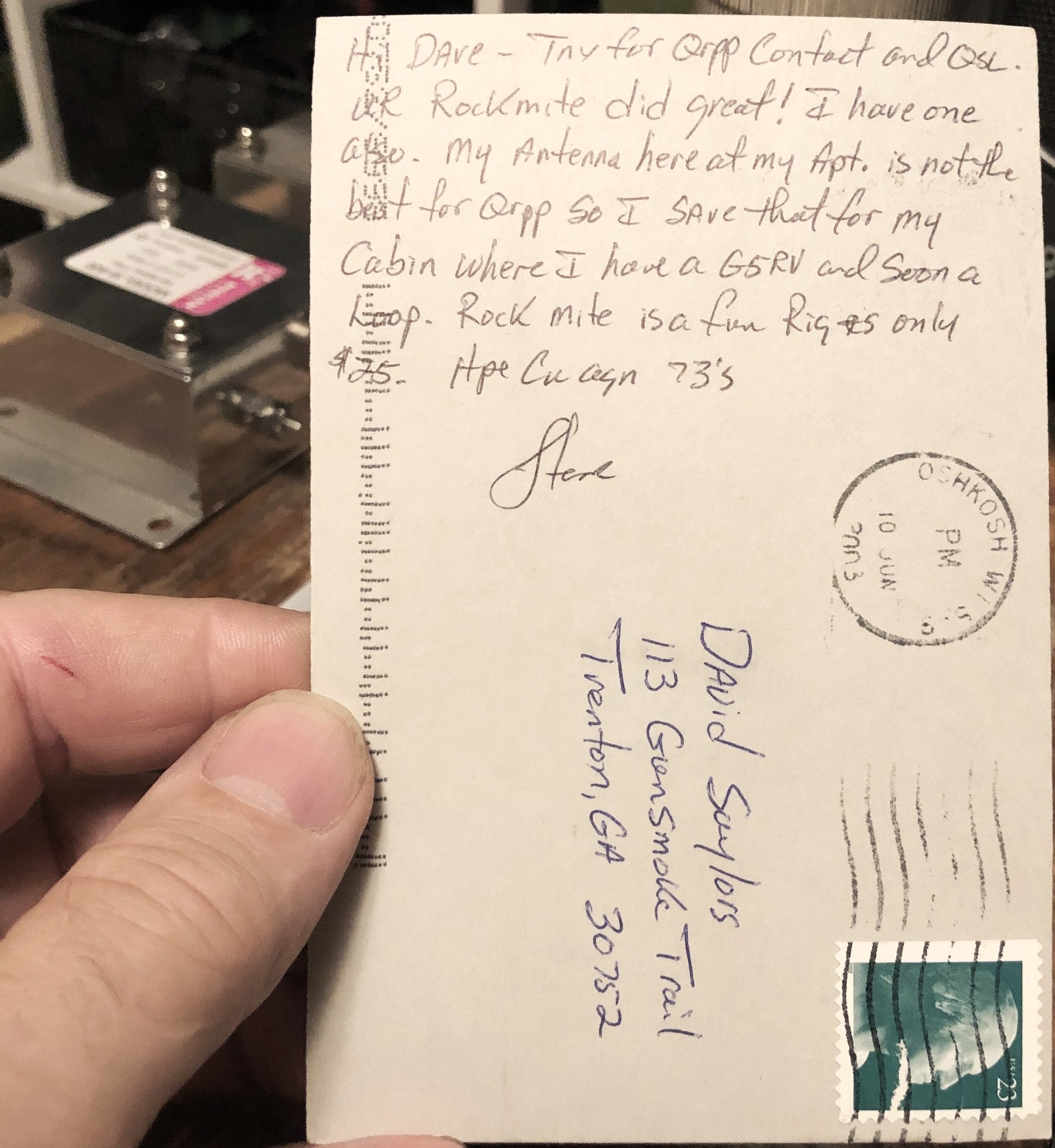
This is why I like paper QSL cards.
PS: By the way, the output power to Alaska that day from a modified 102” stainless steel whip mounted on the back corner of my jeep was just 8 watts. The bands were good to me that day.
PSS: If you noticed, my old callsign and my buddies call sign are sequential. We did this on purpose as we wanted to try to have sequential calls when we decided to get our licenses. I have since acquired a vanity call after getting my Amateur Extra ticket, but Roger still has his original call even though he now has his General.
What have I learned from documenting my antenna position?
The short answer … nothing world changing really.
But honestly I have learned a lot about what it takes to make contact with a QRP radio. The most important part is you setting up the radio and trying to make contact with it. I know this sounds obvious but it is often overlooked as people will look at the band prediction information like the space weather forecast and such and get paralysis through analysis from, this. They will not even bother to turn on their radio. This is a sad result that generates no activity and creates a group of operators that do not operate…
The next best thing I have learned from doing this small experiment is that I was not collecting near enough data to have a informed answer in any way, shape, or form. I was literally only recording my transmitter power, the signal reports (and this is totally subjective and not accurate really), and the antenna direction then generating a QSO map of my contacts from that time. This is not enough information to have any sort of relevant value to even bother with documenting the antenna position or elevation or any of that stuff. What I did learn though is that the antenna elevation and the counterpoise make a large difference and how well the antenna performs if you’re using wire antennas. I would attempt to get the wire as high in the trees as possible and it always seemed that the radio would here and talk much better when I did.

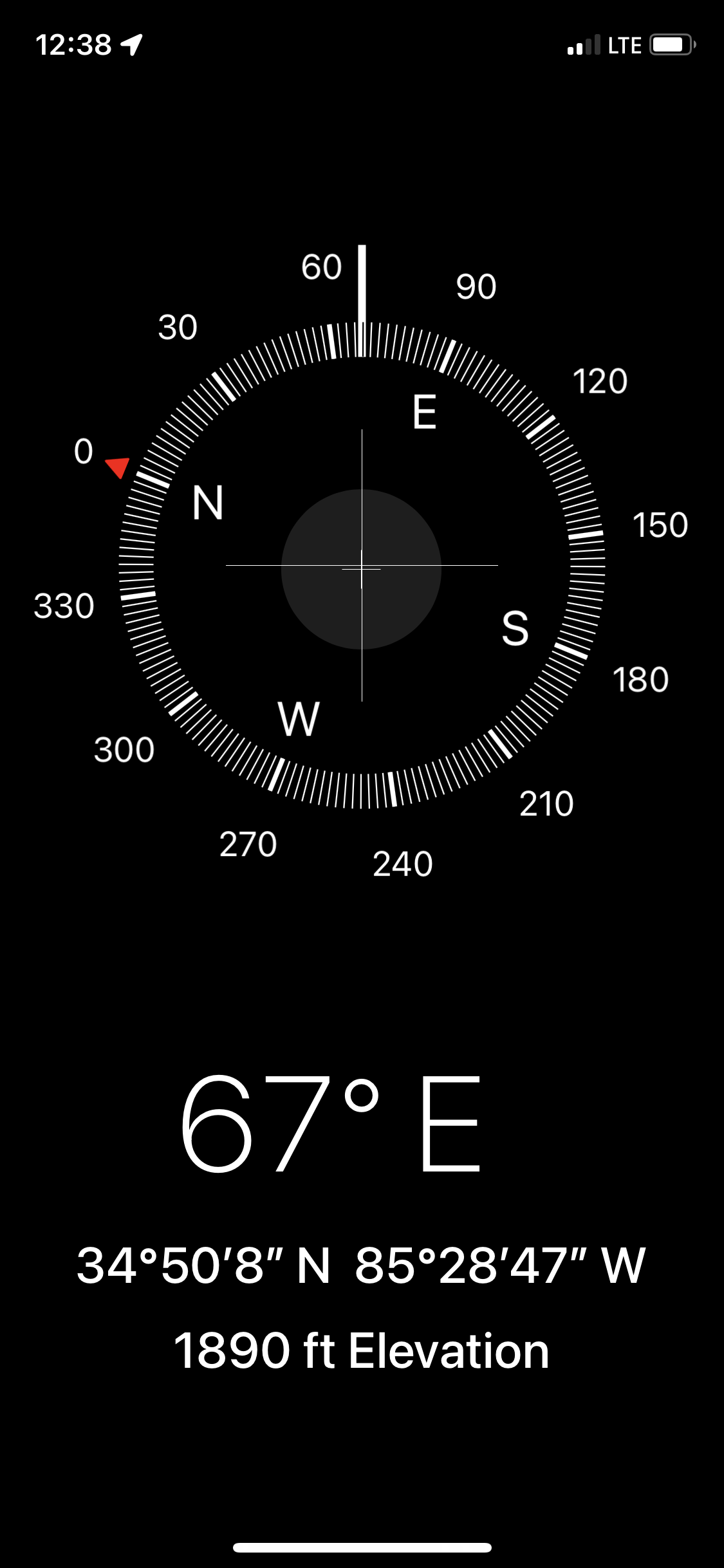
Antenna direction
I posted once on Facebook about this phenomenon of antenna direction and the location of the contacts and a reply was made that I had a omnidirectional contact chart mainly because I was where the radio operators were also at. This was said as a joke but it actually had merit. This actually made a lot of sense. What the charting of my contacts does show is that there is almost 0 NVI (near vertical incident) with wire antennas strung in the trees. Almost all of my QSO contacts are several hundred miles away usually showing that the near vertical incident is almost nonexistent with my wire antennas.
What this has basically taught me is that even if the prediction is for poor band conditions get out and try anyway this will normally result in you at least making a few contacts if not getting an activation in a park or just having a good time in general you don’t have to sweat it too much just get the wire up in a tree put out a counterpoise of some form and the antenna will do its job once you tune it with a tuner. It’s all the better if it is a resident antenna anyway as you do not have to tune this antenna to be able to use it.

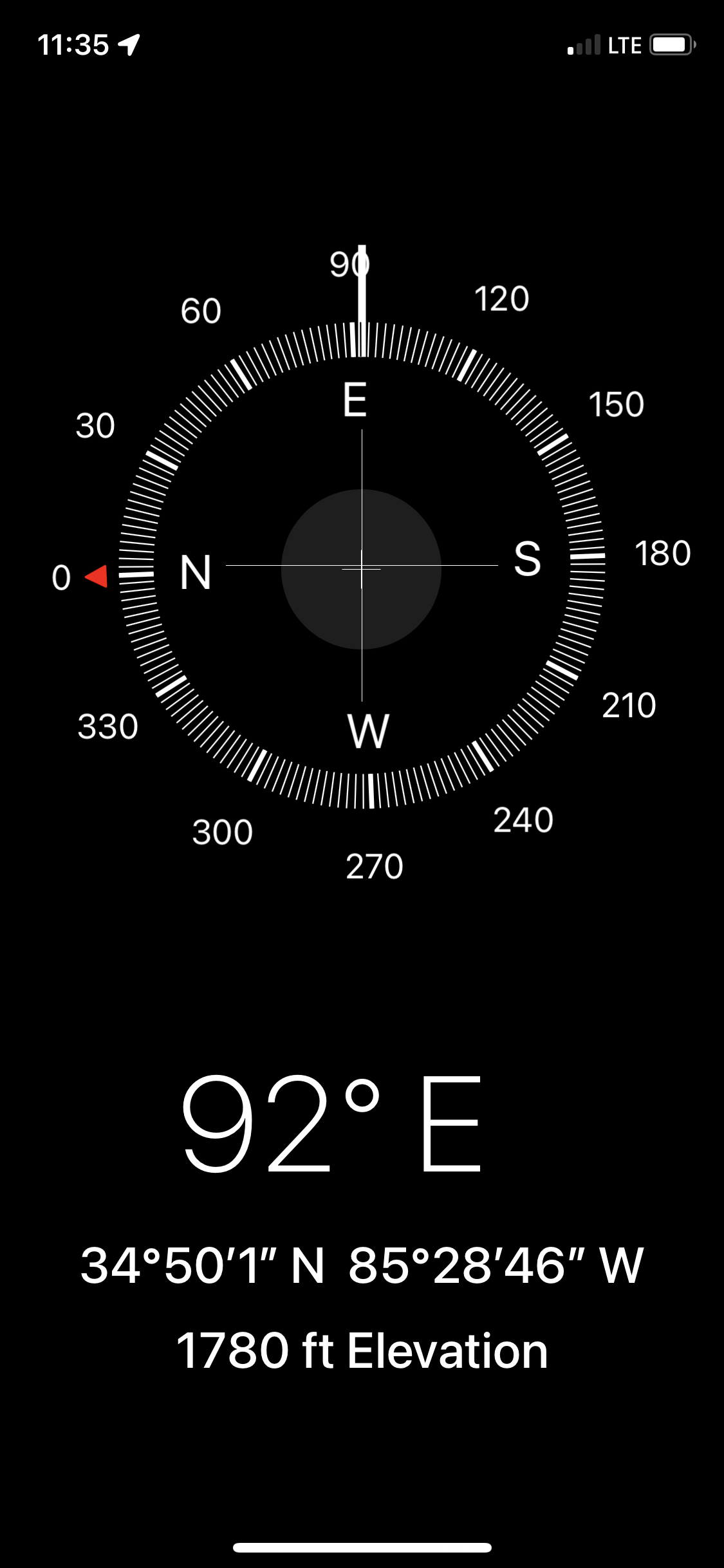
Antenna Direction
Parks on the air is a wonderful activity and I really would recommend you try it out if you have not done it already it is a lot of fun and I get to operate QRP radio in the park and I’ve become the DX! This is something that I have never experienced under normal operating conditions as a US amateur operator. It is literally not something that happens to me normally. So if you want to try out being the “DX” this is an easy way to do it without breaking the bank from having to travel lol