WK4DS Amateur Radio Blog
Search Posts
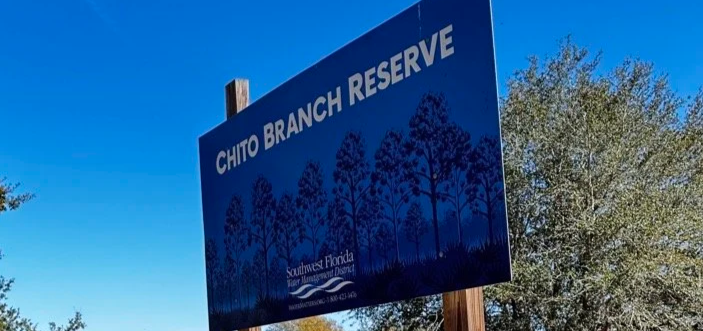
Over 100 QSOs at Chito Branch US-5524 POTA Activation AAR
Once on 15 meters with a warm radio, I set off with calling CQ on a clear frequency. I called for maybe two or three minutes before I started getting replies…and then I got more, and more, and more till I had a genuine pileup on 15 meters! There was times when I am sure I could hear at least ten stations calling at once and this happened a coupe of times today!
Today saw me working on my kilo at Chito Branch again. I figured I would net 30, maybe 40, contacts considering the band conditions and the problems I was running into, but nothing prepared me for what happened today…
The Antenna and Radio Setup
I arrived at the park after hitting a pretty heavy traffic jam this morning a little frustrated since I am attempting to secure the kilo before we leave town for the rest of the year. I get to the park and there is not a single person on site other than me, which gives me the pick of the litter of locations. I immediately go about setting up the antenna and tuning it.
I also noticed today something about the antenna that was of interest to me. I will be investigating it further and writing about it soon. It is that the characteristic impedance of the vertical can not be made purely 50 ohms without a reactive component at all. It simply doesnt work. I testing it for a few minutes as I was curious and as I would tinker with the vertical and the radials to move the plot to purely resistive, it would move the frequency of the antenna off at the same time (stands to reason) but I couldn’t get it to a nice clean 50 ohms no matter what I did. I tinkered with it and the radials till I got the null on frequency and the SWR as low as feasible and moved on to the radio.
After I finished setting up the antenna, I chose to use the TenTec Scout 555 amateur radio and only pulled the 15 and 20 meter band modules for today’s activity. I wanted QSOs in the log and not exotic bands today… I had made a mistake last night though, this radio is temperature sensitive to some degree, it will drift in frequency (mine wanders slowly up) till it warms up from use. So when I am running the keyer and the radio is in transmit a lot calling CQ, the radio heats up in the back and slowly that heat creeps forward in the case to warm the rest of the electronics. Once warm I find the radio to be very stable and work exceeding well, but until it does, I have to watch it and turn the VFO down a little at a time till it is warm. This is what I had to deal with today
The POTA Activation Begins…
People were sending me notes in the spots on the POTA website about my frequency so I would know about the drift. I love how the hunters are there for you all the time, even once they have you in the log. That is awesome camaraderie if I must say so. I racked up a staggering 35 QSOs in short order! It was going so well that I figured I would hop onto 15 meters and see if I could get 40 or 45 before I ran out of time… What happened next blew my mind. After I worked those 35 stations it is like the radio simply turned off, I don’t know if I had worked everyone on the band or if the band had started to close, but I could no longer hear anyone calling. So I called CQ a couple more times and finally after not hearing anyone else for a coupe of cycles, decided to QSY to 15 meters.
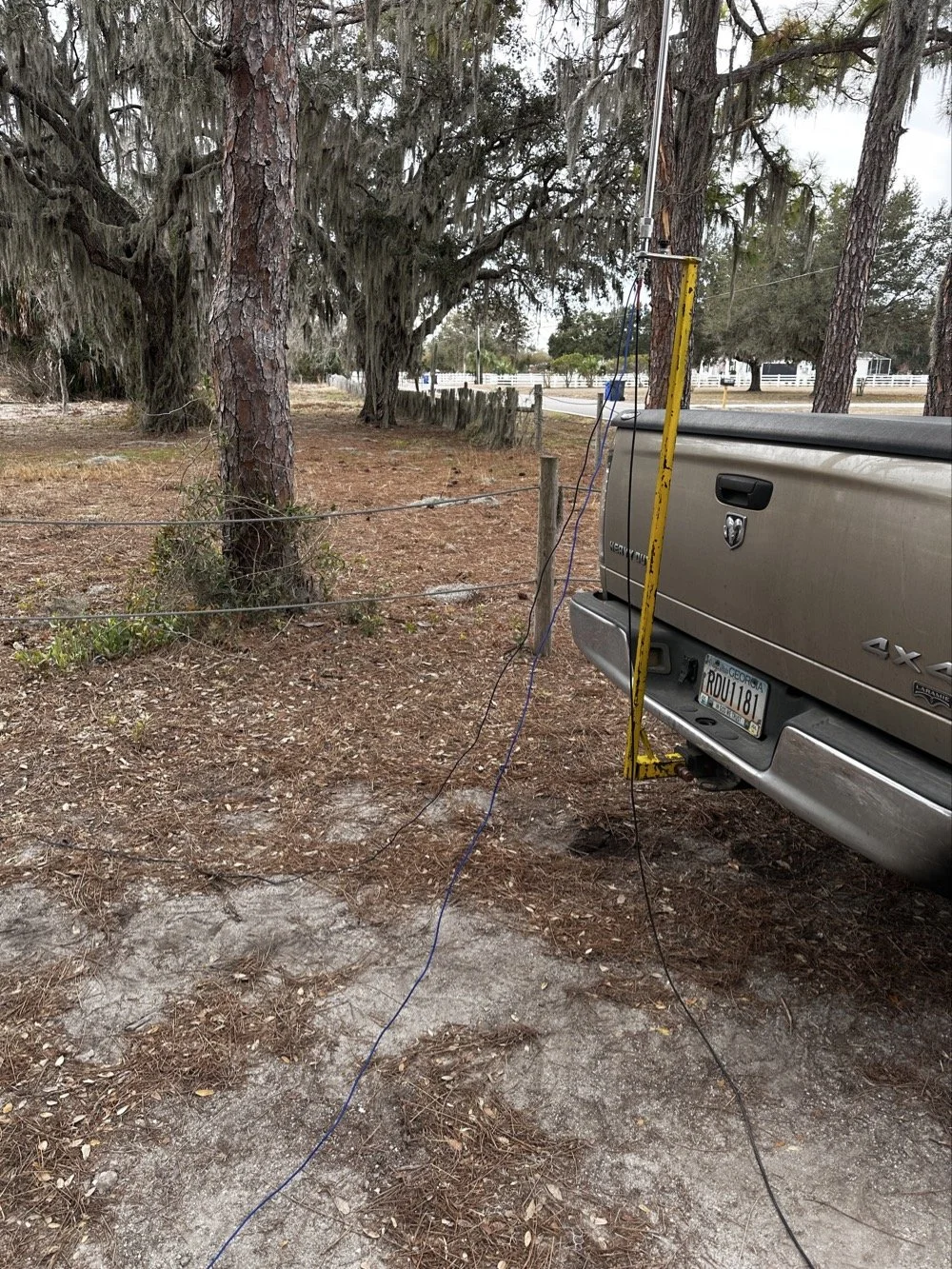
The ¼ wave telescoping vertical antenna was simple and effective today.
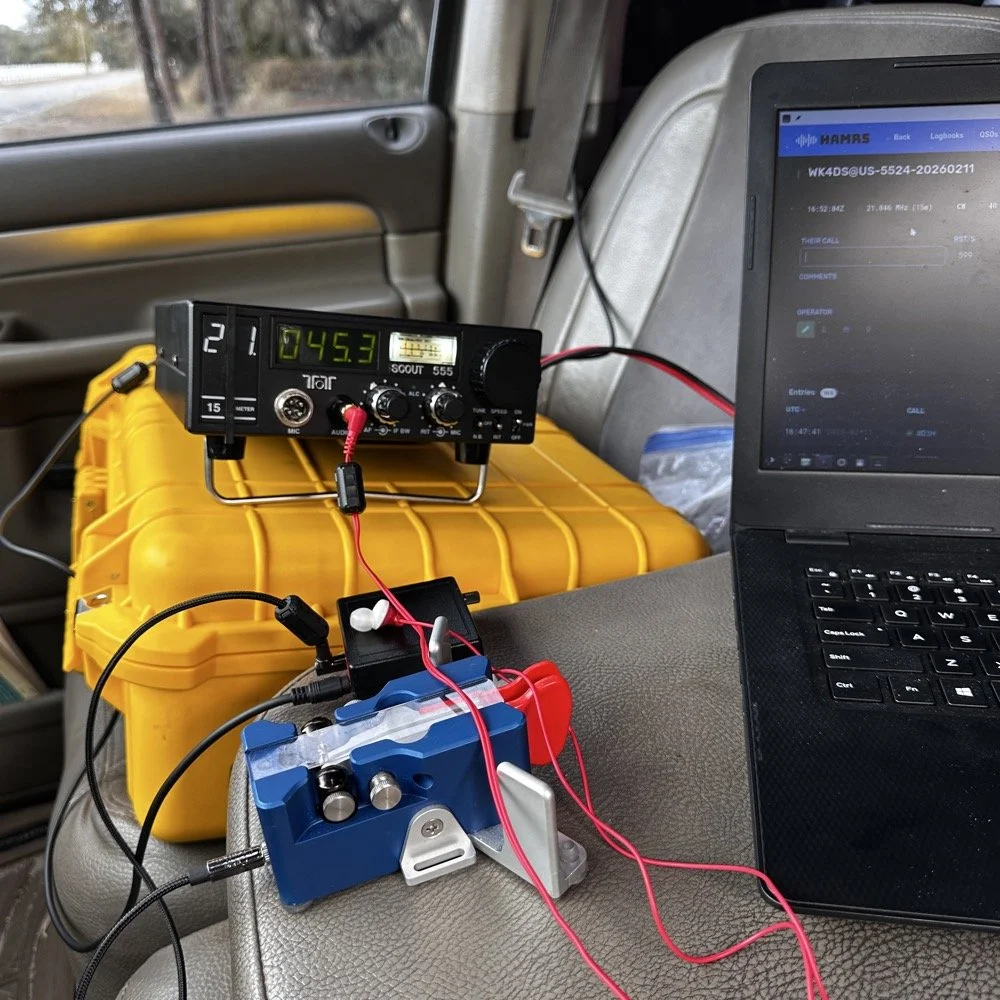
TenTec Scout 555 Amateur Transceiver with Begali Travler CW Key
15 Meters Gets Sporty!
Once on 15 meters with a warm radio, I set off with calling CQ on a clear frequency. I called for maybe two or three minutes before I started getting replies…and then I got more, and more, and more till I had a genuine pileup on 15 meters! There was times when I am sure I could hear at least ten stations calling at once and this happened a coupe of times today! I also knew from prior experience that 15 meter is kinda where I start really hearing DX stations when the band is in good shape so I was kinda listening for stations with callsigns that start with letters other than A,K,N and W. I have found that after doing POTA for a while that my brain instinctively listens for one of those letters first in the call. If I don’t hear one of those 4 at the beginning then something in my brain trips and I only get the last 2 or 3 letters of the callsign and require a repeat…unless…I am on 15 meters and above.
It is really rare for me to even hear DX with the antennas I use for POTA until I get up to 21 mhz or higher. To be honest, I am surprised I hear them at all with some of the antenna designs I use. The ¼ wave vertical pictured above is a prime example, I am pretty sure this antenna needs to be a good bit higher in the air for a good DX take off angle, but here we are….
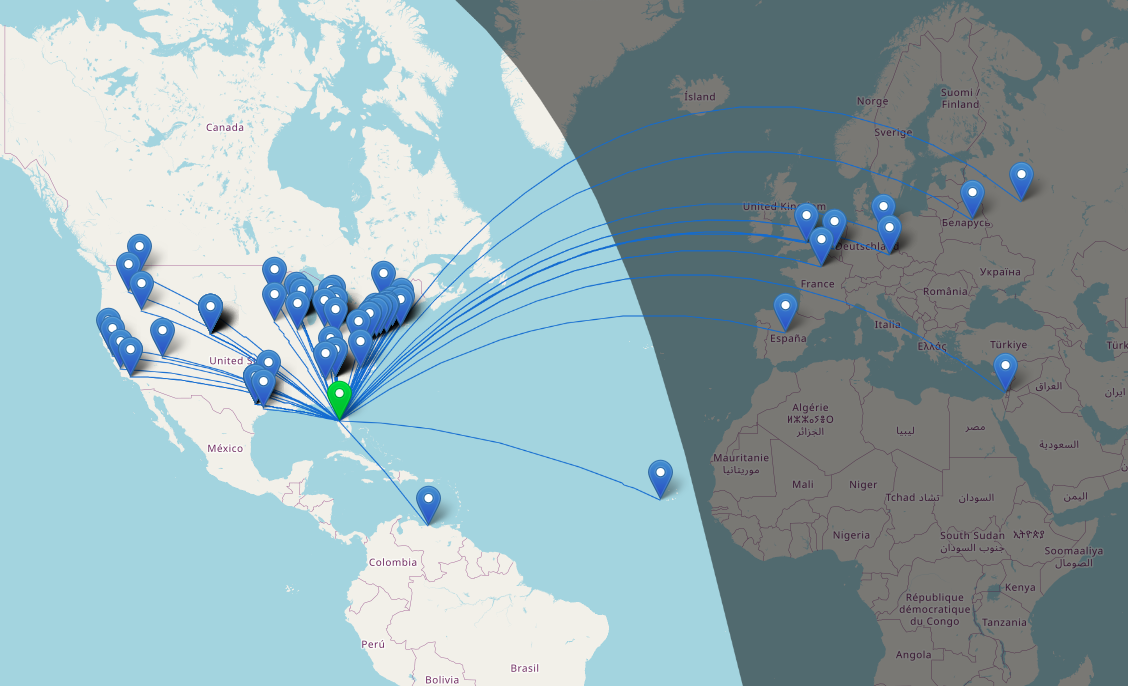
Here is the list of the DX I worked today from a POTA park:
DX Countries Worked:
Working DX on simple antennas is one of the joys of amateur radio. The ARRL's guide to HF propagation explains why 15 meters can be so productive for European contacts from the US.
Venezuela - YV1GIY
England - G0LLU, G3NKQ
France - F6CAX, F6OYU
Spain - EA4MZ
Belgium - ON5JT, ON4ZD
Czech Republic - OK1MGW, OK1XC
Germany - DF2PI
Cape Verde - D4HP
Belarus - EW6GB
Russia - R1QBD/3
Israel - 4Z4DX
China - SH2NR
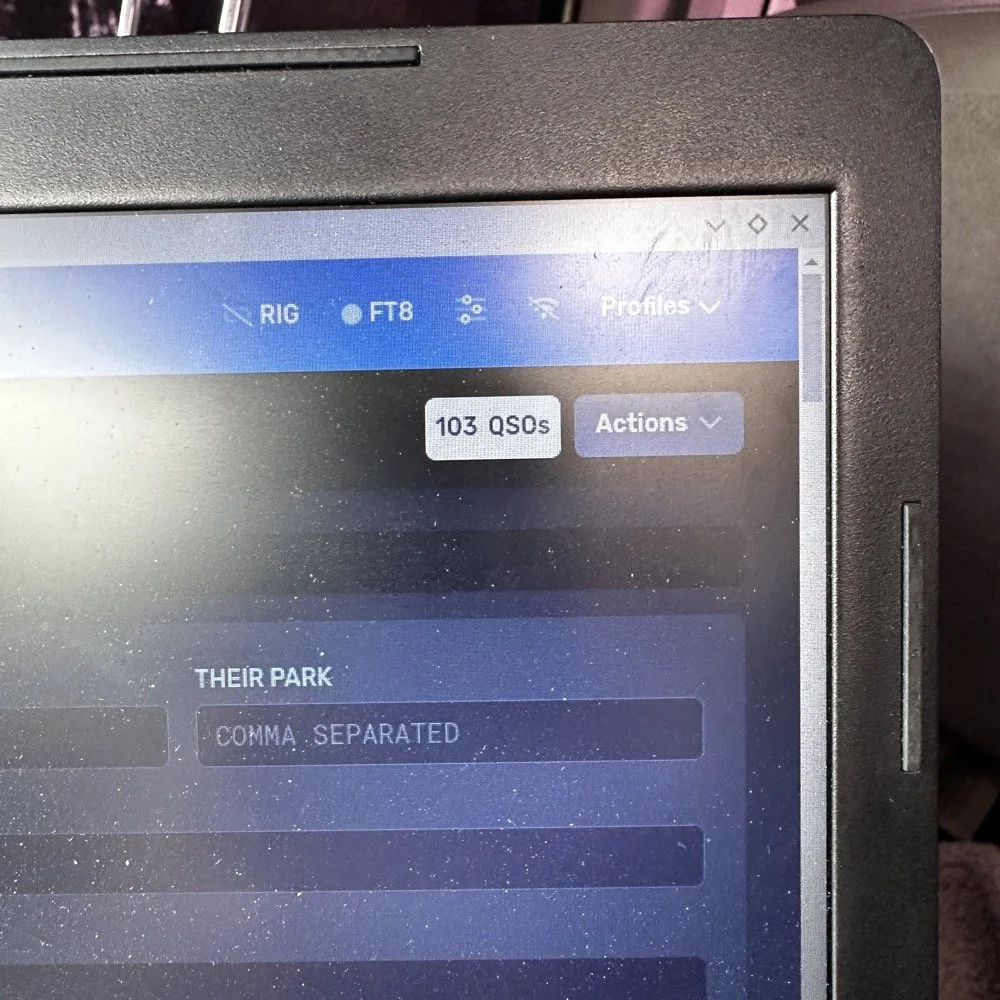
I use HAMRS for my POTA logging.
AAR POTA Wrap Up
As you can see, I was hearing people from all over the world! I couldn’t believe some of the ones on this list. I don’t think I have ever worked Cape Verde before! He was really weak too, I could just make out the call and signal report after him repeating it a few times, but we got it done! Europe would come booming in with spurts of band openings apparently as I would work two or three at one time then it would go silent in the EU for a while then it would happen again.
Now this is not to say the band was in perfect condition. There was considerable QSB (fading) of the signals today, but it was manageable with a decent set of headphones and a properly adjusted radio. I could hear all but maybe 3 stations that I could hear at all. Of those three, one of them I almost got but then it faded out completely. I was so close too… Anyway, the calls just kept coming in and over the next hour I hit 50 then 60 then 70 and the log just kept building. I use HAMRS for my POTA logging and it shows the total in the top corner like a little scoreboard...
I finally got to something like 78 and had a couple of duplicate calls by now so I wanted to finish with a solid 80 and started really working towards this new little goal I had thrown up. Then I did it and then ran right past 80 to almost 90! It just kept happening! 15 meters was on fire today! I finally got to about 98 and I was almost out of time so I decided to stop at 100 even if I didn’t account for the duplicates. 98 is better than being late for picking up the XYL (the wife)… haha. But then I hit a little run of 5 and landed finally on 103 and the goal being reached, I called QRT and powered off the station. This is what I love about POTA, the callers were coming in from everywhere.!
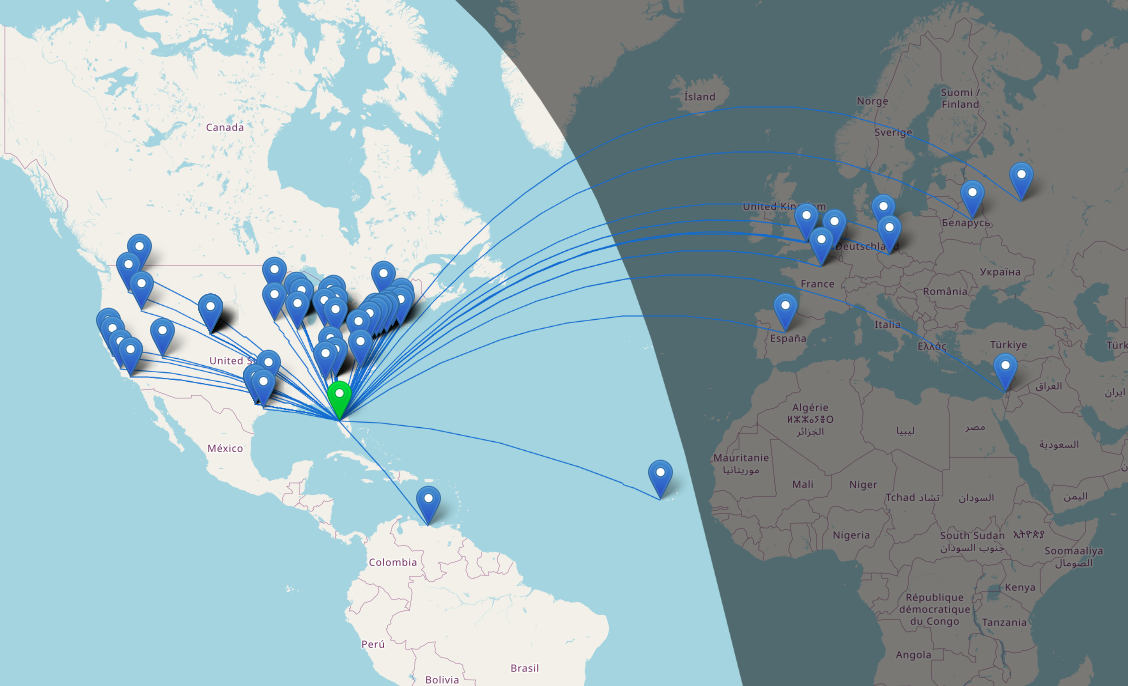
Screen capture from the HAMRS logging software QSO map.
This map blows my mind, all of those calls were worked on a 30 year old, 40 watt TenTec Scout 555 radio (I turned the power down from factory spec for a reason)that has to warm up to stay on frequency, with an “outdated” mode that appears to be very NOT outdated at all, with a less than ideal antenna! So with all this I have to say, just get something together and don’t worry too much about if it has perfect SWR or if the antenna is “high enough” for DX, obviously that don’t matter when the band conditions get right! Now of note, most of the DX (I think almost all of it other than Venezuela, is 15 meters only) also all of the west coast if 15 meters as well as several of the ones due north of my position.
Elated at the fact that I had put over 100 calls in the log toward my kilo, I hurriedly broke down the antenna and packed the radio away and drove off to get the wife from school. Now if I can just repeat this again tomorrow…haha.
How many watts does the Ten-Tec Scout 555 output? The Ten-Tec Scout 555 outputs 50 watts from the factory, I have mine “turned down” to 40 watts as this is a simple adjustment and helps protect the radio from high SWR issues in the field, which is more than adequate for POTA activations and working DX on CW. Despite being a 30-year-old radio, it performed exceptionally well during this activation and many others in the past.
What bands work best for DX during POTA activations? 15 meters (21 MHz) and above typically offer the best DX opportunities during POTA activations (for me at least). At US-5524, nearly all European DX was worked on 15 meters, while 20 meters provided primarily US contacts.
Do you need a perfect antenna for POTA DX contacts? No - this activation proved that DX is possible with simple antennas. Using a basic quarter-wave vertical with radials at ground level, I worked 12 countries across Europe, South America, Africa, and Asia…in one sitting.
Why does the Ten-Tec Scout 555 drift in frequency? The Scout 555 is temperature-sensitive and drifts slightly as it warms up during transmit cycles. Once warm (after 15-20 minutes of operation), it becomes very stable. Simply adjust the VFO slightly downward as it warms. The radio drifts in frequency due to component value changes as they warm up, this is common in older equipment or less sophisticated designs like the Scout 555. Things like crystals will change frequency when they get warm, other things like capacitors will also change value with temperature if they are not specifically stabilized versus temperature.
What is the best logging software for POTA activations? HAMRS is excellent for POTA logging - it's free, works offline, handles POTA references automatically, and generates helpful QSO maps. It also exports to ADIF format for easy upload to pota.app. Is it the best? For me it is…
Related Posts
Hope you enjoyed this AAR, leave a comment and I look forward to hearing from you in a future one,
You can help support this website by using these Amazon Affiliate Links:
QRP/Portable Radios:
Antennas & Tuning:
CW Equipment:
Power & Accessories:
Organization & Transport:
BONUS ITEMS
David - WK4DS